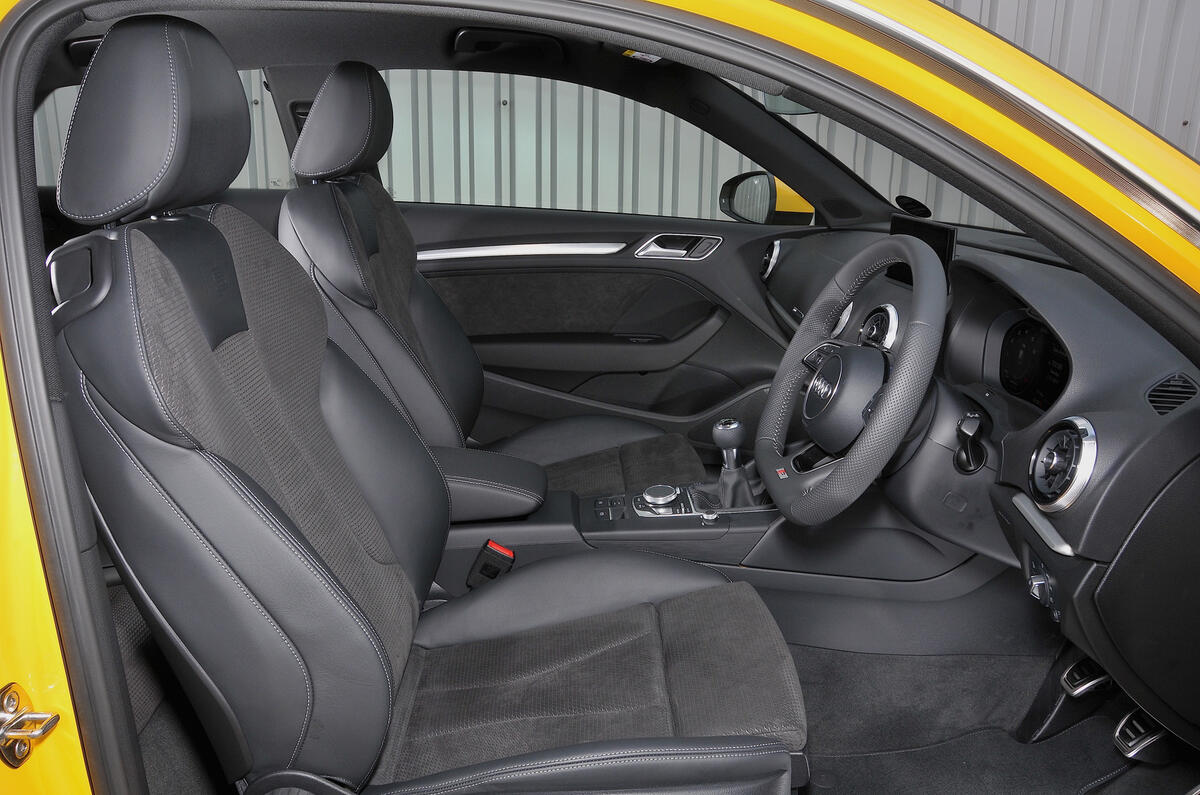
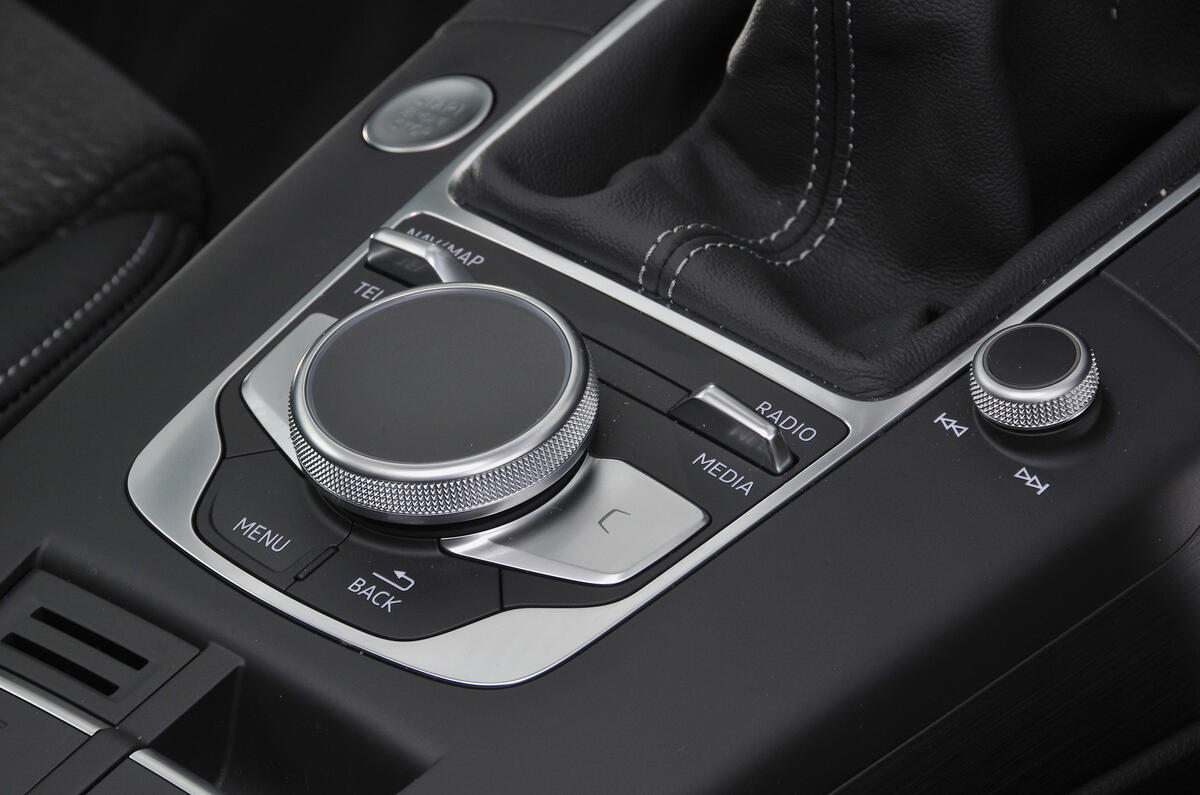
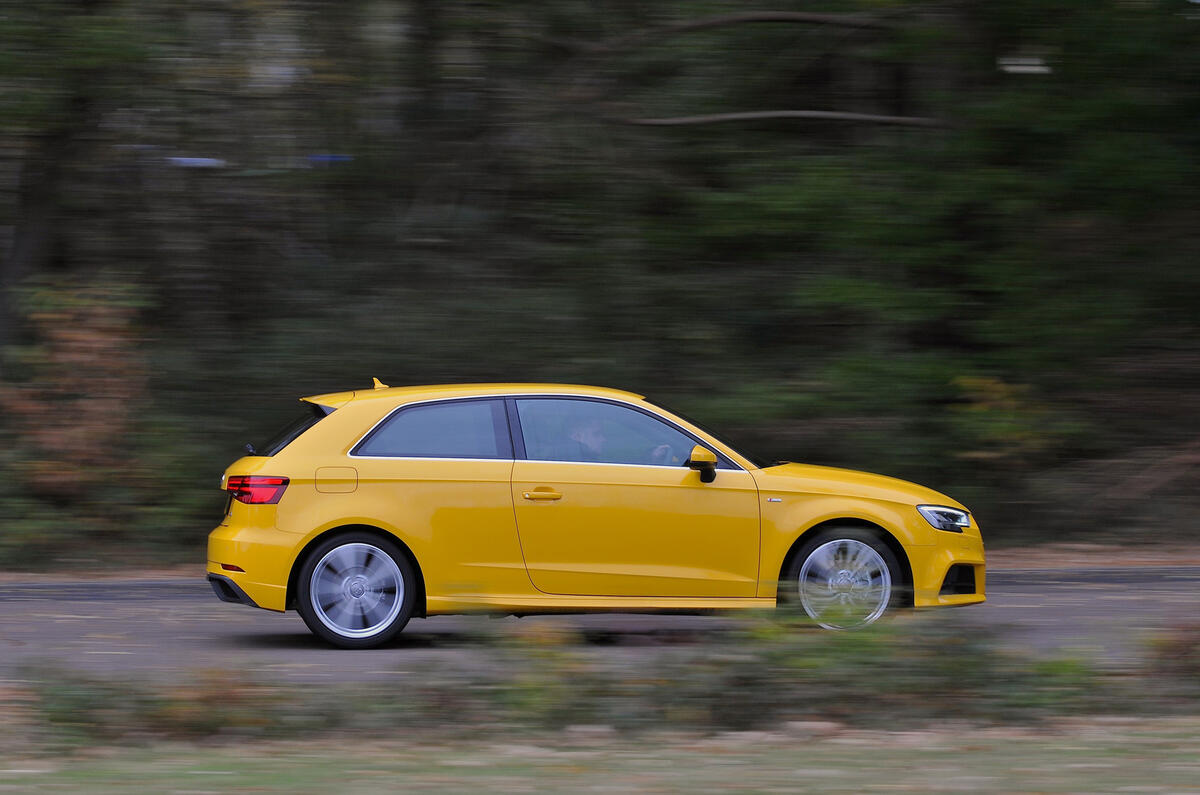
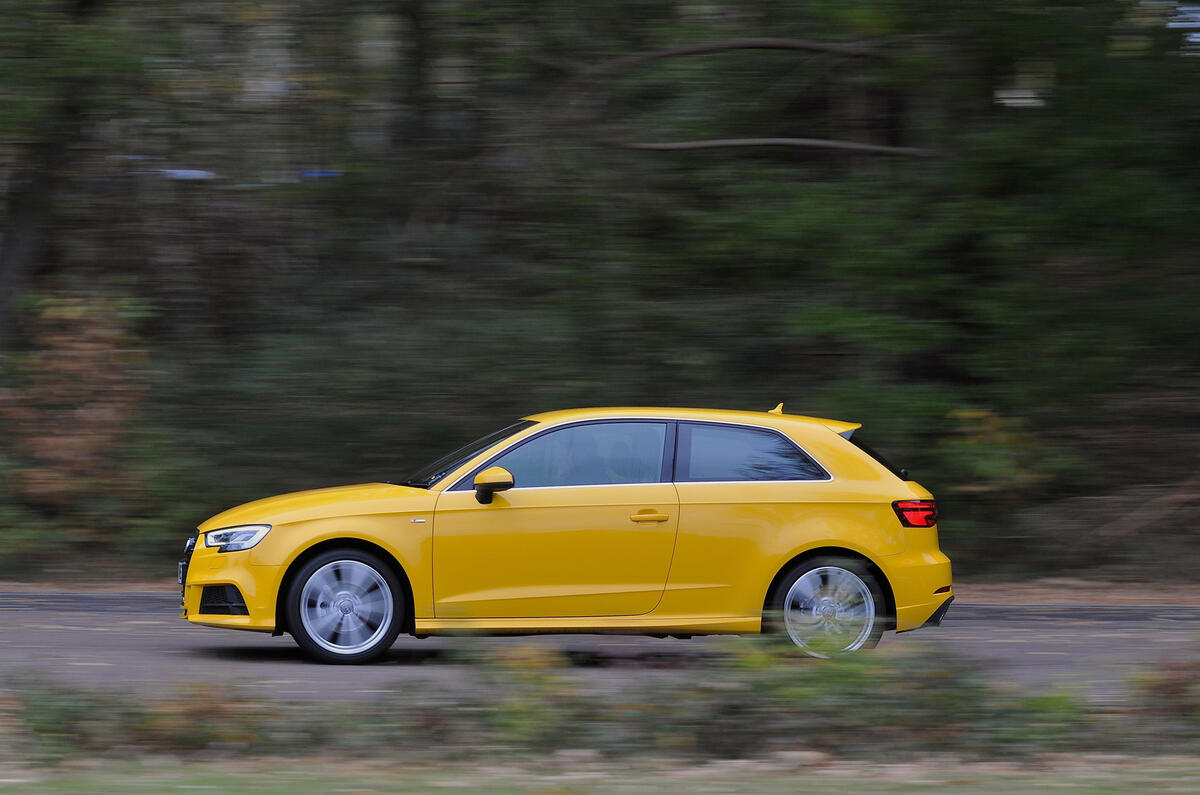
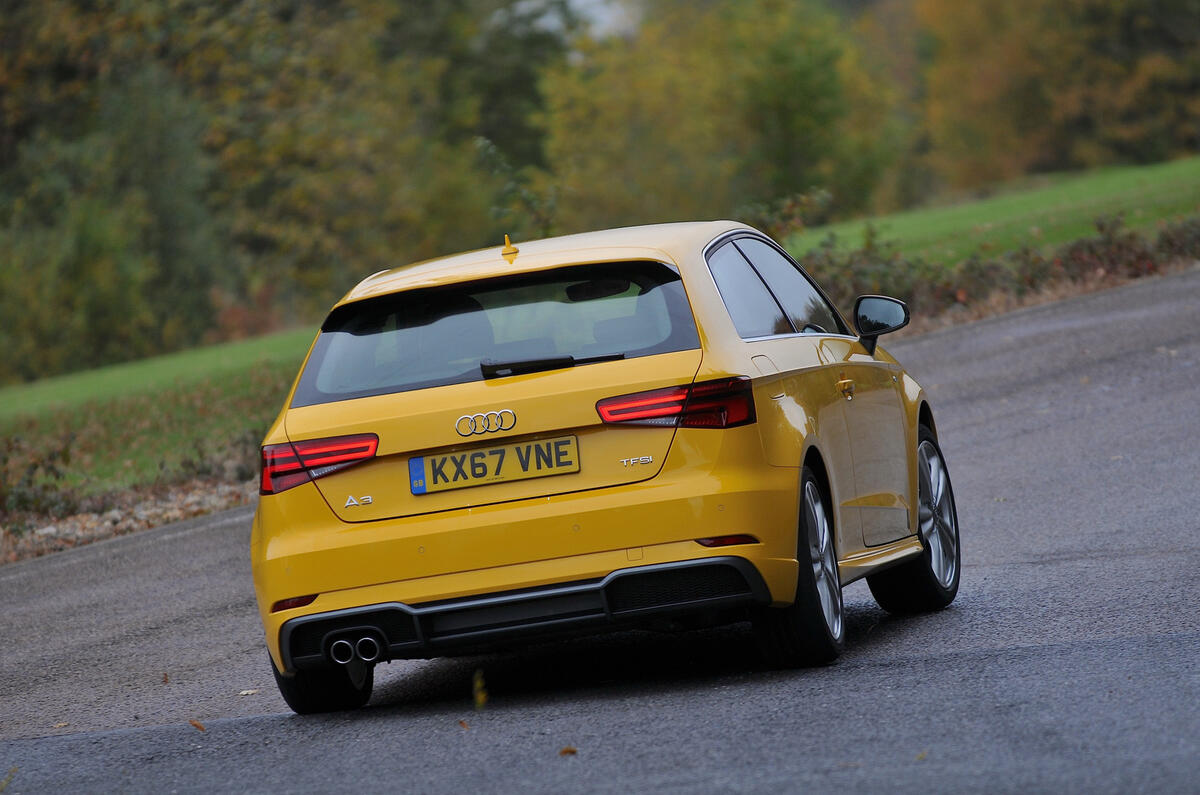
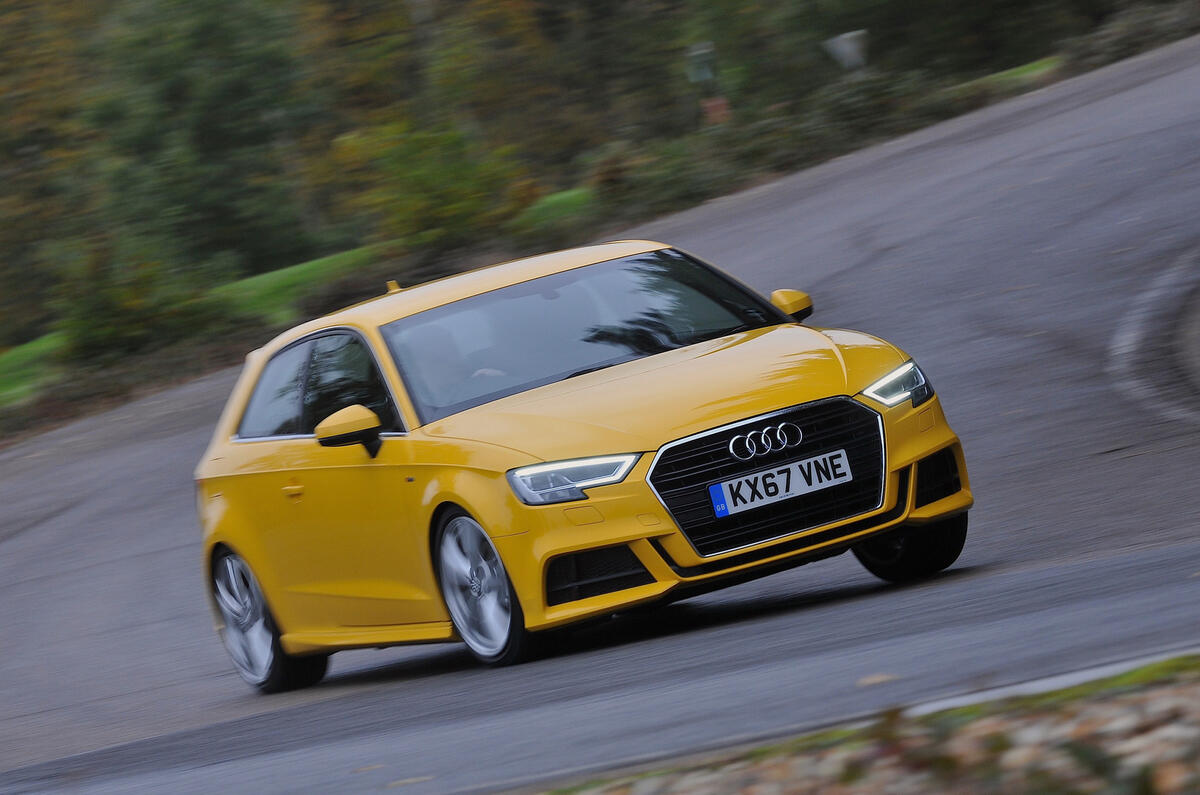
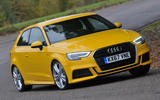
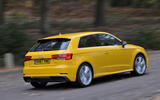
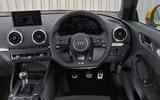
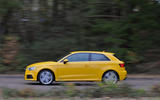
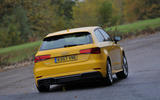
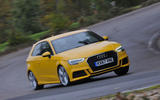
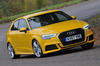
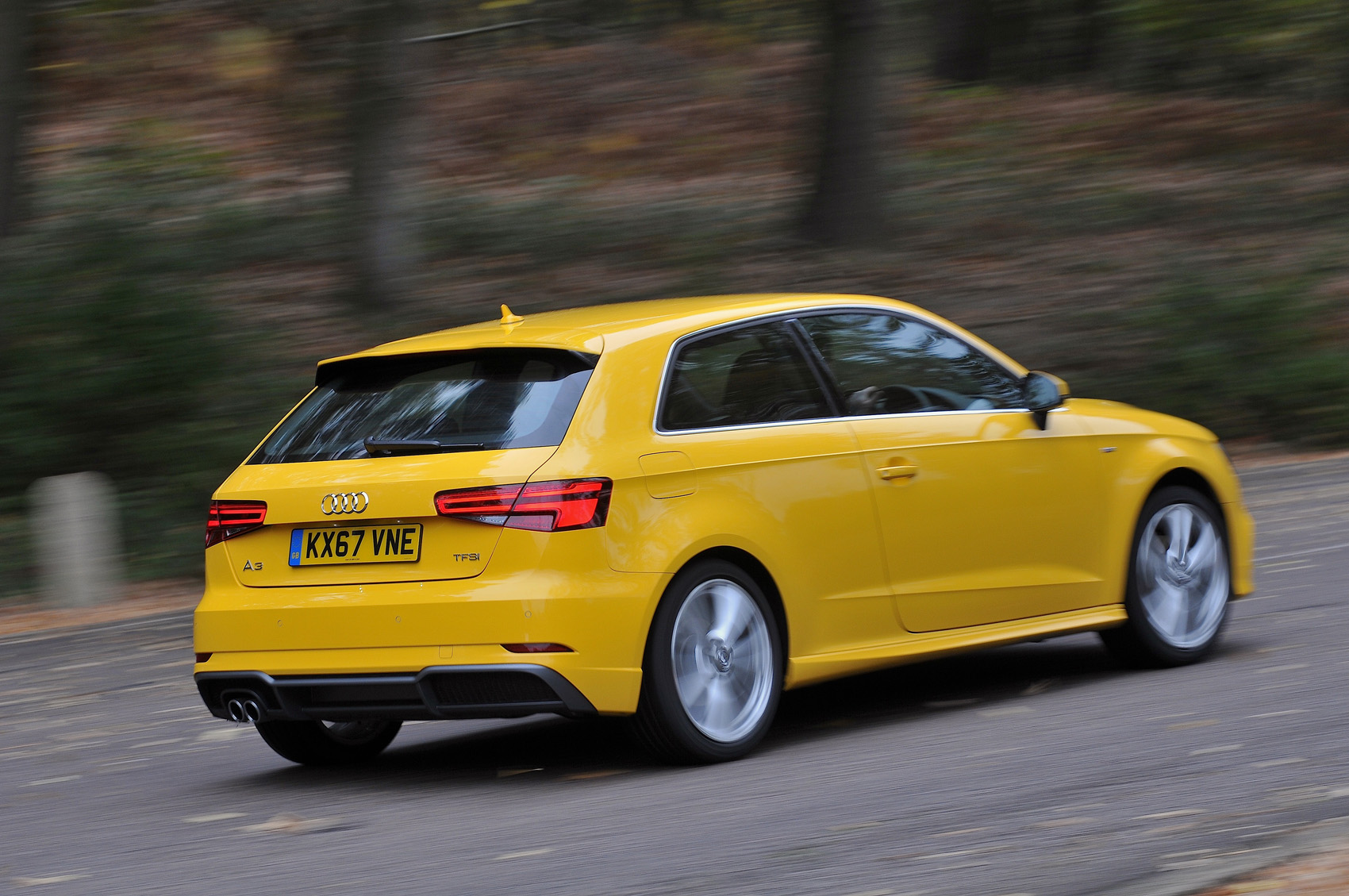
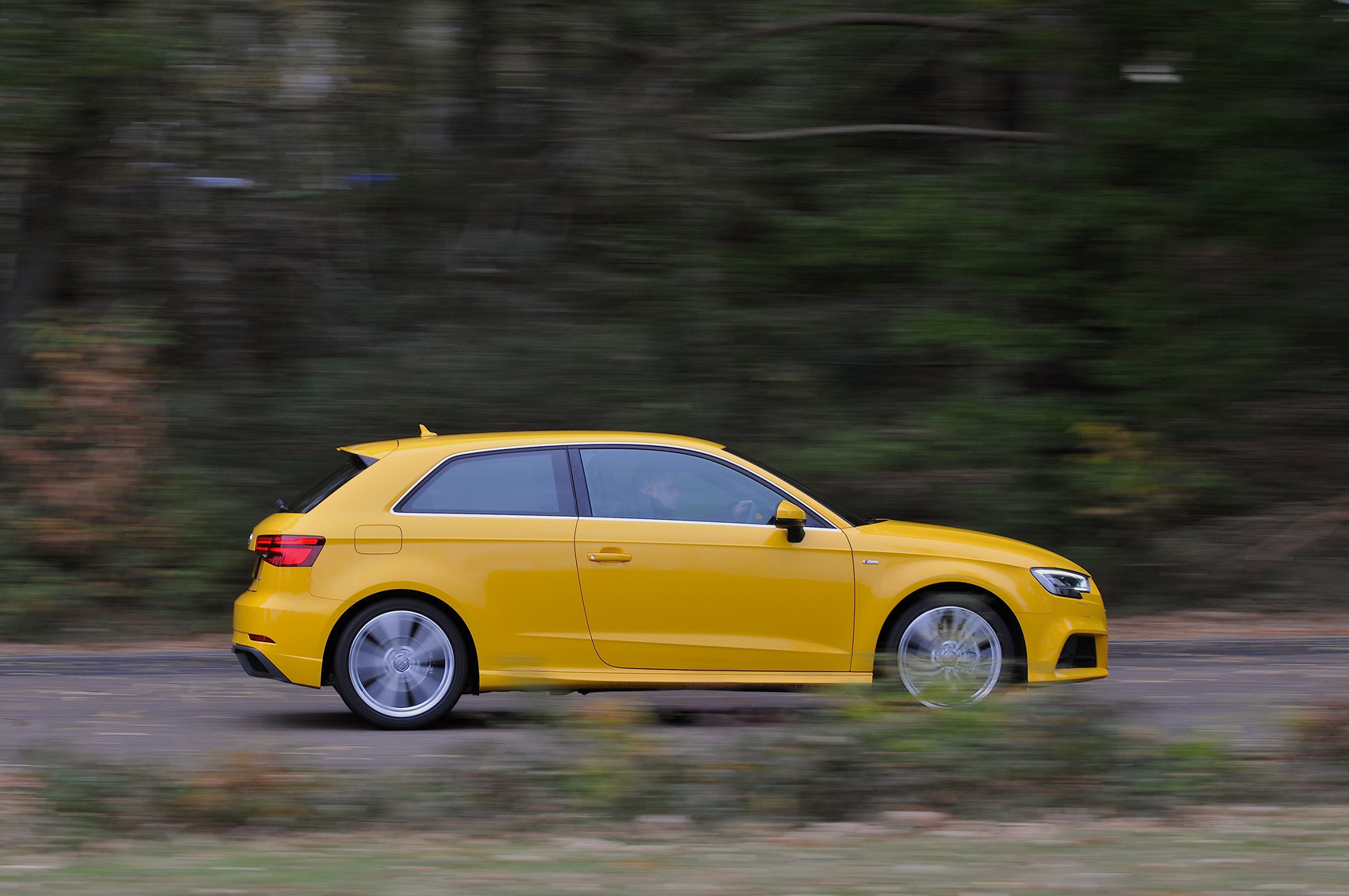
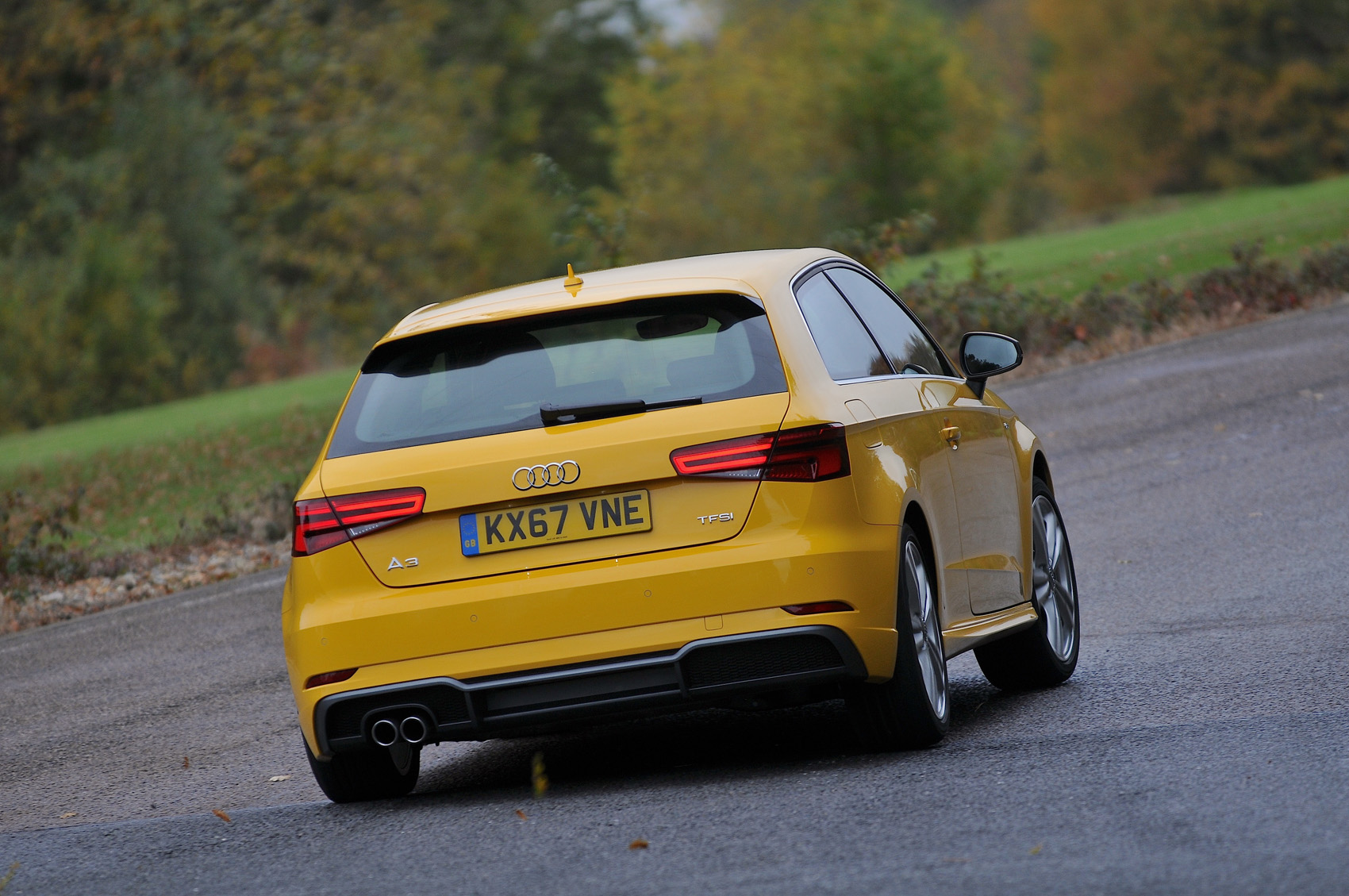
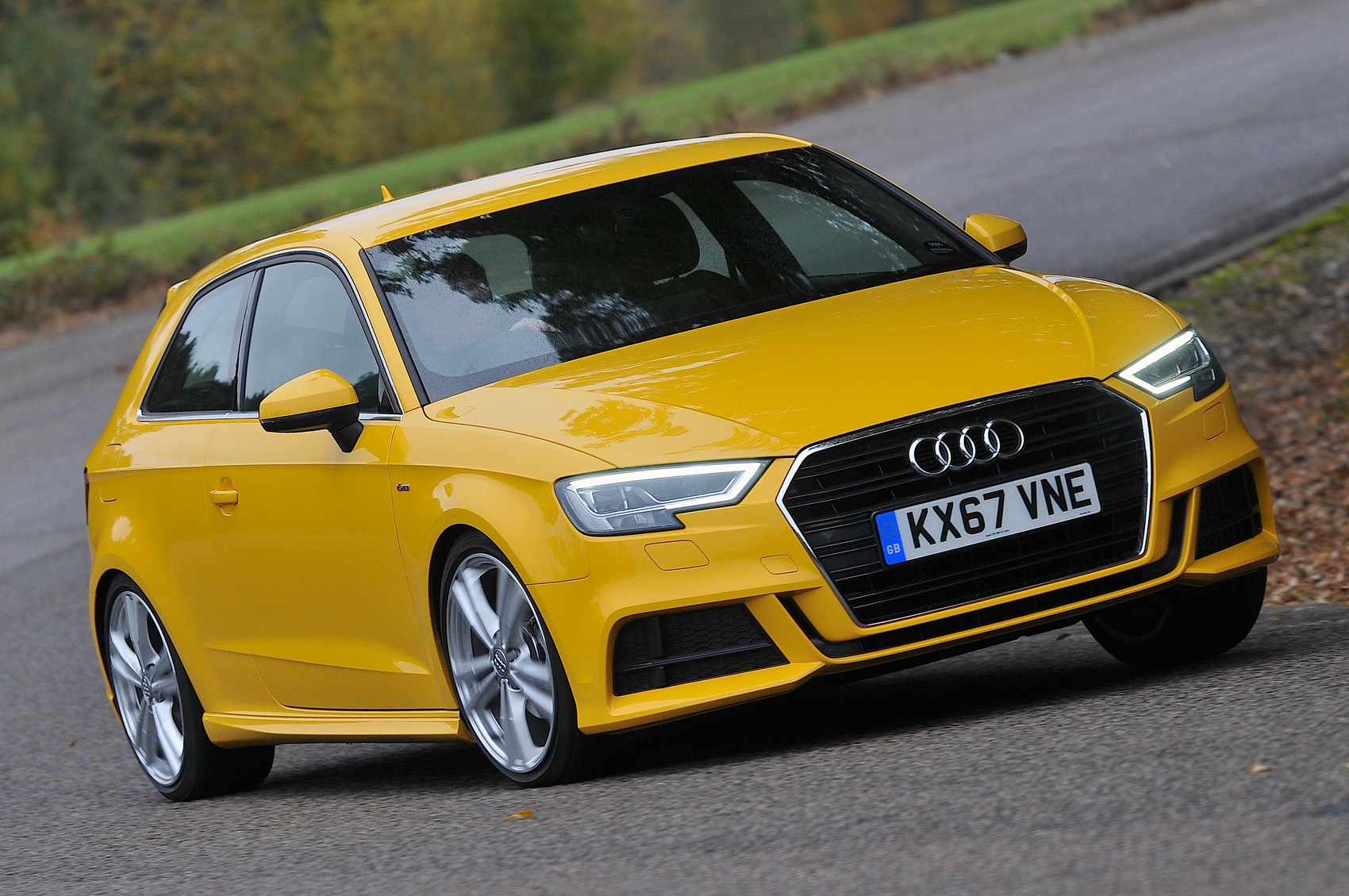
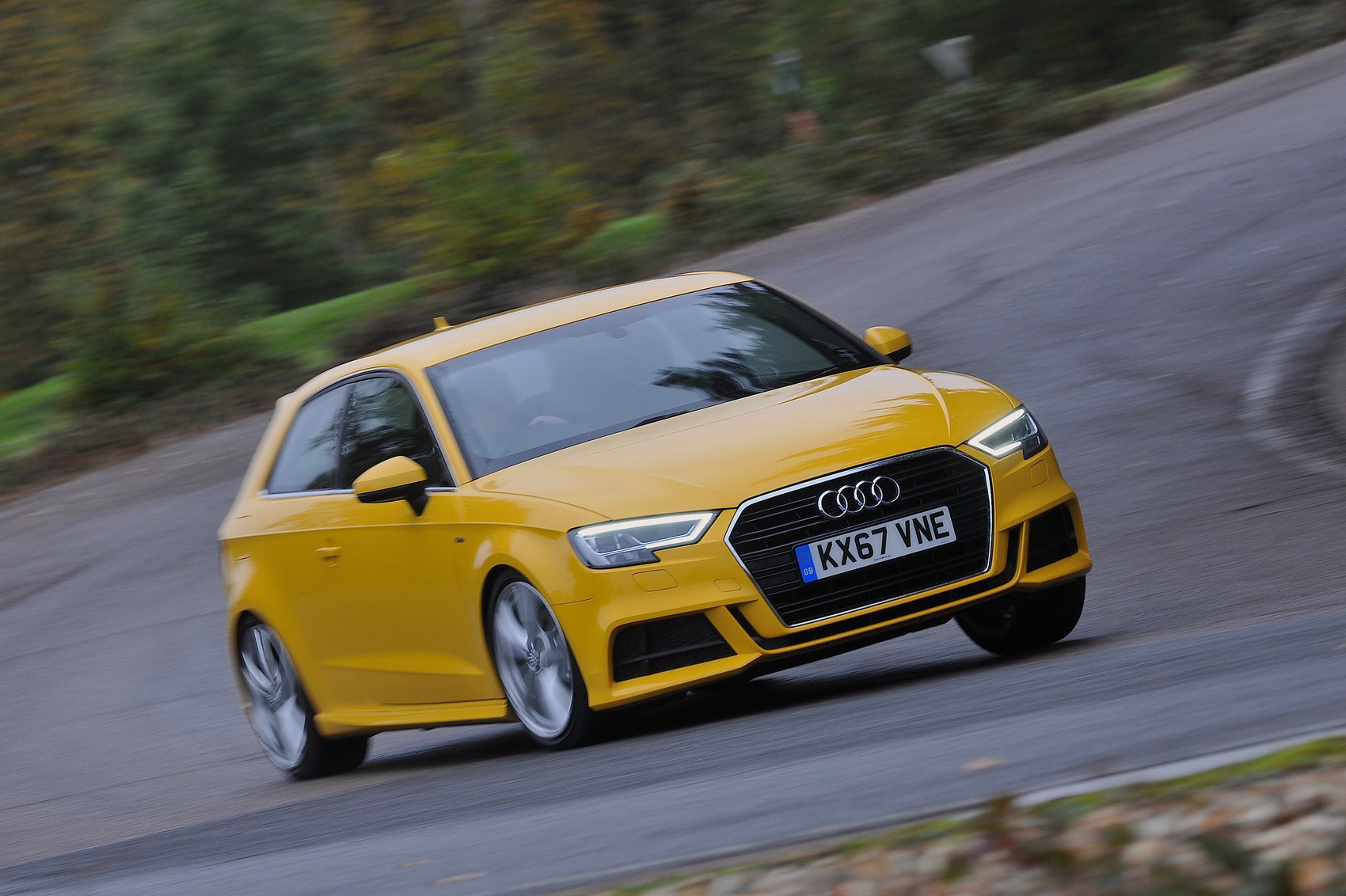
The Audi A3 always felt like the entry-level Audi, even though after the arrival of the Audi A1, it no longer was. Its interior worked at a basic ergonomic level but the style and quality enjoyed by those rich enough to afford larger, more expensive Audis was missing.
This changed with the Mk3. It marked the point where Audi democratised its brand values in order to broaden its appeal and reach a wider audience.
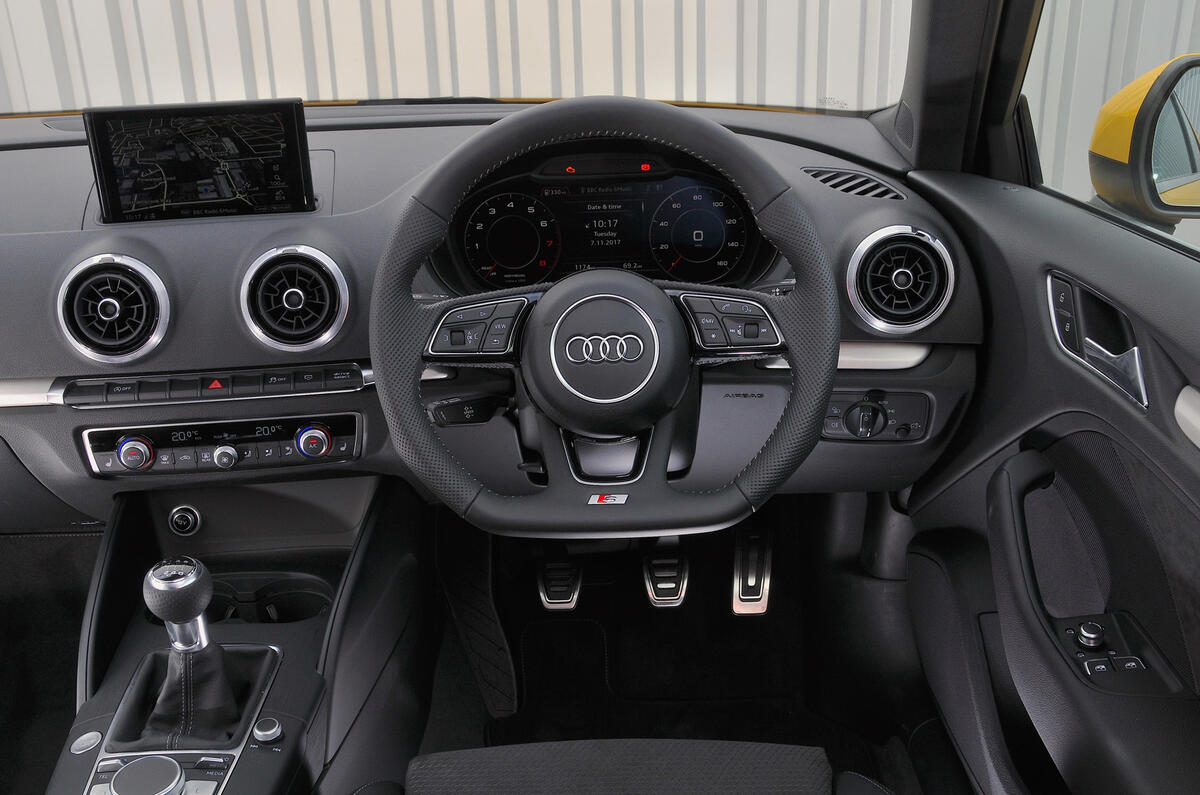
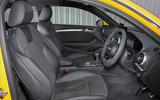
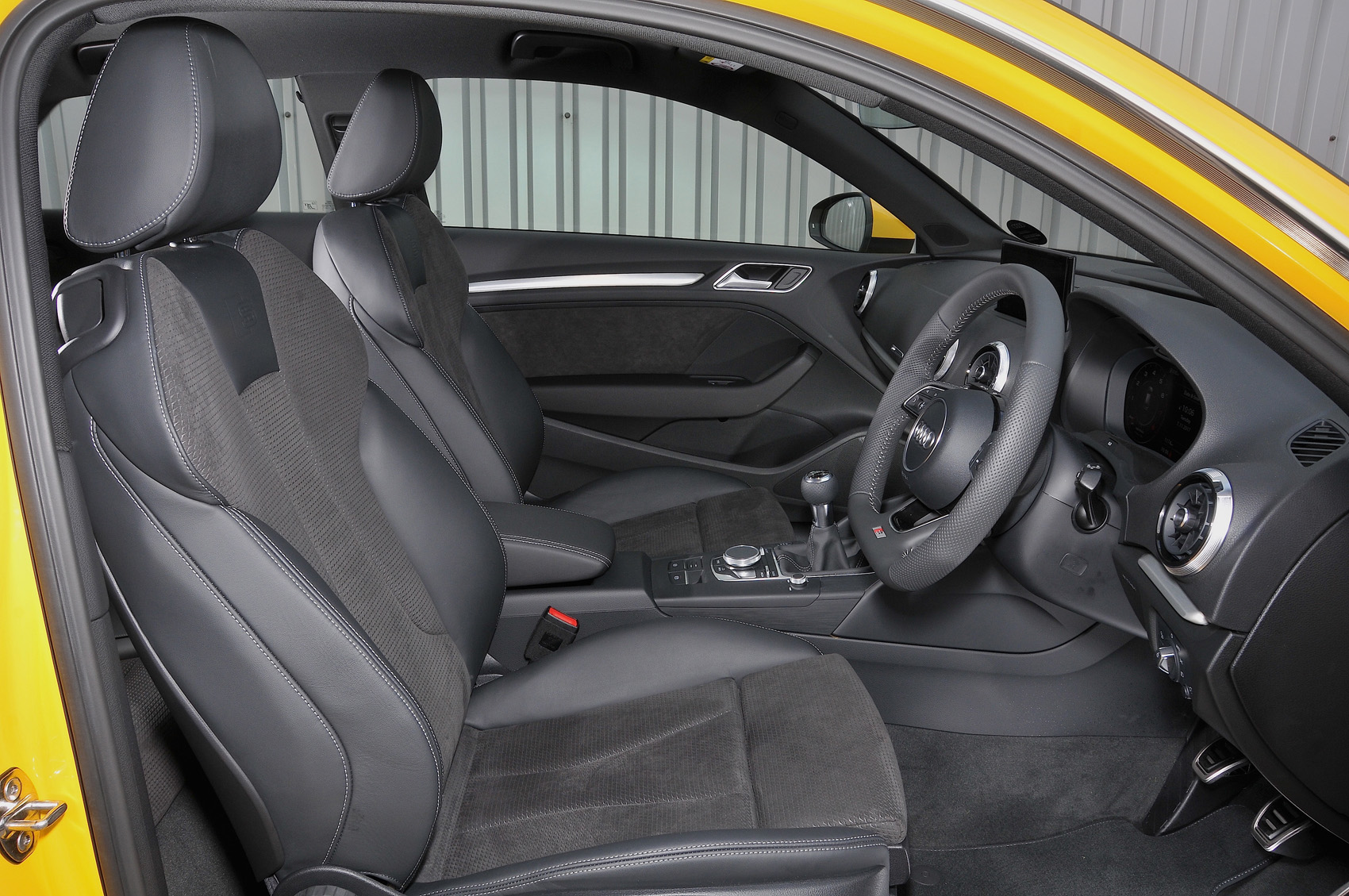
It seems almost redundant to talk about the basics. Of course a perfect driving position was achievable for all bar the freakishly tall or short.
For an extra £450 you could have Audi's fabulous Virtual Cockpit, which was configurable and could display a wealth of information, including your sat-nav.
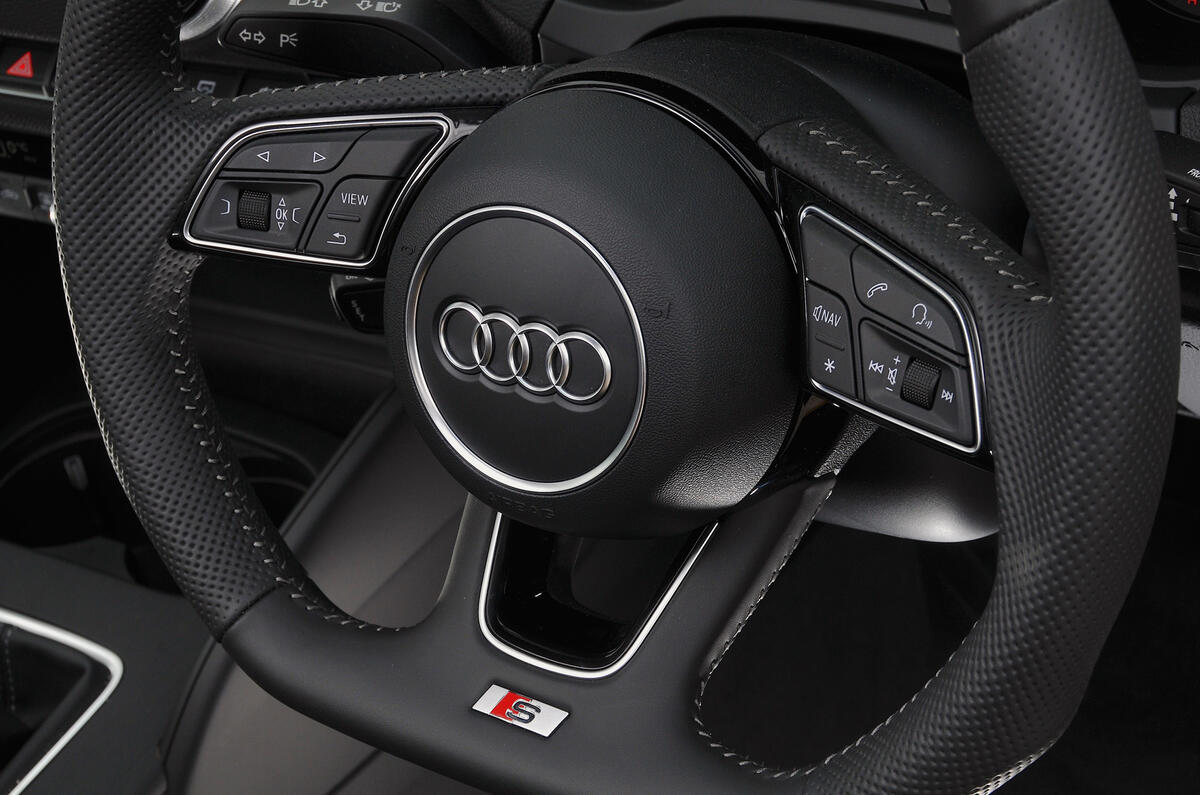
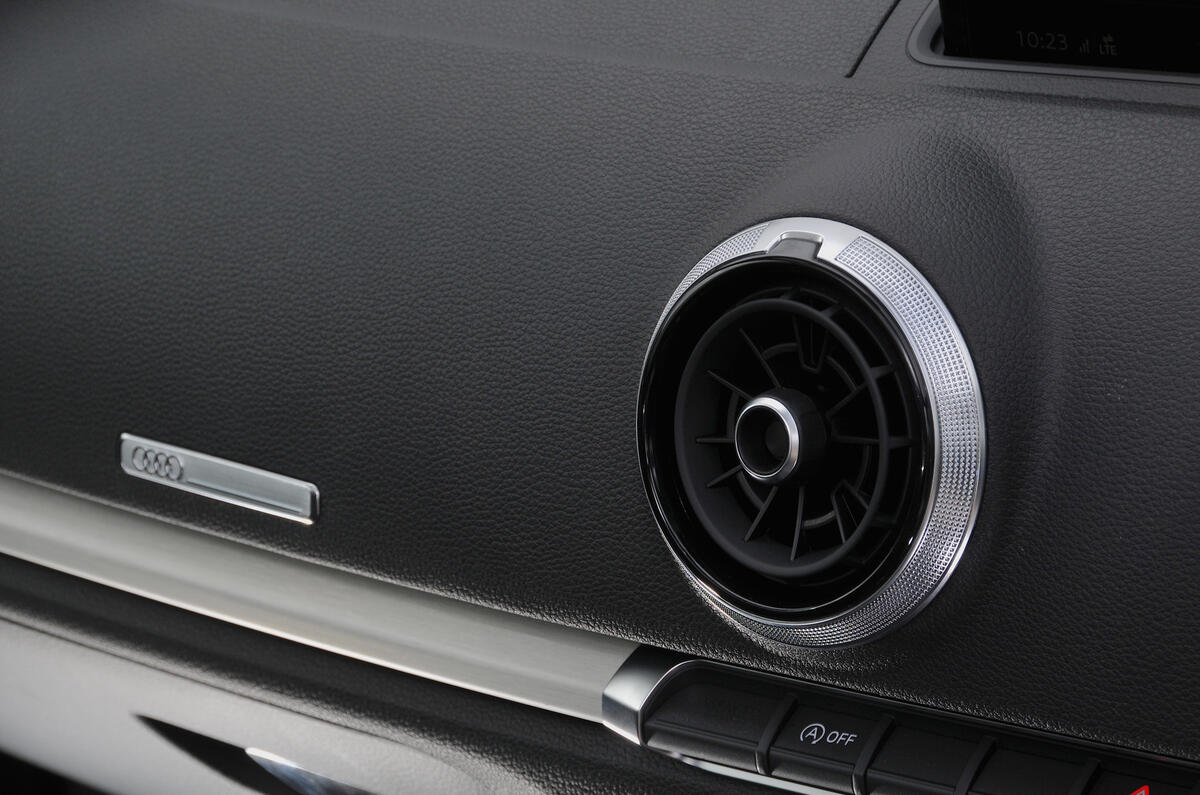
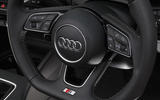
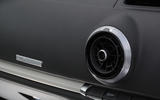
But it was the quality of the fittings and the way they had been put together that made the previous-gen A3 shine.
It all looked so effortless that it was tempting to think all those neat radii and millimetrically perfect panel fits just happened naturally rather than being the result of years of blood, sweat and euros.
When you pushed and prodded the soft fabrics and plastics, you soon realised that there was very little inside the A3 that merely looked the part.
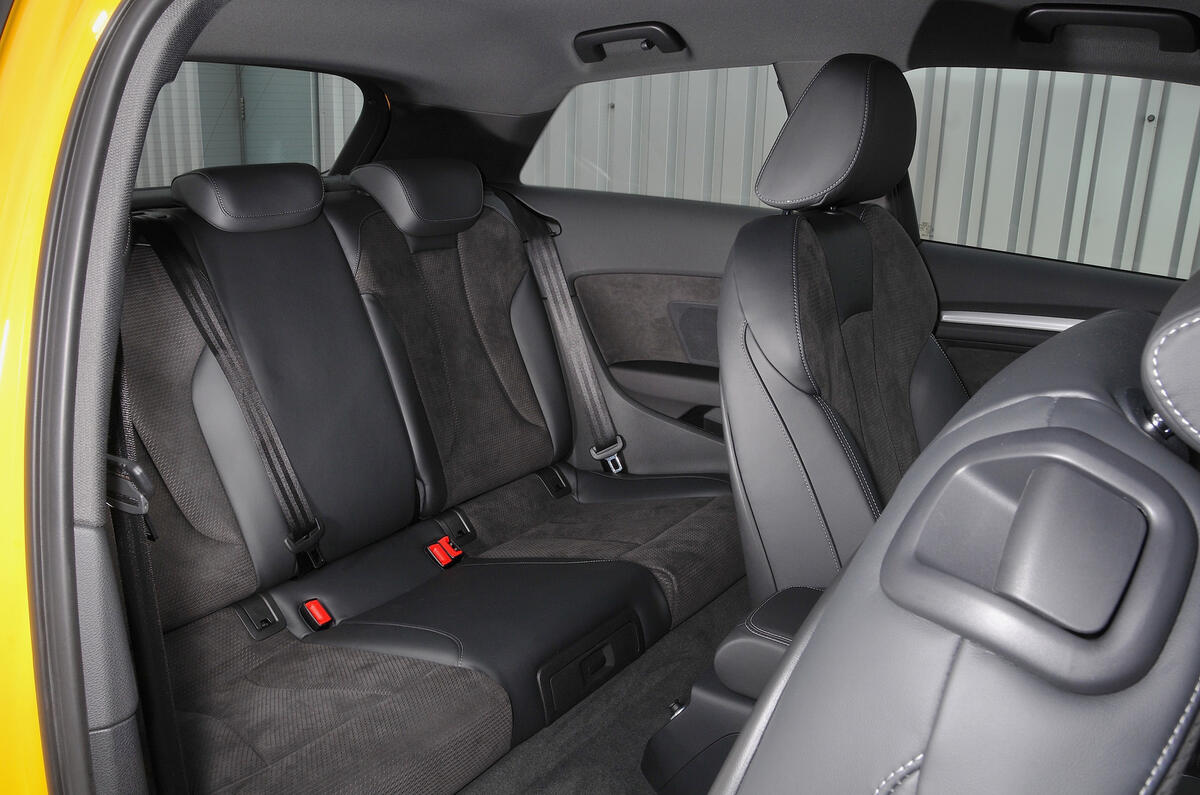
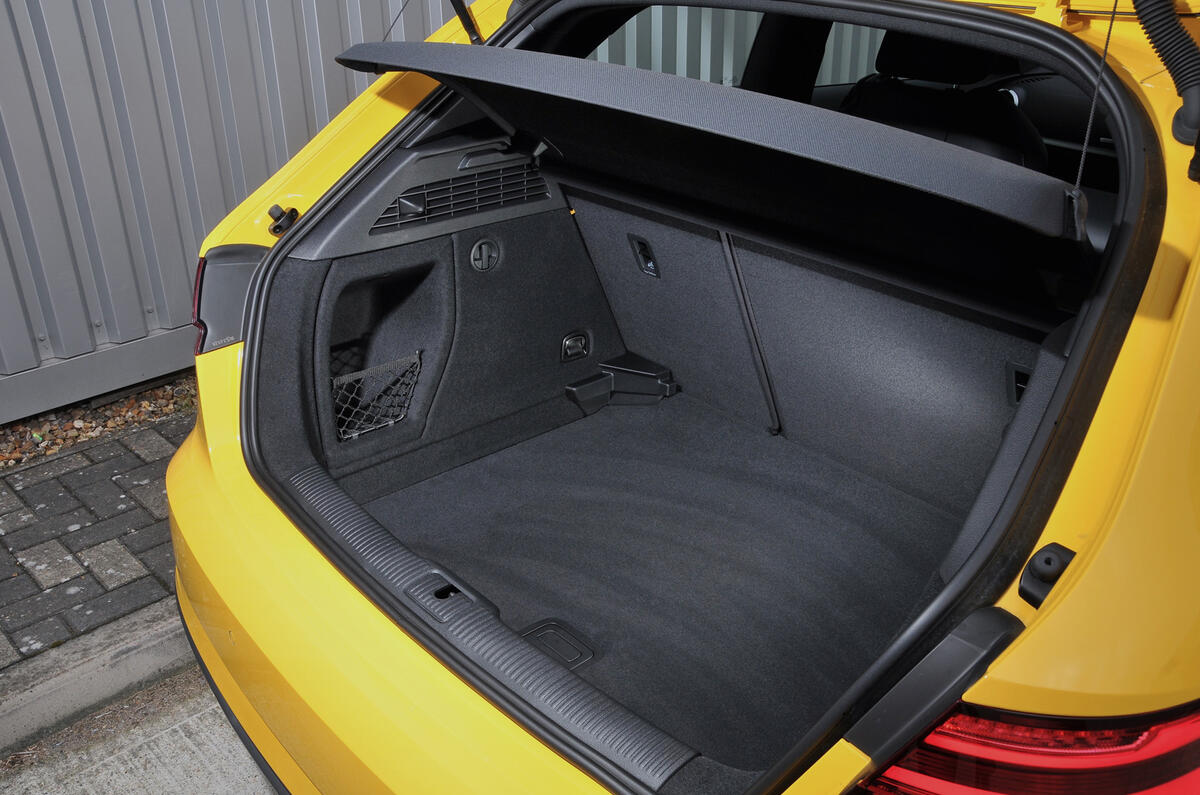
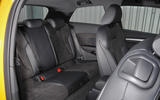
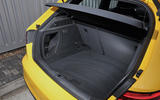
It was a spacious car too, at least in the front. Rear passengers were deliberately denied more than adequate leg room to provide owner/occupiers with the grounds to spend more on the longer-wheelbase A3 Sportback. The 365-litre boot was competitive in the class but no more.
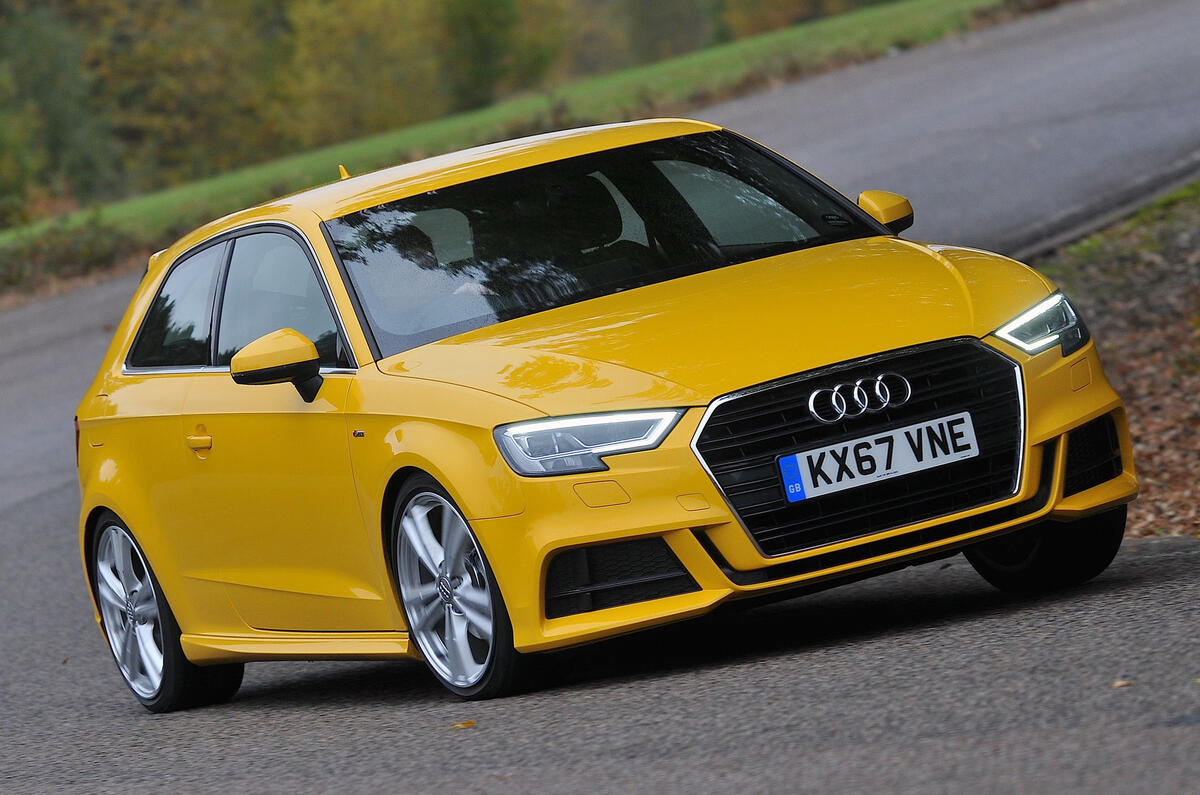
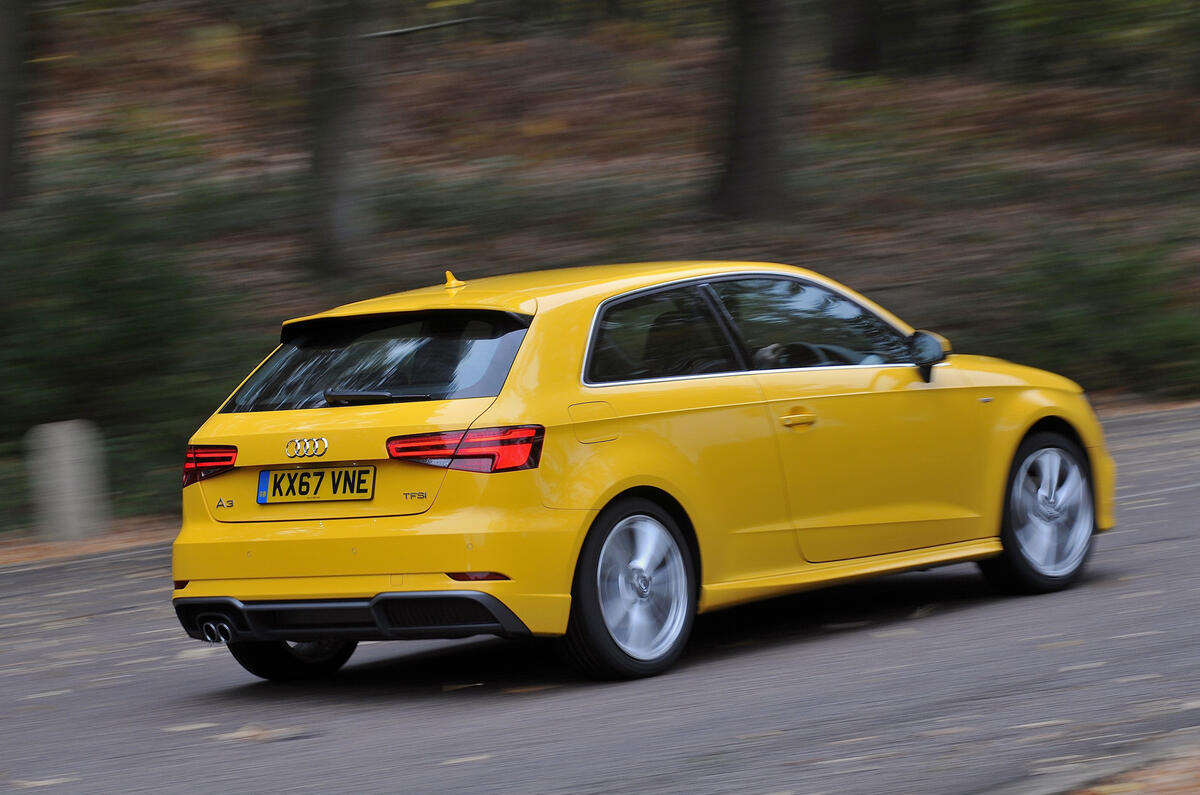
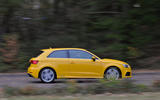
There were seven trim levels available with the three-door A3 - starting with the SE and going all the way up to the S3 Black Edition.
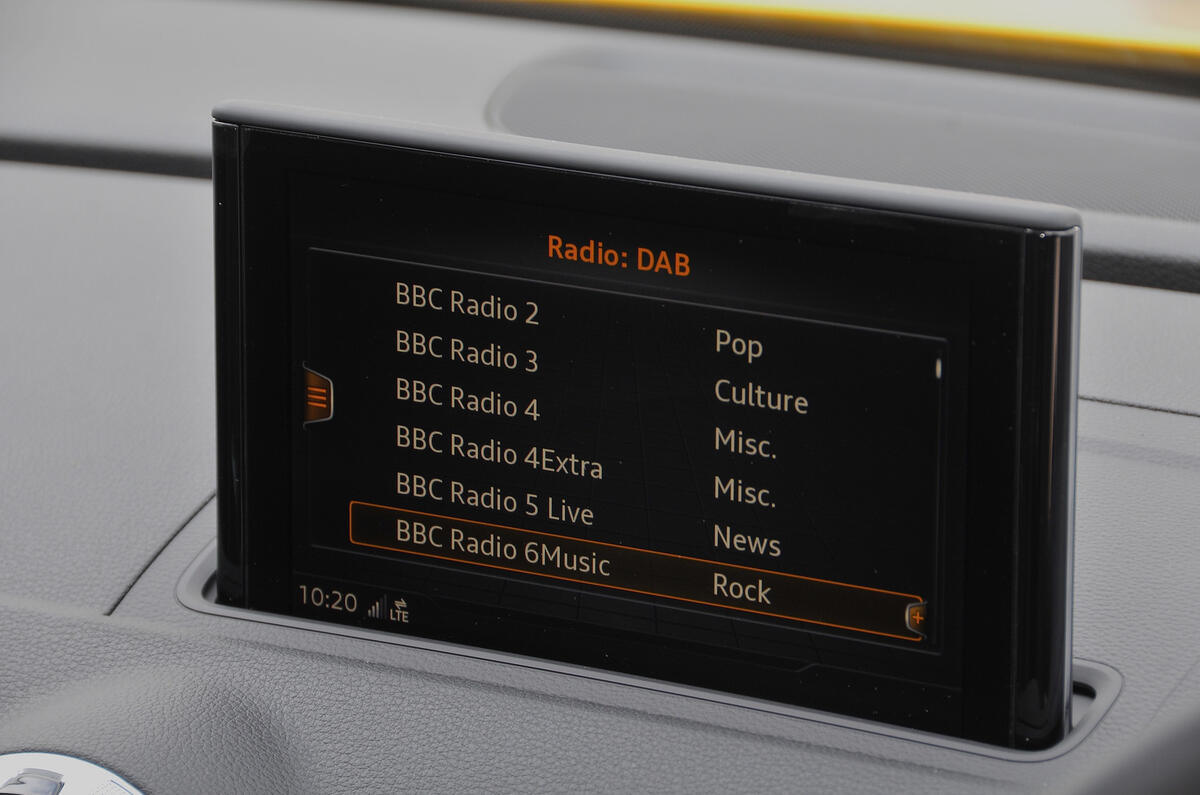
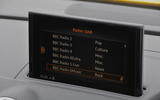
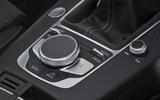
The entry-level SE A3 came with 16in alloys, xenon headlights, cruise control, rear parking sensors and auto lights and wipers fitted as standard on the outside. Inside, there was air conditioning, an auto-dimming rear-view mirror, and Audi's MMI infotainment system complete with a 7.0in display, DAB radio, Bluetooth and USB connectivity, and smartphone integration. Upgrading to the SE Technik trim added sat-nav and a three-month trial to Audi's online connected services.
The Sport trim, meanwhile, gained 17in alloys, dual-zone climate control, front sports seats and touches of aluminium, while S Line cars got LED headlights, a sporty bodykit, lowered and firmer suspension, ambient interior LED lighting, part-leather upholstery and 18in alloys. Topping the standard range was the Black Edition model, which got 18in alloys, an improved audio system and lots of gloss black exterior styling.
The 305bhp S3 had its own trim level, with all the equipment found on an S Line A3, plus sports suspension and steering, a quad-pipe exhaust system, an aggressively styled bodykit, and nappa leather-upholstered heated front seats included in the bundle.
Those wanting a little bit of exclusivity added to their S3 could opt for the Black Edition version, which included the stylish, five-arm turbine alloys, lots of gloss black exterior trim, rear tinted windows and a Bang & Olufsen audio system.