
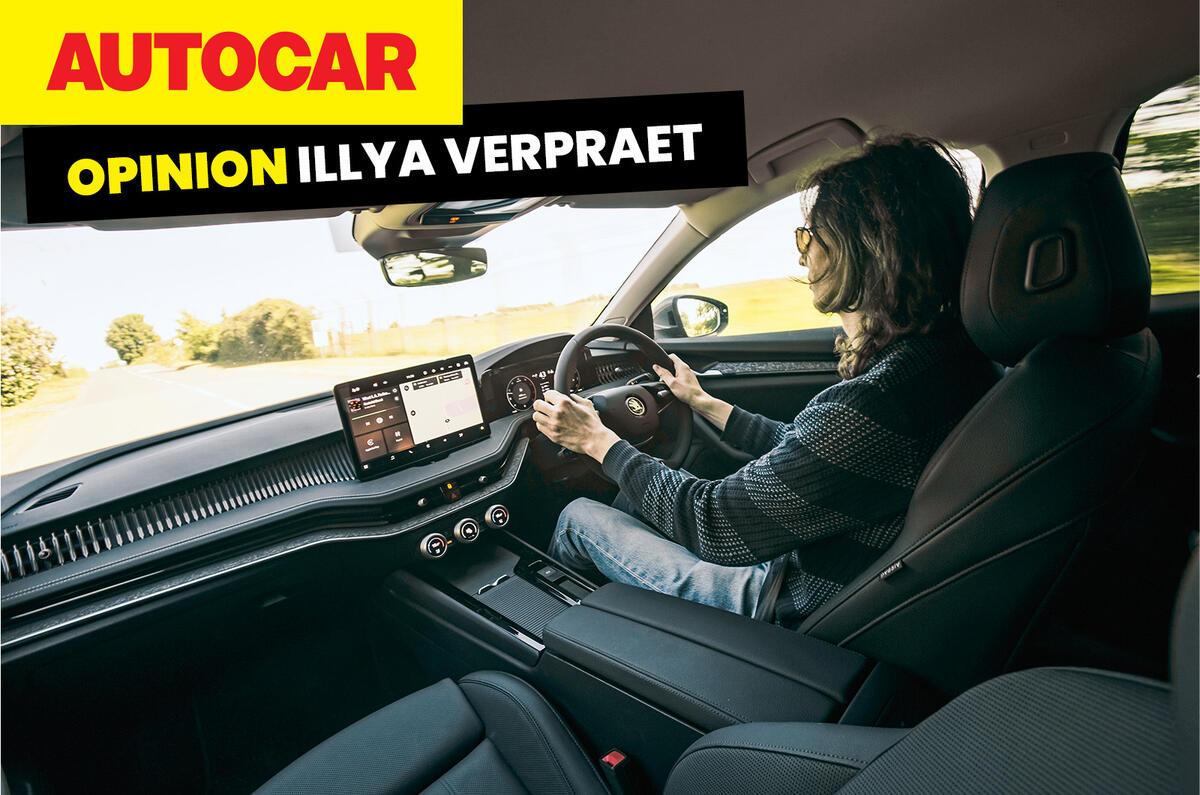

Modern car steering is a very complex dance between shafts and cogs, software, suspension geometry and flexing tyres.
But you would hope that operating it should be simple, as subconscious as breathing: turn the wheel clockwise to go right, turn it twice as much to turn twice as sharply.
Same with the accelerator pedal. Particularly with electric motors having a flat torque curve in most everyday speed ranges, you might expect that putting the pedal to the floor gives you full power and holding it at half its travel gives you half the available power.
Not always: in the Hyundai Inster that I drove a while back, three-quarters throttle equated to full power, according to the on-screen graphic. Which begs the question, what the remaining 25% of travel is for? Moral support during a particularly ambitious overtaking manoeuvre?
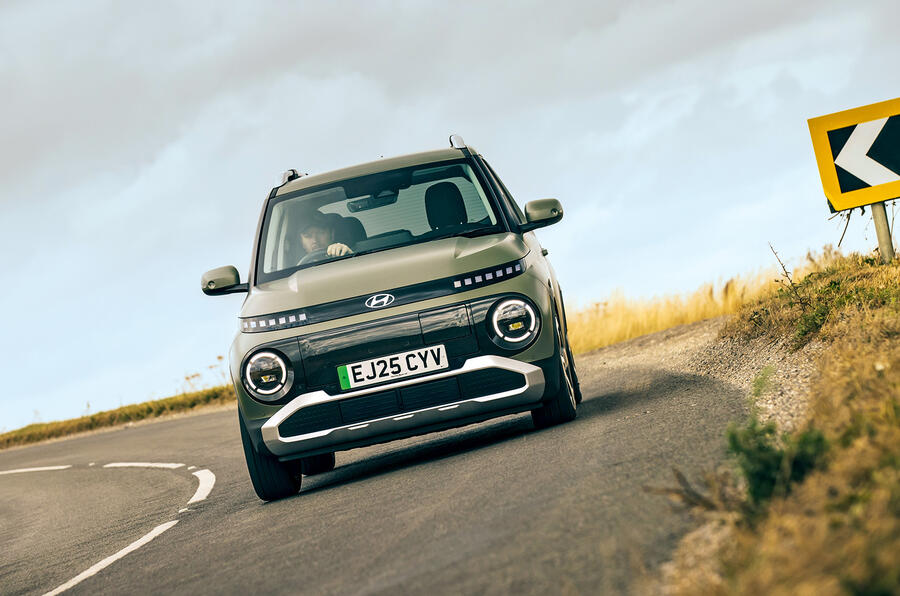
The Inster (which I found a charming thing otherwise) is far from the only offender. Sport, let alone Sport Plus mode (or similar) for the powertrain of any given car, whether electric or combustion-engined, is generally to be avoided, because it tends to map 80% of the power onto the first third of the pedal travel.
Presumably this is done to make the car feel faster than it is initially, at least. Given how many manufacturers are guilty of such tricks, there must be some research somewhere that says customers love it.
Heck, even the Ferrari 12Cilindri gets jumpier as you dial up the spicier modes. Wanting a rear-driven, 819bhp, 0-62-mph-in-2.9 sec car to feel faster than it is seems psychopathic to me, but there we go.
I try to drive smoothly even when I'm alone in the car. It's so refreshing to drive an old BMW M car or a current Ford Mustang and find a loooong-travel accelerator that is 100% functional. I've never driven a TVR, but I'm told they effectively used long throttle pedals as DIY traction control, which may be taking things in a slightly sinister direction.
Where accelerator linearity is sometimes a setting in a menu that the driver can adjust, steering tends to be baked in, and it's remarkable how many ordinary cars have excessively darty steering off-centre. Renaults are particularly bad for this. The 5, Scenic and Megane all have steering that isn't unusually quick overall 2.5 turns or so between locks but makes flowing smoothly down a B-road needlessly difficult.






Join the debate
Add your comment
great piece! i've been noticing this trend more and more myself. the last few cars i've driven have so many warning chimes and automated interventions that it almost feels like the car doesn't trust me to actually drive. the lane departure warnings, the blind spot monitoring, the automatic emergency braking - they're all great in theory, but when they start fighting each other or going off at the slightest thing, it becomes exhausting. i test drove a new suv last month and literally couldn't adjust my mirrors without triggering three different alerts. it's gotten to the point where i find myself missing the simpler cars from 15-20 years ago. there's something to be said for just getting in and driving without being babysat by a touchscreen. that said, i do appreciate the safety benefits for less experienced drivers. but there has to be a middle ground - surely manufacturers could make these systems more subtle or at least give drivers easier ways to customize them. the "sensitiveness" issue really does detract from the driving experience. reminds me of when i was looking at getting one of those scritchy scratchy noise makers for my old project car - sometimes the simplest solutions are the best. would love to see car companies dial things back a notch and trust drivers a bit more.
There seems to be an assumption that the lock-to-lock number of turns of a wheel gives you a direct comparison from one car to another.
However, this assumes that all cars achieve the same final angle of turn of the wheels, which I doubt to be the case. Different sized wheel packages and the proximity of structural members can make quite a difference to max allowable wheel rotation.
So two turns lock-to-lock on one car may be actually quite different gearing to that on another
Modern cars really are too sensitive with all the beeping. It's ironic that I find more peace playing simple browser games like Cookie Clicker 2 (cookieclicker2.top) or just messing around in Hytale concepts than actually driving my 'smart' car sometimes.