

A new wave of car crime has hit the UK, with owners of high-end cars being told to take additional security measures.
New data from the Metropolitan Police shows that thieves are using re-programmed keys to gain entry to cars from manufacturers such as Land Rover and BMW.
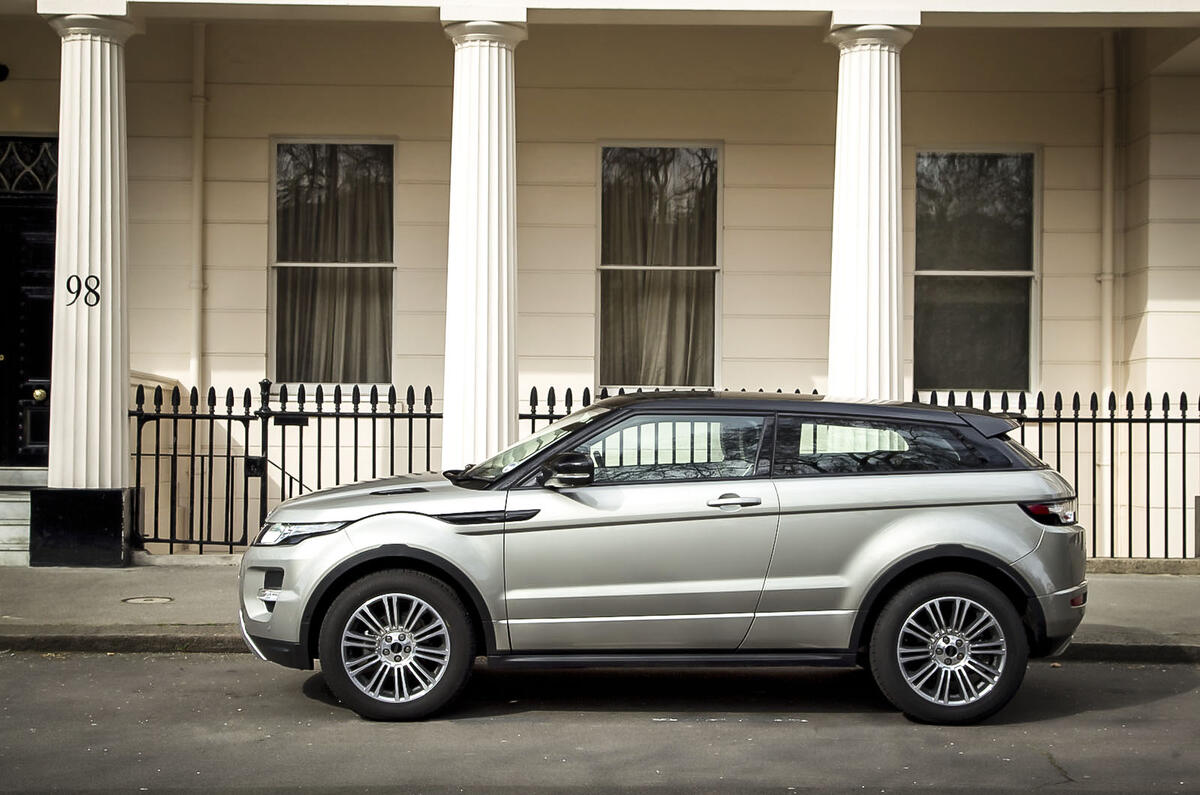
Figures reported by The Guardian newspaper reveal that almost 300 Range Rover Evoques and Range Rover Sports were stolen between January and July of this year, as well as 63 BMW X5 and 3-series models.
Thieves are understood to be targeting these vehicles both because of their popularity in Europe and because of their keyless ignition systems, which can be ‘hacked’ by using a re-programmed key to gain access to the car.
Specialist insurer Alan & Thomas, which deals with high-end vehicles, says the ongoing spate of car crime is being fuelled by demand from eastern Europe.
Head of high net worth insurance at the company Matt Warner said: “There’s a big market out there for high-end vehicles. Generally when we see high-value vehicles going missing they are making their way over to eastern Europe and potentially down into Africa, too.
“We had a case recently where a Range Rover was stolen and picked up on the Hungarian border. That was still in one piece and was likely stolen to order. It’s probably the only occasion where we’ve recovered a vehicle within Europe.”
So why are so few vehicles recovered from Europe once they’re stolen? Warner says it’s down to the car’s tracking systems. “Generally most vehicles will have a tracking system fitted,” he says. “Once the tracking company is notified the police can zero in fairly quickly. However, once a couple of hours have passed thieves have usually located and removed the tracking device. That’s why we usually don’t pick those cars up once they’ve left the UK.”
Making the recovery of stolen vehicles even harder is the fact that most will have been broken up for parts before they’ve even left the UK. “The cars are being taken by organised criminal gangs,” said a spokesman for Thatcham Research. “They’re rapidly shipped out of the country and broken up for parts.”
The problem is understood to be particularly rife in the UK because buyers here option their cars to a much higher specification than elsewhere. Trim levels such as BMW’s M Sport and Audi’s S-line are coveted in eastern Europe, but the small market for such options there means prices can be high. Such parts can easily be retrofitted to base-spec cars.
The problem isn’t a new one. In 2012 the flaws of keyless entry systems, and the relative ease of bypassing them, were well known by manufacturers. One example, detailed in this video, shows a BMW 1-series M Coupé being taken from an owner’s driveway within two minutes – and all while the keys to the car were inside the owner’s house.
A spokesman from the Society of Motor Manufacturers and Traders (SMMT) said: “This is the latest way to steal cars. Each time manufacturers develop a new way to make cars more secure, criminals will find ways to break it. It’s a constant circle.”
Making keyless entry systems particularly vulnerable is the fact that manufacturers are forced by European law to make their software upgrades, and the tools needed to access their car’s on-board diagnostic systems, available to the wider automotive industry.



Add your comment
Could not believe it.
Everyone concerned knew it wasn't coming back, even the insurance paid out within 18 days of it happening.
So it's not just high end cars that are being taken.
Recently
The real blame for this problem
No blaming