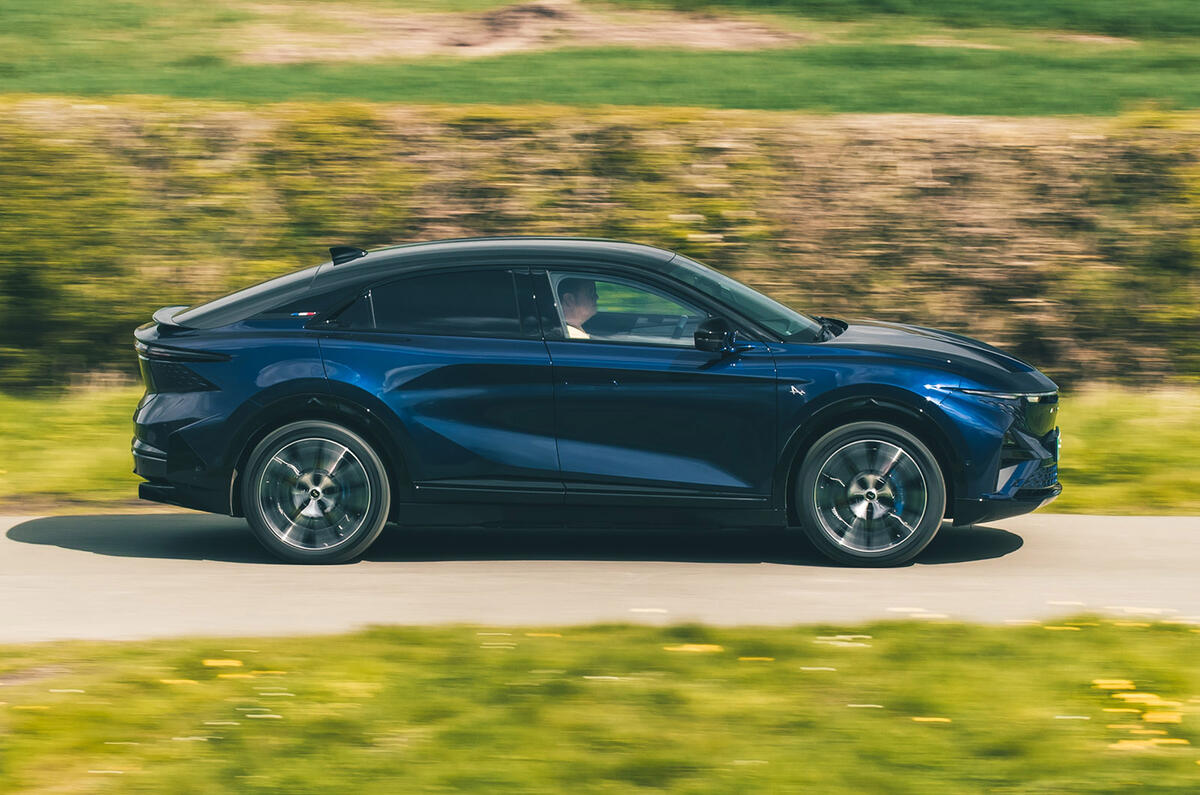
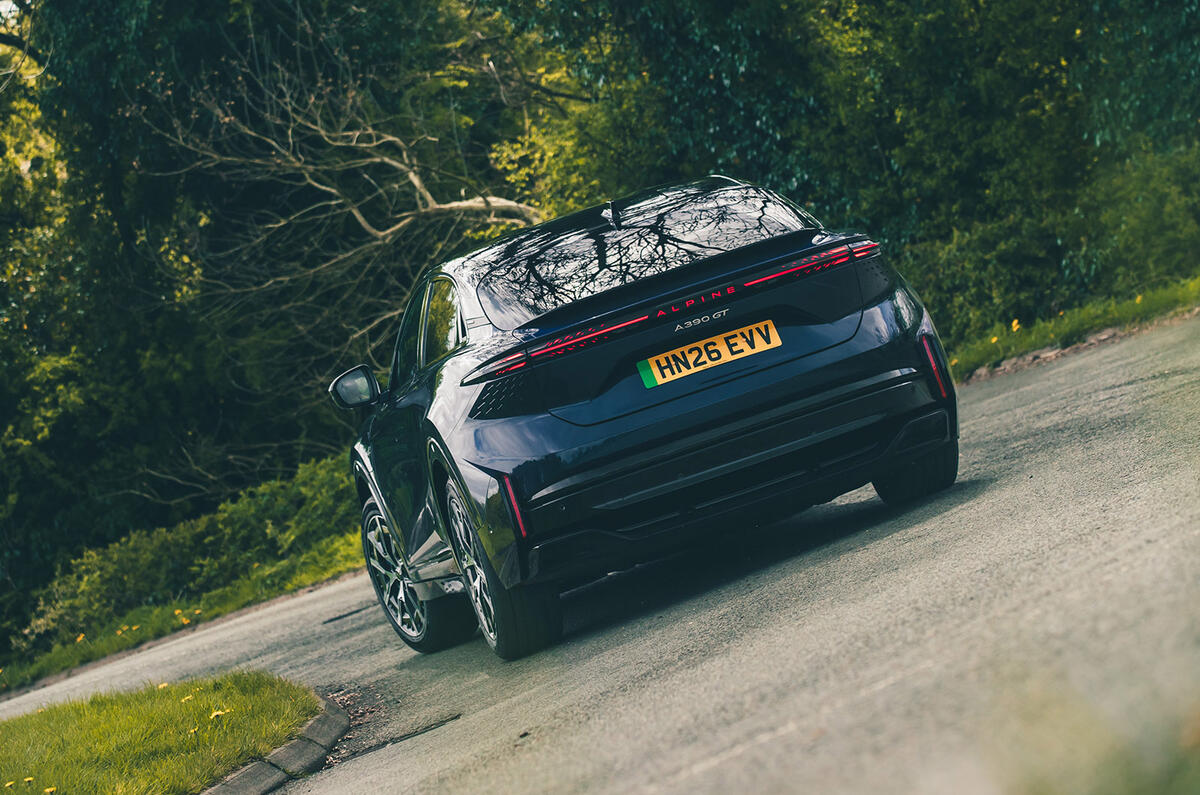
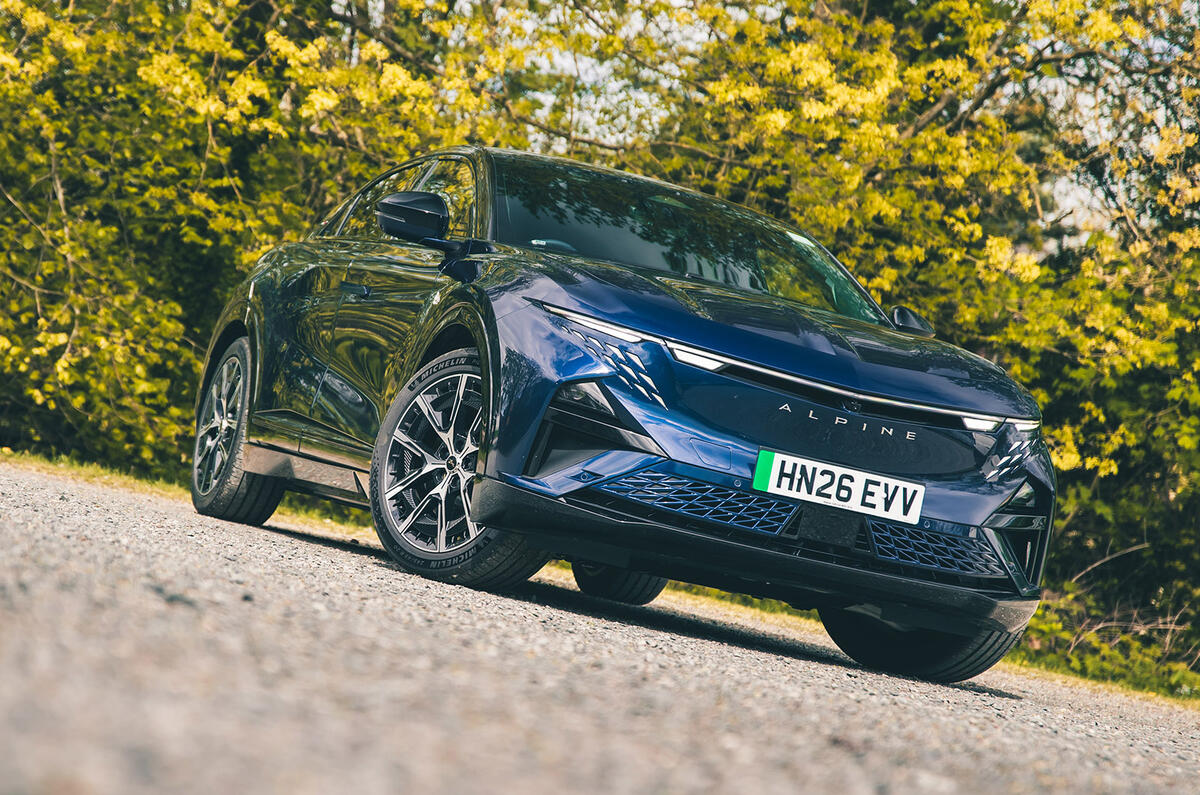
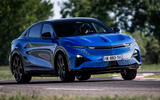
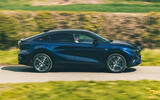
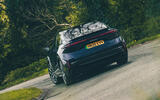
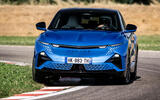
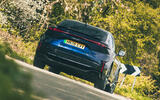
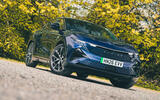
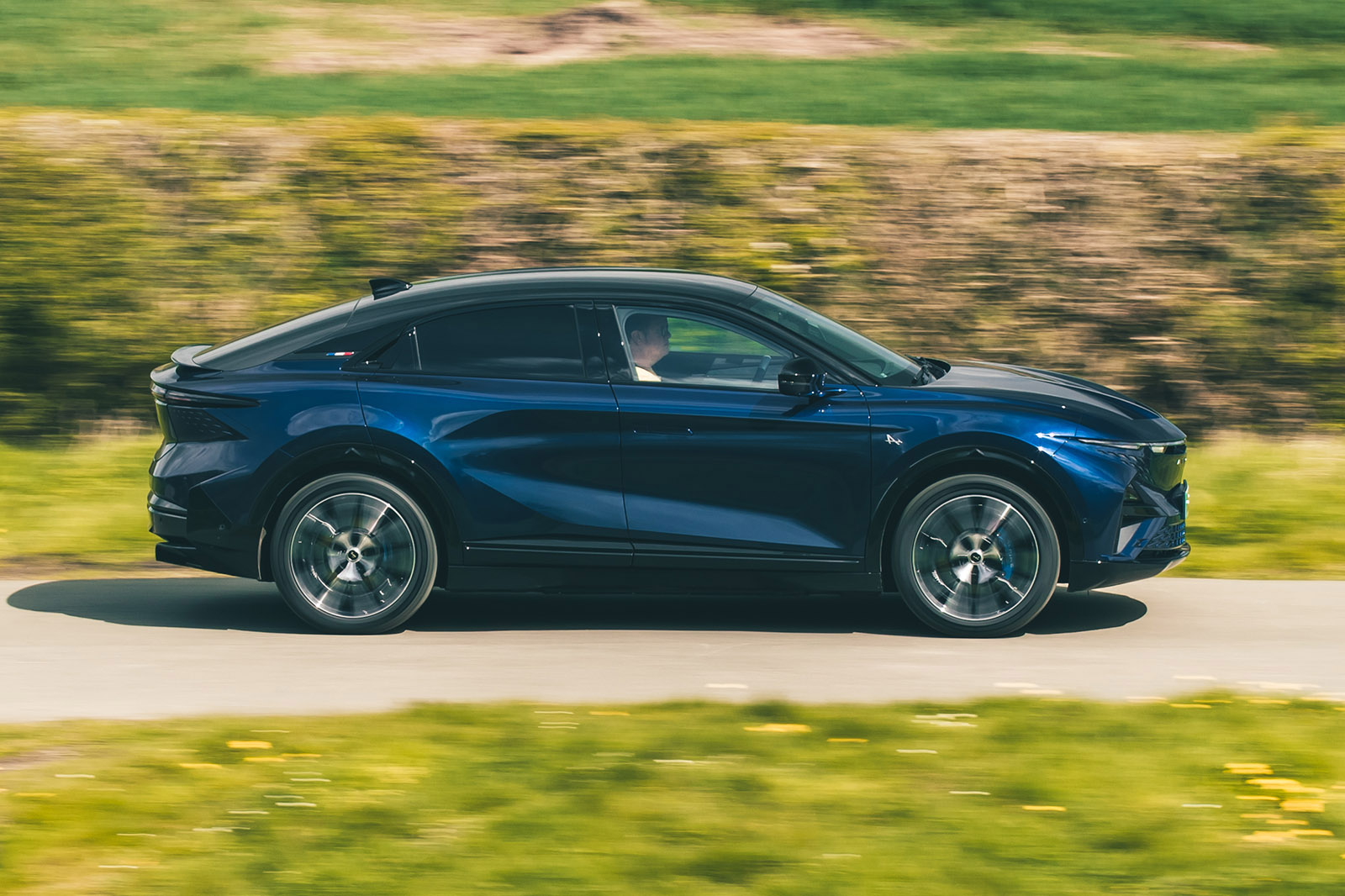
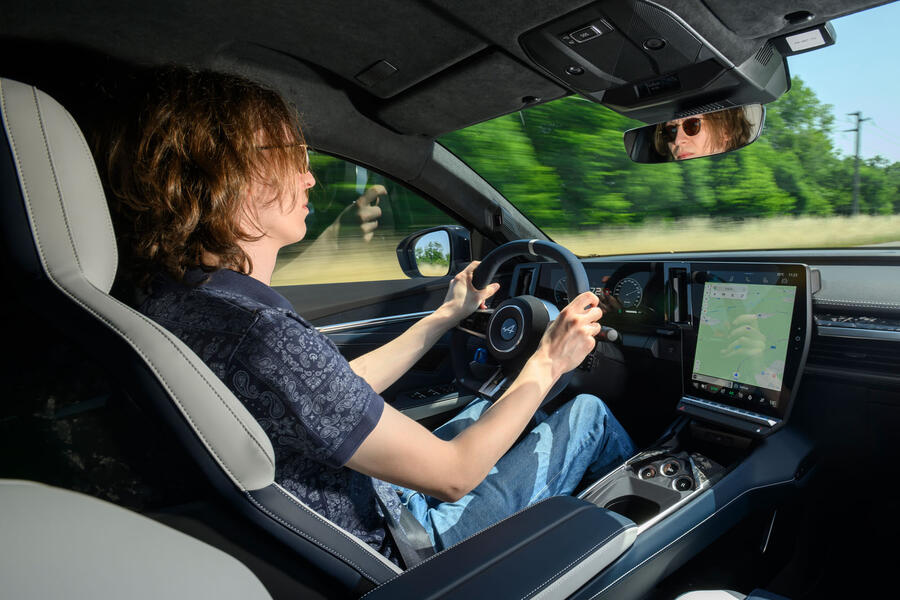
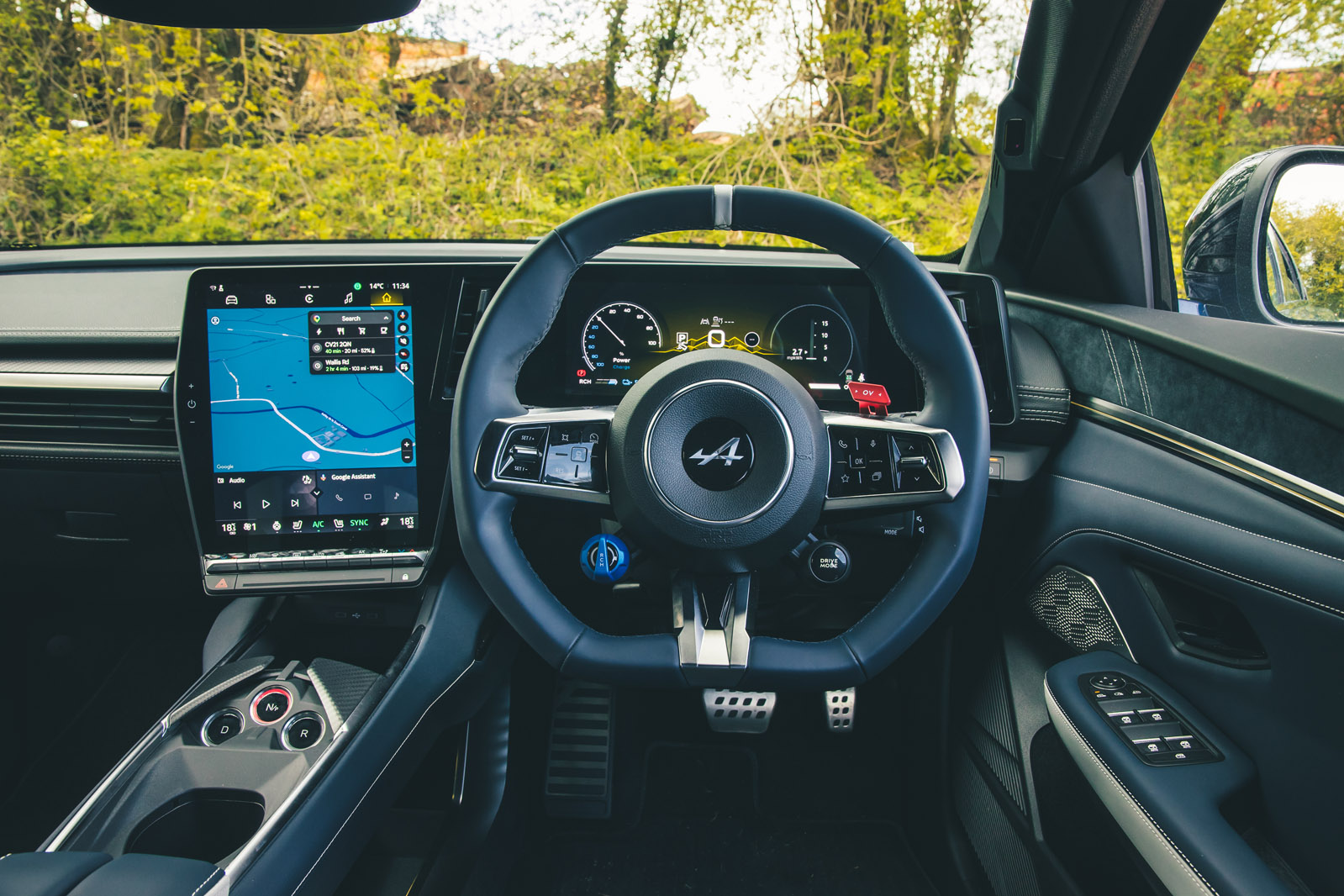
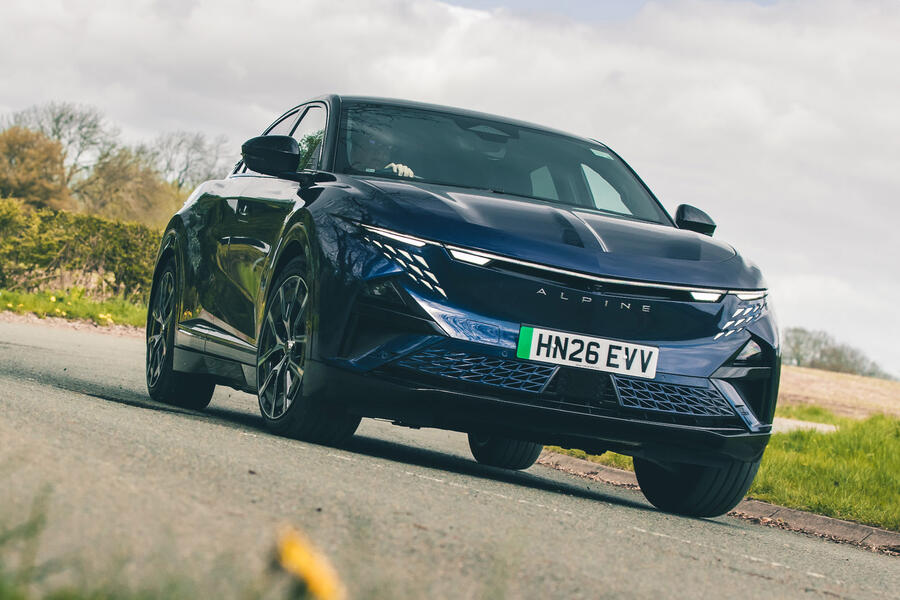
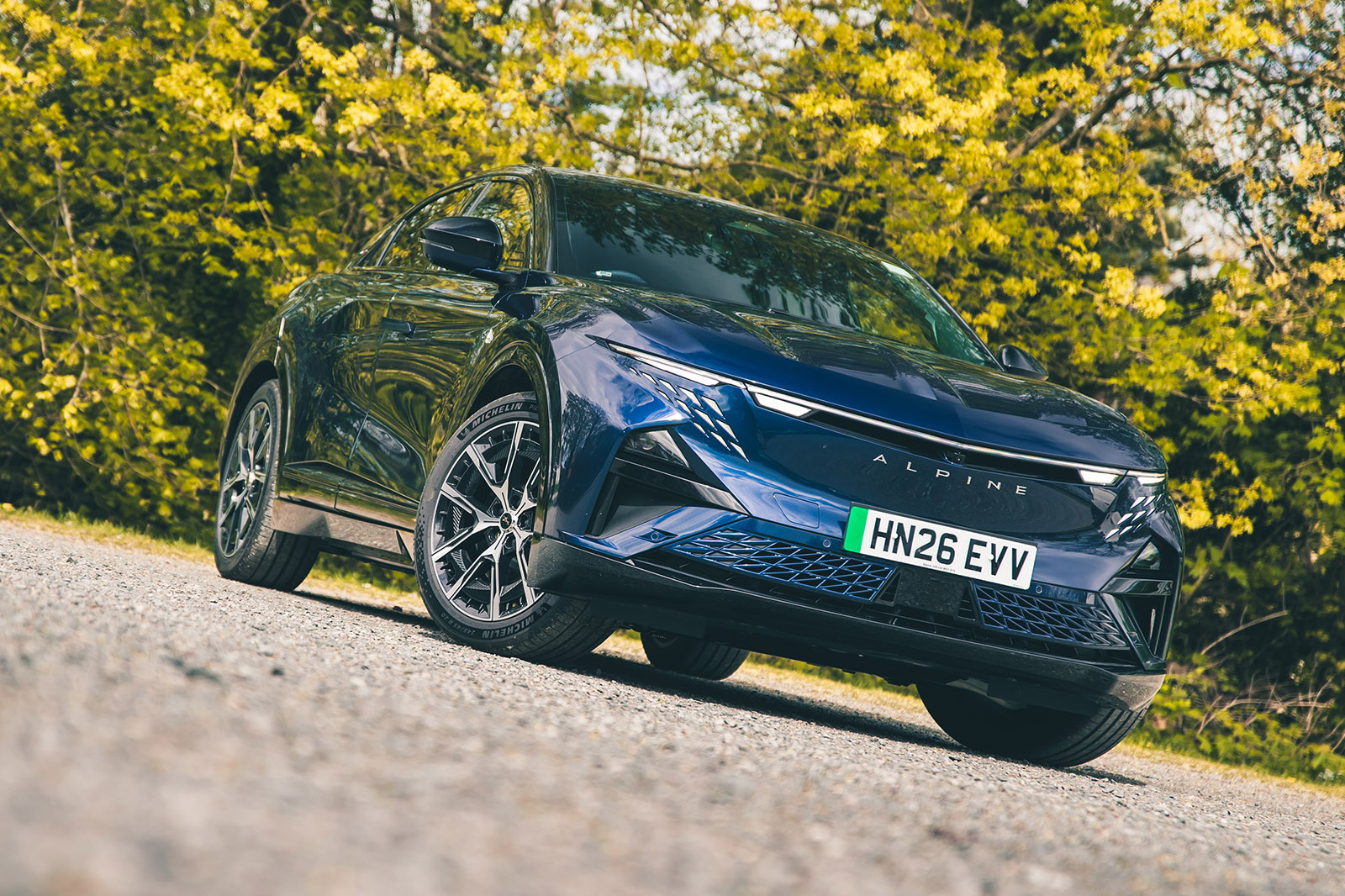
But there’s simply too much mass to keep tabs on here, and too much vertical and lateral recalcitrance about the body control, to ever let the car’s bulk seem to breathe easy over its wheels at a brisk pace, as a great Alpine’s should.
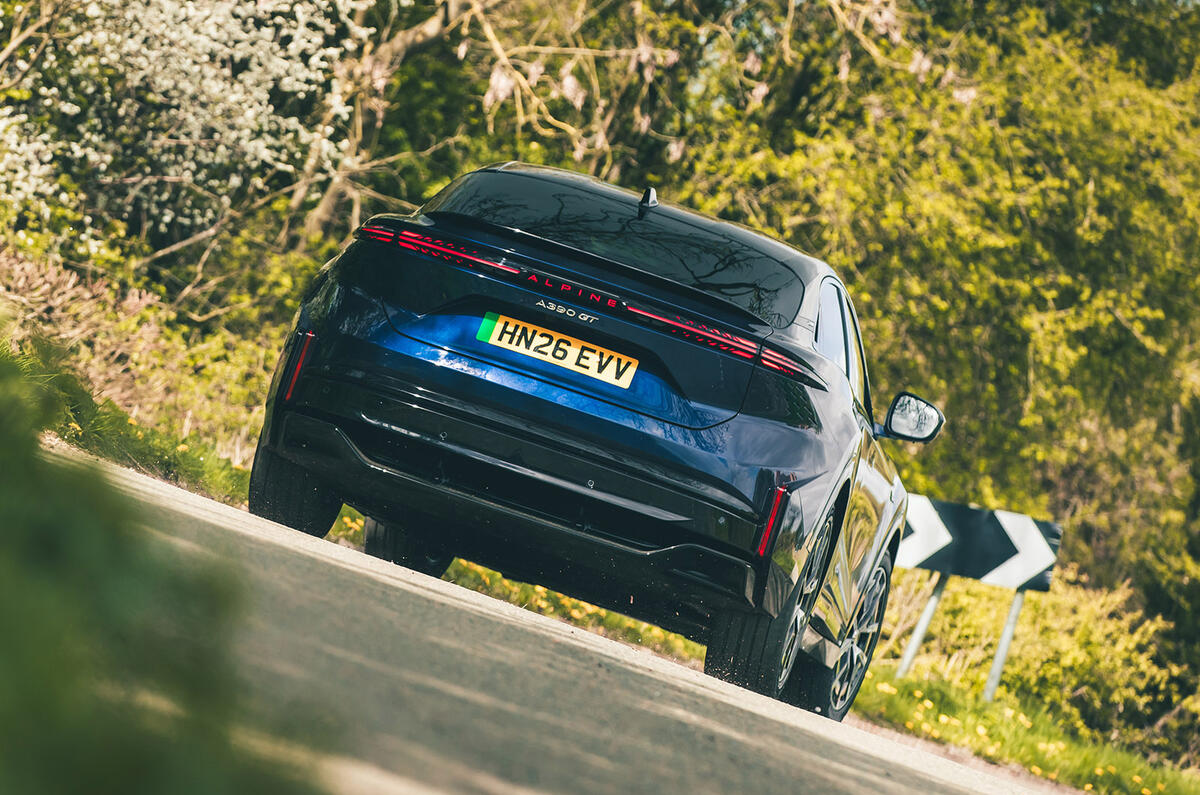
A fairly fast-paced steering system and a wheelbase that’s quite short by class standards promise agility through tighter bends, and the A390 certainly commits to those bends with a some enthusiasm.
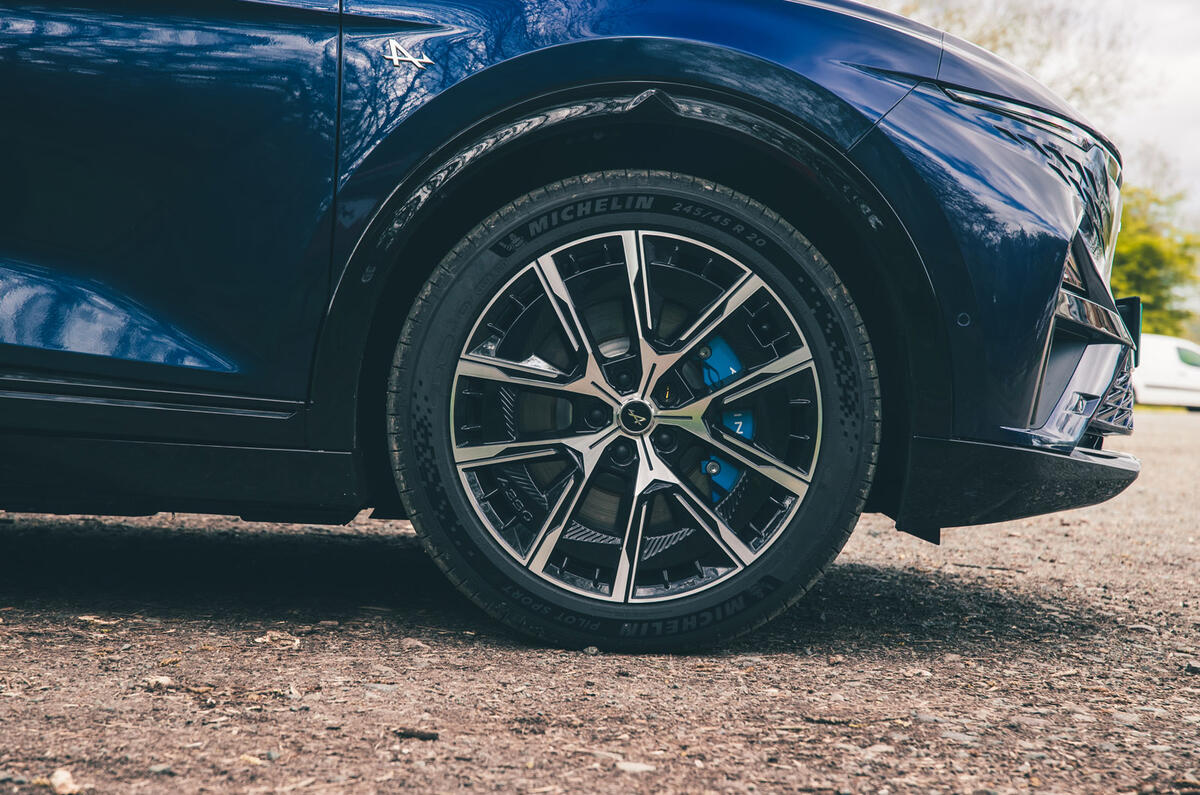
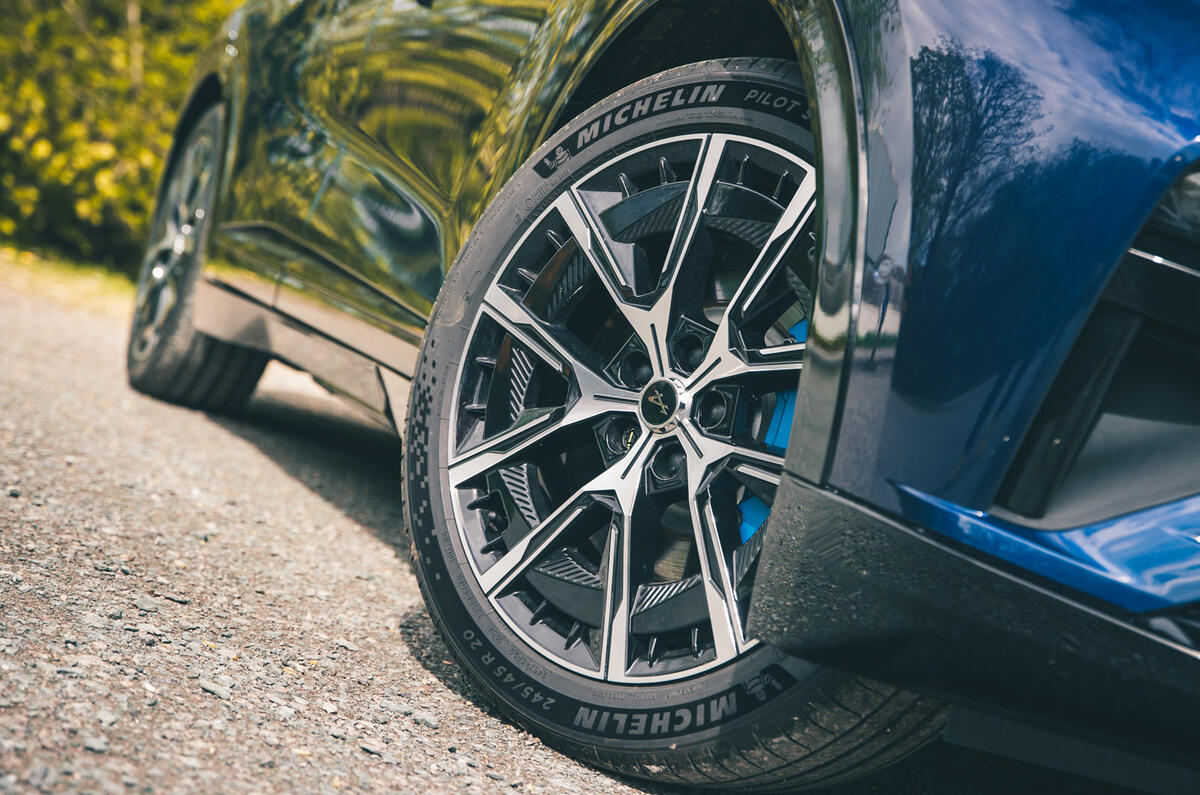
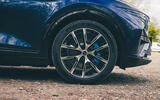
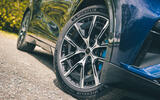
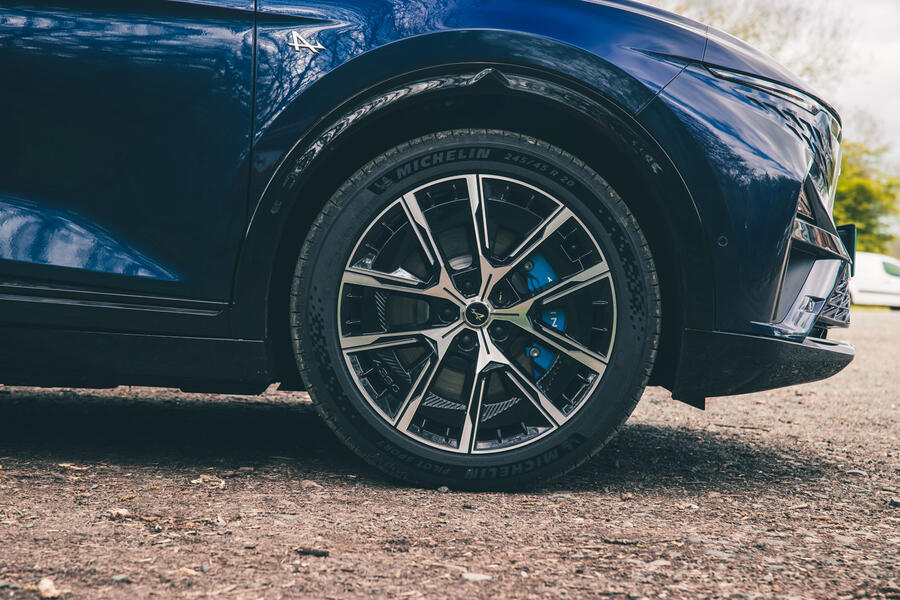
There’s plenty of grip and turn-in response, regardless of which tyre option you select. However, the steering is very light, with a glassy sub-limit feel and rather nervous around the straight-ahead. Some testers enjoyed this eagerness, others found it simply too twitchy. In this respect, we preferred the 21in Pilot Sport 4S tyre option, which adds some welcome meat to the steering and makes it easier to place the car accurately.
Regardless of tyre option, from the turn-in phase onwards, the A390’s underlying chassis balance seems to be quite dull, and its torque vectoring seems to have limited capacity to really make it rotate through the apex under power
Track notes - 3 stars
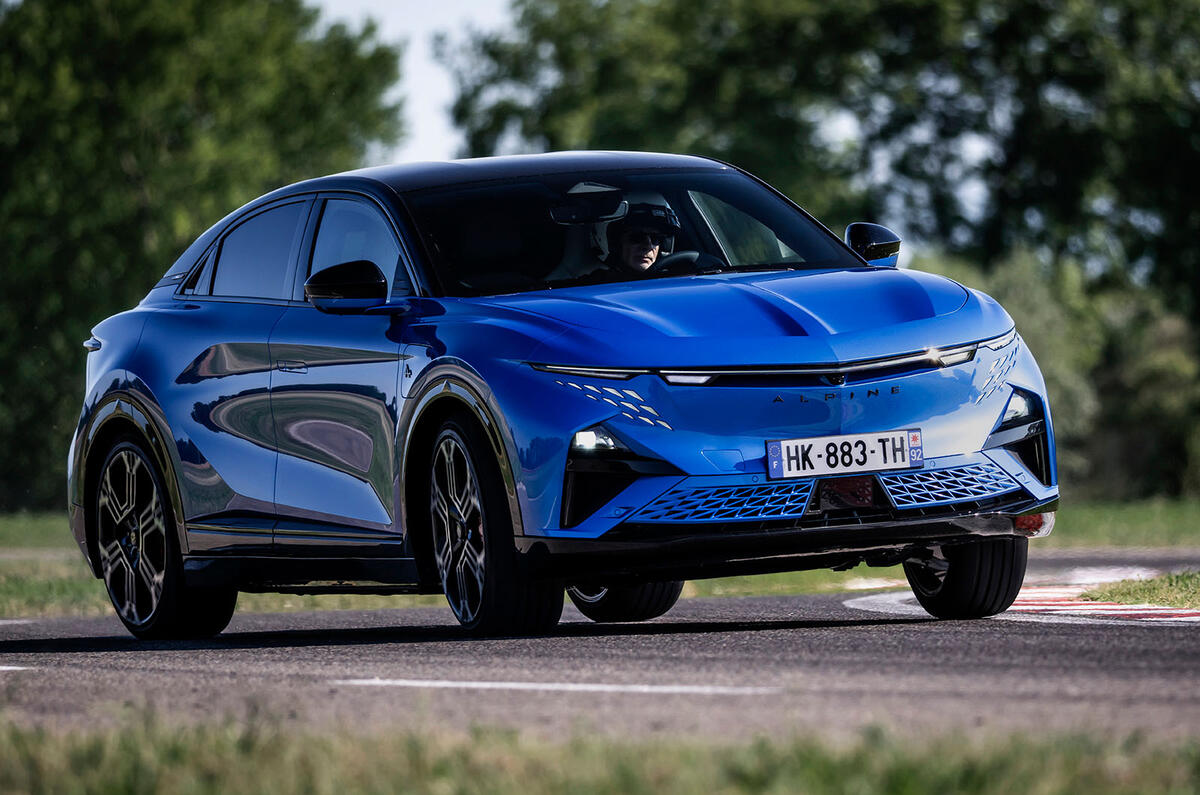
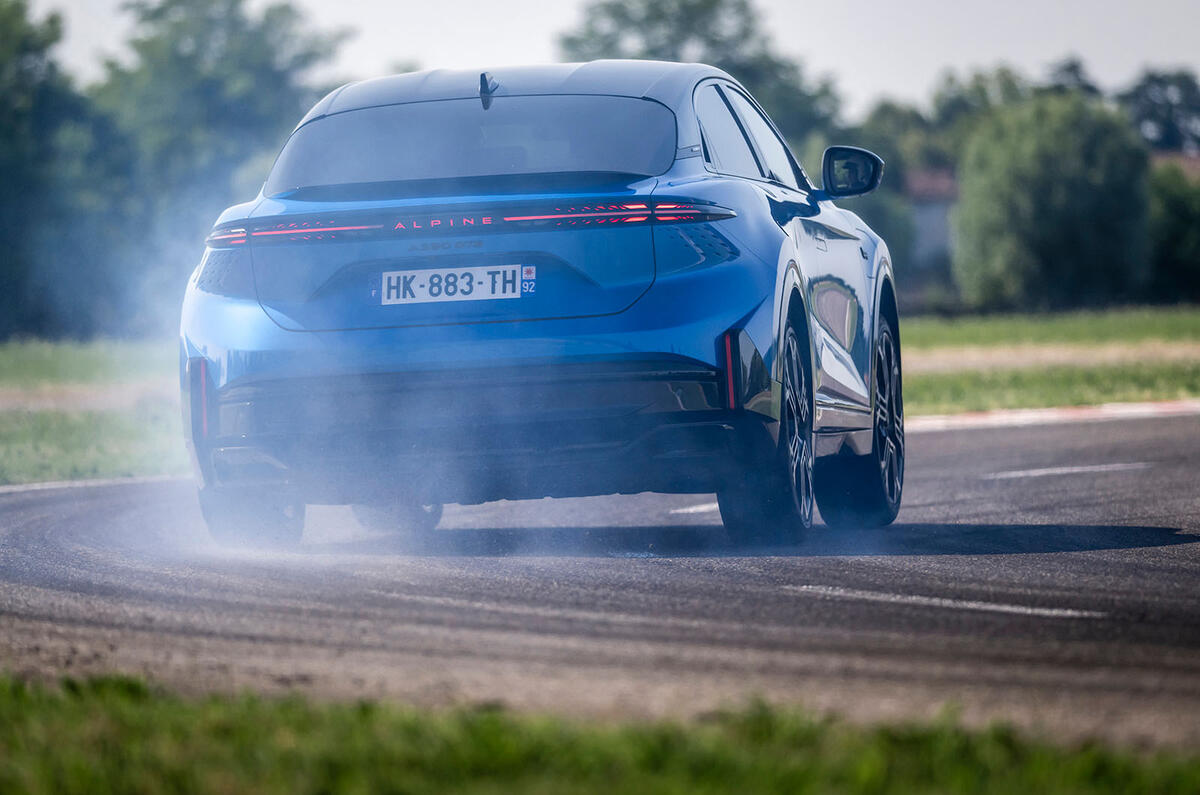
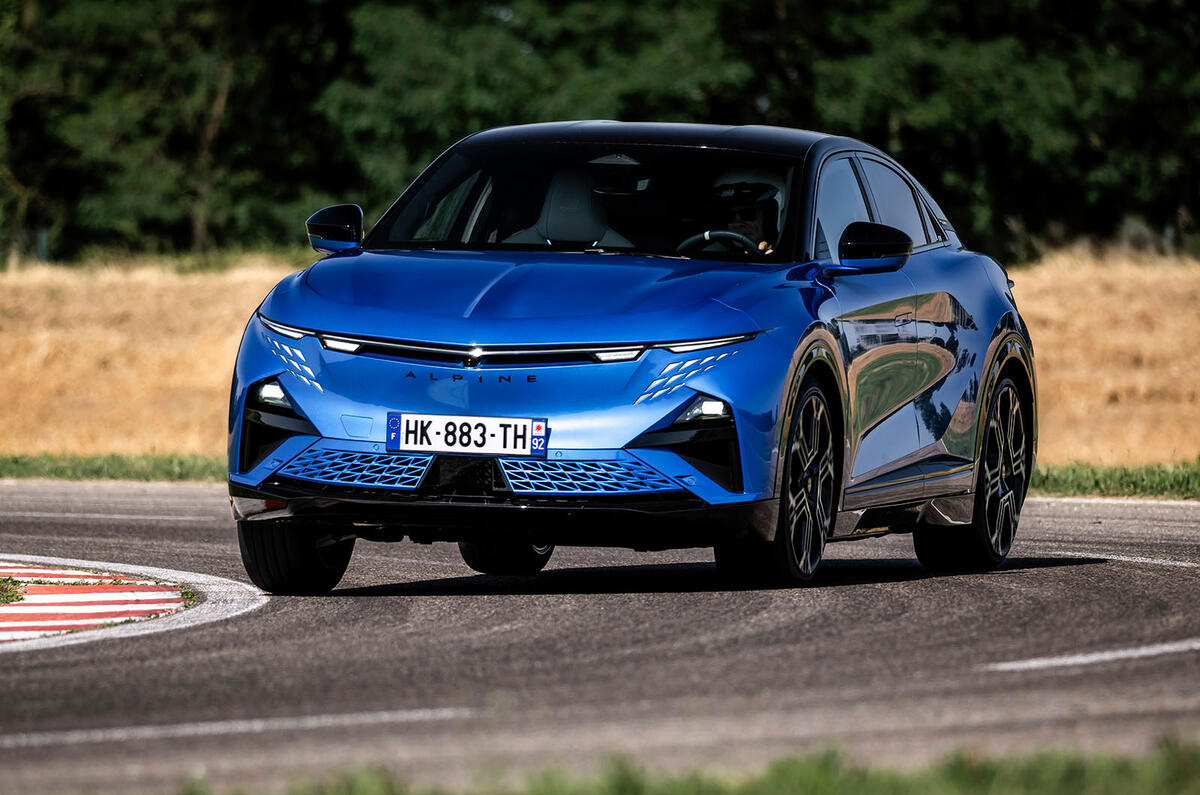
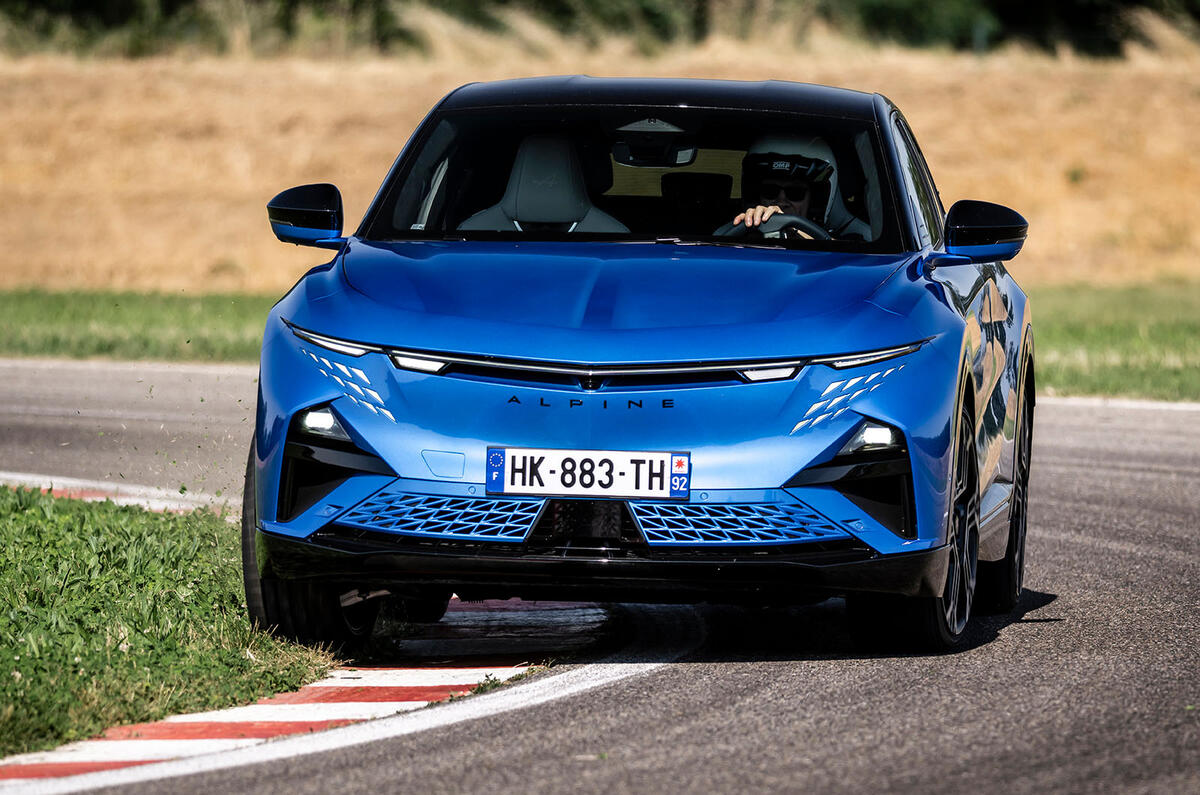
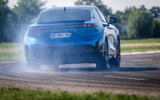
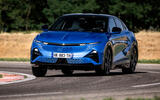
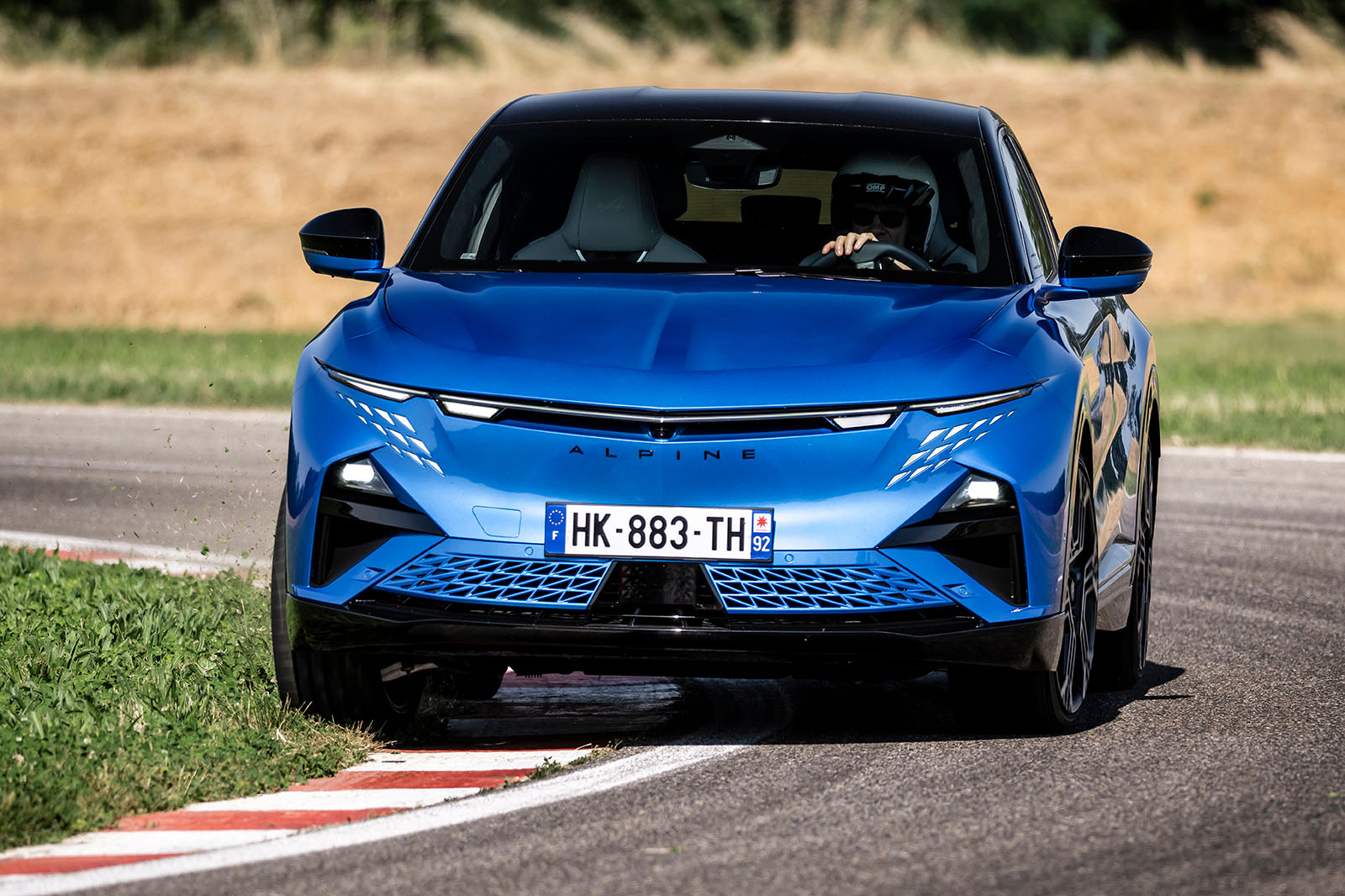
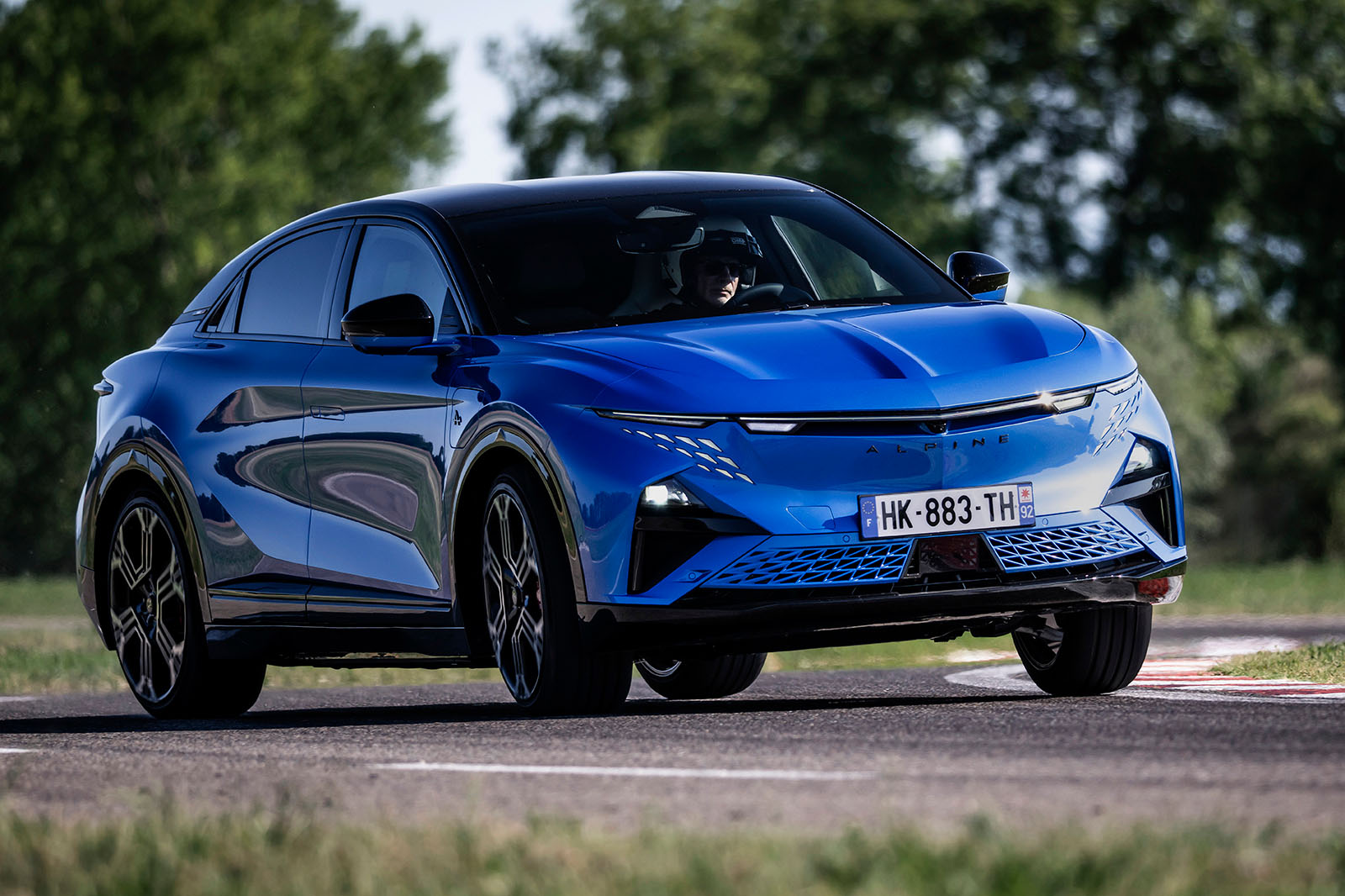
It was with some interest that we took to the handling circuits in the A390 – first Horiba MIRA’s in the GT, then the Circuito di Vairano in the GTS, expecting a showing comparable with – possibly even better than – that of Hyundai’s mould-breaking Ioniq 5 N. The car fell some way short of those expectations, however.
Outright body control isn’t the problem: the A390 controls roll and pitch consistently well. Michelin Pilot Sport tyres give it plenty of lateral grip and don’t seem to be prone to overheating, taking track treatment well. While the soft, long-travel brake pedal feel isn’t the stuff of a keen driver’s waking dreams, the brakes themselves resist fade well and have enough power.
Once into the corner, however, the A390 demands a very particular driving style, one which, contrary to the promises of sophisticated torque vectoring, is reminiscent more of old-school 4WD cars than modern fully-variable systems.
On a track, because the cornering loads are much higher than on the road, the steering starts to communicate better. Because there’s more space, and no oncoming traffic, it’s easier to play with weight transfer. The A390 responds very well to trailbraking, which you can use to set up the car going into a corner and neutral-steer through on the power.
However, as soon as you apply any opposite lock, the car’s brain interprets this as wanting to come out of a slide and it shifts power away from the outside rear wheel and to the front motor, pulling you out. This means that, as a driver, you don’t just have to account for physics, but also the car’s whims, which is a world away from the natural and intuitive A110.
Alpine’s engineers say that all of this is deliberate: it’s not set up for sideways hooliganism, but to feel lighter than it is, and be stable and subtly agile even on uneven and slippery surfaces. Which is admirable, but in the absence of an exciting engine, the option of a bit of sideways hooliganism does add involvement. The genius of the Ioniq 5N is that you can turn it on and off.