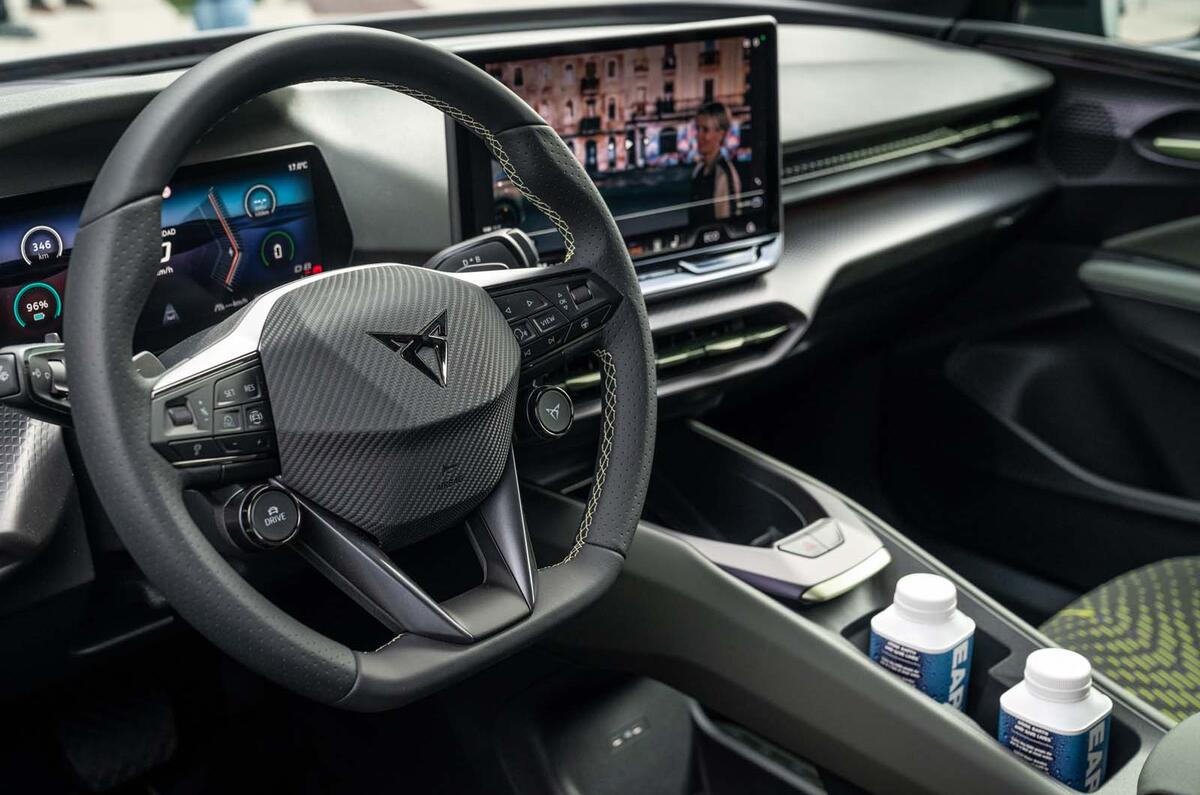
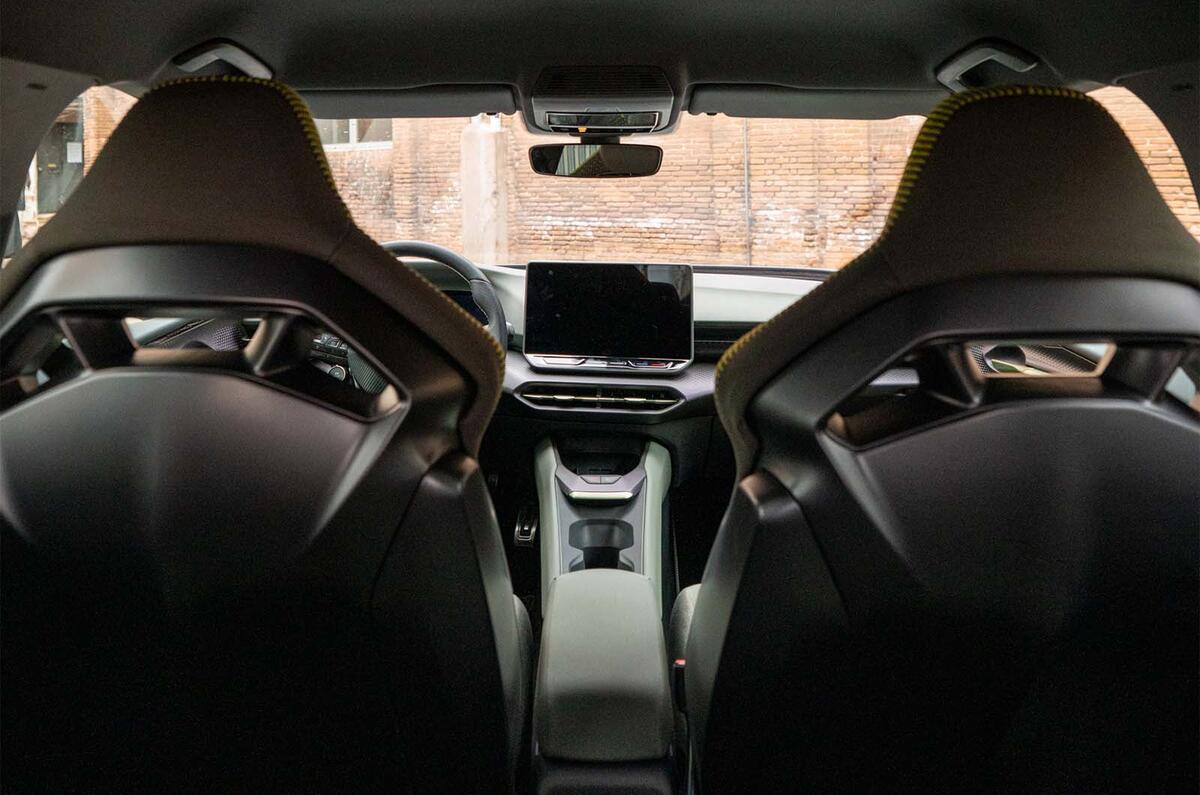
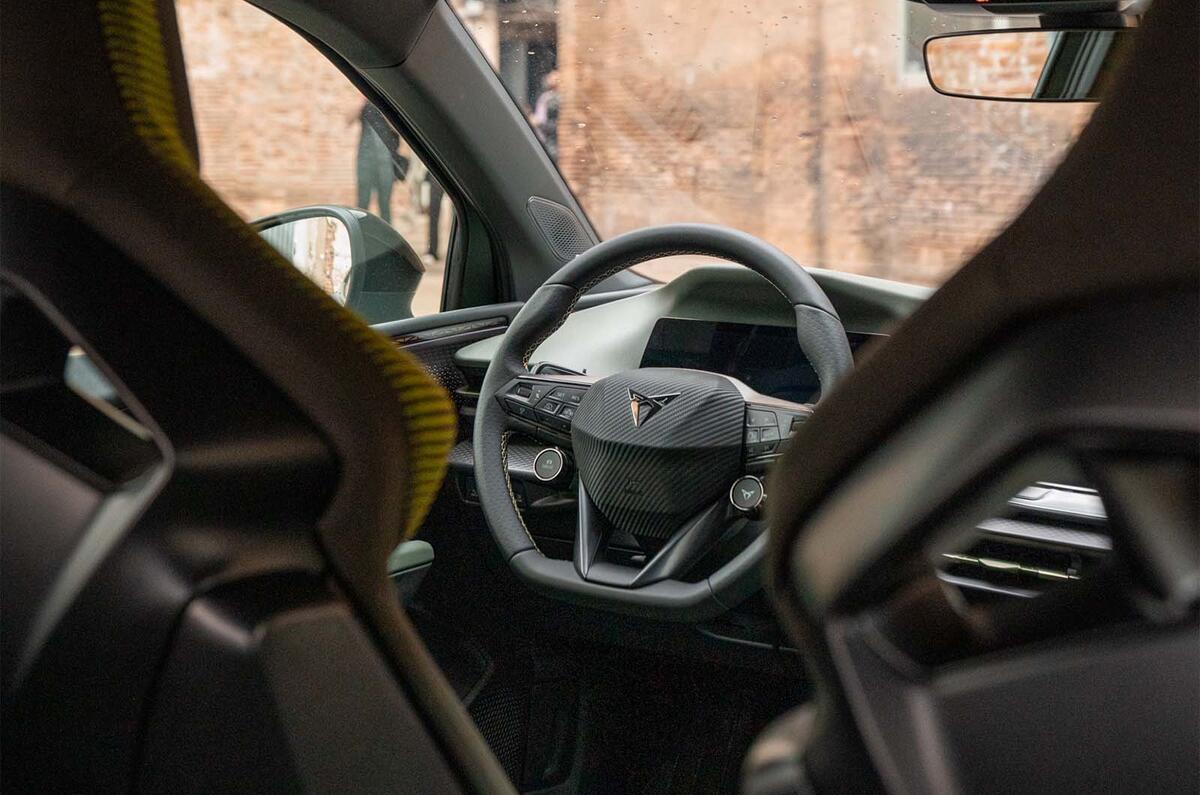
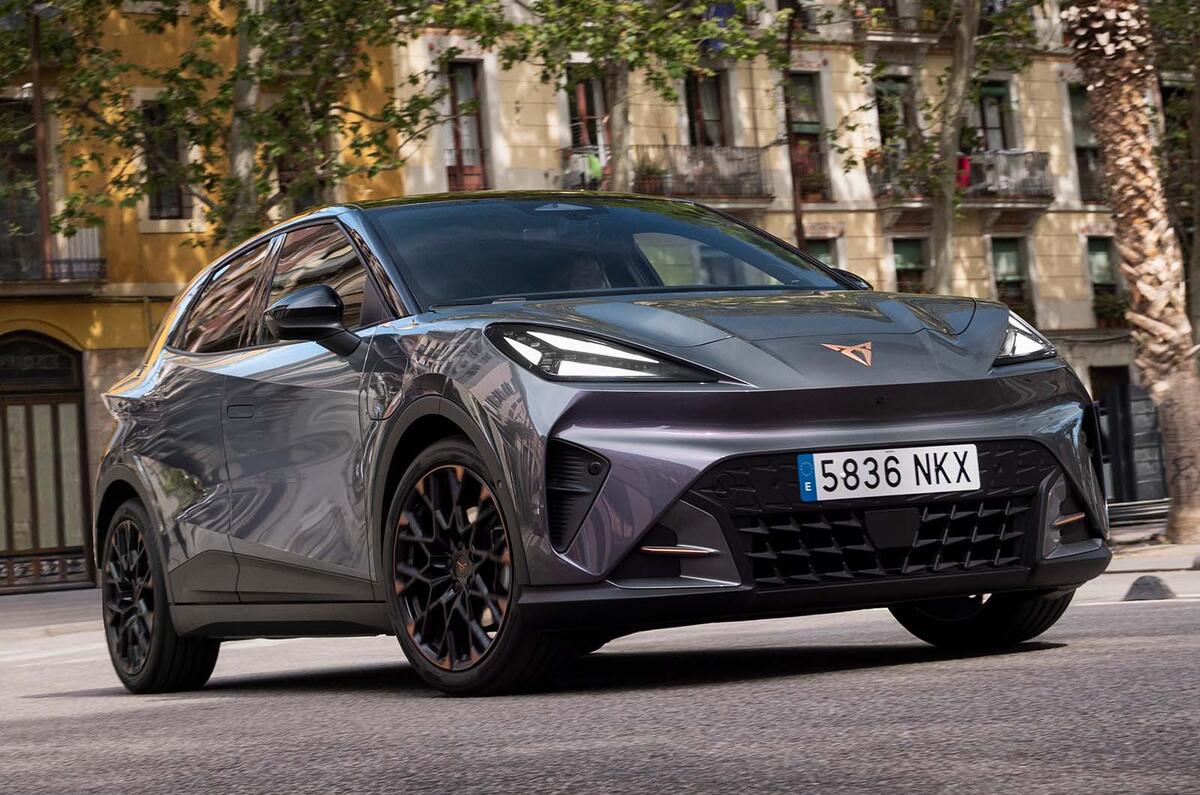
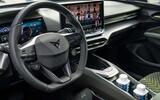
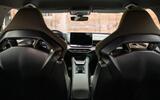
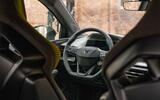
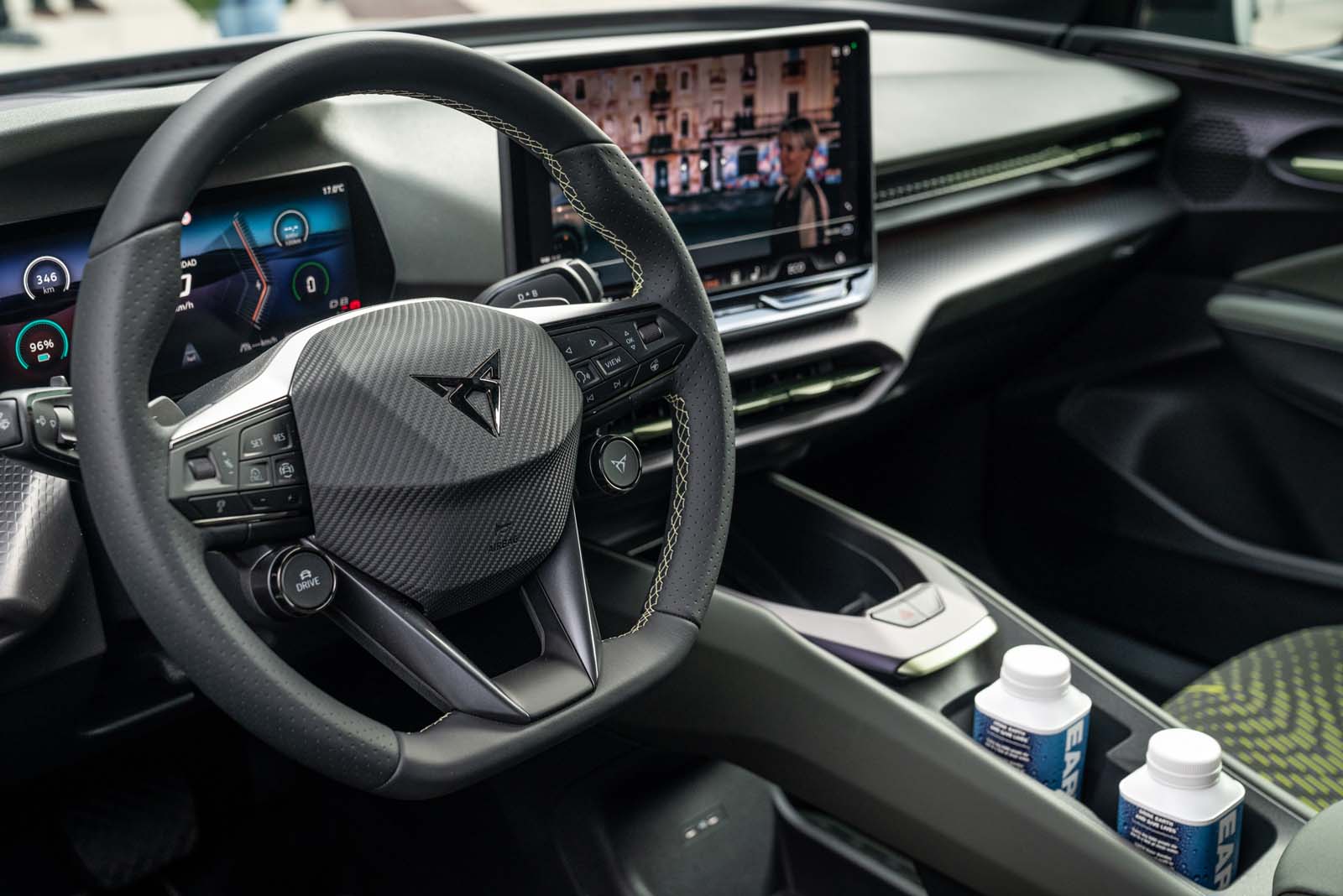
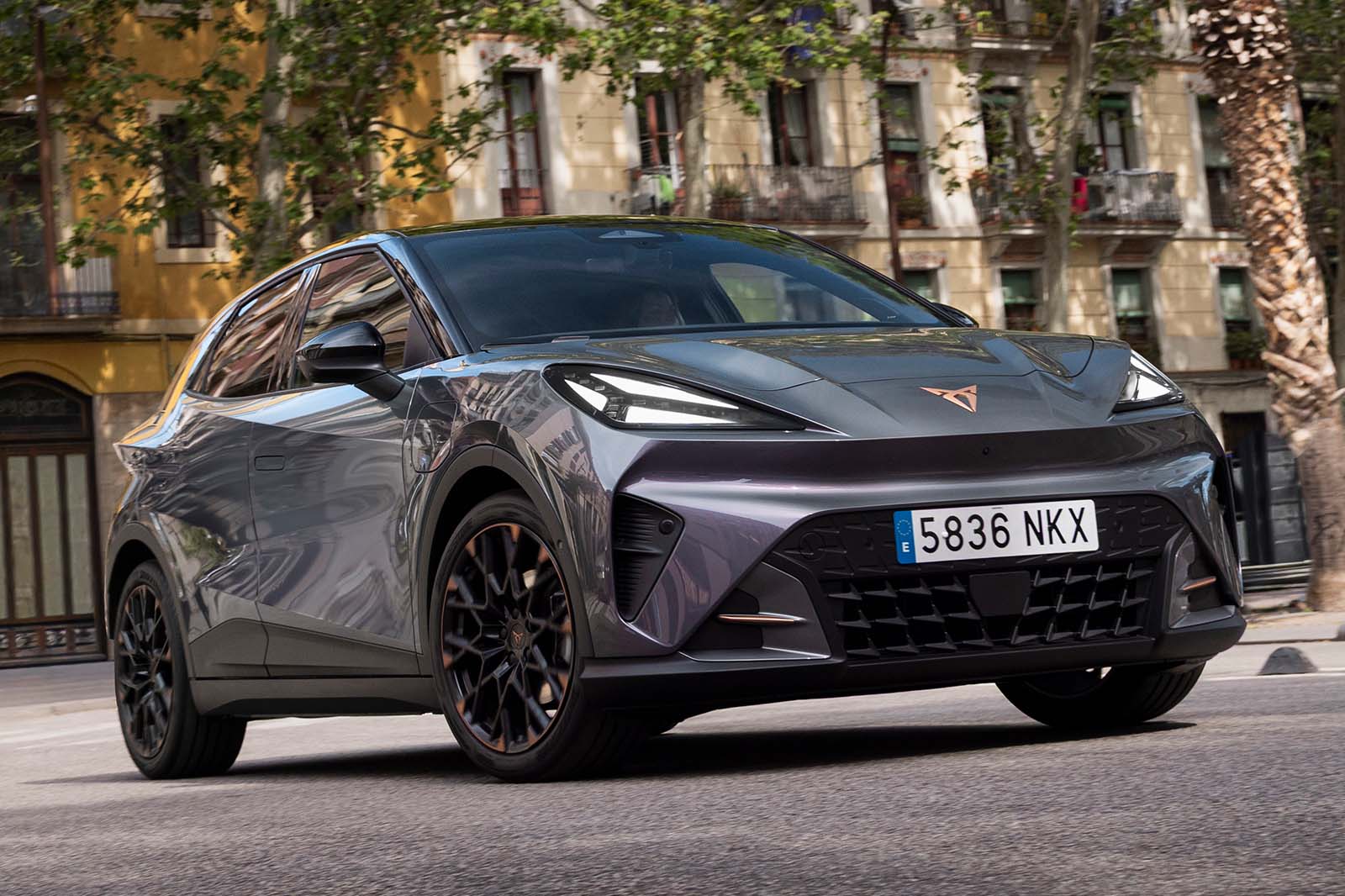
Slide into the sculpted bucket seats that you get in the VZ and this does feel like a pretty grown-up car.
Fancy ambient lighting beams gentle patterns onto the doors and around the light that frames the dashboard, offering varying patterns from ‘ooh, it’s like a gently lit Tiffany lamp’ through to ‘ooh, it’s like a '90s rave’.
In all seriousness, lighting does a lot of heavy lifting when it comes to modern car interiors and how manufacturers make them feel special, but the Raval's is impressive – especially given that you get this jazzy lighting on every trim from V2 and up.
The materials all feel smart, and the bright flashes of colour and the trademark bronze highlights around the dash all make it feel very different to anything else in the class.
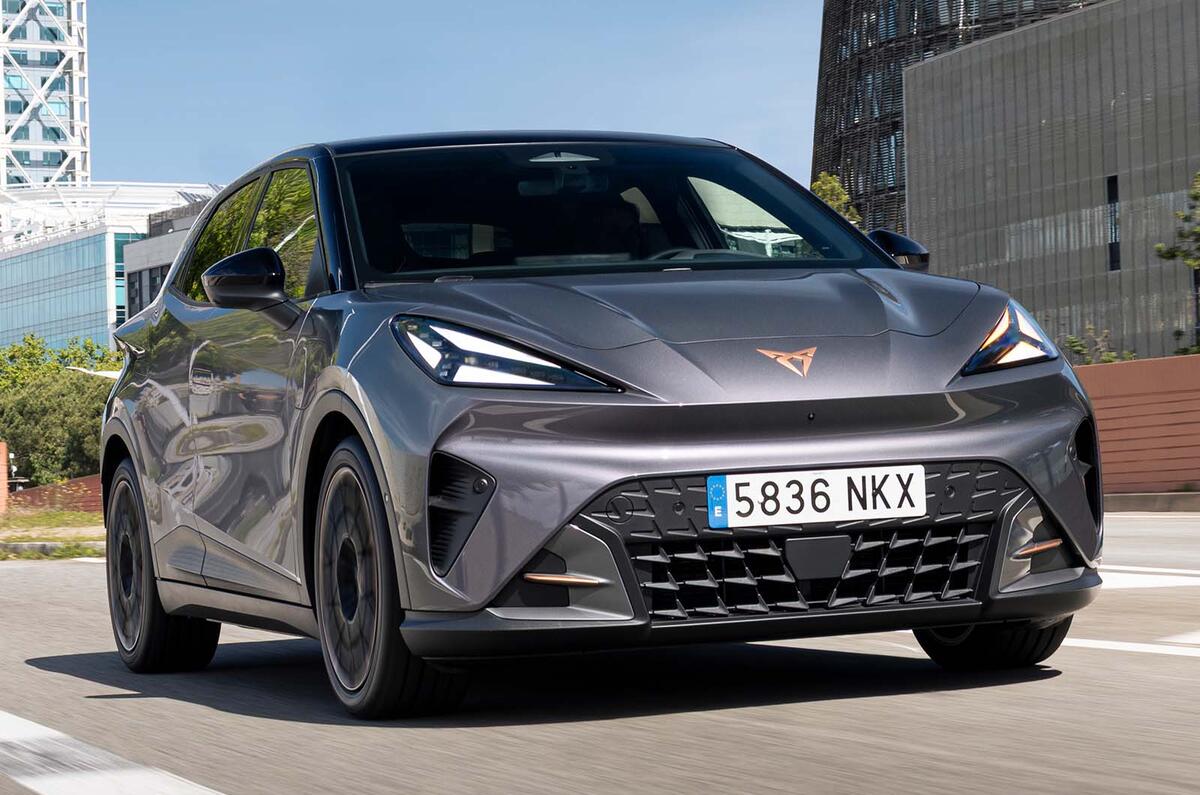
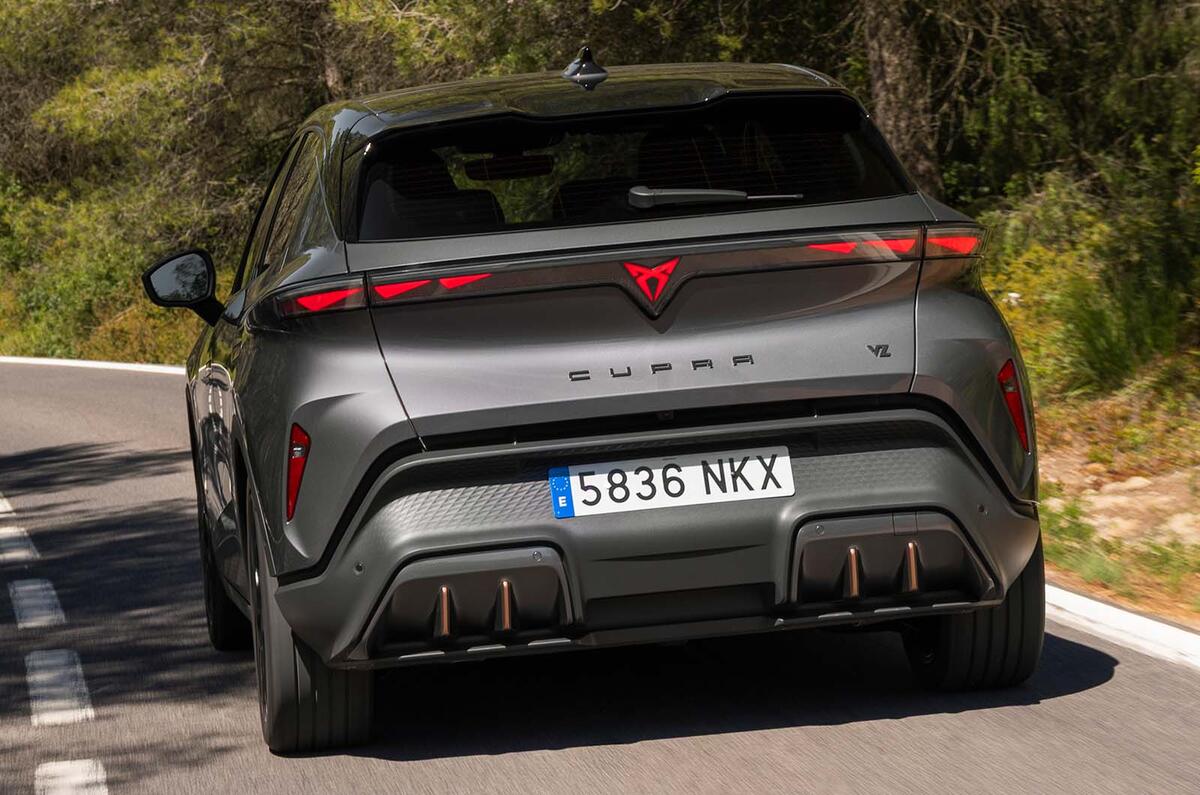
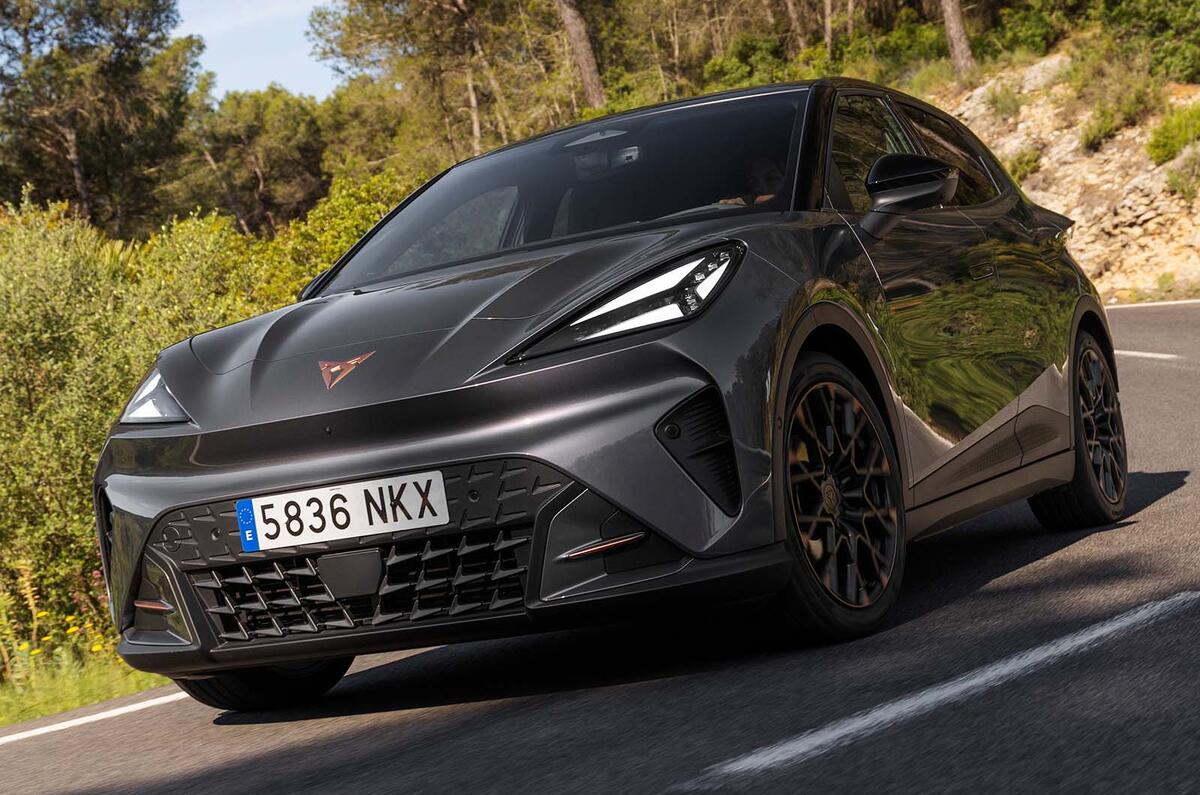
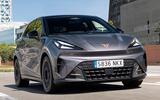
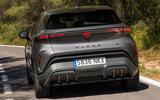
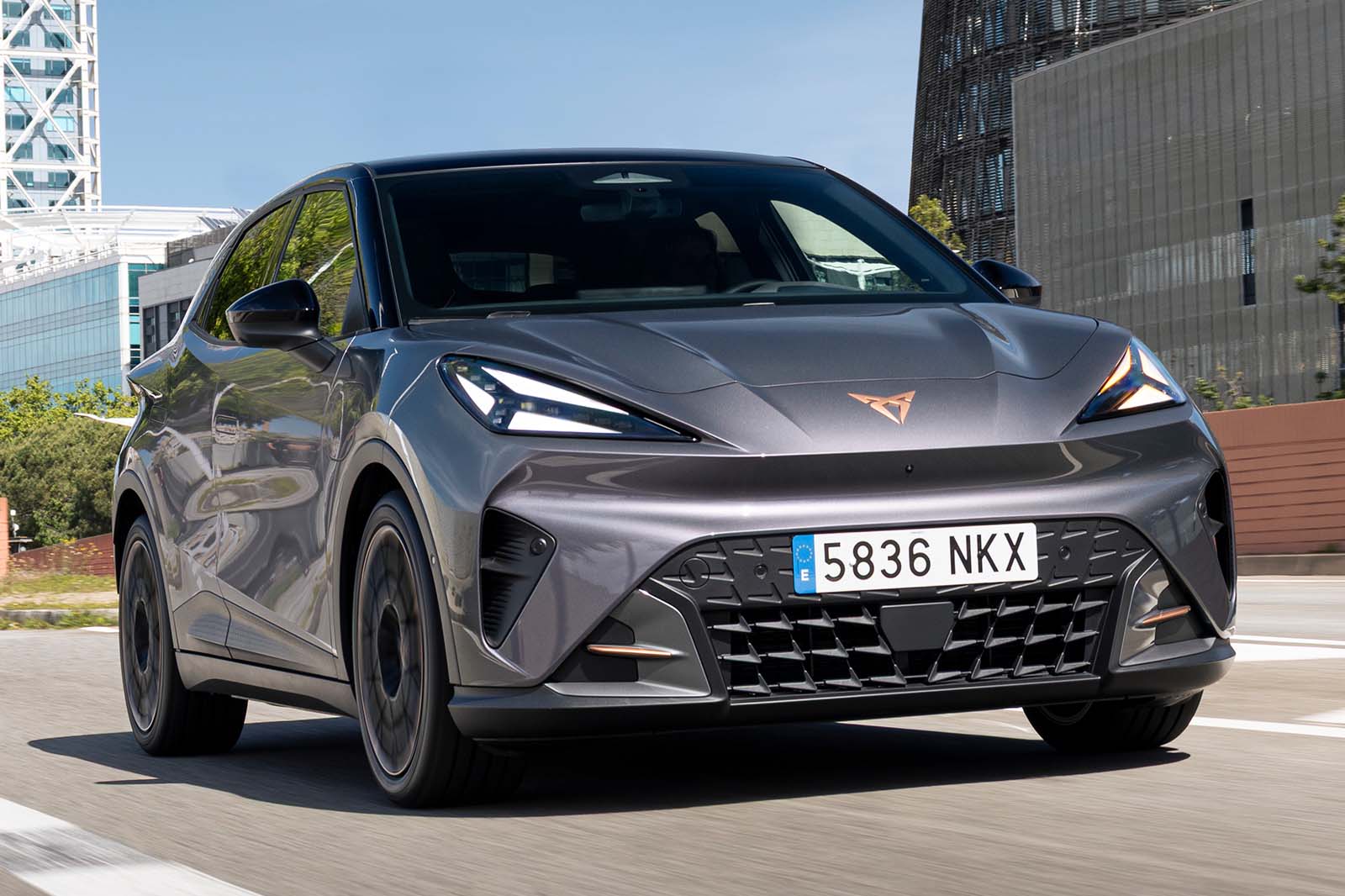
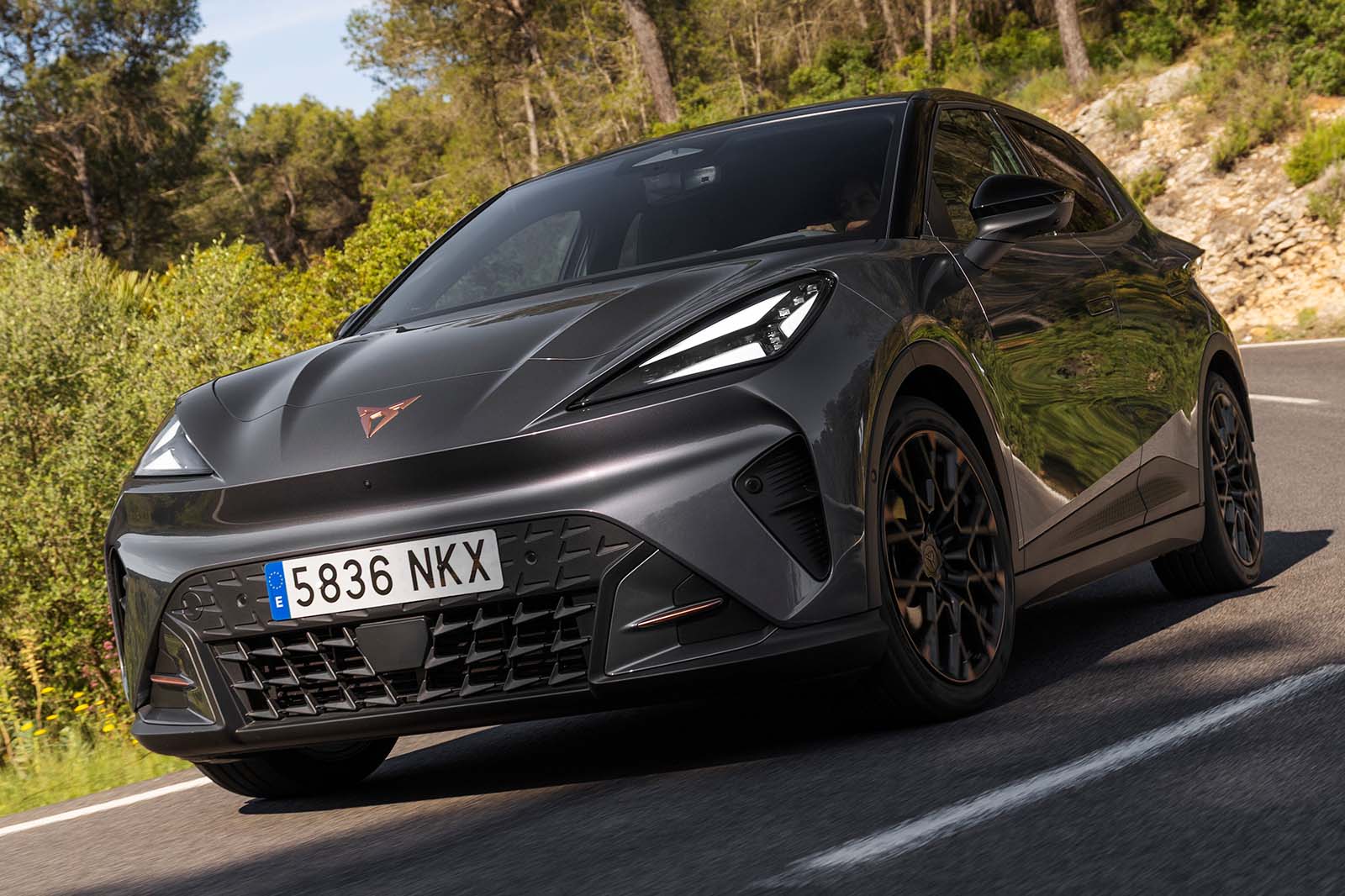
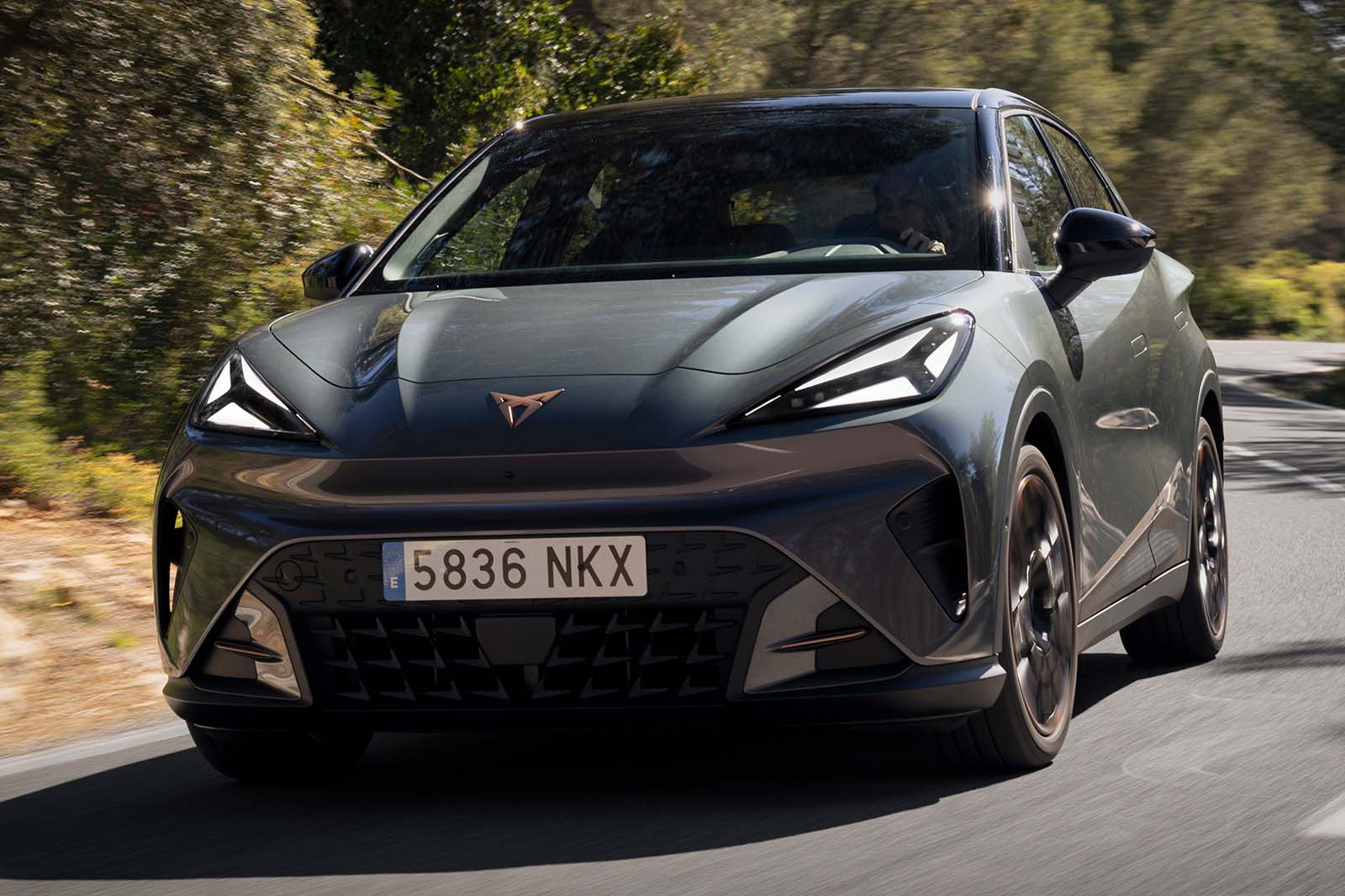
Is it a bit fussy? Maybe. It’s very angular and there are a lot of different material textures, but Cupra has made forceful design one its chief selling points, and the interior certainly matches the exterior’s assertive lines.
It’s comfy, too, and surprisingly spacious. The electrically adjustable bucket seats on the VZ give masses of support but feel great even for longer journeys, and it’s a relief that there are straightforward, physical controls for your mirrors, windows and steering wheel adjustment.
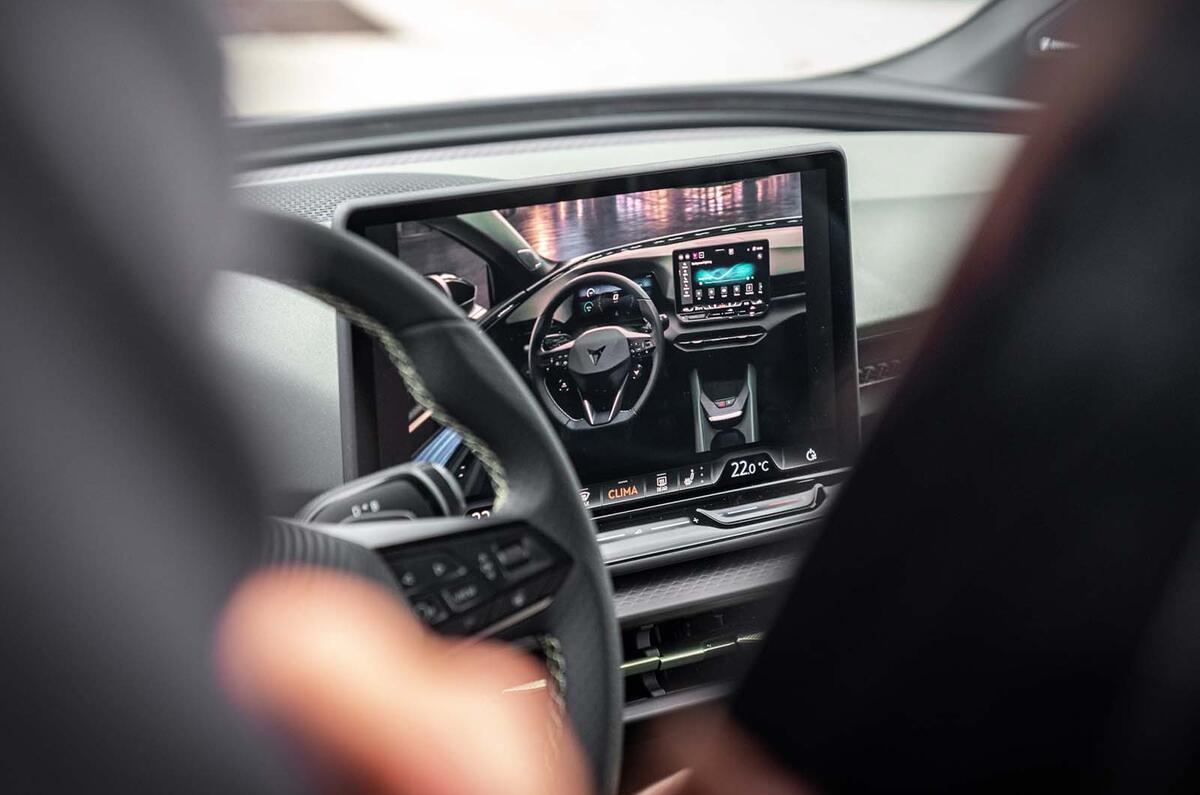
There are still some touch-sensitive switches for climate control and volume beneath the screen, but they’re easier to use than the controversial slider controls that featured in a lot of Volkswagen Group’s bigger, MEB-based EVs.
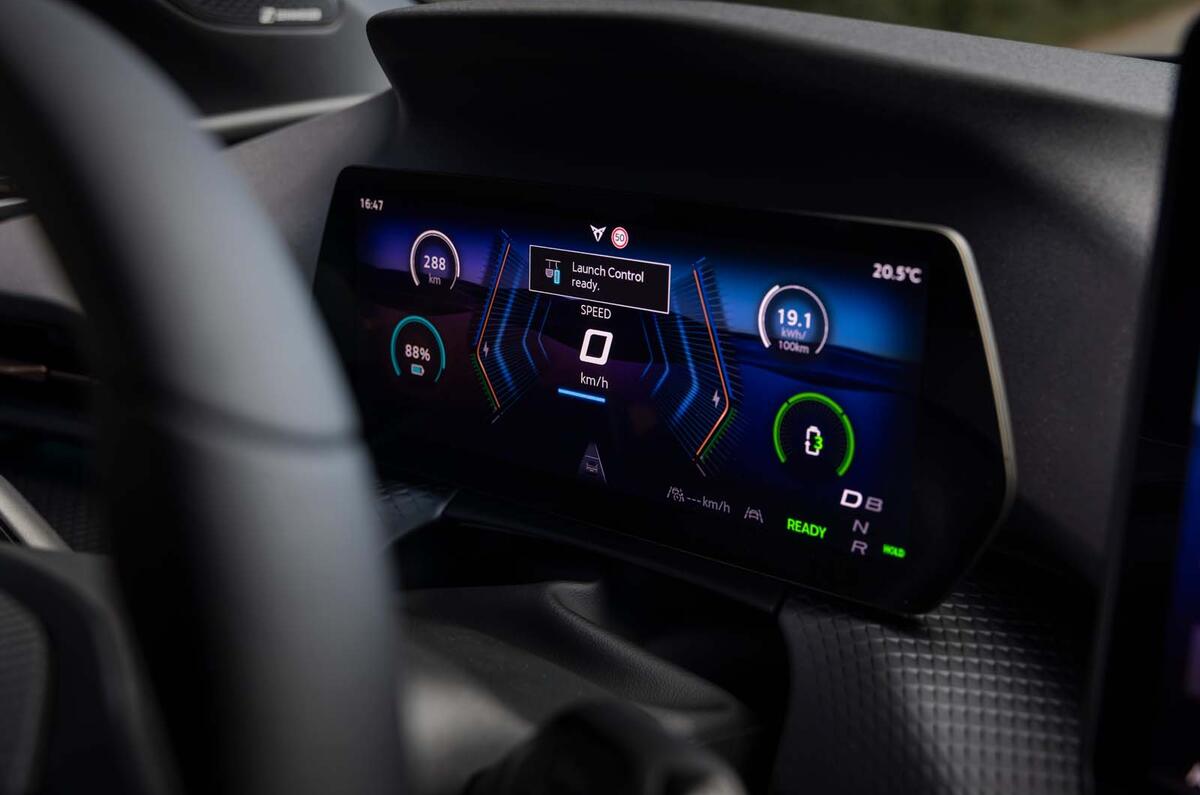
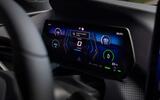
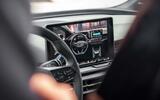
In fact, the screen and user interface are pretty good. There are shortcuts that you access by swiping down on the screen, making it easy to turn off your speed limit and lane keeping aids, if you wish to. The big, 12.9in touchscreen and 10.25in digital instrument display are clear and easy to read and generally have quite intuitive menus and readouts.
So while a few more physical shortcut buttons would be welcome, the system in the Raval does a good job of serving up the music, sat-nav or system setting that you’re after without too much muttering and prodding on your part.
Naturally, wireless Apple CarPlay and Android Auto are standard on every model, and you get in-built native sat-nav on all but the rather basic entry-level Raval Origin model.
Visibility is pretty good: slightly restricted to the rear three-quarters, but your view out is more than good enough to give you confidence in a tight spot.
There’s a good amount of space in the back seats, too. Even with the bucket seats in the VZ (which take up a bit more space than the standard seats) you can sit an average-sized adult behind a fairly tall driver and everyone is still pretty comfortable.
Especially if you’ve added the optional £580 ‘Skyline’ roof, which sheds a lot of light on the rear seats. You can add that roof on any Raval other than the Origin, and it’s worth doing, we reckon. The rear windows are a bit small and it does feel a lot darker back there without the panoramic glass.
Shame there’s no rear centre armrest, but by the standards of the small EV class, the Raval is one of the more practical and spacious – certainly a lot more so than the Renault 5 or Alpine A290. You even get three sets of Isofix childseat anchors (including one on the front passenger seat).
There’s a big 441-litre boot, complete with variable-height floor and loads of underfloor space. The loading lip is quite high, but again, by the standard of this class it’s really impressive. Only the Ford Puma Gen-E (which is slightly bigger and more SUV-ish) has a substantially bigger boot.
There’s no frunk, but with a boot this big you probably won’t miss it.