






















8

Kei car-based cutie escapes from Japan as Honda’s latest EV venture

The Honda Super-N, along with the Renault Twingo, is one of the green shoots appearing in the scorched earth that was the previously thriving A-segment. Fun, affordable small cars have had a tough time with legislation and profitability, leaving them neither much fun nor very affordable. As battery prices are coming down, though, there’s now hope that A-segment cars can return as EVs.

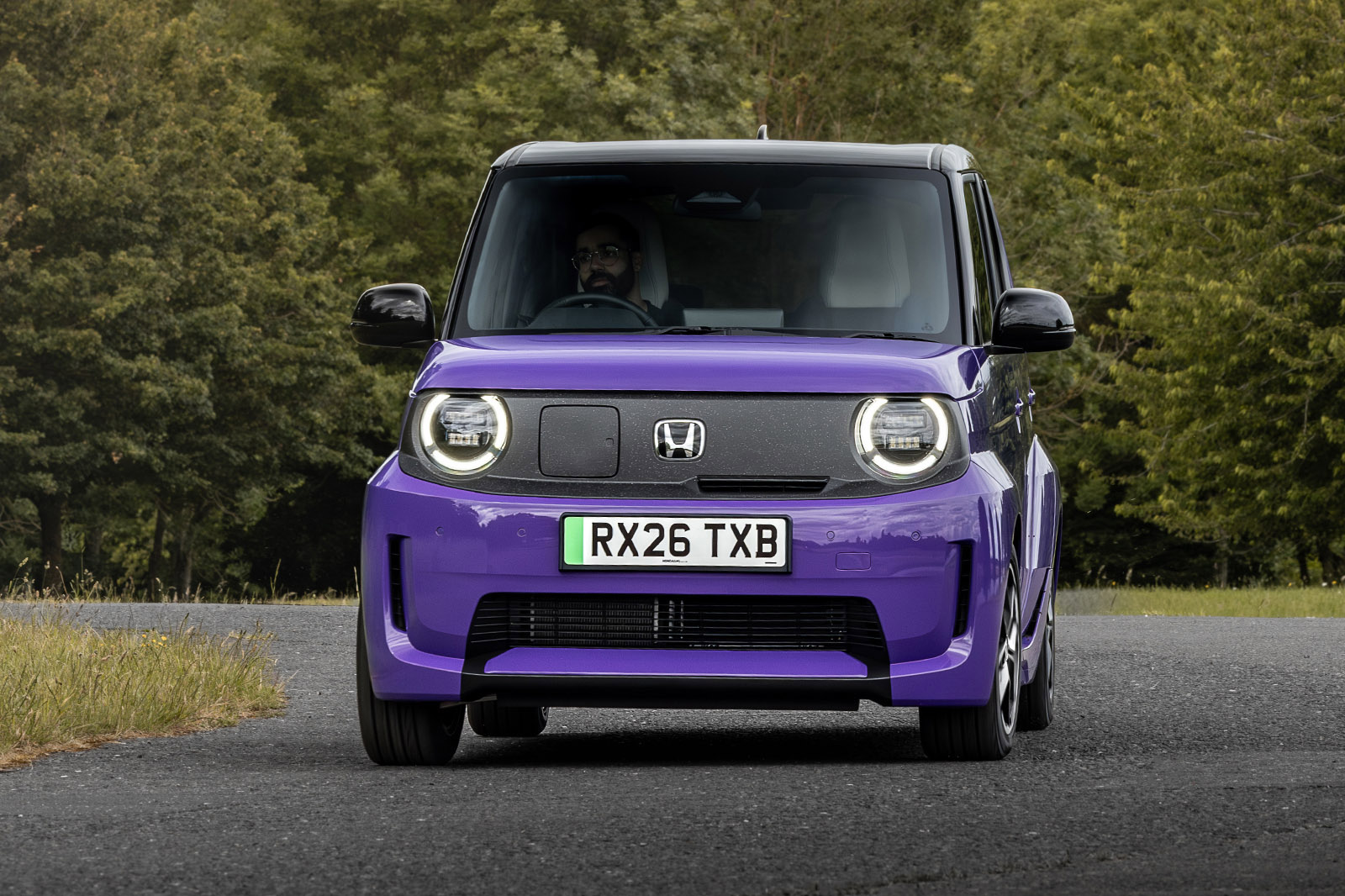
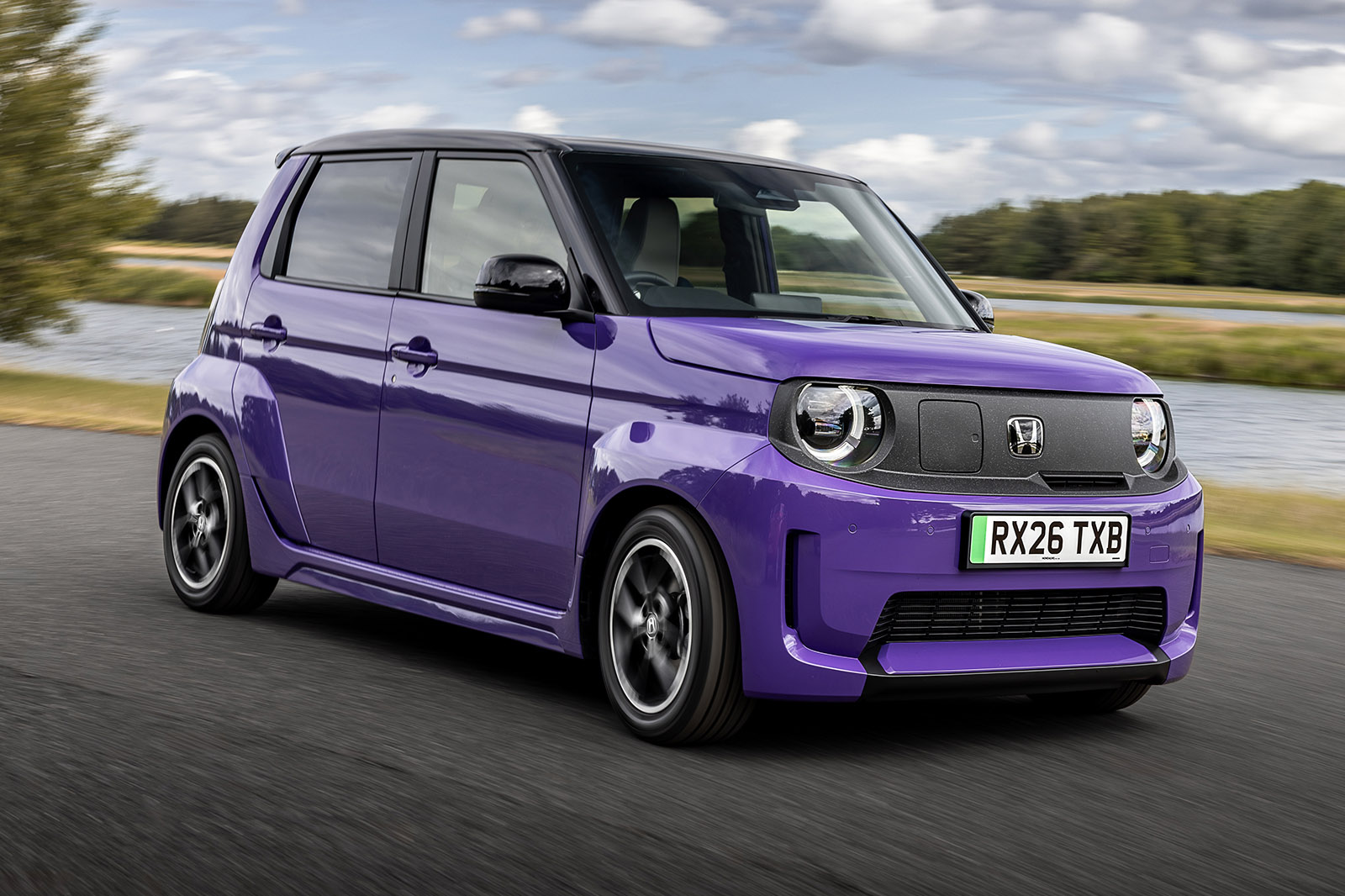
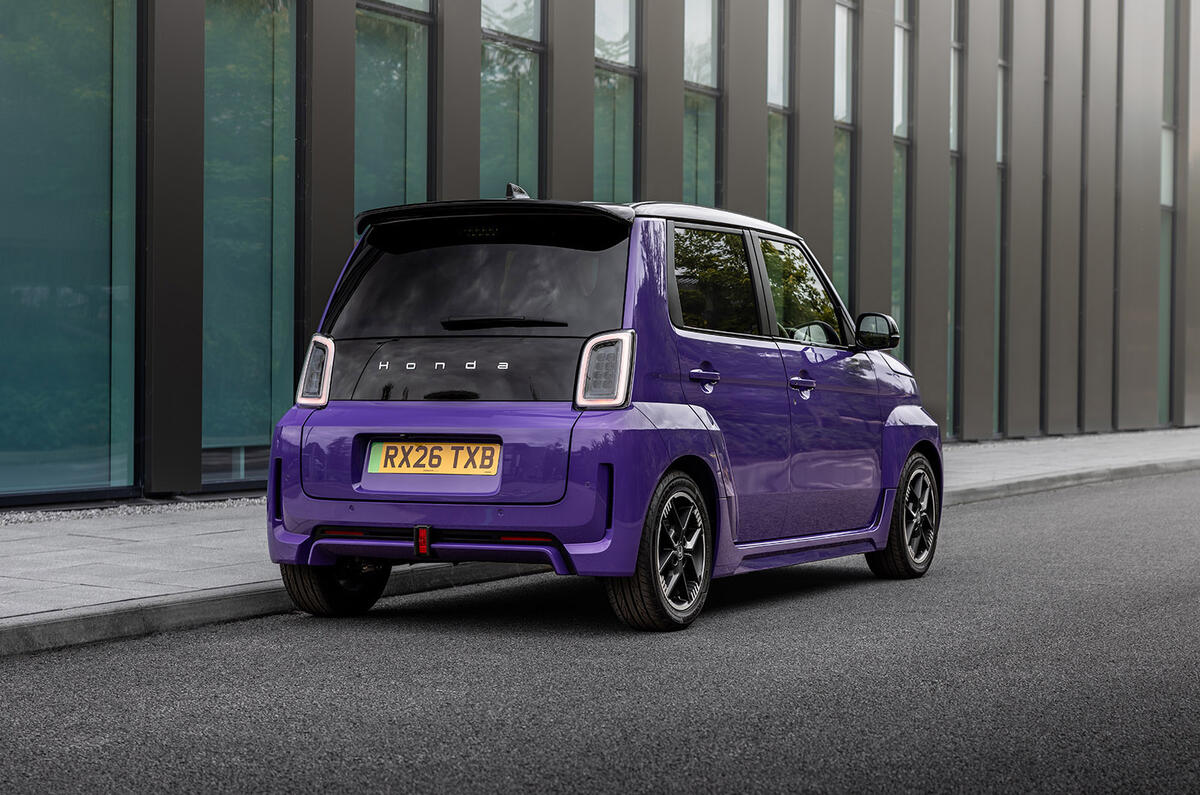
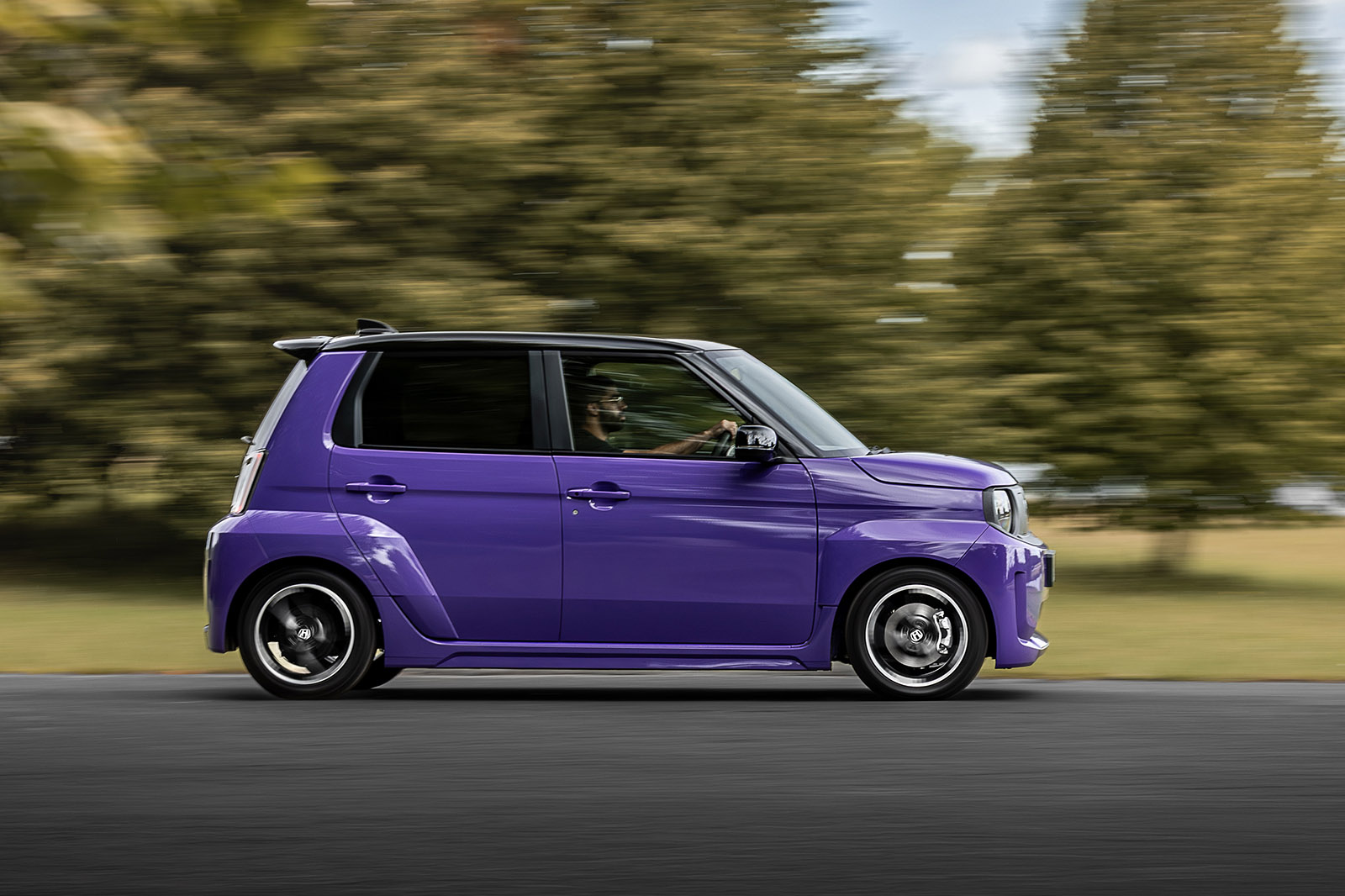
With the £18,995 Super-N, Honda is rekindling the joy of pocket-size driver’s cars like the Renault Twingo RS 133 and VW Up GTI. It truly is small: just 3599mm long and 1573mm wide without the mirrors, but with its pumped-up arches, sporty tyres and simulated engine and gearbox, it promises real driving fun as well.

It’s a bit of an experiment in more ways than one. Being derived from the Japanese-market N-One E, it tests whether Japanese kei cars can work in Europe. They’re wildly popular in the insular market of Japan, where they offer affordable motoring, albeit at a cost of some performance and safety. Indeed, the Super-N boasts just 128 miles of range and 94bhp. Are we willing to make the same trade-offs?

It also represents a reset for Honda’s EV strategy, if 'strategy' isn’t too generous a word. Like most Japanese manufacturers, Honda hasn’t exactly embraced electric cars, and its first two attempts haven’t moved the needle. The Honda E was highly likeable but offered very little range for a very high price. The e:Ny1 was still expensive but not very good. After cancelling its 0 Series EVs, the Super-N is a way of literally starting small and going from there.

Clearly, Honda is going to need a lot more to stay relevant in Europe – particularly since the Super-N is only sold in right-hand-drive markets. But that’s something for the execs to worry about. All we’ll concern ourselves with for now is whether the Super-N can deliver enough fun and enough utility to make it make sense – despite the short range.

Advertisement
Back to top

DESIGN & STYLING

9
Honnda Super N review 2026 02

But the really important differentiator between the Super-N and the E is that the newer car has a job to do in bolstering Honda’s EV sales mix.

The E was a halo product – a premium-leaning, tech-heavy flagbearer for the Japanese firm’s bold electric age, and one that was pitched well clear of the mainstream at around £37,000. It was an eyebrow-raising list price even before you consider it had a shorter range than nearly every other electric car on the market.

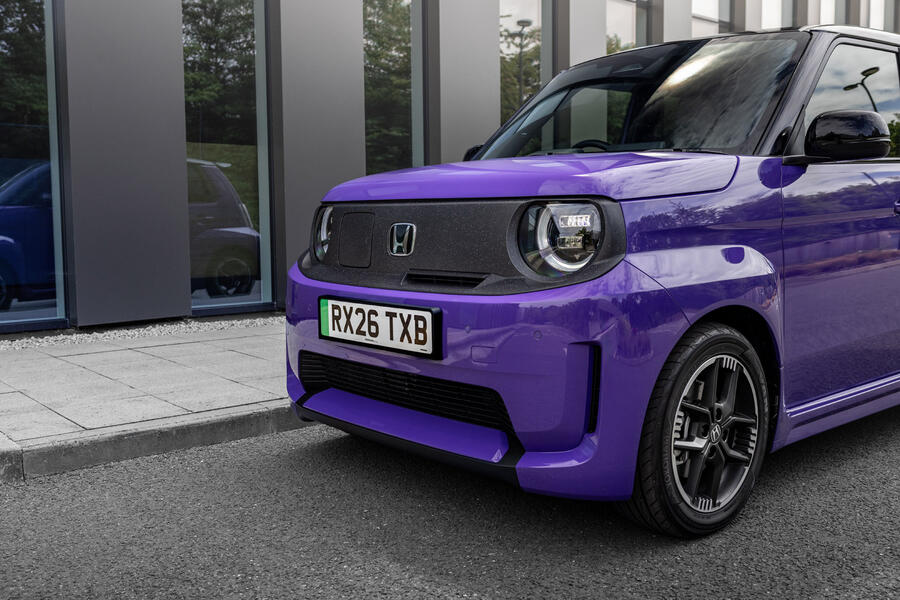
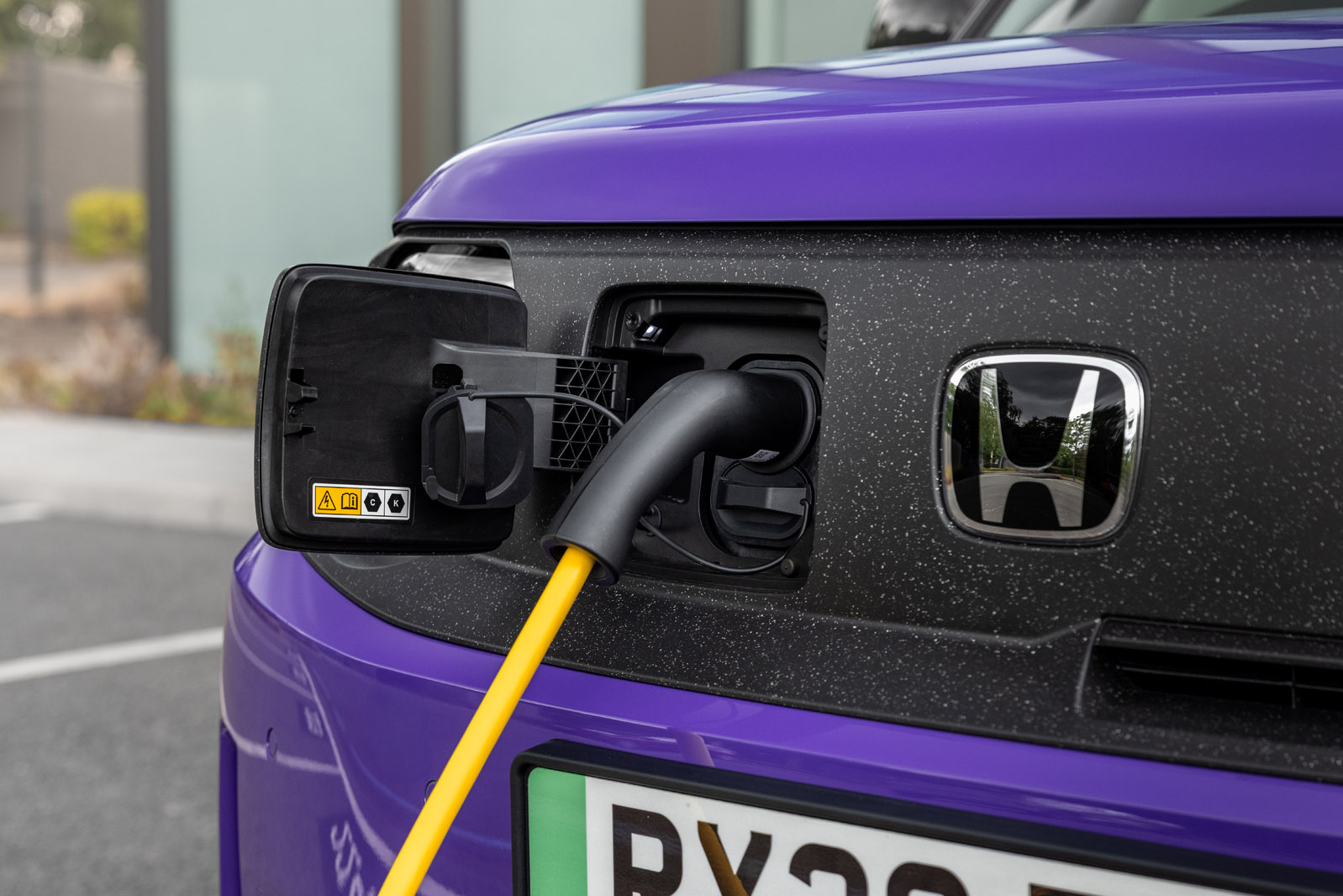
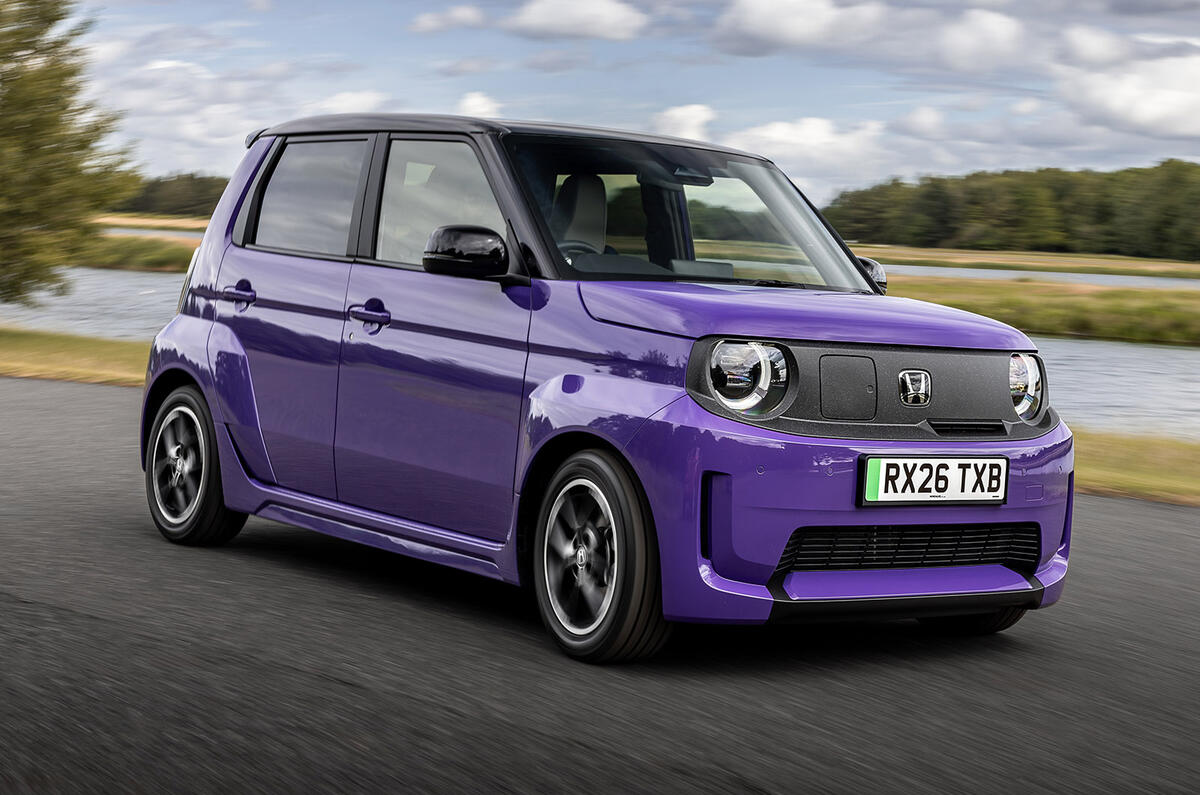
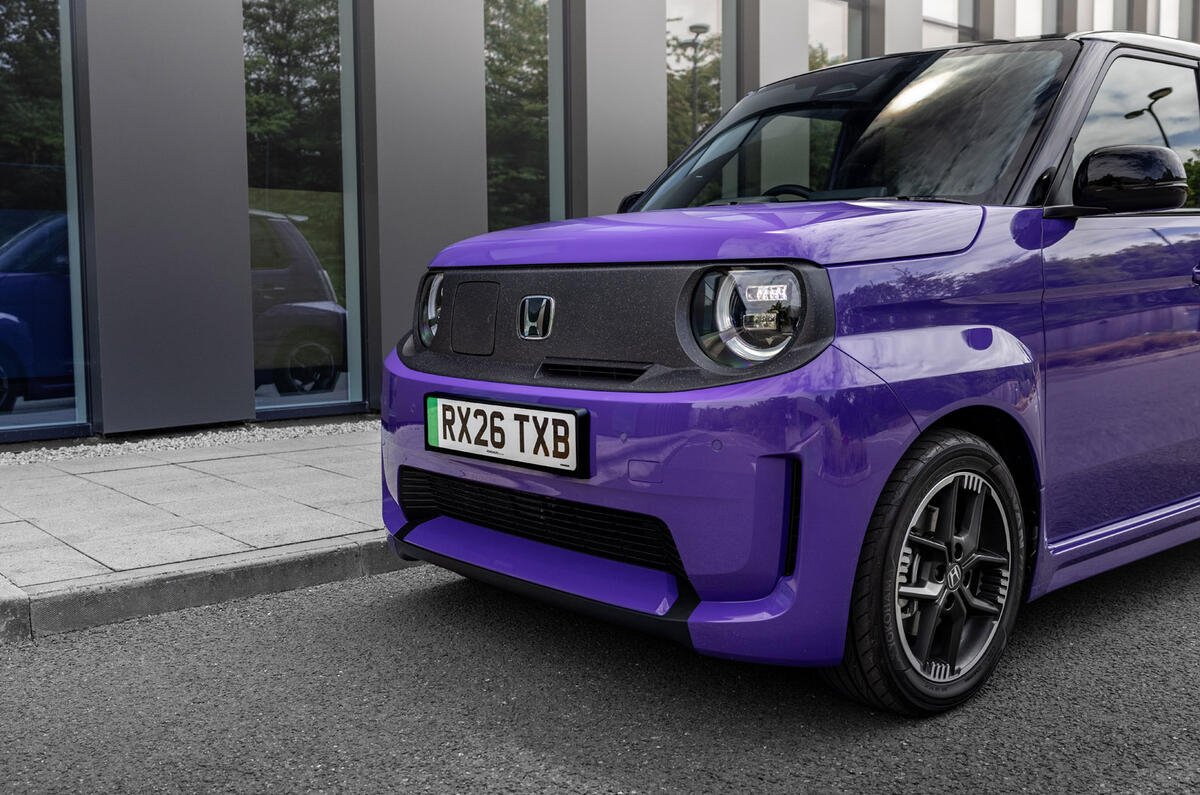
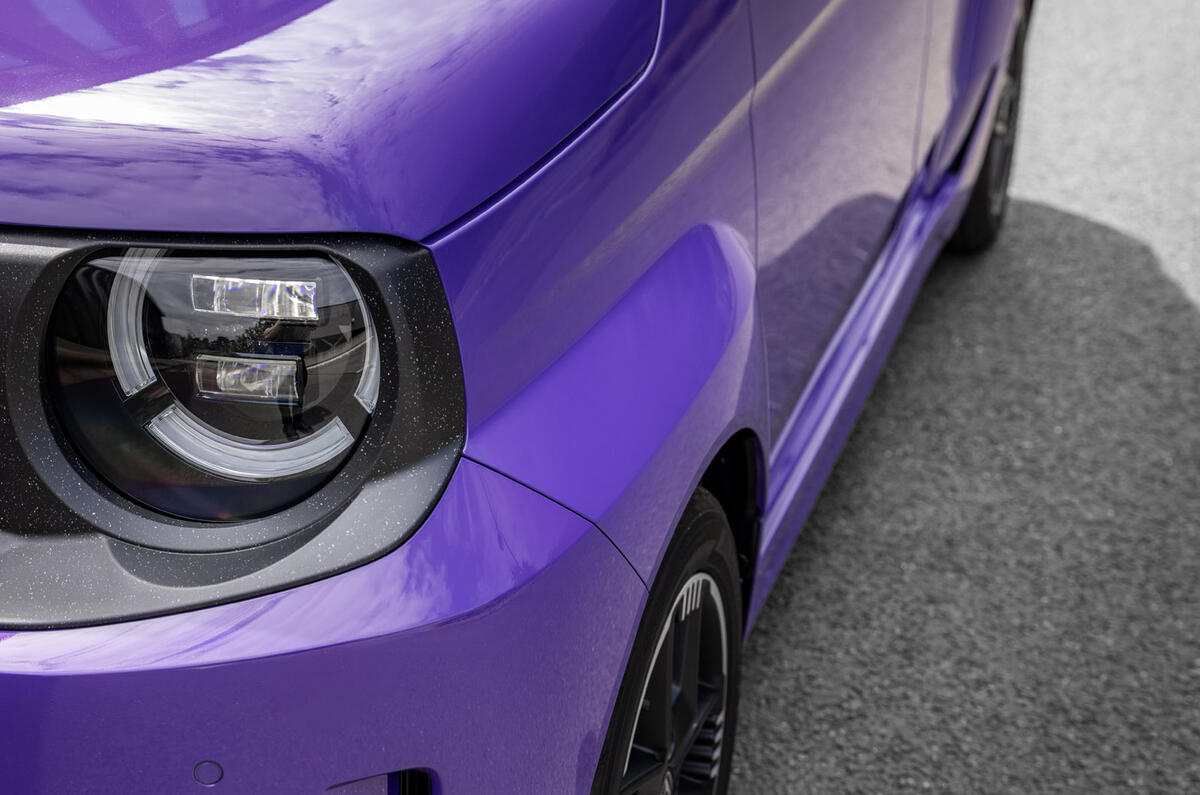
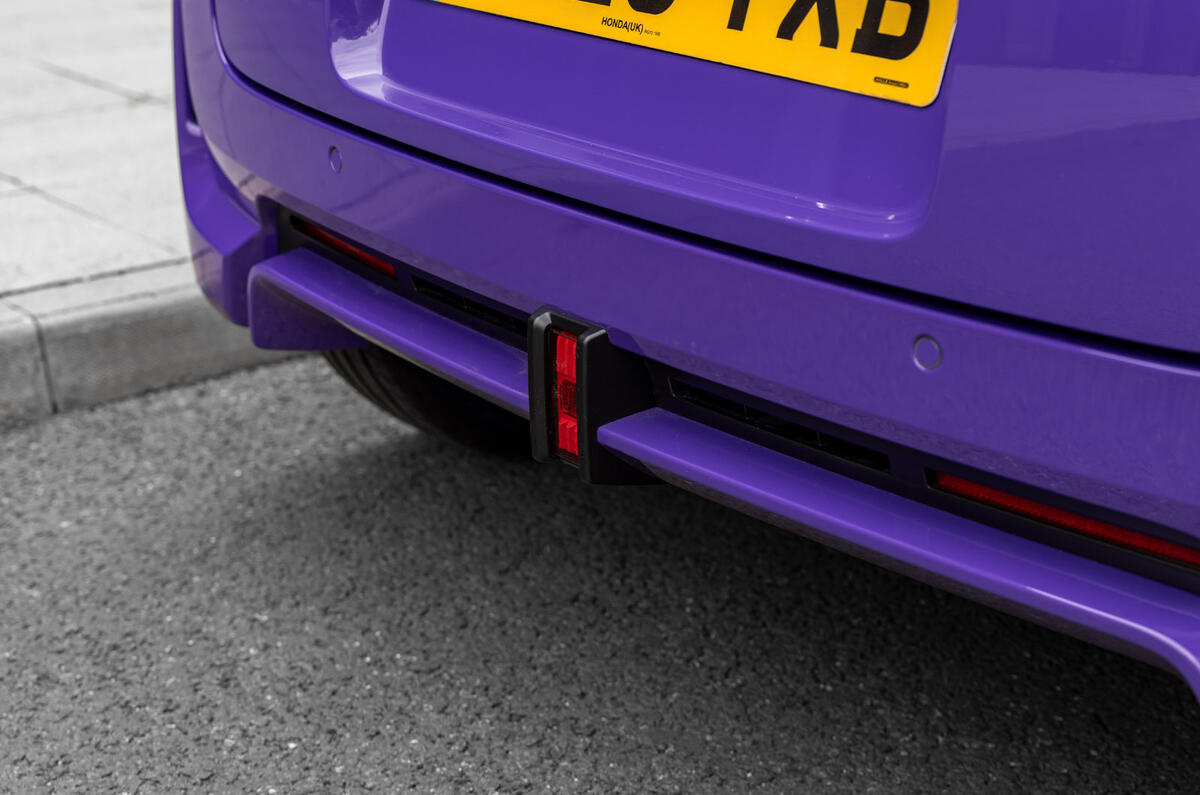
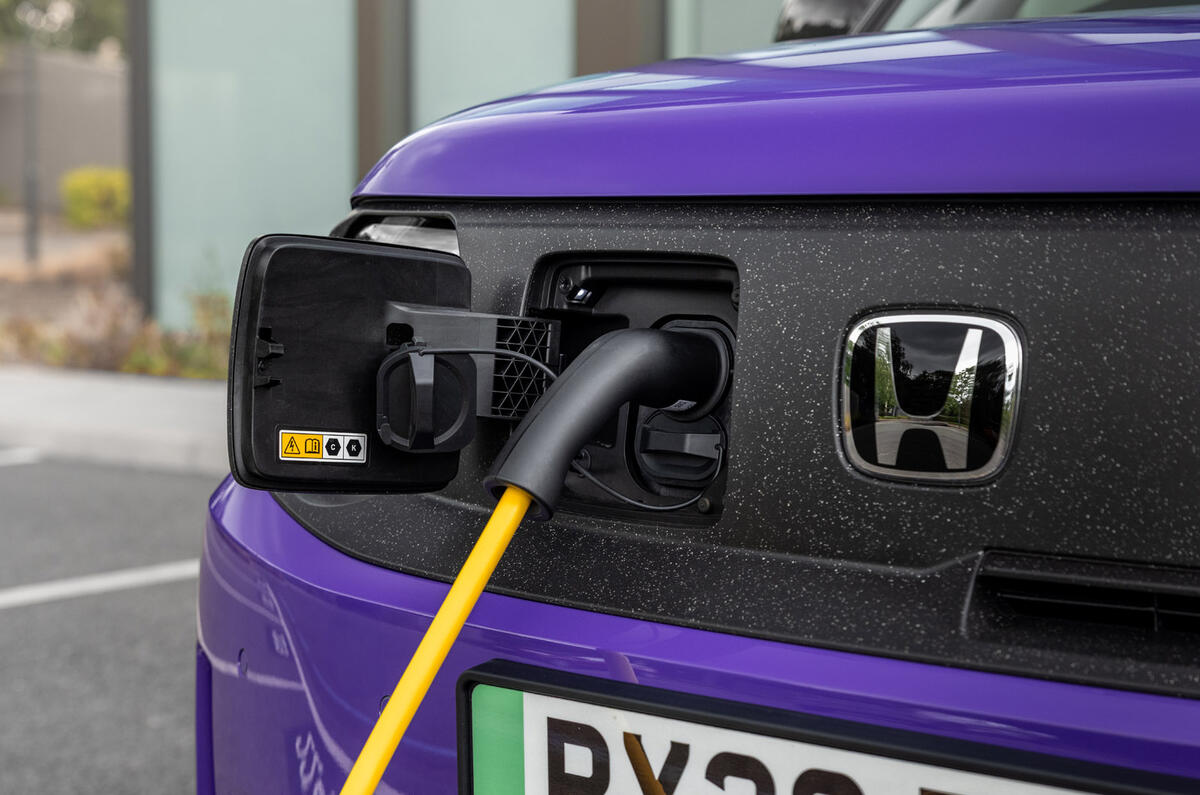
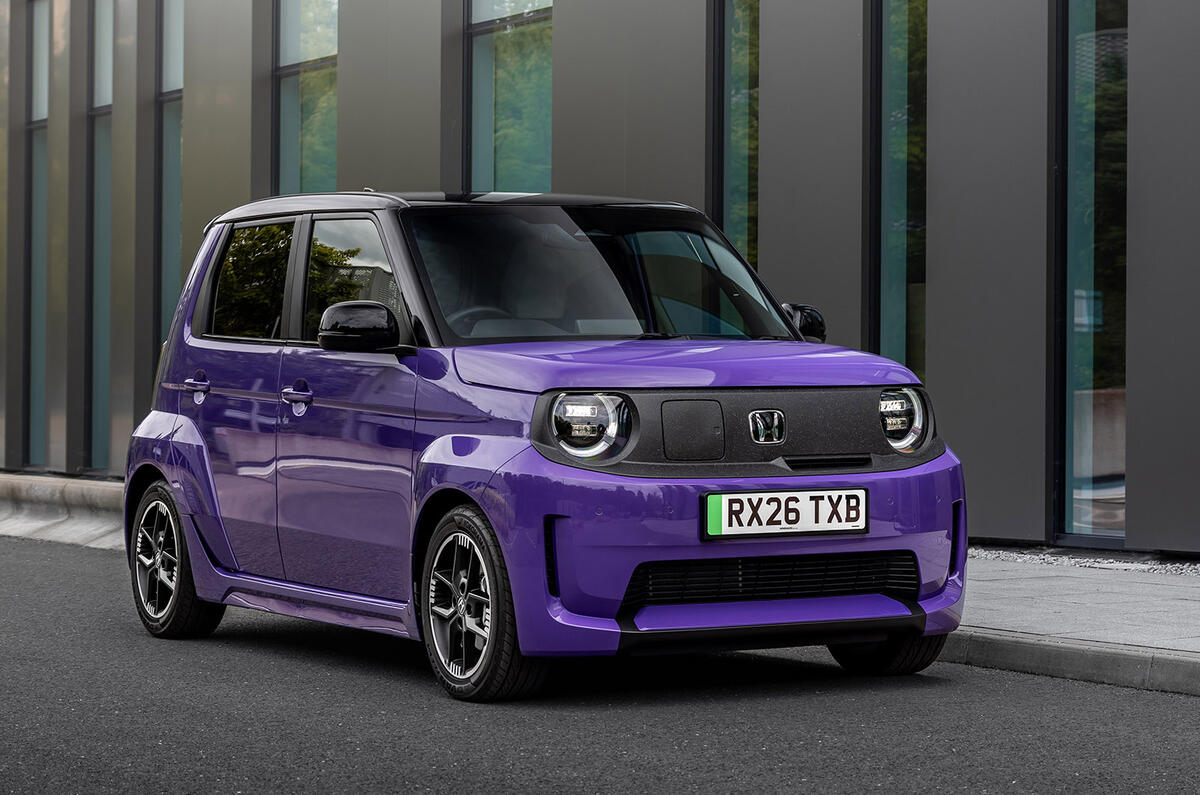
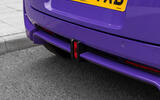
The matt black 'grille' is speckled with white because it's made from recycled bumpers of other cars. It's a neat effect – I like it.

“In terms of what it will do for us, the price point will be very important,” says Adamson of the Super-N. “And the opportunity for this car, from my perspective, is not only our existing customer base.” The plan is for the Super-N to appeal as much to young drivers in the city as it does to existing CR-V and HR-V owners, for example, who need a smaller station car or school run shuttle.

With that in mind, Adamson emphasises, “the affordability of this car” is key. Honda hasn't given a firm price yet, but has confirmed it will start from less than £20,000.

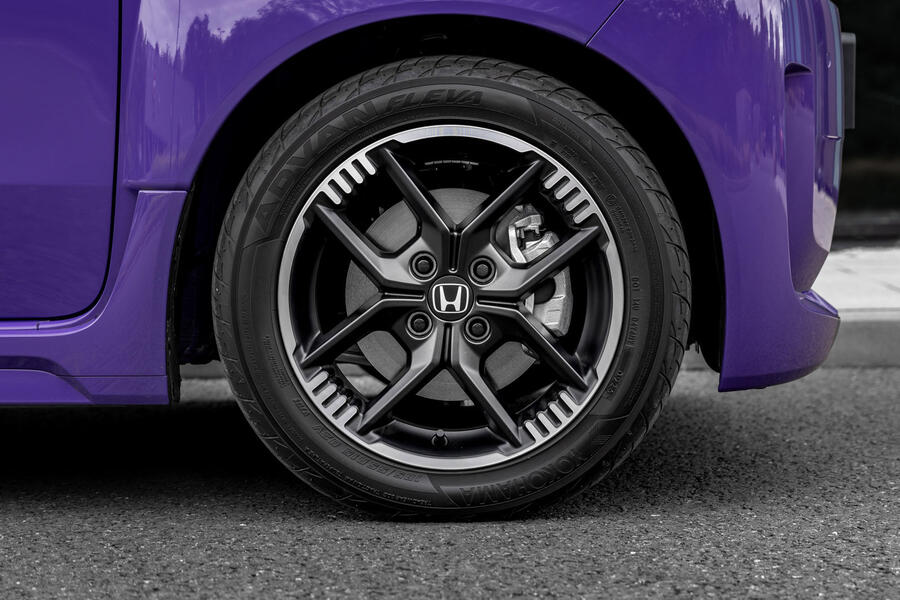
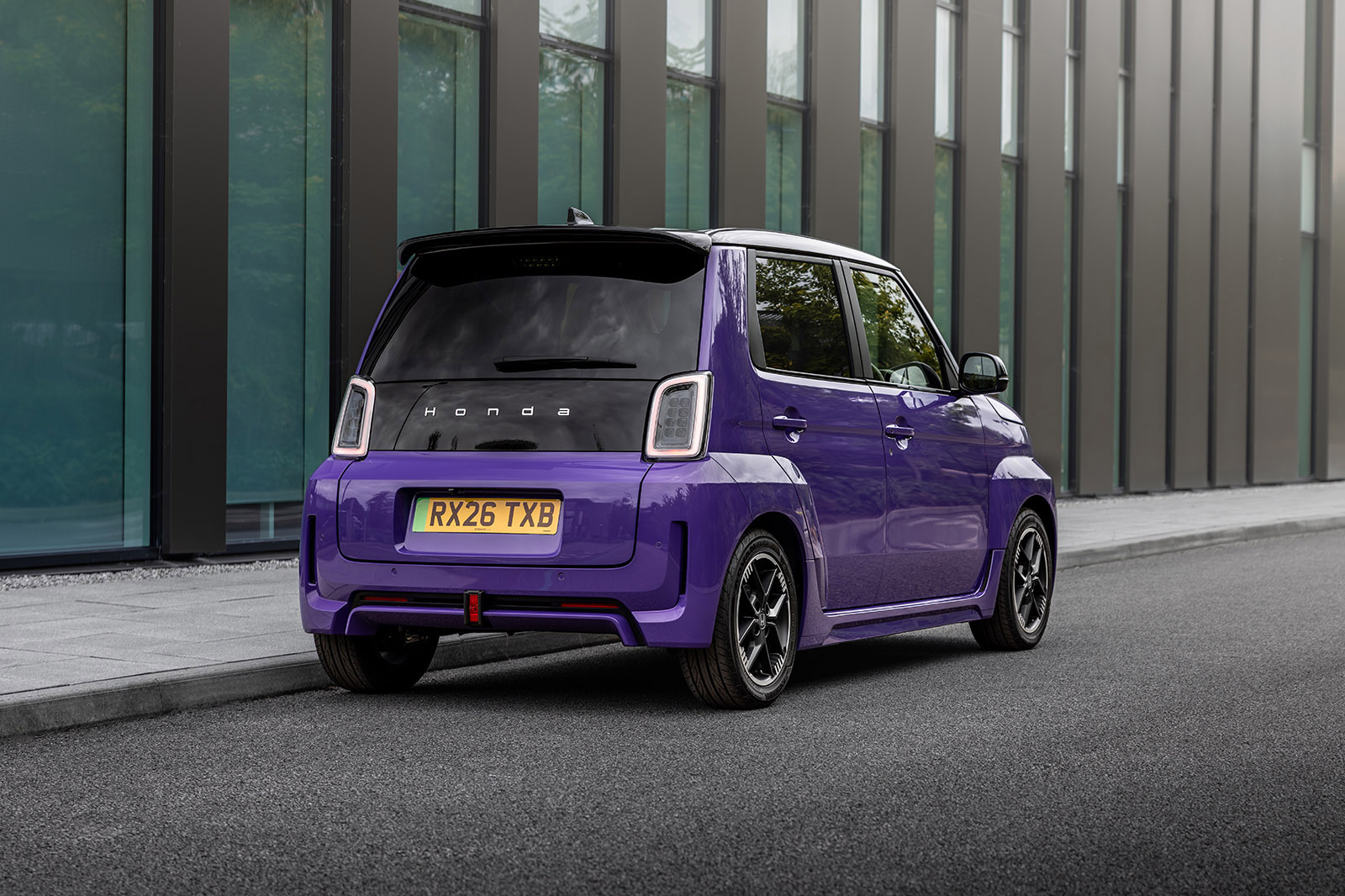
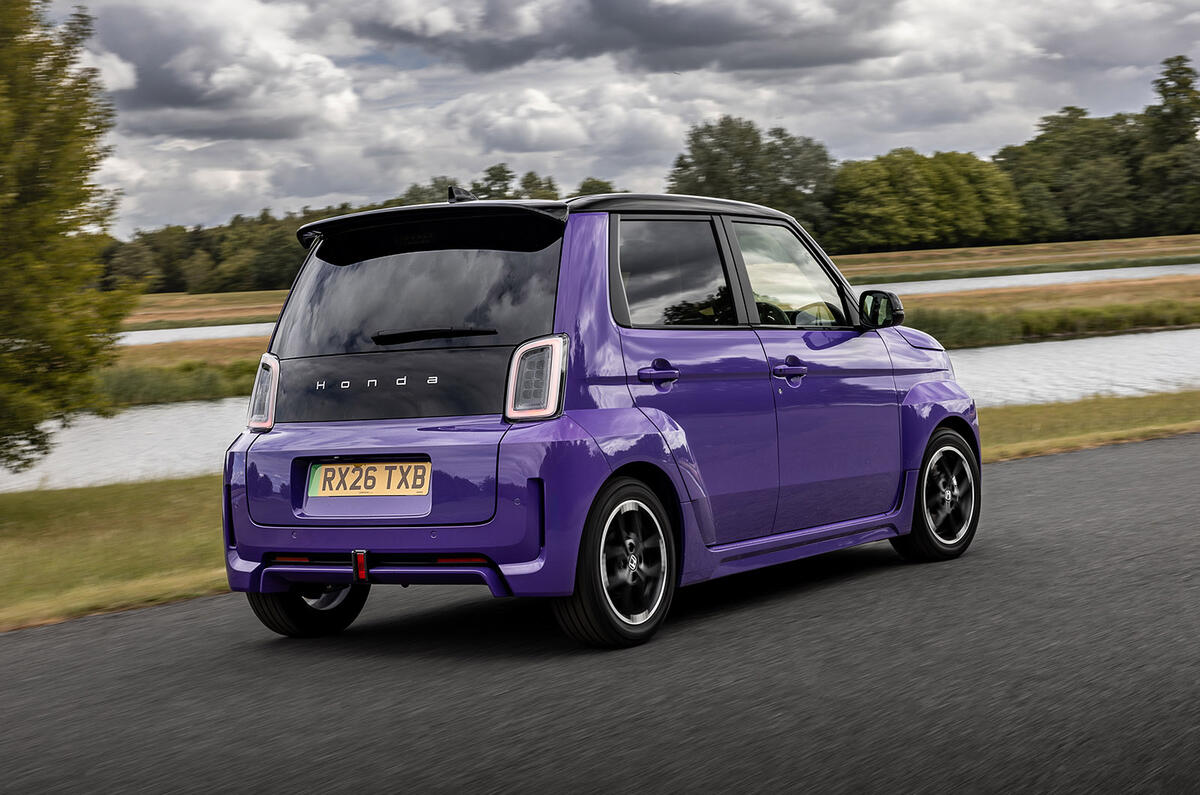
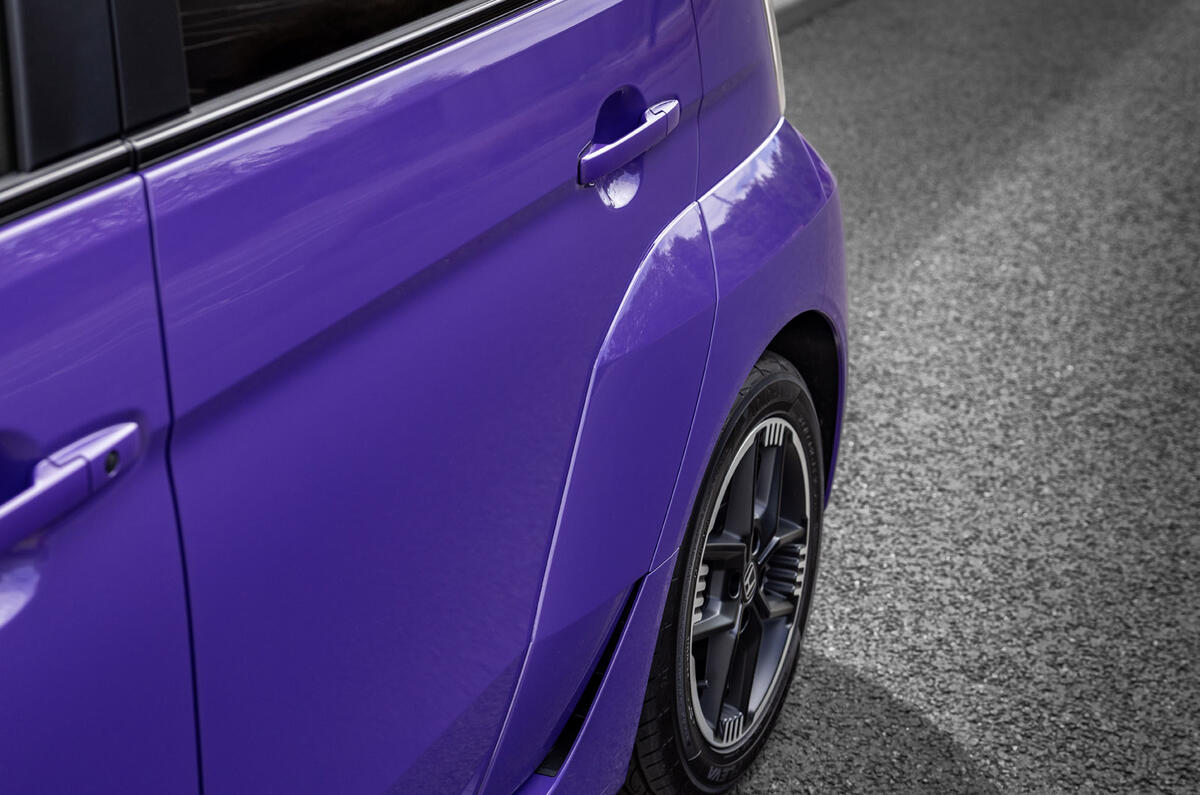
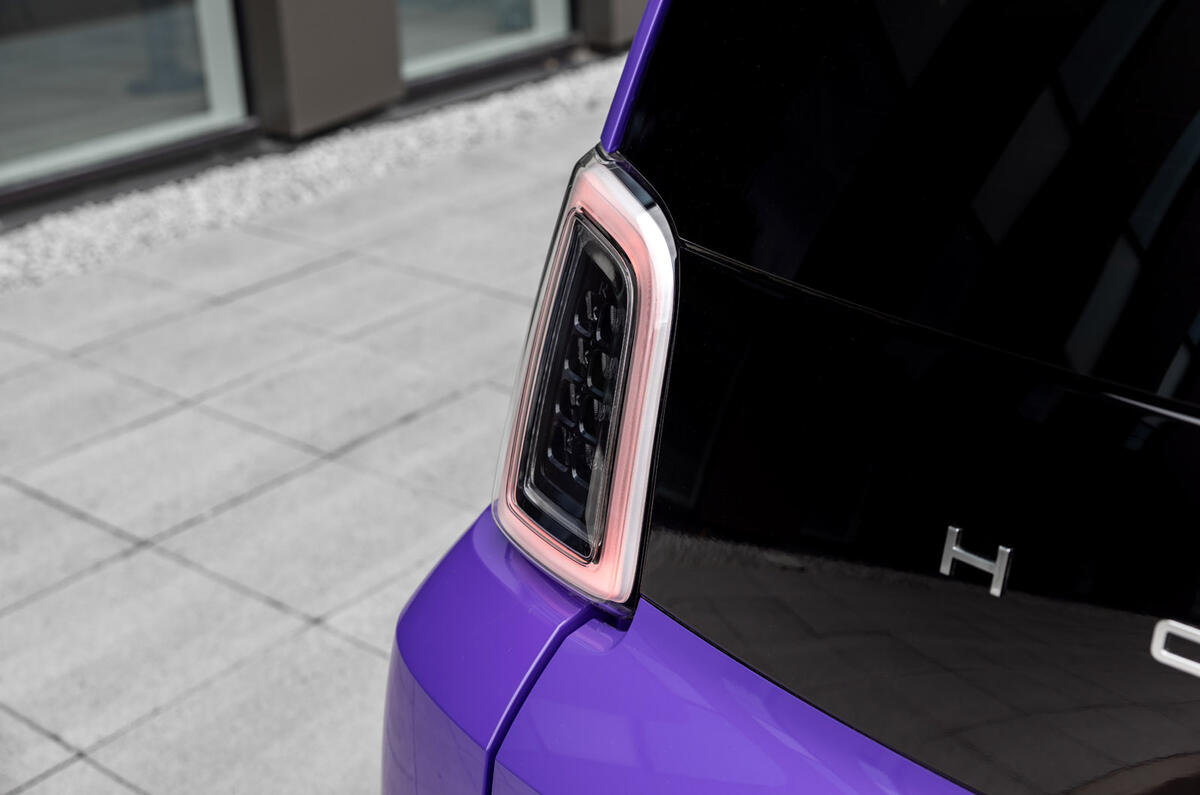
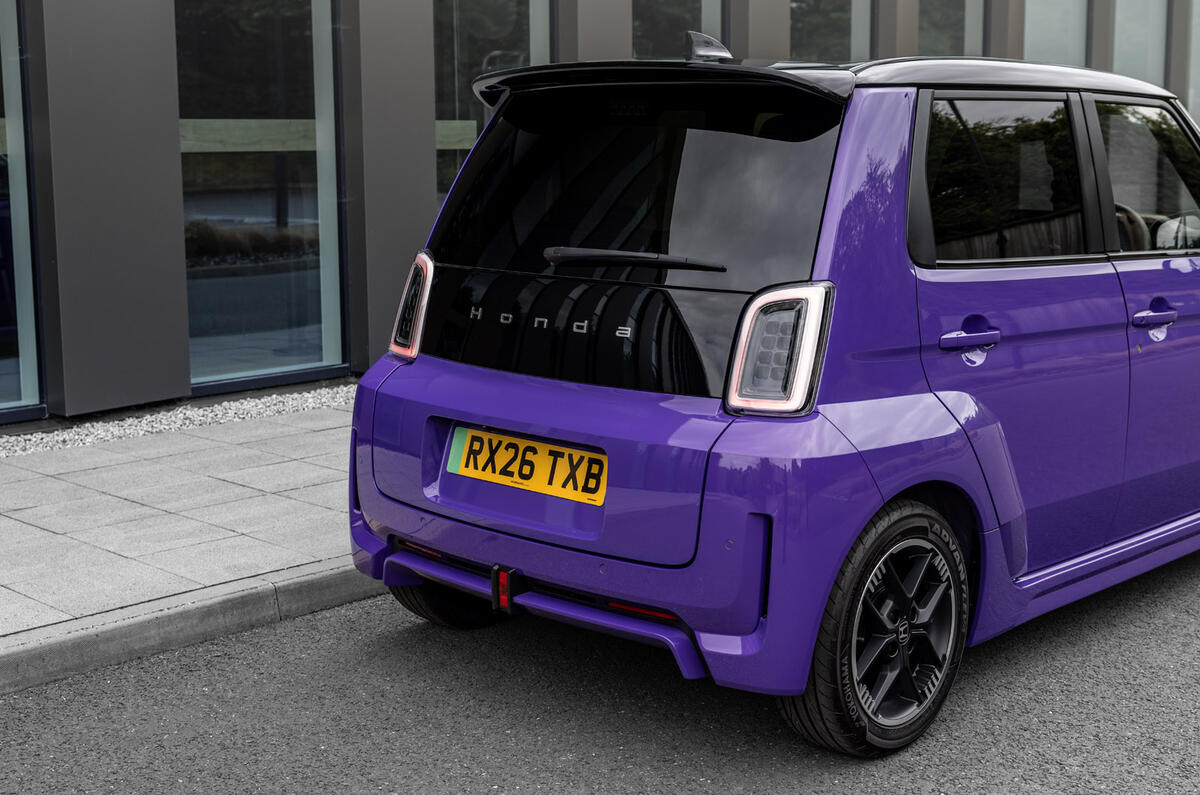
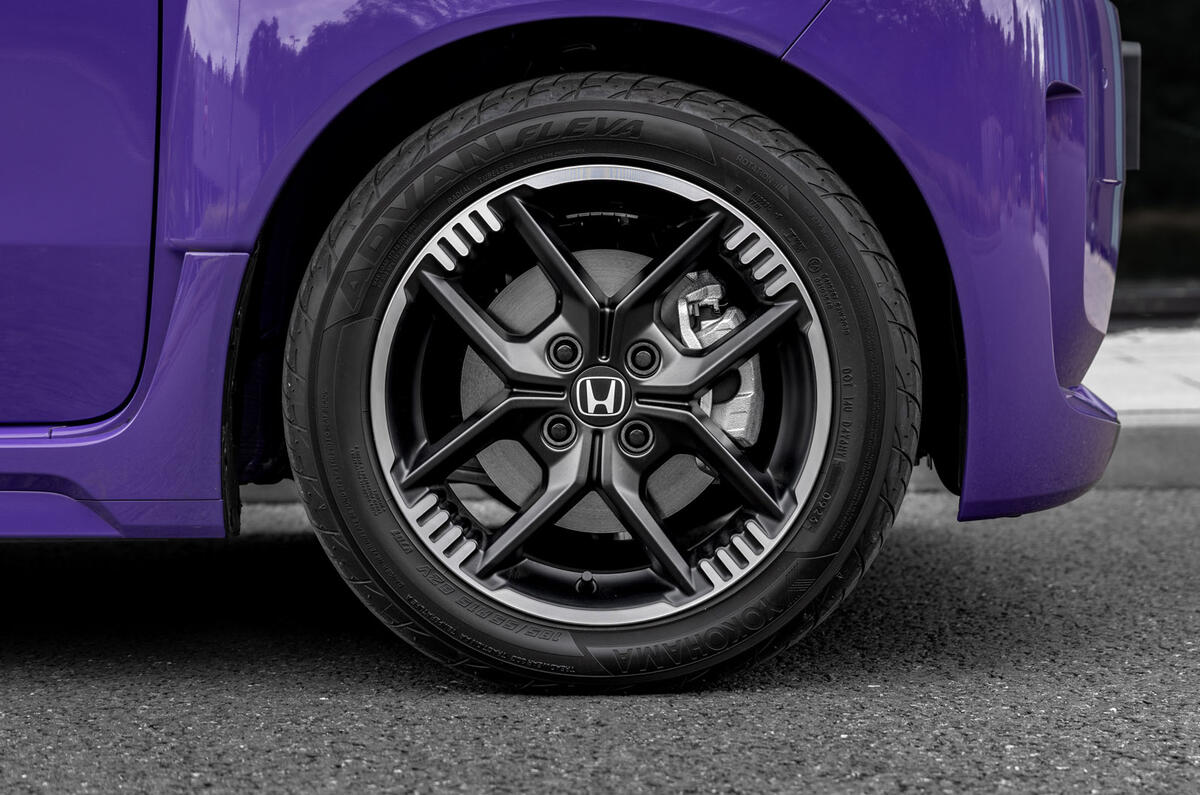
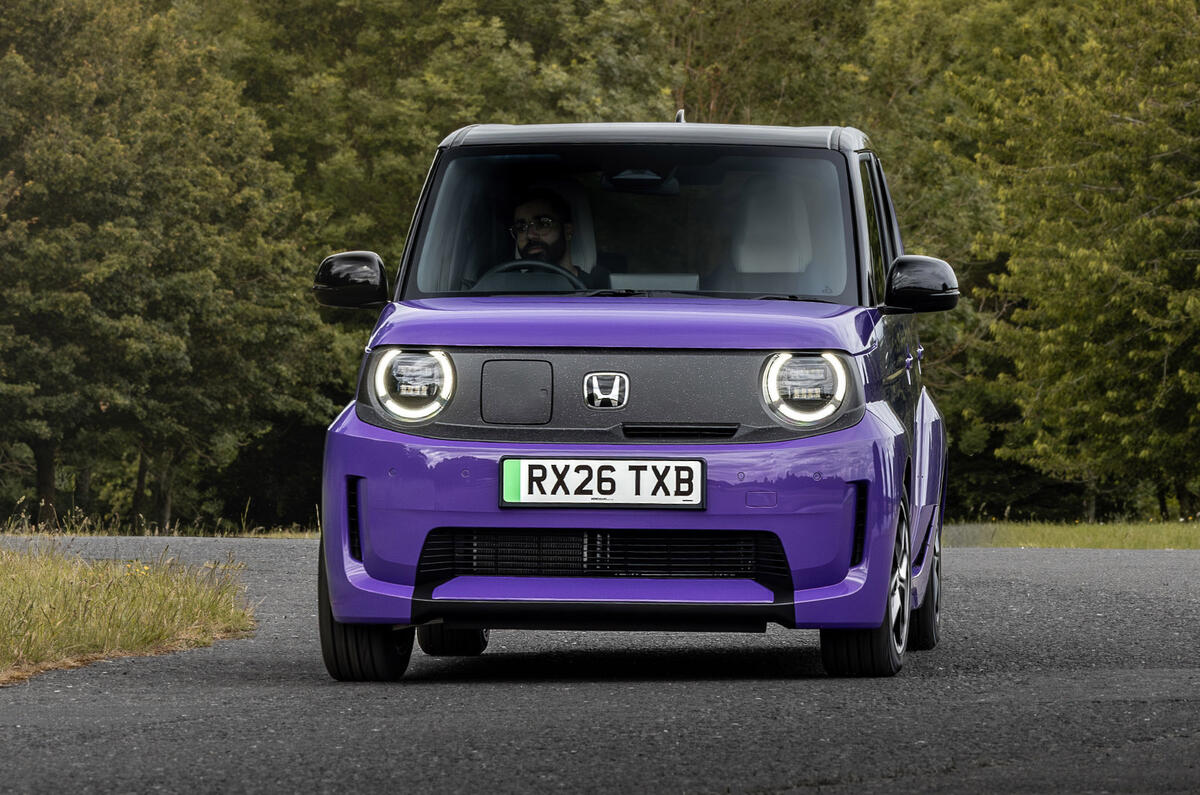
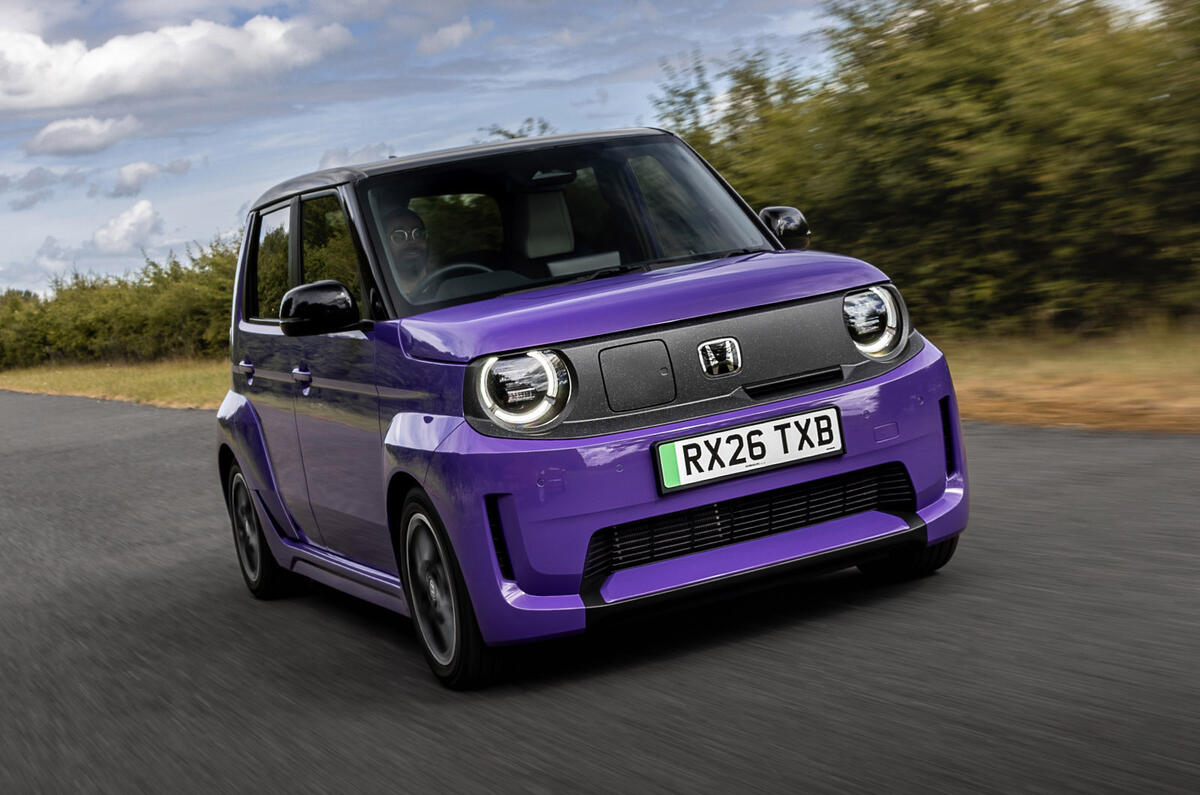
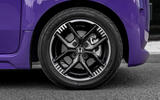
Aside from the flared wings, wider tracks (which take it beyond the width limit for a kei car), racy 15in alloys and slightly more 'aggressive' (it's all relative) bumpers, the Super-N is visually unchanged from the N-One E kei car on which it is based. The prototype we drove at Honda's test track in Japan was wearing some mean-looking Advan performance tyres, but Honda has yet to confirm if these will come as standard in the UK.

Honda won’t tell us yet precisely how technically different the Super-N is from the N-One E, beyond the fact that it’s more performance focused. Engineers did suggest, though, that the fundamental ‘package’ of the base car is unaltered,  so there should still be a 29.6kWh battery under the floor giving slightly less than the more sedate standard car’s 183-mile range, and capable of charging at up to 50kW. Honda says it'll be good for 199 miles of city driving, and 128 miles combined. 

INTERIOR

9
Honnda Super N review 2026 11

Being a budget-friendly car brings the benefit that getting into the Super-N is nice and straightforward, because Honda hasn’t tried to do anything clever with the doorhandles. They’re simple, with a pleasingly mechanical feel. The cabin harbours plenty of surprises, though.

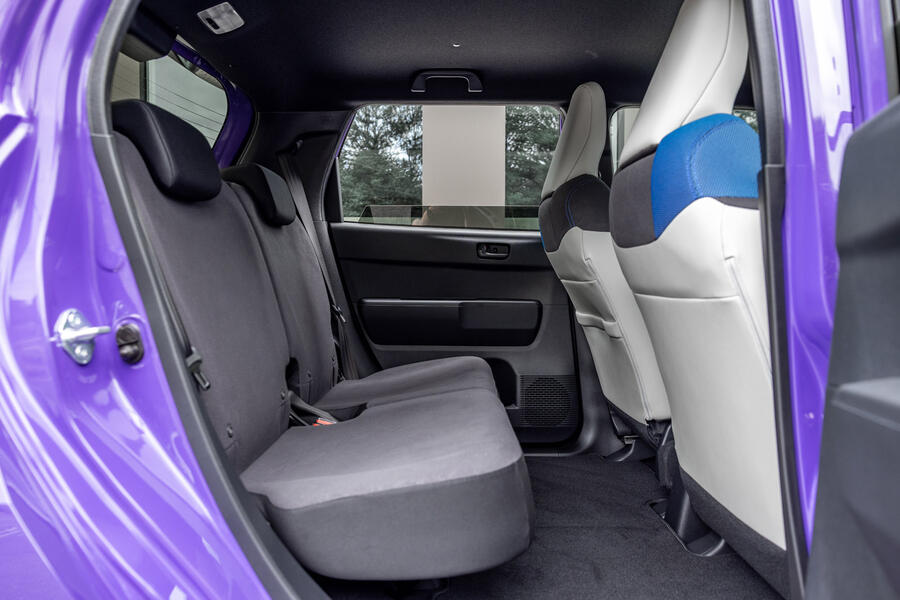
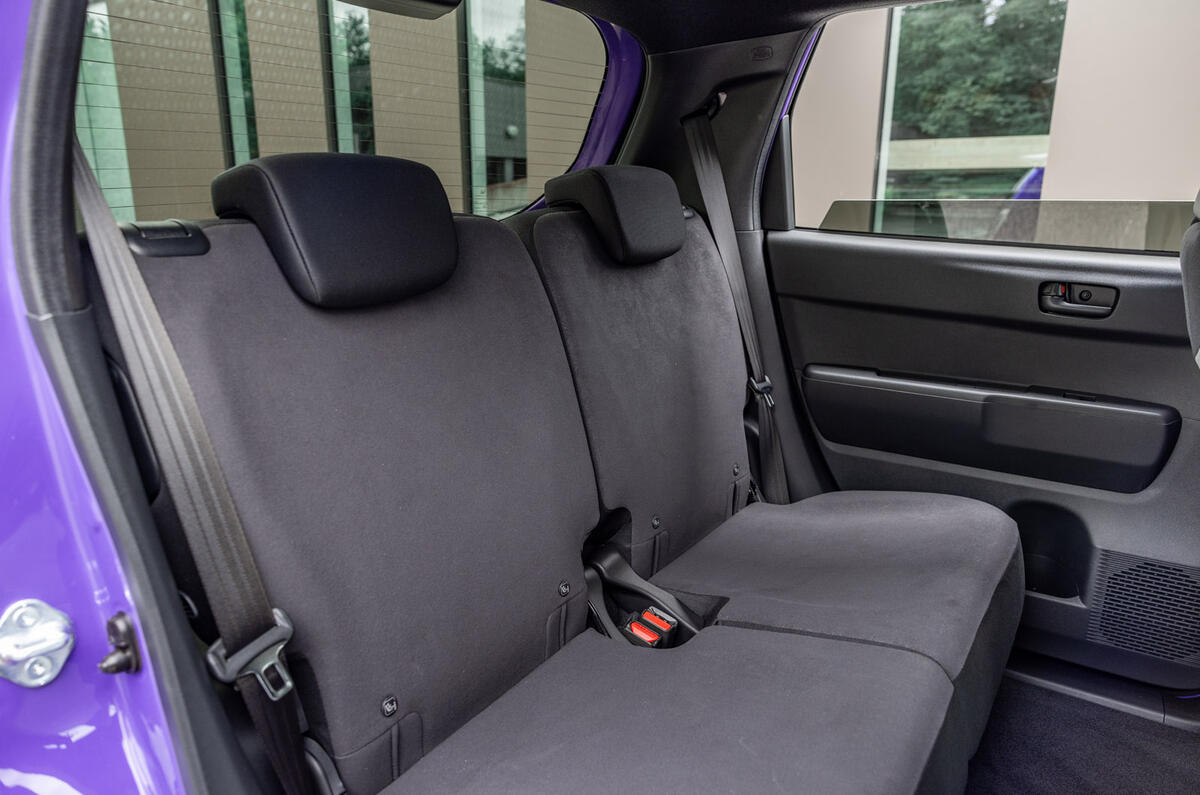
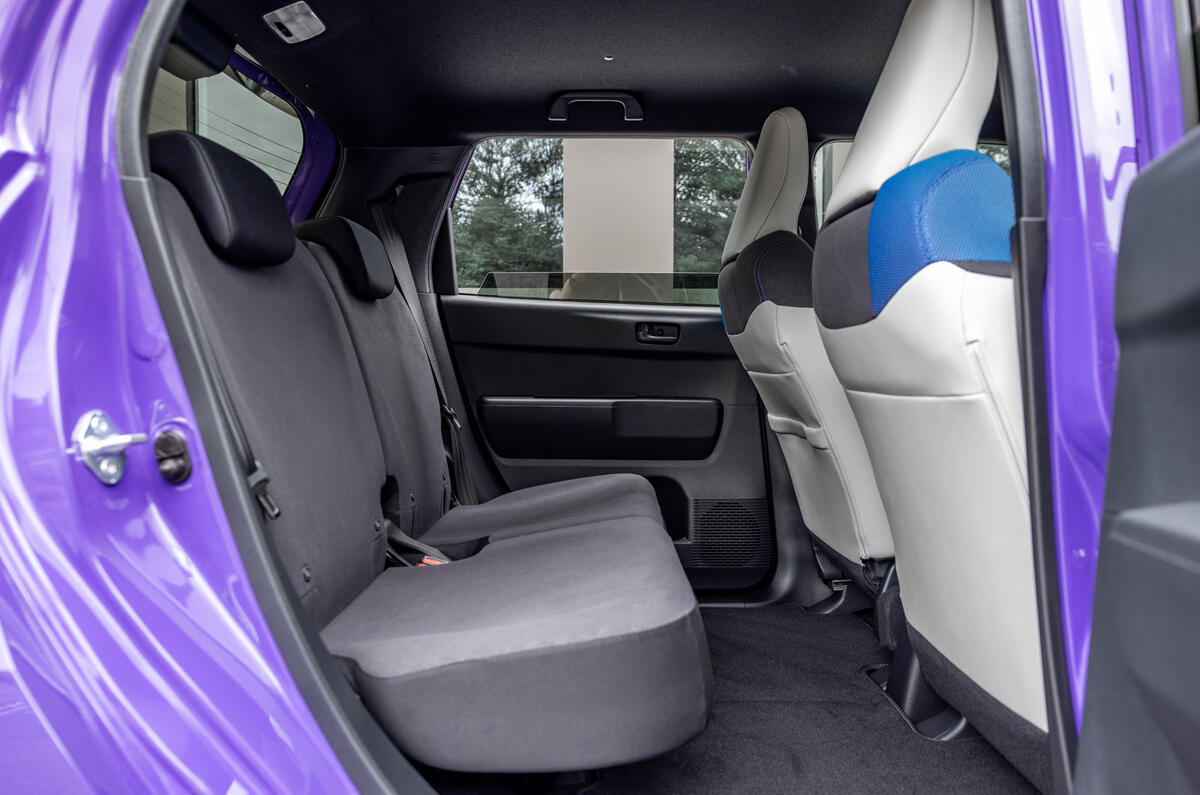
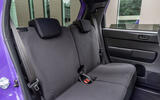
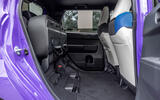
Kei cars are often little marvels of packaging, and the Super-N is no different. The cabin is narrow, but thanks to the big glasshouse it doesn’t feel claustrophobic. The seating position is relatively high and upright, but this feels entirely appropriate. It also leaves a good amount of space for the second row. As a result, two tall adults can just about sit behind each other, which is impressive for a car this small. The floor is fairly high and the rear headroom limited, but still…

The Super-N has a cupholder to the right of the steering wheel, like a Ford Transit.

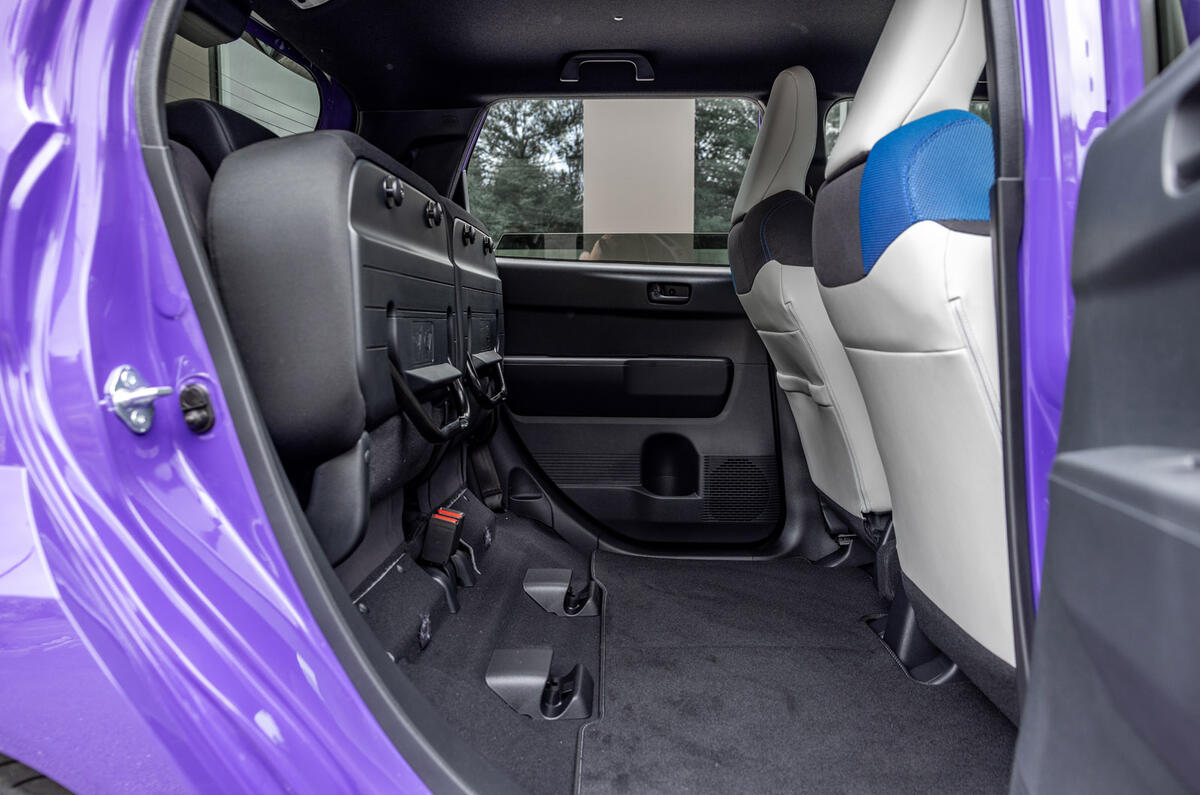
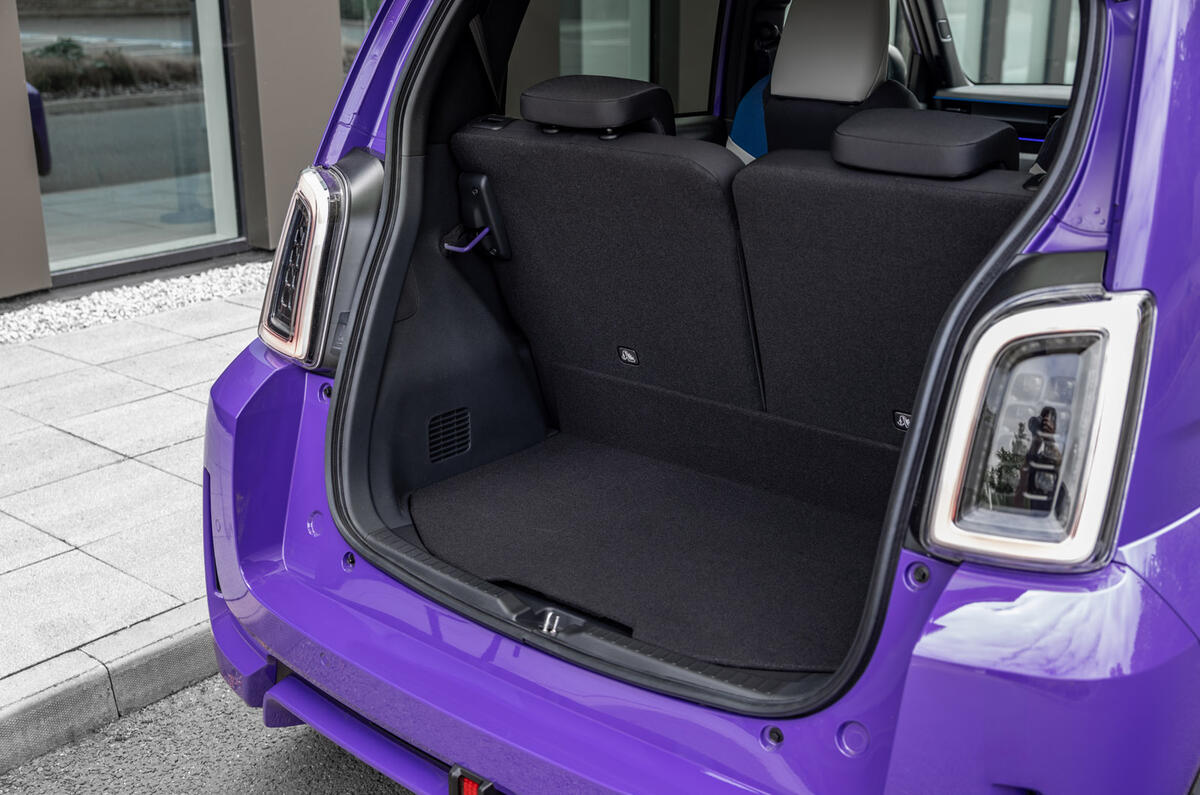
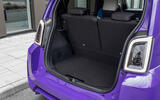
While the rear seats don’t slide like in a Twingo or Hyundai Inster, they are still pretty clever. Like on the Jazz and HR-V (and many Hondas before them), the Super-N has Honda’s ‘magic seats’ with bases that flip up completely to make a tall pass-through space that can fit a bicycle. The backrest also folds down completely horizontally, which transforms this tiny hot hatch into a tiny van. With the seats up, boot space is predicably limited, but 162 litres is still respectable enough.

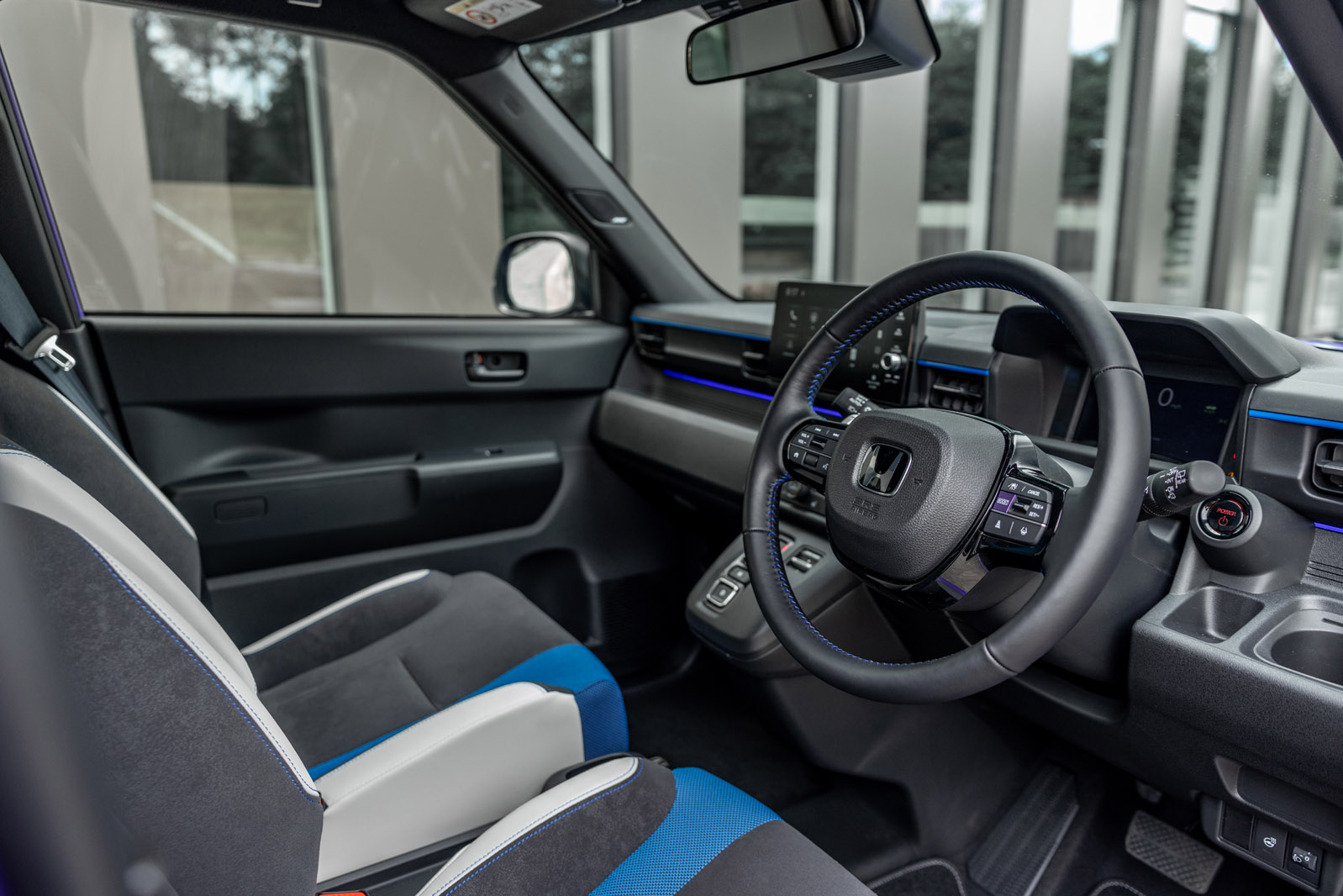
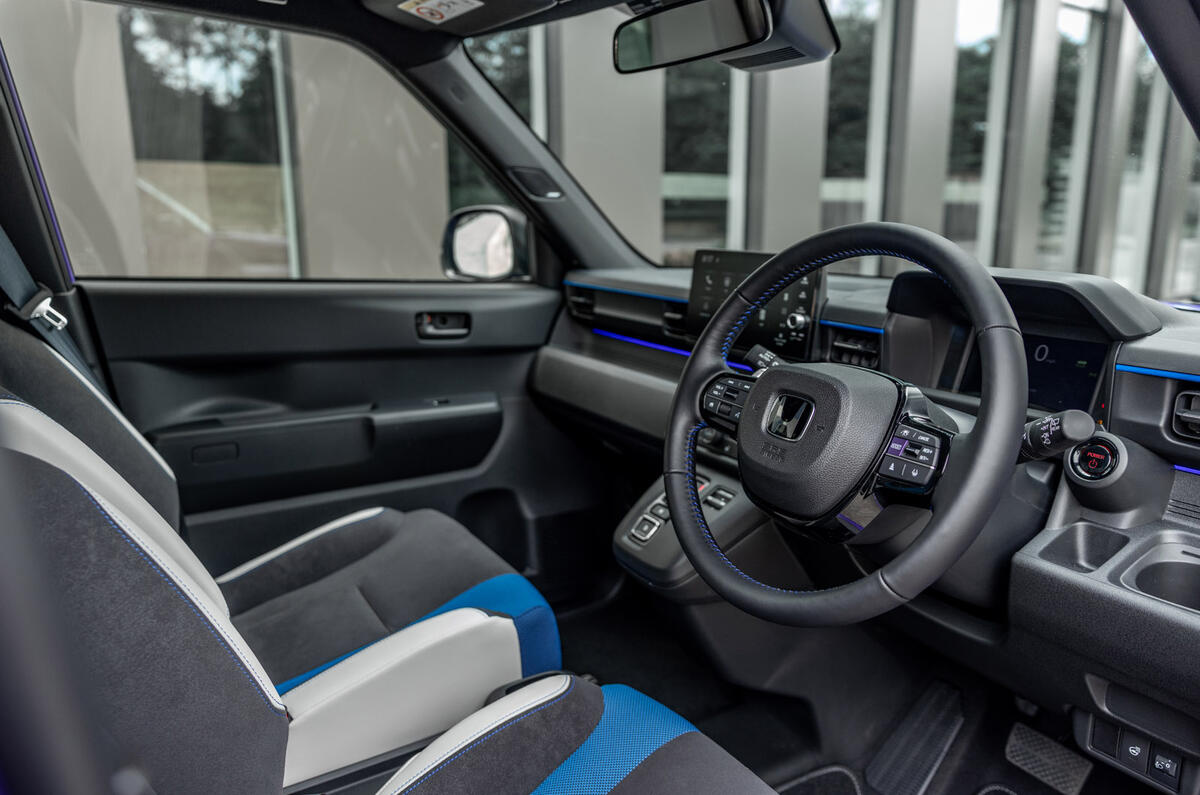
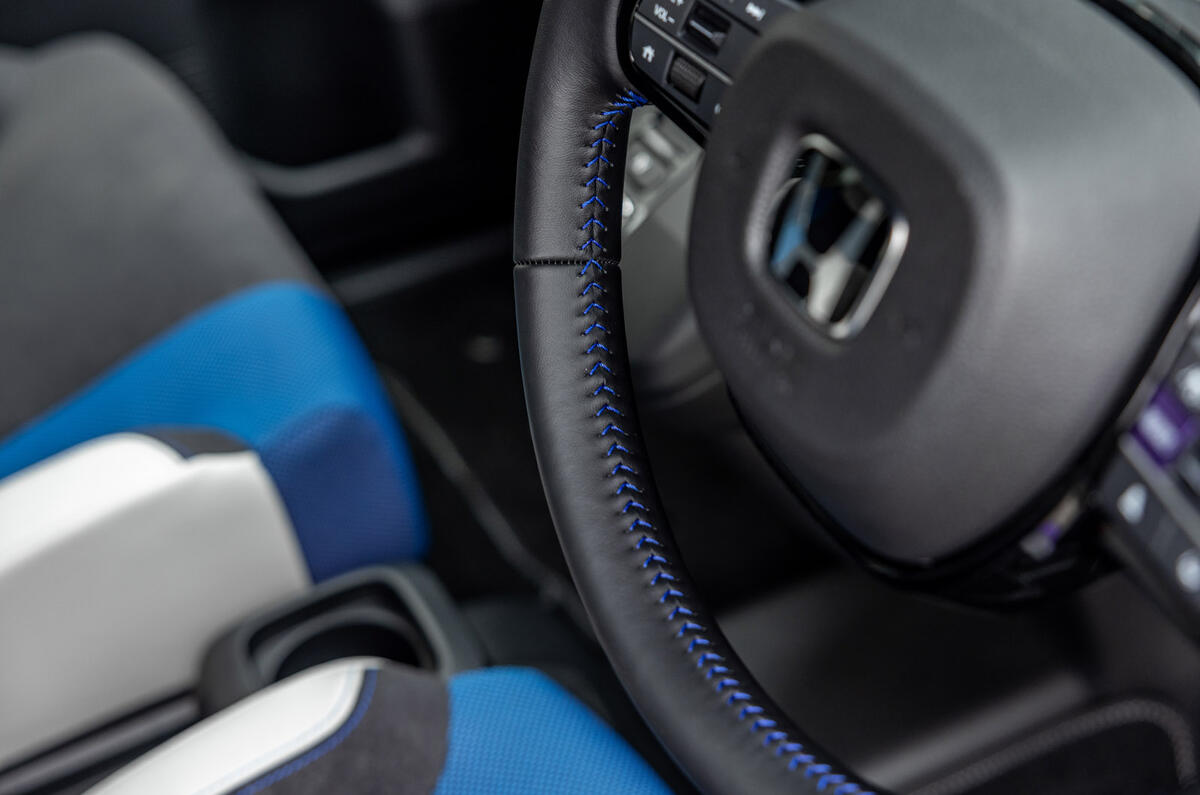
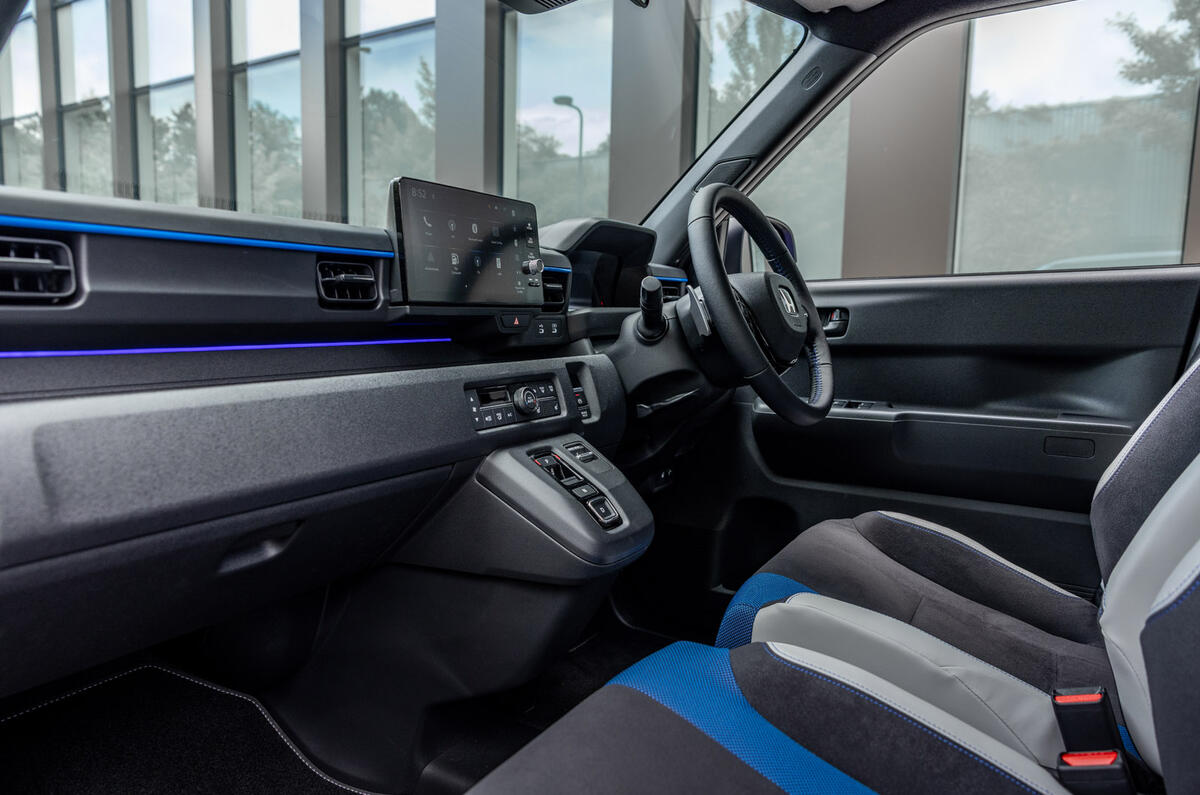
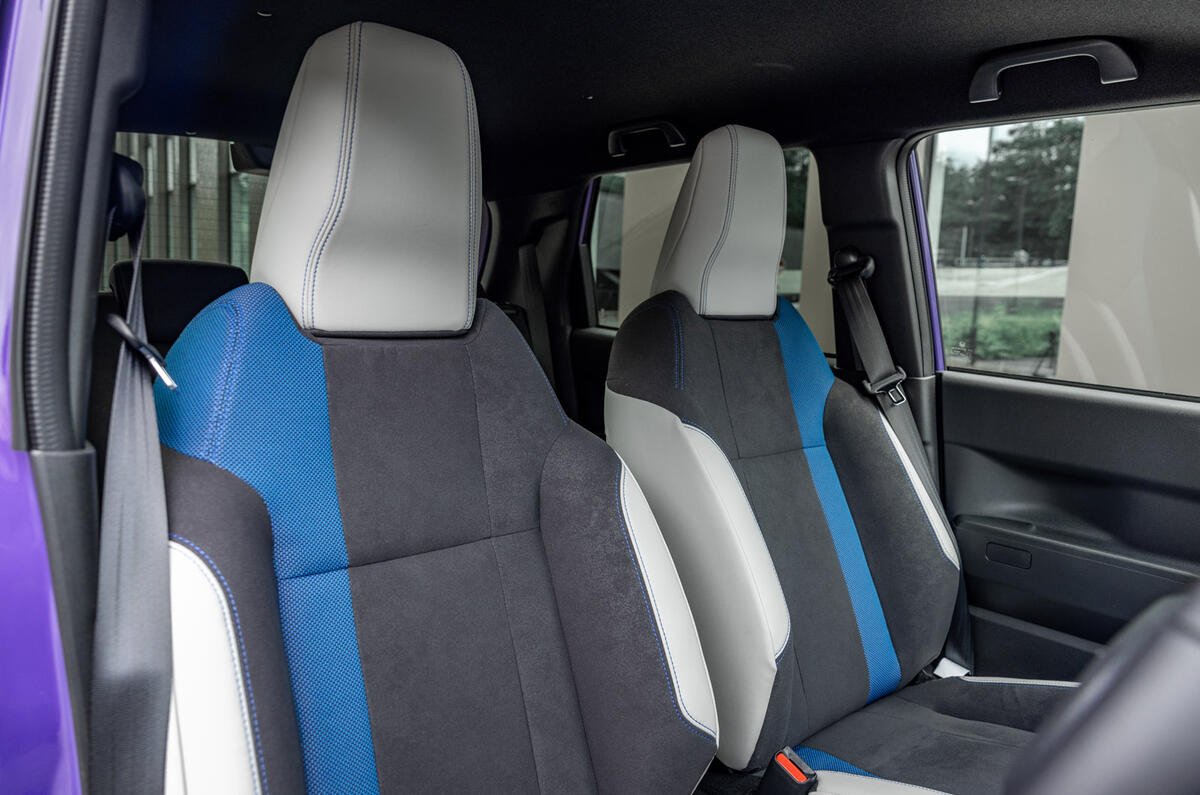
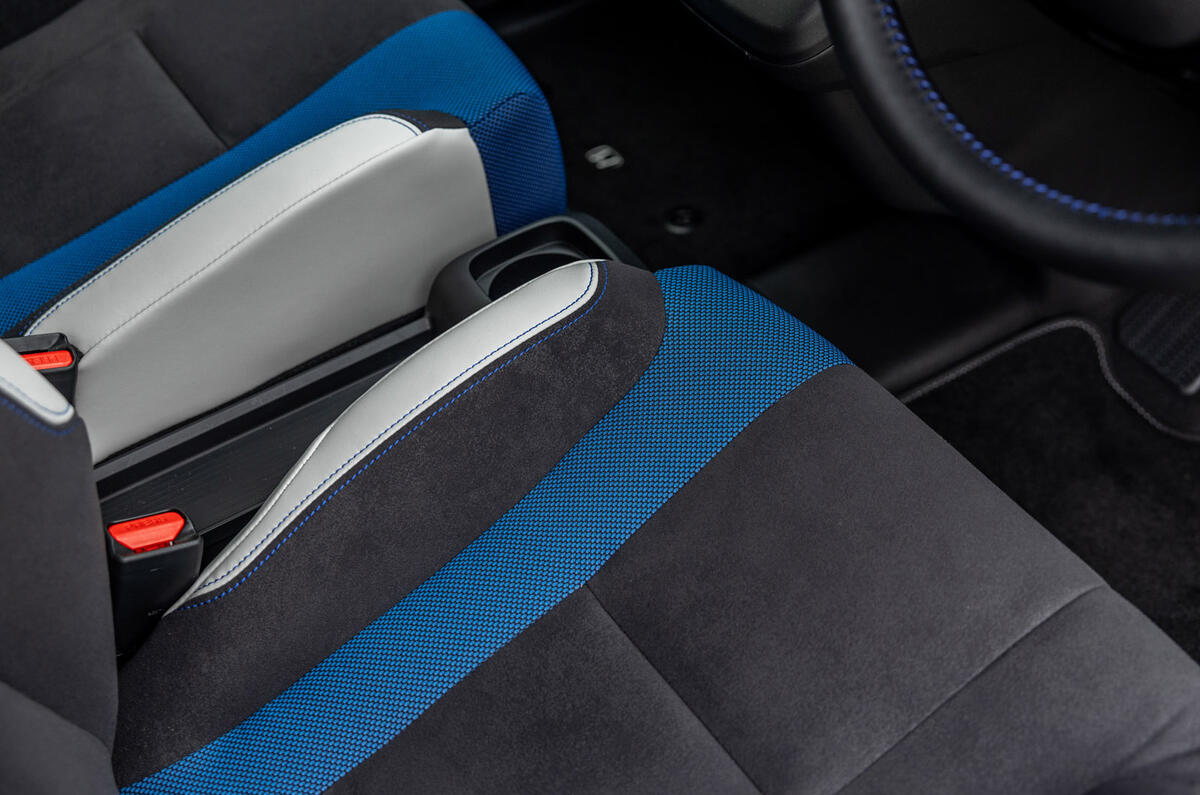
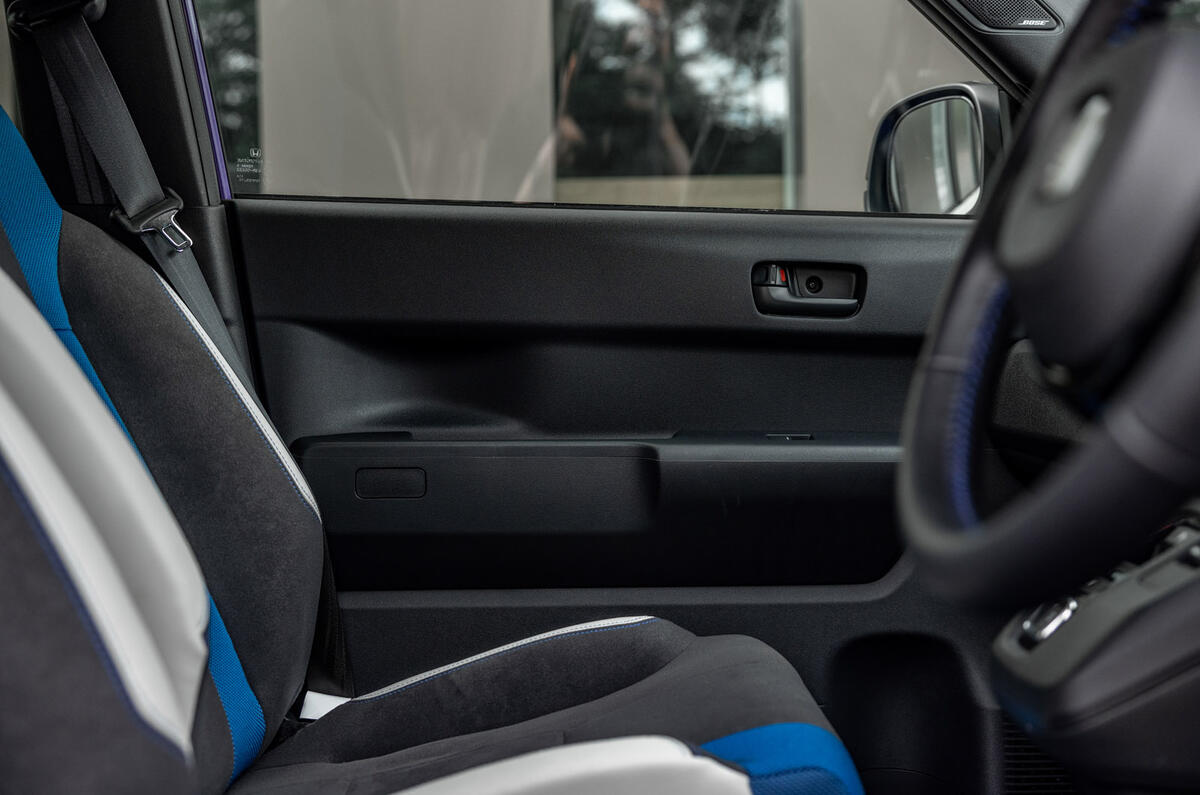
Up front, the Super-N is clearly a cheap car with plenty of hard plastic surfaces, but Honda has given it many thoughtful touches so you’re not reminded of this fact every step of the way. First, there’s the steering wheel, which is round, firm and upholstered in leather, as god intended. The other big one are the seats. They are completely different from those in the N-One base car and feel like properly bespoke sports buckets, with vheavy bolstering. The padding is soft and comfortable, though, and they’re set at an angle that still supports your thighs nicely. We also love the combination of white faux leather, black microsuede and blue fabric to put you in a racy mood.

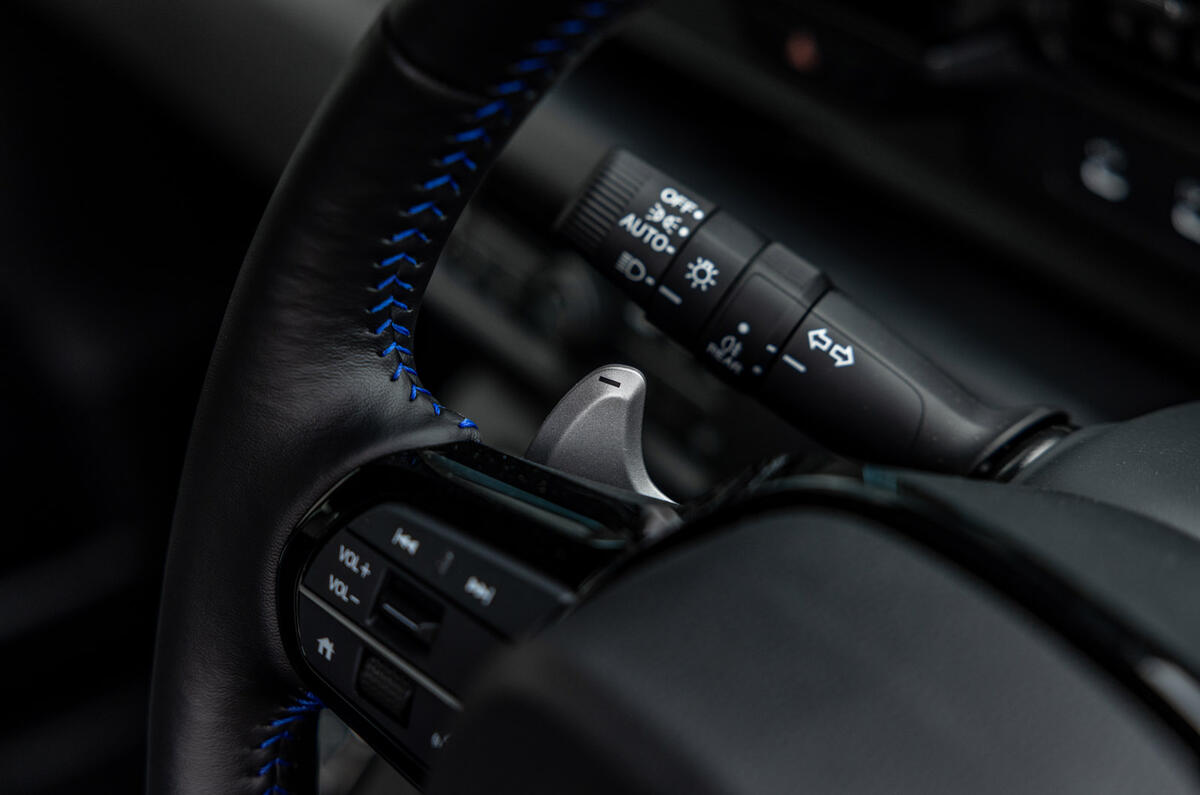
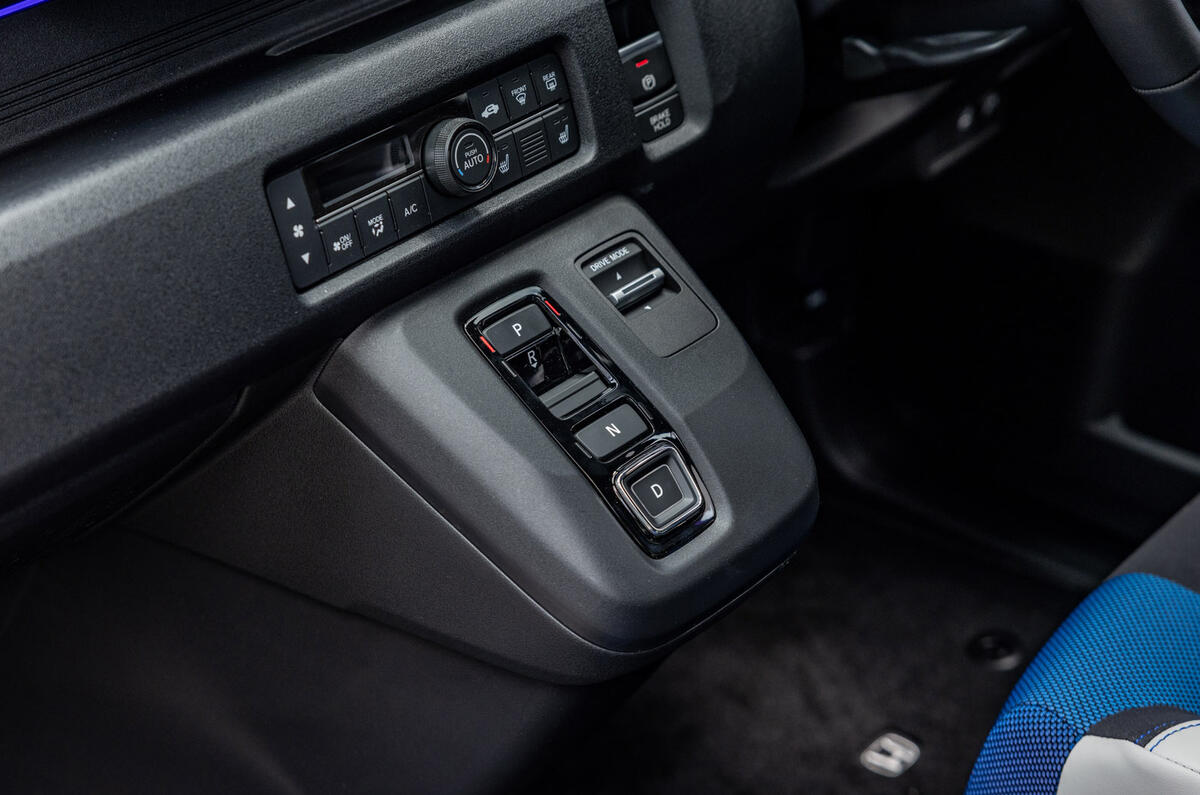
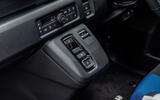
The tall dashboard has quite a funky three-tier design with useful storage space on the middle tier and a cupholder to the right of the steering wheel. There’s a relatively big glovebox and more storage on the floor between the seats. Pleasingly, all the important controls, including the climate, heated seats and steering wheel, media volume, mirrors and drive modes, get chunky physical controls.

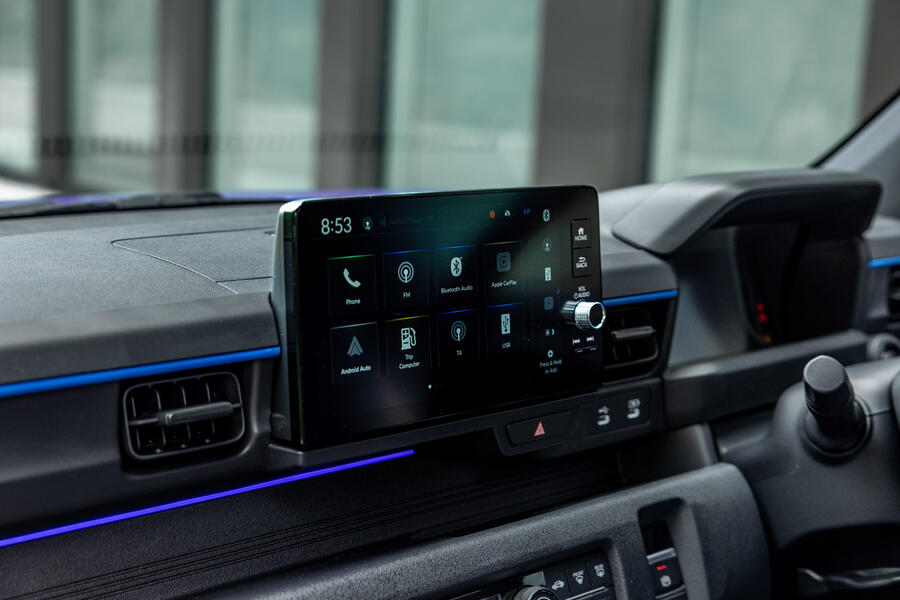
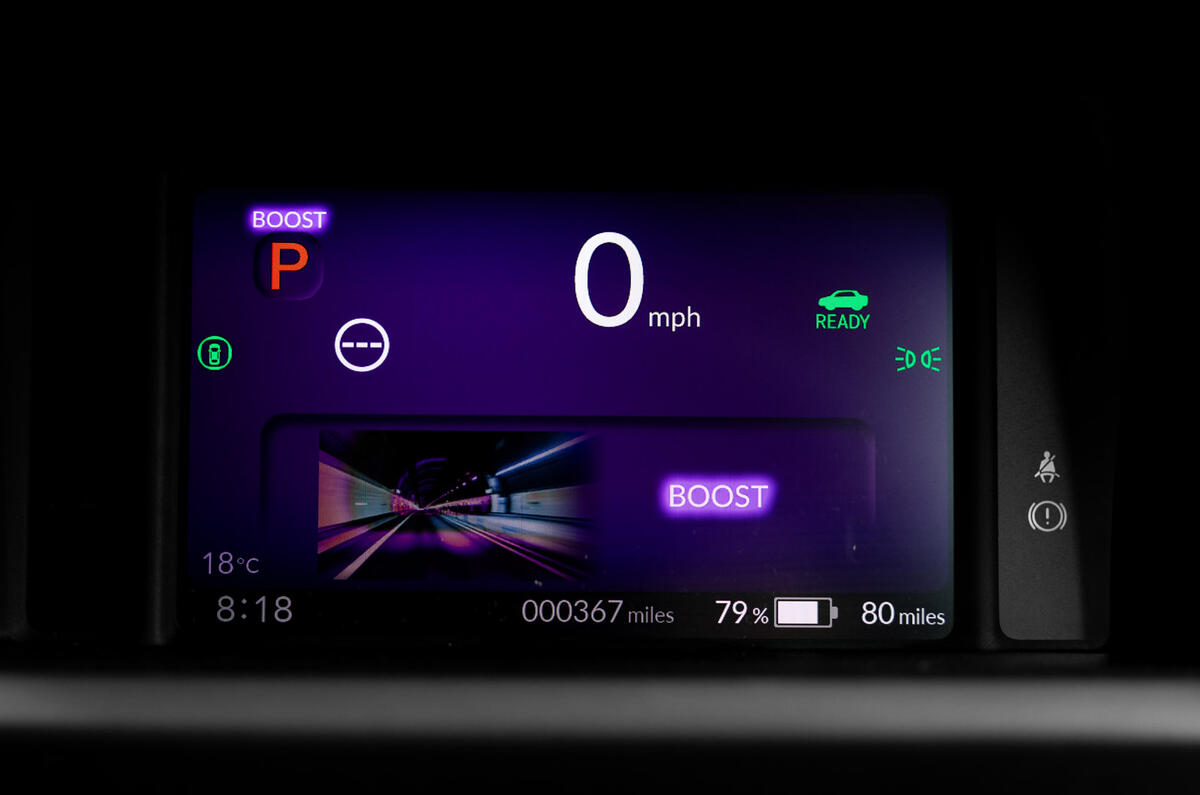
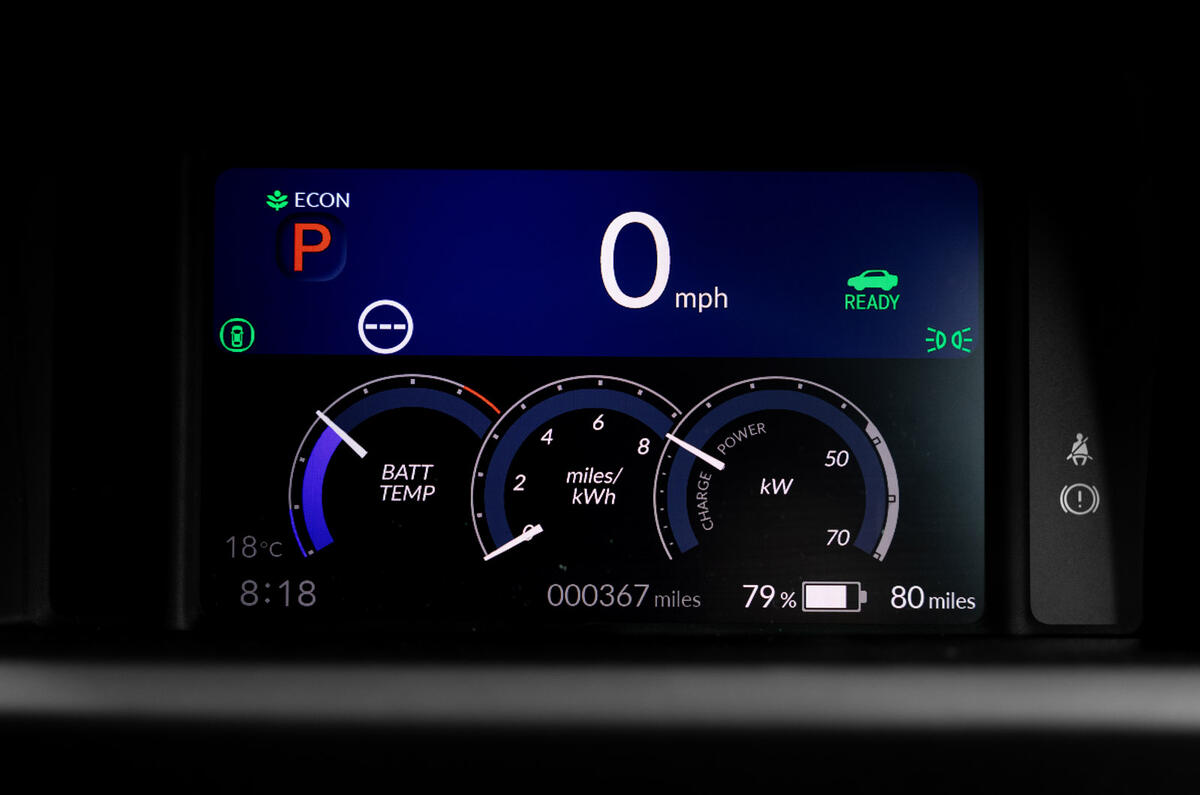
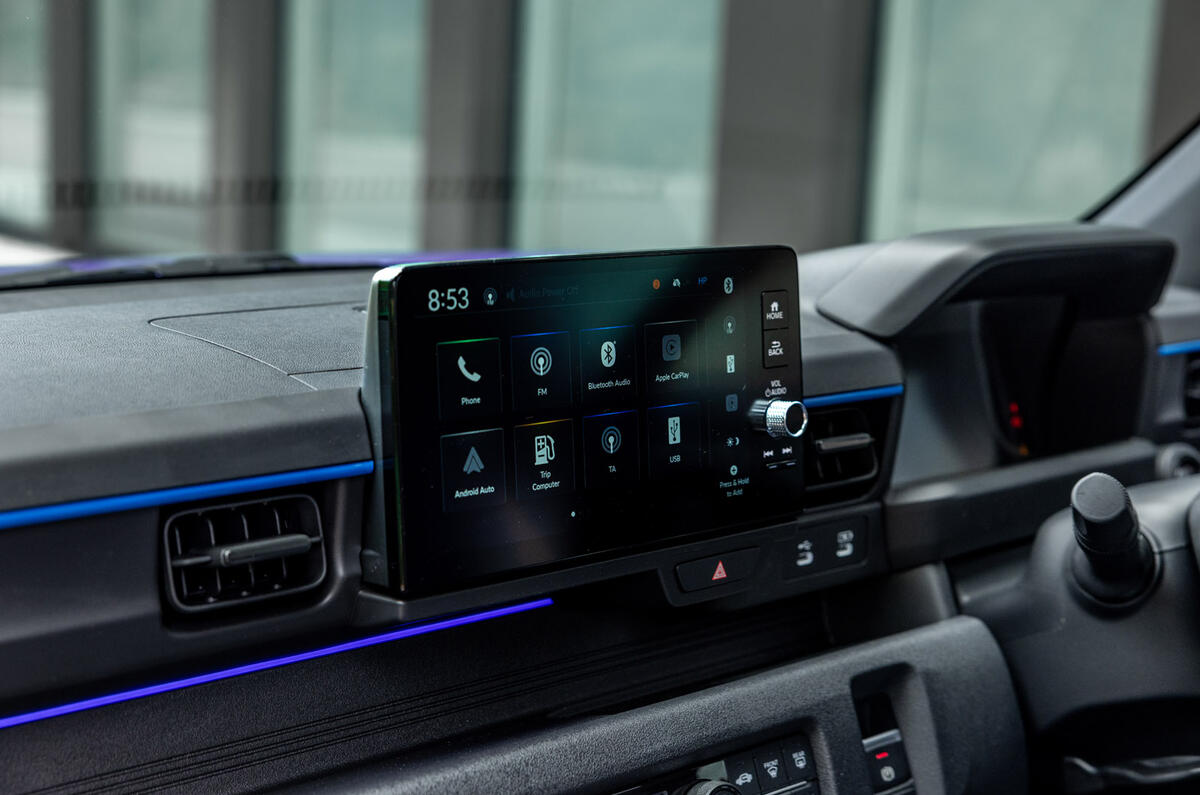
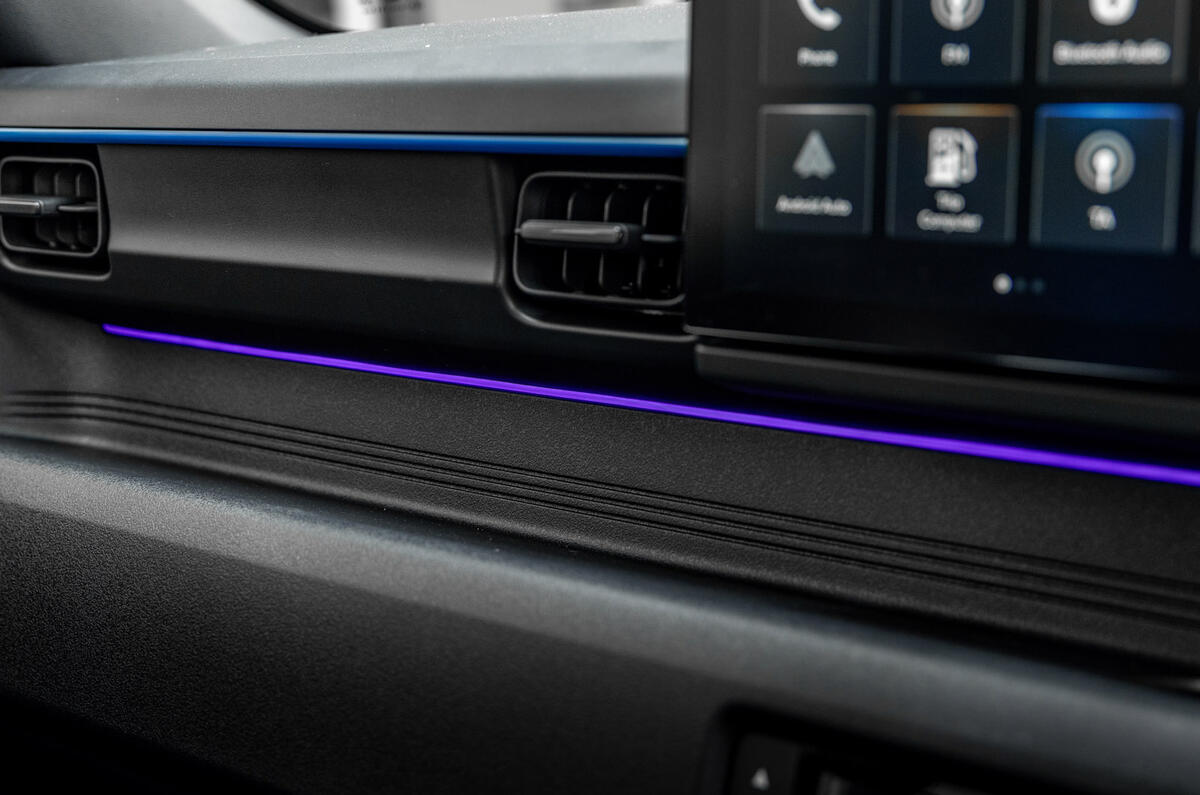
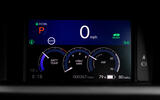
The digital side is fairly basic, as befits a basic car. The 7in driver display has simple and calm graphics, and it offers a number of lay-outs – although scrolling between them is a little cumbersome. The main infotainment screen as in all other modern Hondas, which means it looks a little dated and doesn’t offer very many functions. That said, activating the phone mirroring (wireless for all devices) and ignoring the native interface works quite well.

ENGINES & PERFORMANCE

6
Honnda Super N review 2026 33

You’d be forgiven for looking at the Super-N’s swollen wheelarches, deep bumpers and sports seats and expecting spirited performance. Do that and you’ll be disappointed when you first put your foot down. It only has 63bhp in the standard modes, and 94bhp in Boost mode, for 0-62mph times of 14.5sec or 10.0sec respectively.

Again, this goes back to the Super-N’s kei-car origins. There is a long history of kei cars with sporty looks but no extra performance, because it’s not allowed under the regulations and there’s not much point when you’re in Tokyo traffic – not that this stops individuals and aftermarket companies from modifying them, of course.

There are two more drive modes: Econ, which softens the accelerator and turns down the climate control; and Sport, which gives you engine noise and sharper accelerator response but still only 64bhp. Both feel a bit pointless, and we'd rather have an individual mode.

But we’re not in Tokyo, and we can’t help but feel this car deserved more authoritative performance. But given that Honda buys in the drive system from a supplier, that probably wasn’t viable.

In the standard modes, acceleration is fine for around town. The brake pedal is progressive (it’s the same by-wire e-booster as on Honda’s hybrid cars), as is the one-pedal operation that comes into play in City mode. Performance is marginal for maintaining pace on A-roads and merging on motorways, though.

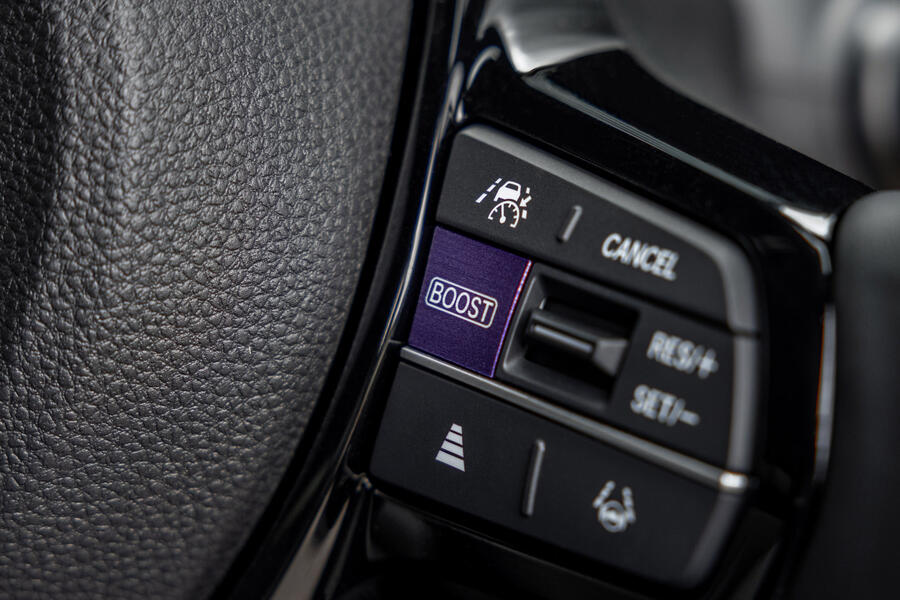
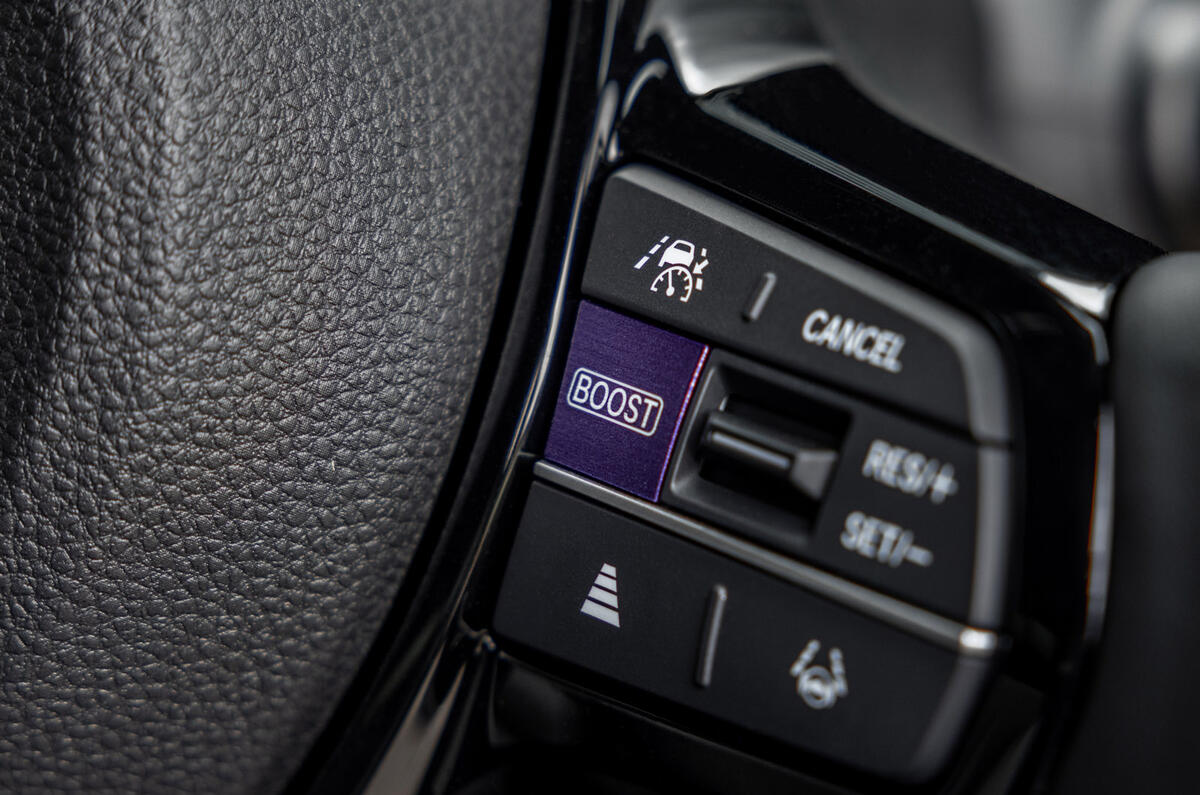
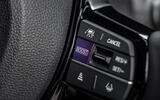
Engage Boost mode via the purple button on the steering wheel and the Super-N feels a lot nippier but still only ordinarily quick. Boost mode also calls up the car’s party trick: simulated engine noise and seven fake gears. It’s easily one of the more convincing systems of its kind: the ‘engine’ sounds like a high-performance four-cylinder turbo engine, and it’ll bog down at low revs and clatter into the limiter if you don’t shift up in time. The shifts themselves are faster than any real gearbox. Ultimately, the illusion is not quite as strong as it is in the Hyundai Ioniq 5N and 6N cars because the ‘engine’ is so slow to rev it feels like a diesel truck.

Still, it adds an additional layer of engagement, which would be very welcome if it weren’t mandatory. There is no way to get the additional power without the simulated engine, so if you want the Super-N to be acceptably quick without the brm-brm noises, you’re out of luck.

Clearly, there’s no technical reason it has to be this way, but the engineers say that to have the engine noise in the faster mode is part of the concept of the car. We think this is a big mistake and will alienate quite a few people who just like the pure EV experience, and we hope Honda can come up with a quick software fix.

RIDE & HANDLING

8
Honnda Super N review 2026 34

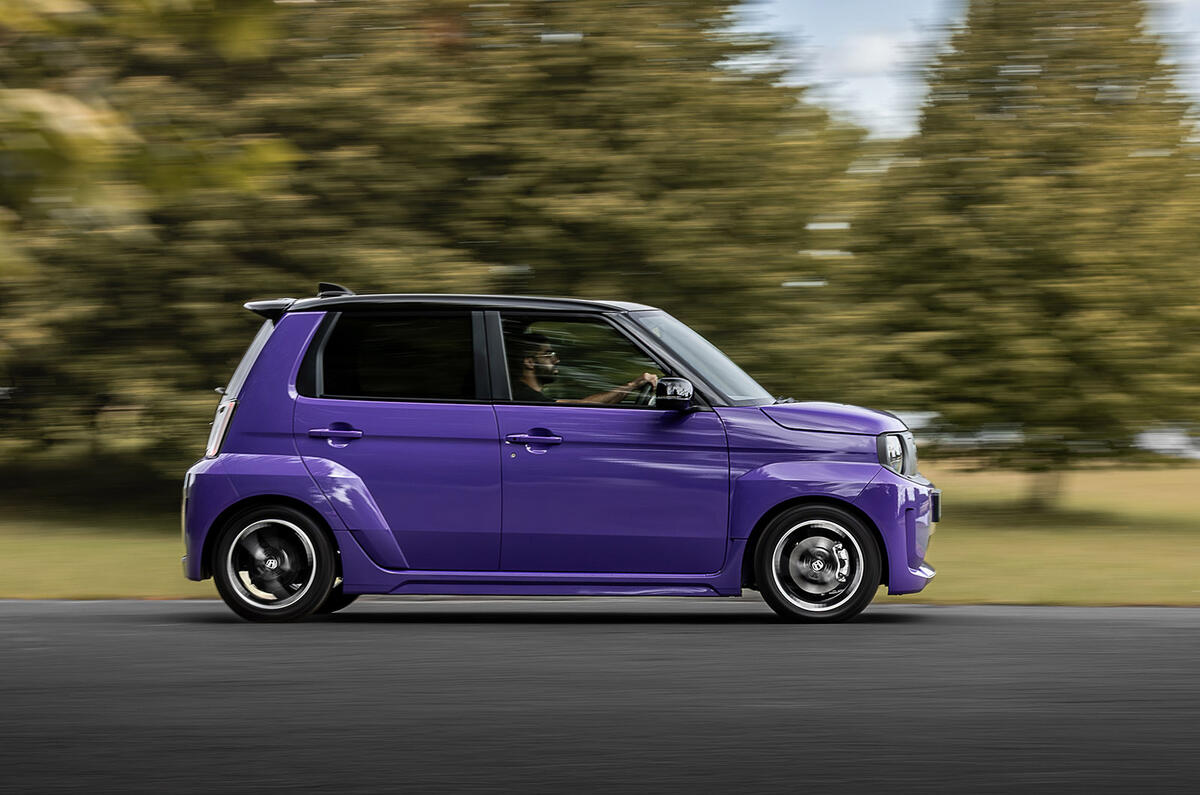
The Honda Super-N is a rare thing in 2025: a genuinely small car. It might break out of the Kei car regulations, but it’s still shorter and narrower than a Kia Picanto, let alone a Renault 5. On British Tarmac that feels like a bit of a superpower: twisty, narrow, hedge-lined roads suddenly become open playgrounds because there’s always room to carve a line or avoid that pothole. There are simply more places to have fun in a car like this than with a supercar.

The Super-N backs this up with textbook fun small-car handling. That is to say that it certainly doesn’t possess the most sophisticated chassis, but it counters that with a clear sense of fun. It has a simple torsion beam at the back, and on bumpy roads it will bounce around a bit, but its small size and low weight (1097kg) mean it never feels threatening.

Instead, you always feel confident chucking the Super-N into a bend. The steering is sensibly geared, with some keenness just off-centre, and although there isn’t loads of feel, it does weight up a bit to let you know the car is gripping.

The front-end responds well initially, and there’s strong grip in the dry from the Yokohama Advan Fleva tyres. Back off the power mid-corner and there’s a fleeting hint of some throttle-adjustability as the chassis wants to start rotating, but the non-switchable stability control rudely kills any slides before they can develop.

In some ways, the Super-N is somewhat reminiscent of the VW Up GTI in that it doesn’t have the poise and crispness of a proper performance car. But then with fairly basic suspension, it can’t be one, and it isn’t meant to be. Instead it thrives on its lightness and chuckability, which means there’s no mass that needs to settle into a corner: the Super-N just grips and turns in that go-karty way. Put simply, it's just fun.

Clearly, then, you wouldn’t buy a Super-N for comfort. The ride is slightly bouncy and clunky, and there’s a lot of road noise at motorway speed, but that’s all pretty standard city car stuff. Adaptive cruise control is standard and works fairly smoothly, it but will only go up to 71mph.

As a very early example shipped over for the UK launch event, our test car didn’t seem to have an overspeed warning. The lane keep assist is somewhat rudimentary but easy enough to disable.

MPG & RUNNING COSTS

7
Honnda Super N review 2026 01

The Super-N has one clear and obvious Achilles’ heel: its 128-mile WLTP range. Early testing suggests it’s easily capable of exceeding 4.0mpkWh. Honda only quotes the battery’s total capacity of 29.6kWh, but assuming a 27kWh usable capacity, that would mean the WLTP range isn’t unachievable.

That clearly limits its usability to being a city runabout or a second car in a way that was never the case with petrol A-segment cars. A VW Up may not be your first choice for a road trip, but it can do it; the Super-N's 50kW DC charging does little to compensate.

The tyres are off-the-shelf, fairly sporty Yokohama Advan Fleva. I wonder if the Super-N could gain some range with a lower-rolling resistance compound. Good options are available these days that maintain good grip and steering, albeit perhaps not in 15in.

However, we must put this in context, because the Super-N is part of a wave of sub-£20k short-range EVs. The Twingo musters 162 miles, the BYD Dolphin Surf Active 137 miles and the Citroën e-C3 132 miles. Priced at £18,995, the Super-N thus has at least a fighting chance at relevance. It’s unfortunate that the Super-N doesn’t get the government EV grant, even though it’s built in Japan. The bottom line is that the Fiat Grande Panda and Renault 5, with around 200 miles of range, aren’t much more expensive.

Those options will come with far less equipment, though. The Super-N has heated seats and steering wheel, keyless entry, adaptive cruise control and a six-speaker Bose hi-fi as standard, since there is only one trim level. Apart from some paint options (£675 for monotone, £975 for two-tone), which we’d ignore in favour of the standard Boost Violet, there are no options.

VERDICT

Honnda Super N review 2026 36

You might look at the Super-N’s 128-mile WLTP range and conclude Honda hasn’t progressed since 2020, when it came up with the 125-mile Honda E. While it’s clear that Honda is in desperate need of a credible mainstream EV and the Super-N isn’t it, we see a better chance of success for it than Honda’s first attempt.

The E cost nearly £40,000 by the time it went off sale, but the Super-N is less than half as expensive. At £18,995, it’s one of the cheapest cars on sale at the moment, but unlike comparable rivals, it has a real sense of character and quality. It’s also remarkably practical for its small size. Above all, what makes it endearing is that it is genuinely fun to drive.

The Super-N is far from perfect; it could do with more range and power and a way to toggle the simulated engine noise independent of the drive mode. As a city car or a second car for school runs and blasts to the shops and the station, we can see someone getting a lot of enjoyment and use out of it

Illya Verpraet

Illya Verpraet Road Tester Autocar
Title: Road Tester

As a road tester, Illya drives everything from superminis to supercars, and writes reviews and comparison tests, while also managing the magazine’s Drives section. Much of his time is spent wrangling the data logger and wielding the tape measure to gather the data for Autocar’s in-depth instrumented road tests.

He loves cars that are fun and usable on the road – whether piston-powered or electric – or just cars that are very fit for purpose. When not in test cars, he drives an R53-generation Mini Cooper S or a 1990 BMW 325i Touring.