9

After the definitive performance crossover EV comes this Taycan hunter

Find Hyundai Ioniq 6 N road test: The ultimate electric driver's car? deals
Other Services
Sell your car
84% get more money with

The electrification of Hyundai’s N performance brand has so far gone rather better than plenty of people probably imagined it might. 

The lightning rod for the transformation has been the Ioniq 5 N, which was launched in the UK in 2024. It arrived with a twin-motor powertrain of remarkable torque-vectoring and combustion-aping qualities – and duly proved itself to be a breakthrough moment in the development narrative of the electric driver’s car.

It has been showered with praise and awards – not least among them a fulsome five-star Autocar road test verdict. And it has sold particularly strongly in the UK, which is currently second only to the US market in its commercial prominence.

That reception must surely have added a hint of trepidation when Hyundai came to decide where, exactly, this bold new N brand would go next. For the answer to that, enter the subject of this road test: the Hyundai Ioniq 6 N.

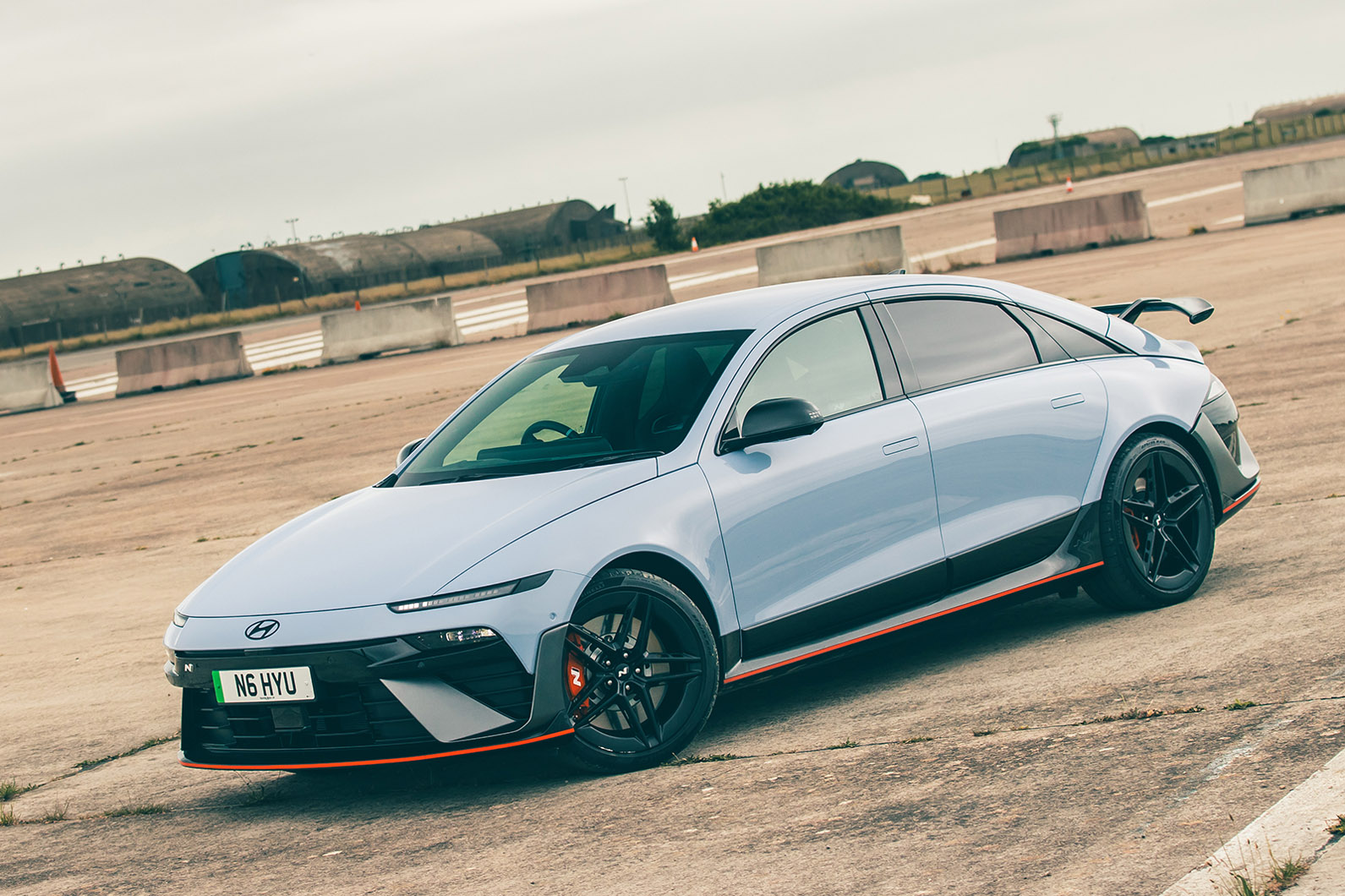
This is the performance version of Hyundai’s famously distinctive ‘streamliner’ electric saloon, ready to blend the elegant and aerodynamic with the dramatic and aggressive in a way that the super-saloon niche has rarely seen. 

It shares the 5 N’s E-GMP platform and its pioneering electric twin-motor powertrain, but it develops elements of the style of that powertrain’s delivery, as we’ll come to explain, and adopts axles and suspension widely revised from those of the standard Ioniq 6.

Advertisement
Back to top

DESIGN & STYLING

8
Hyundai Ioniq 6N reveiw 2026 02

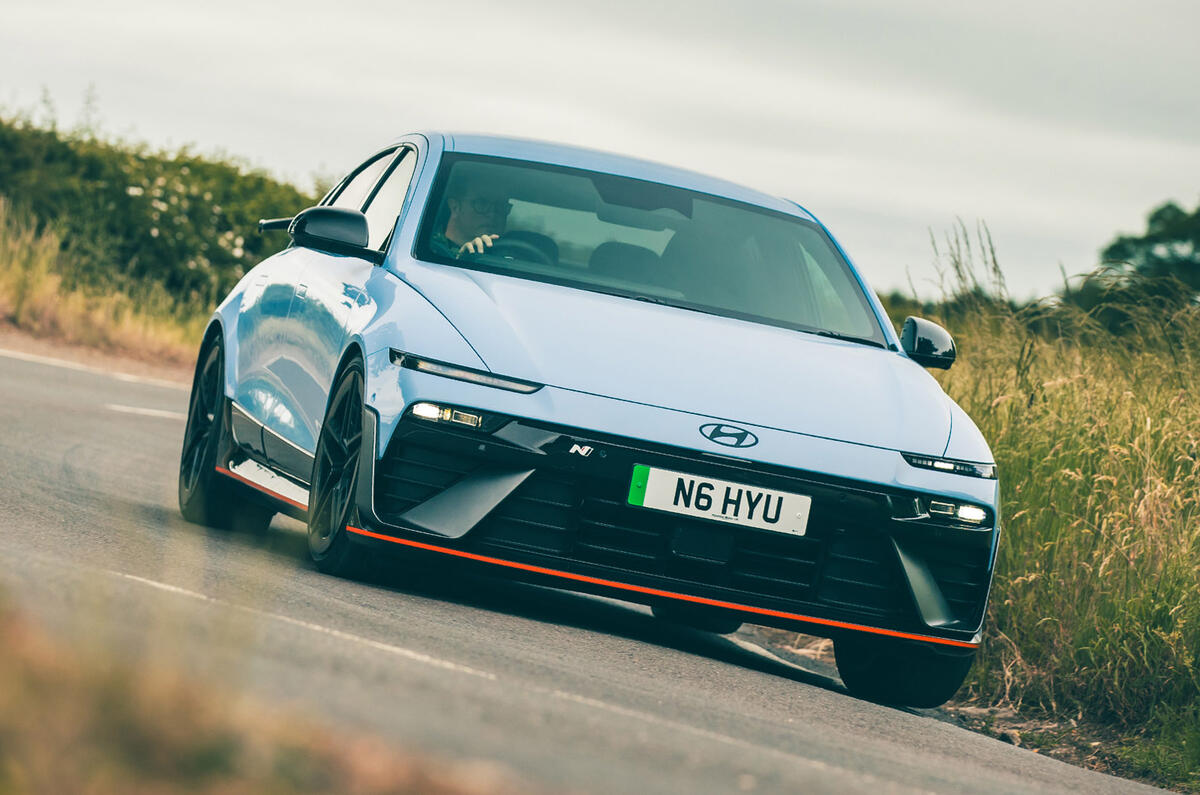
If the Ioniq 6 N’s styling looks more differentiated than is typical for a performance derivative, that’s partly the result of timing. This is effectively the range-topping version of the facelifted Ioniq 6, the supporting versions of which are due to filter into UK showrooms later this year.

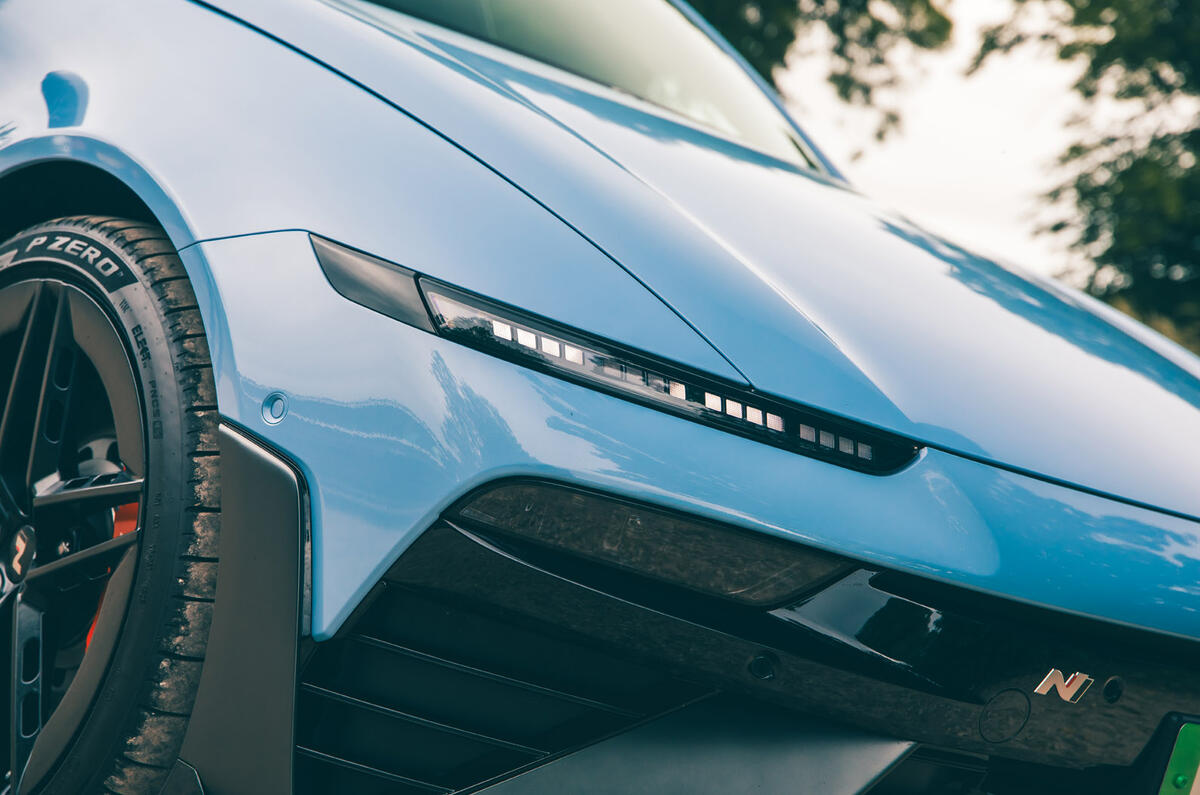
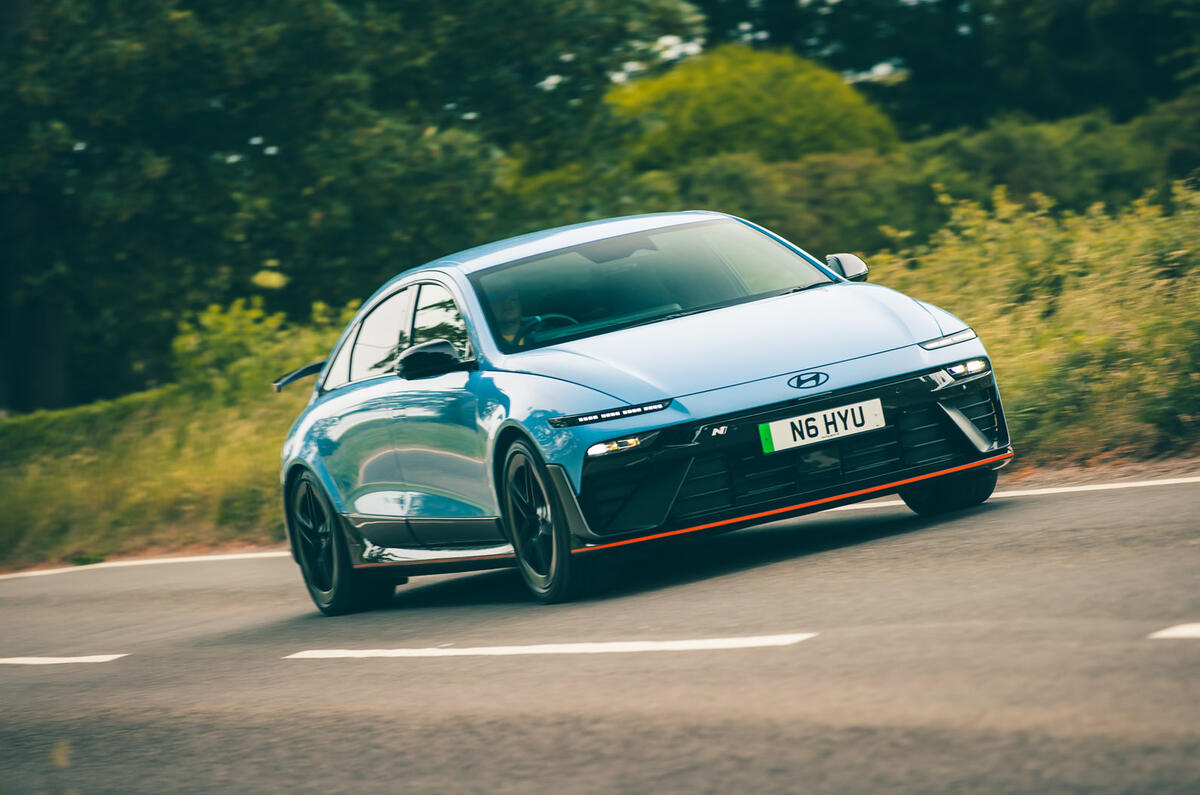
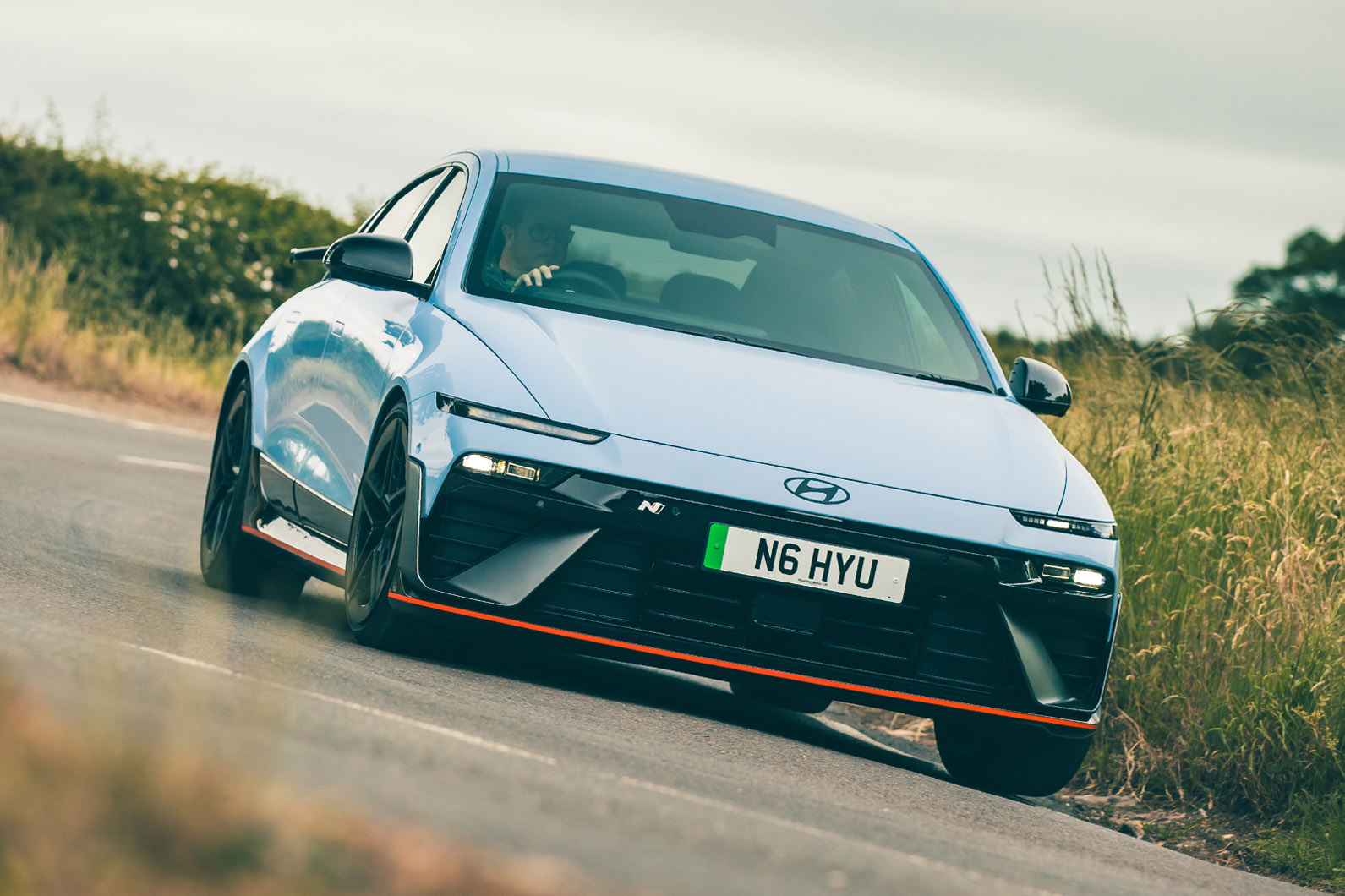
So our test car has a notably different front-end design, which junks the friendlier-looking swept-back headlights of the original Ioniq 6. In their place, it adopts a new combination of ‘feature’ LED positioning lights, with the accompanying main headlight  units hidden in the corners of the bumper/intake section underneath.

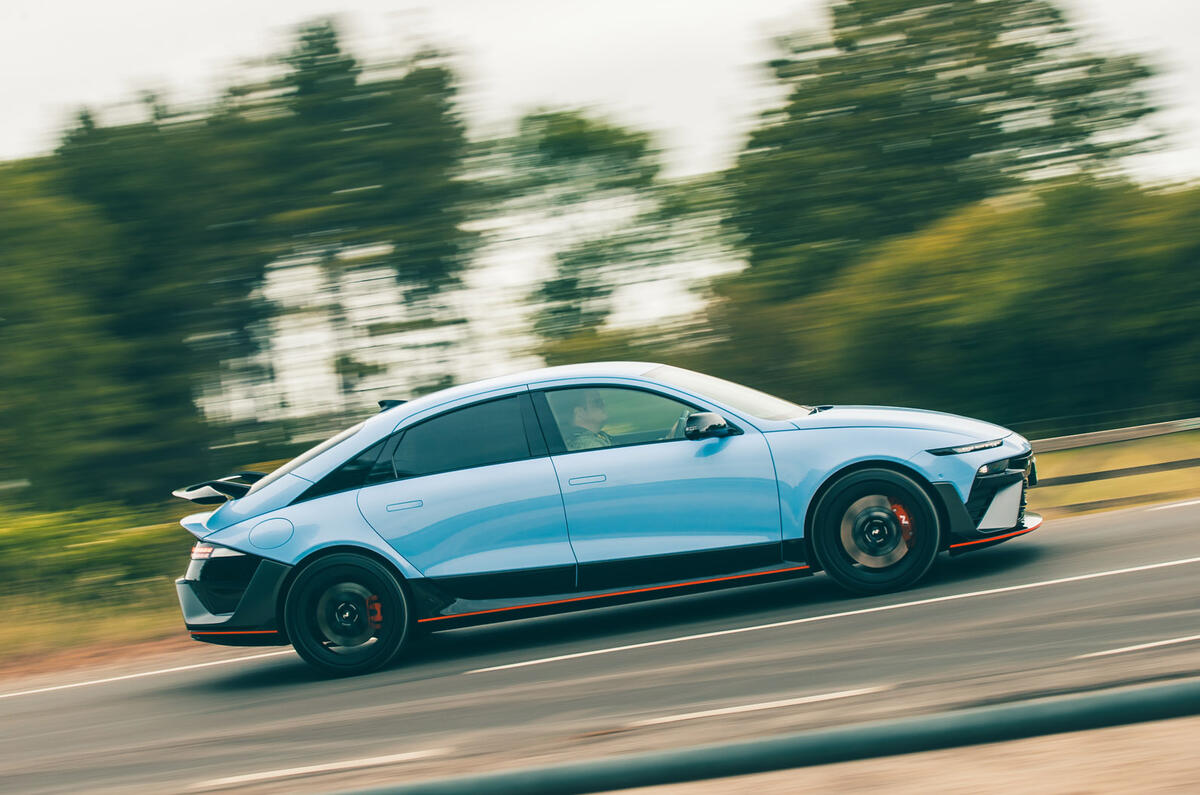
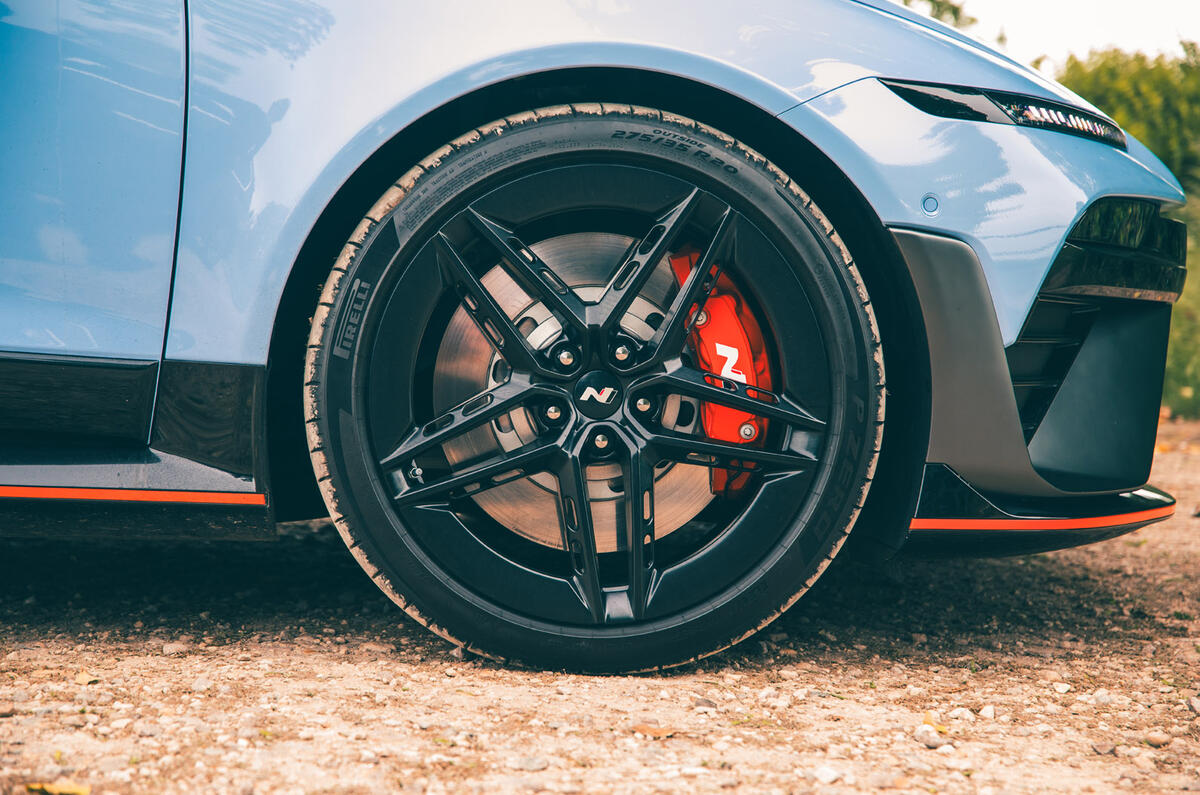
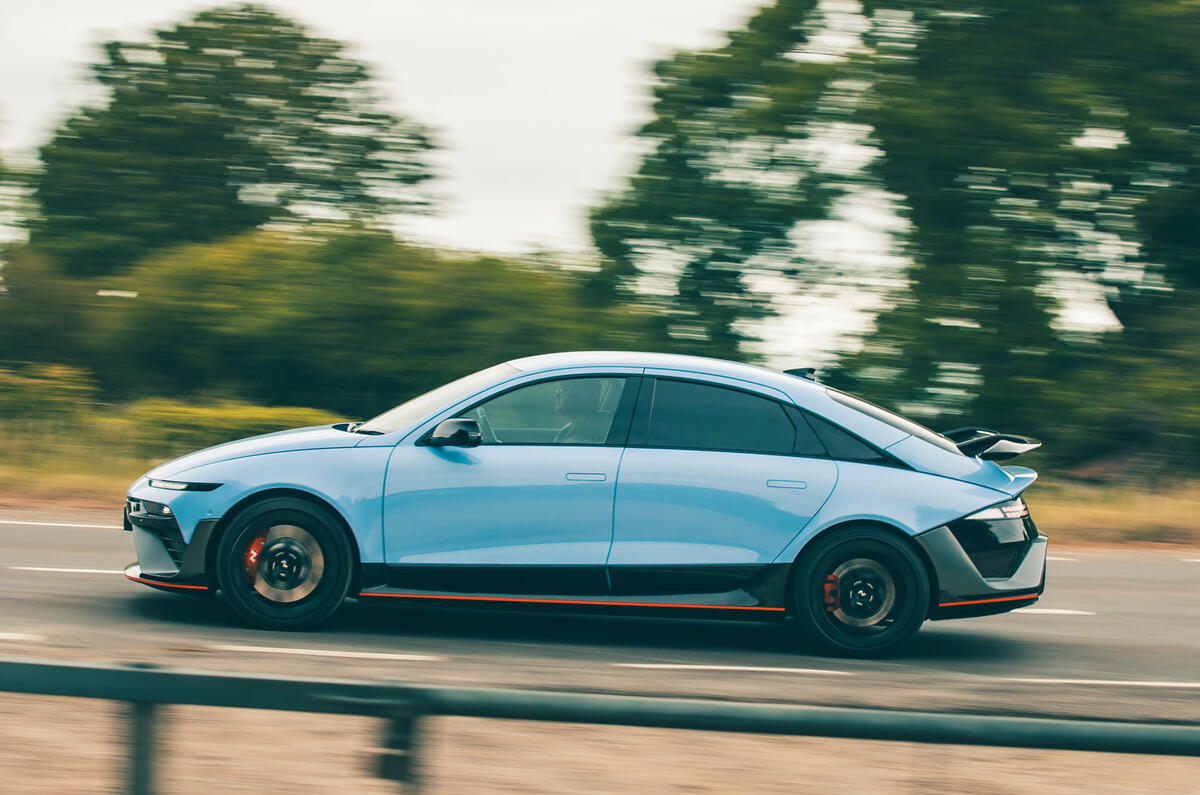
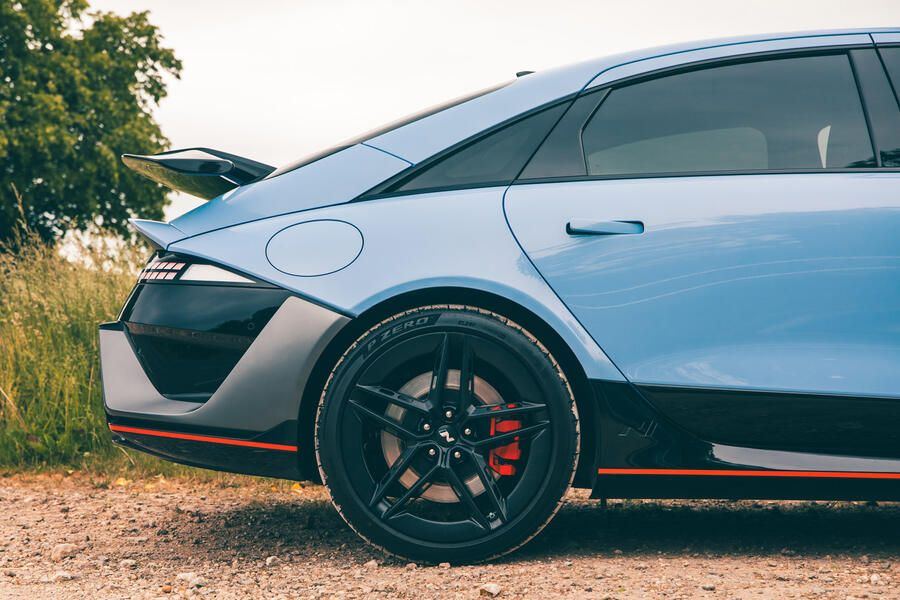
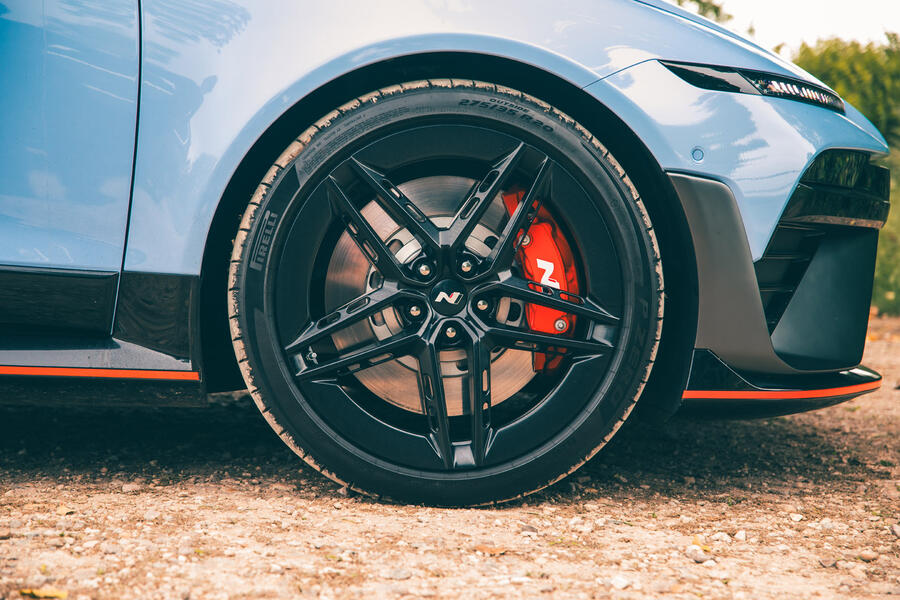
Ioniq 6 N has 20in alloy wheels that sit underneath widened bodywork front and rear and they’re attached to widely updated axle hardware. The matt black look is very fashionable and works with the car’s aesthetic well.

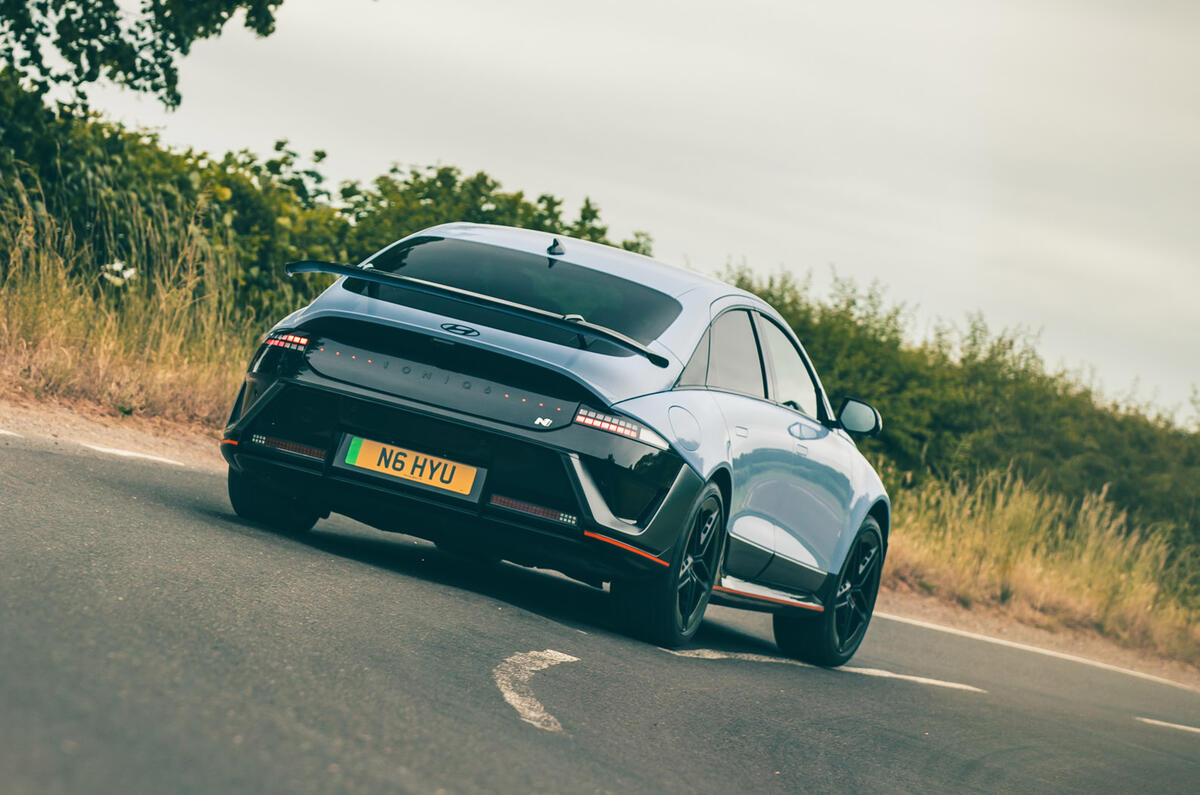
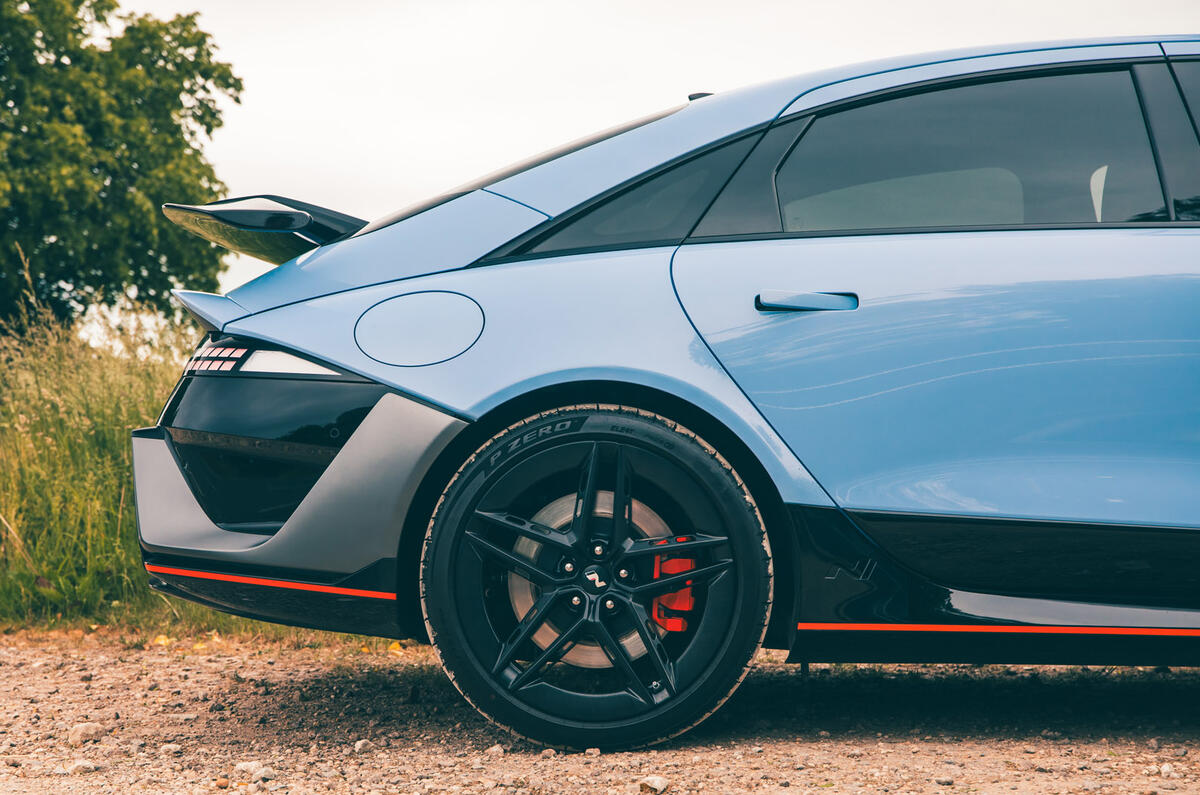
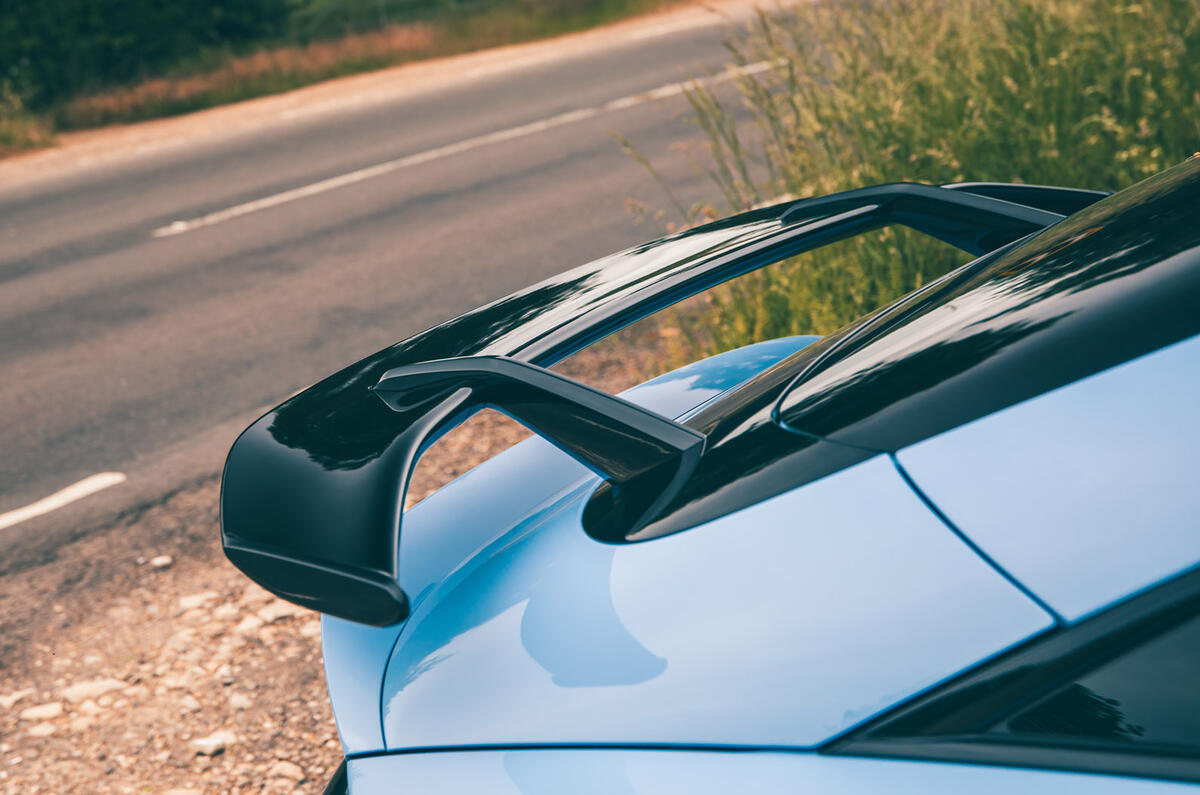
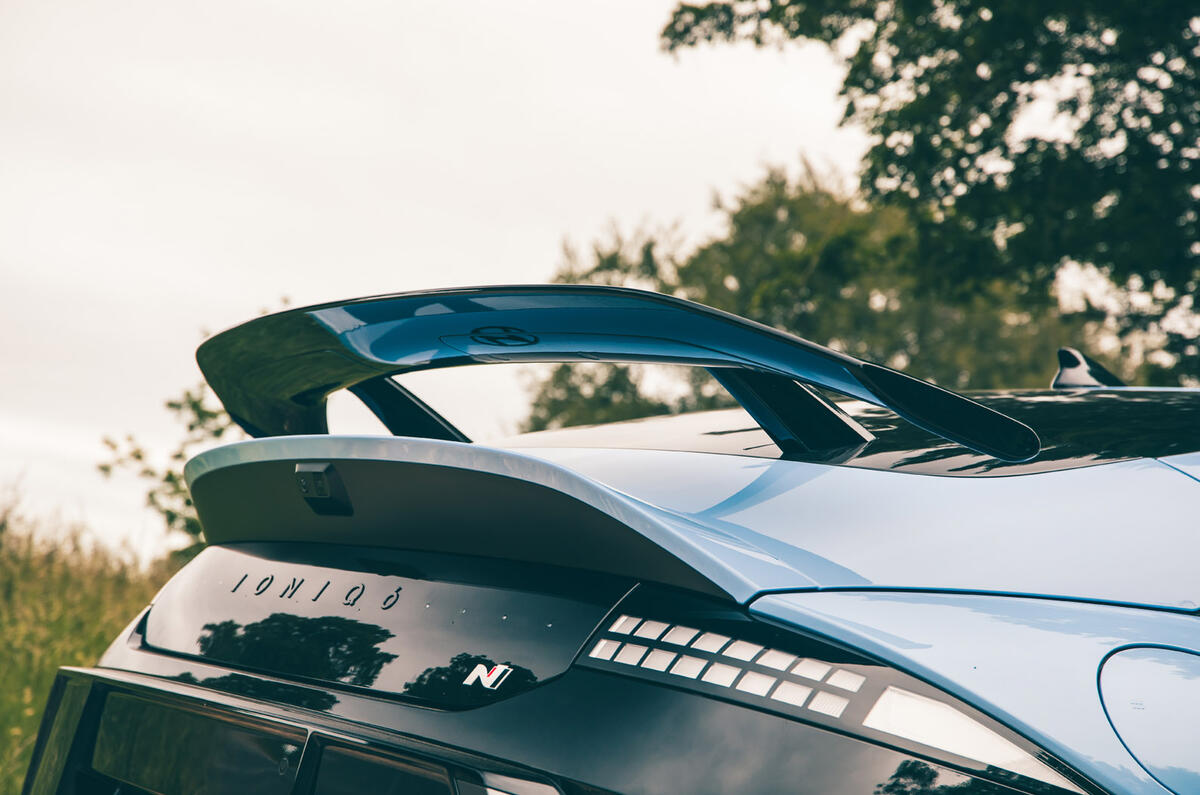
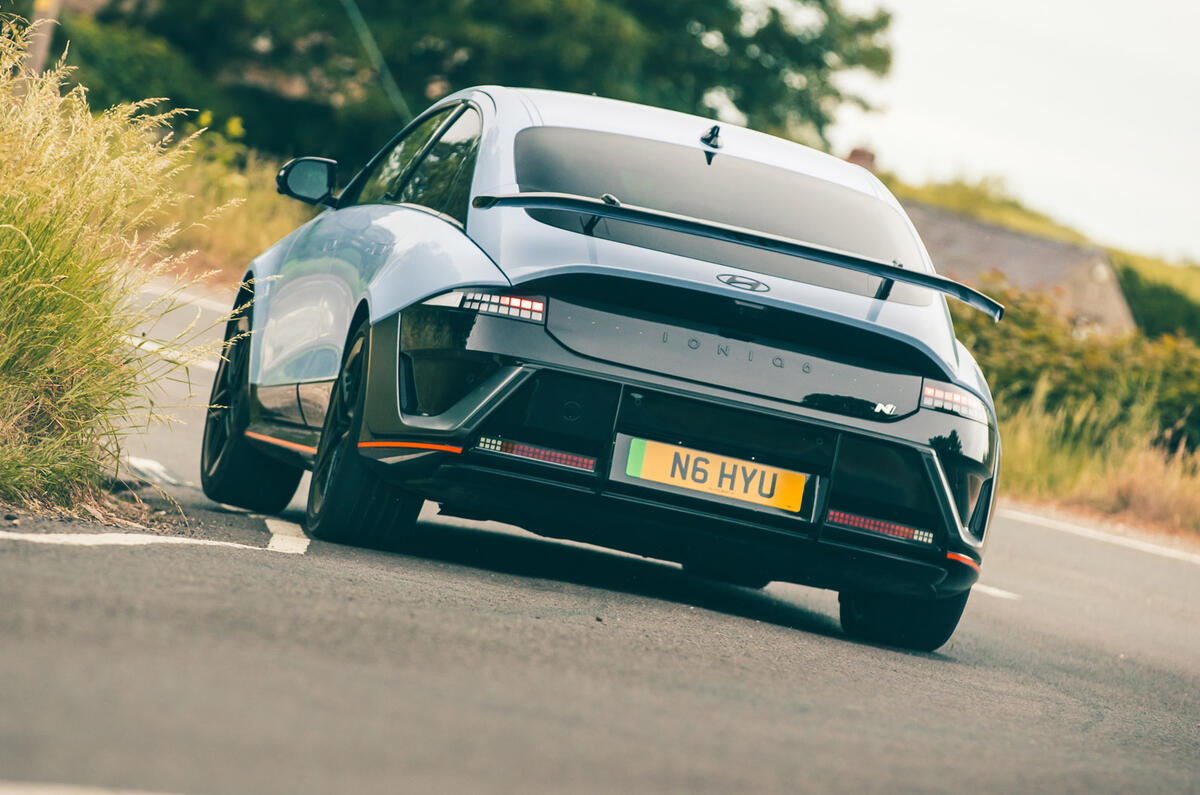
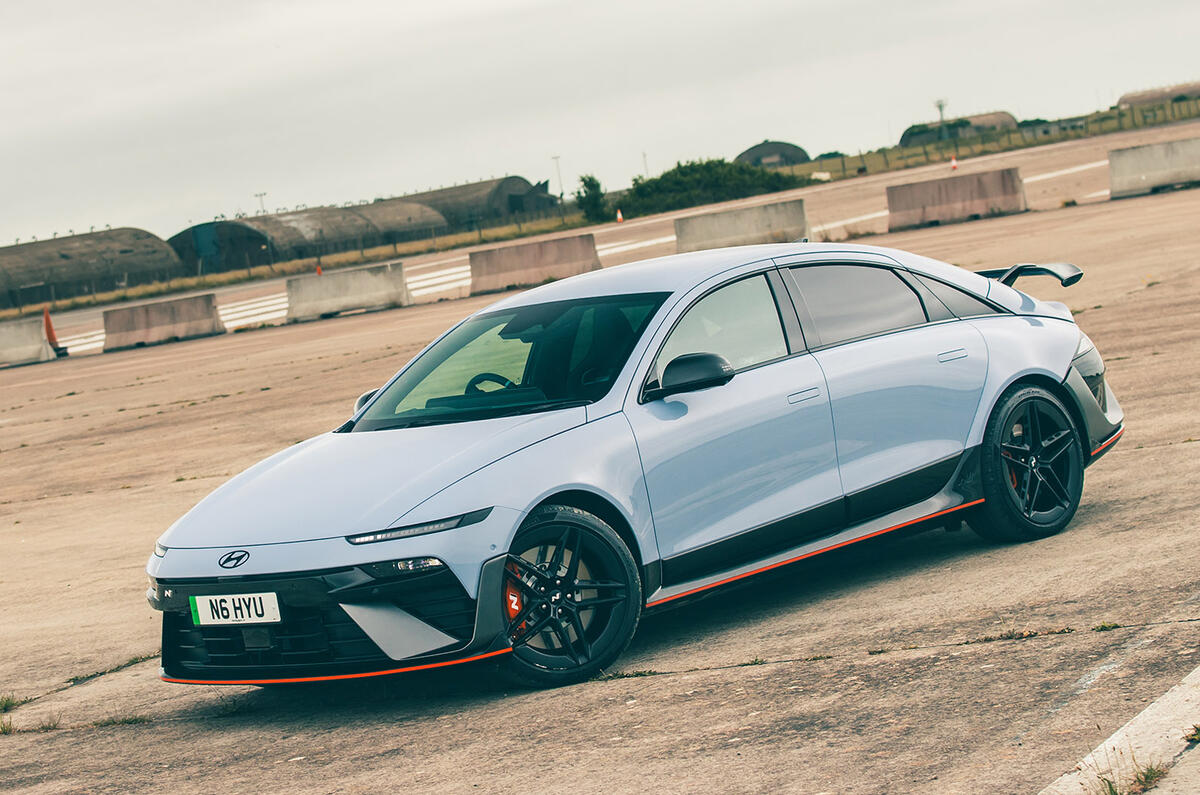
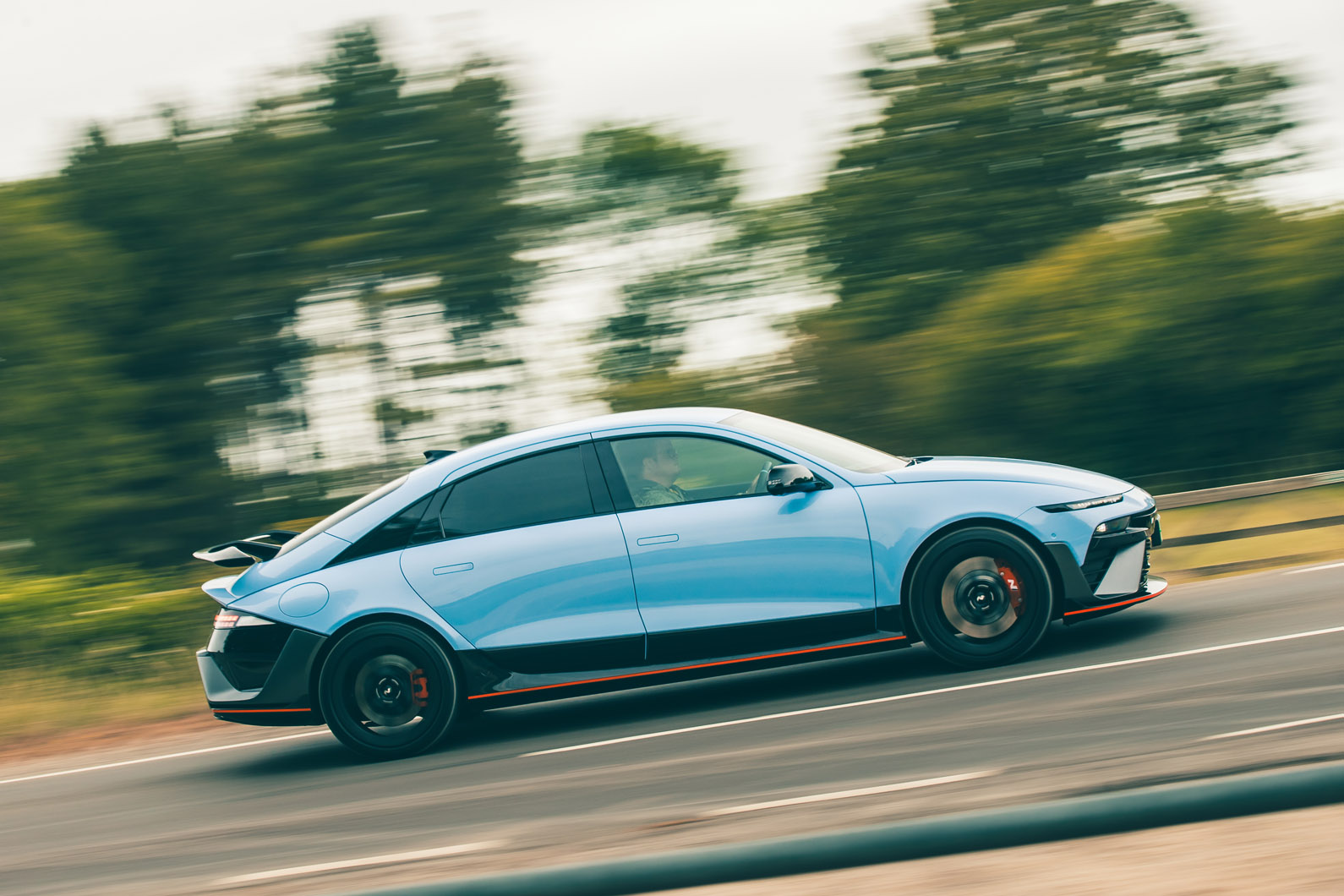
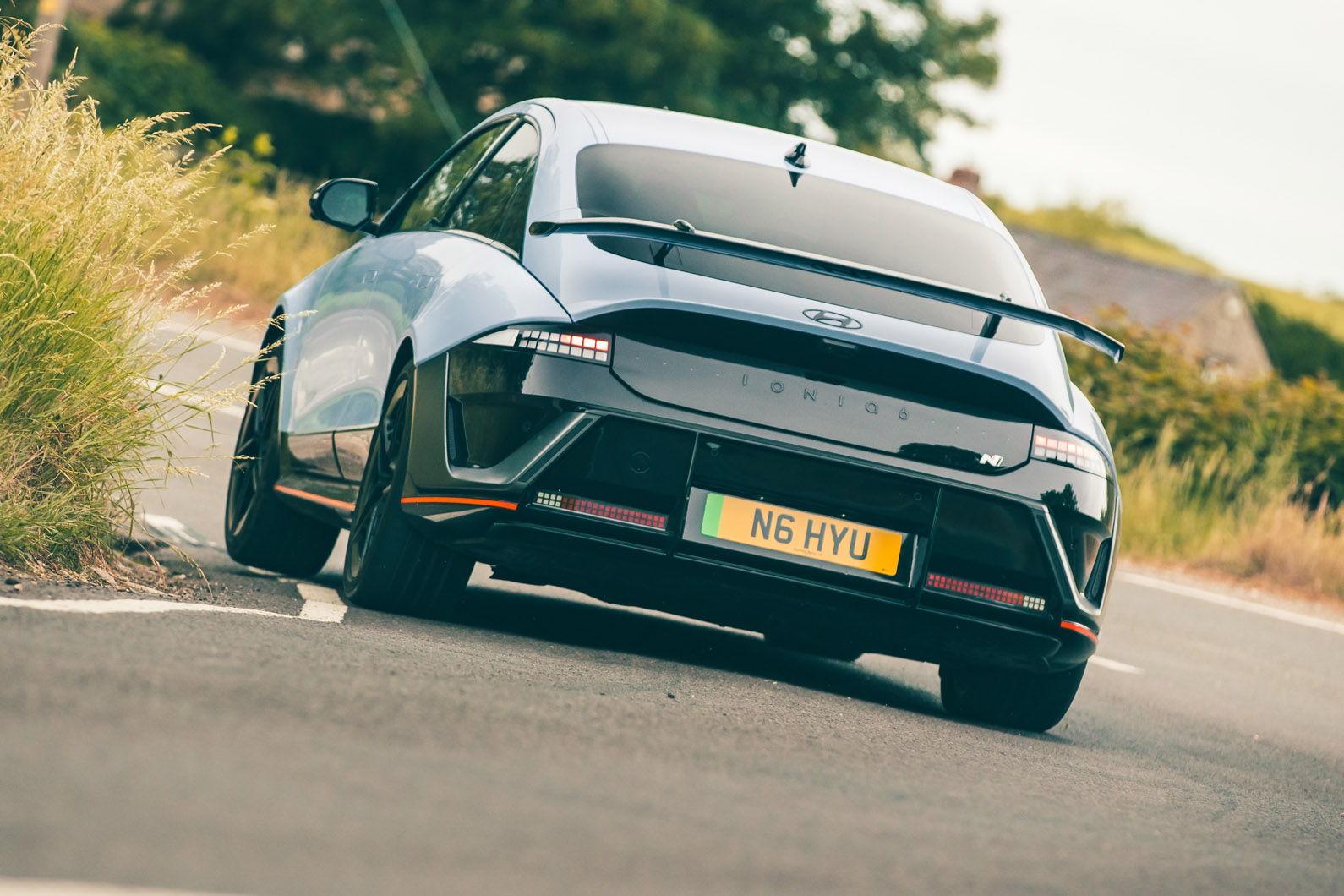
It makes for a meaner ‘shark nose’ expression, which suits the N derivative’s purposes rather nicely. And the impression is enhanced by the car’s conspicuously large, contrasting, gloss black bumper panels, its widened front and rear wheel arches, the extended rocker panels, matt black 20in alloy wheels and a full-width rear wing.

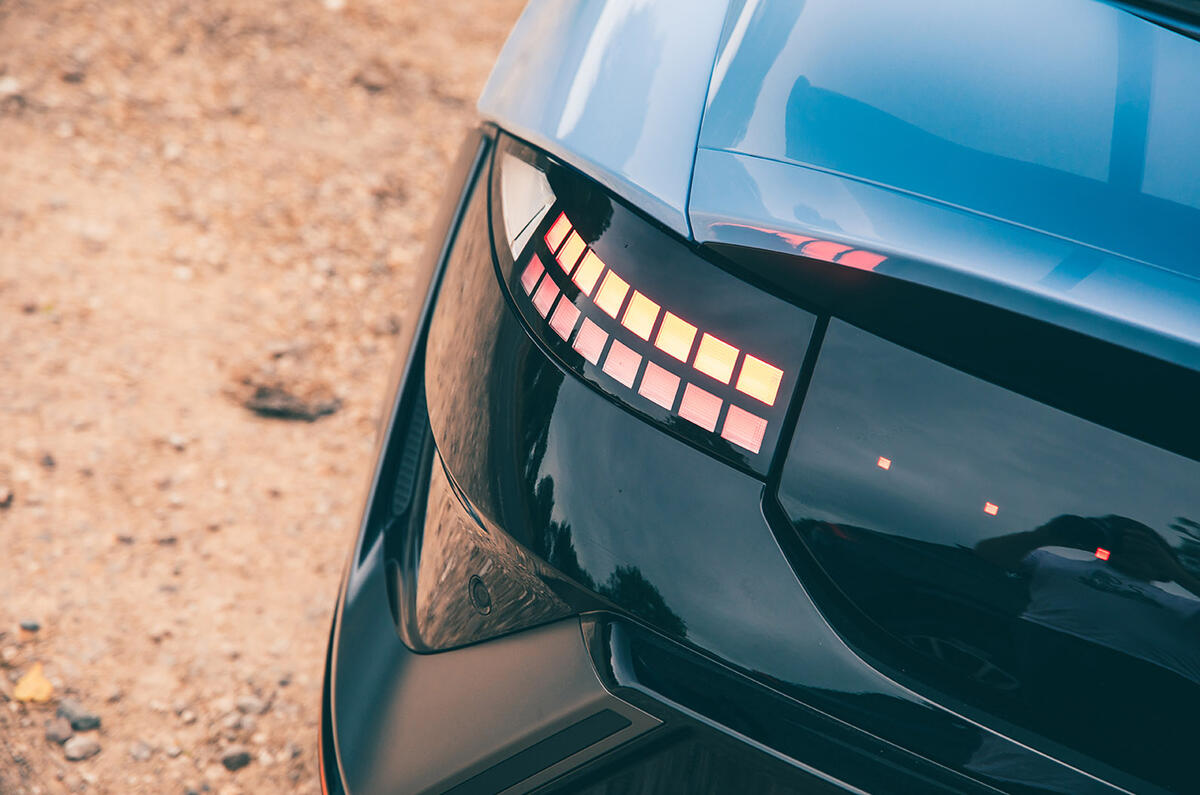
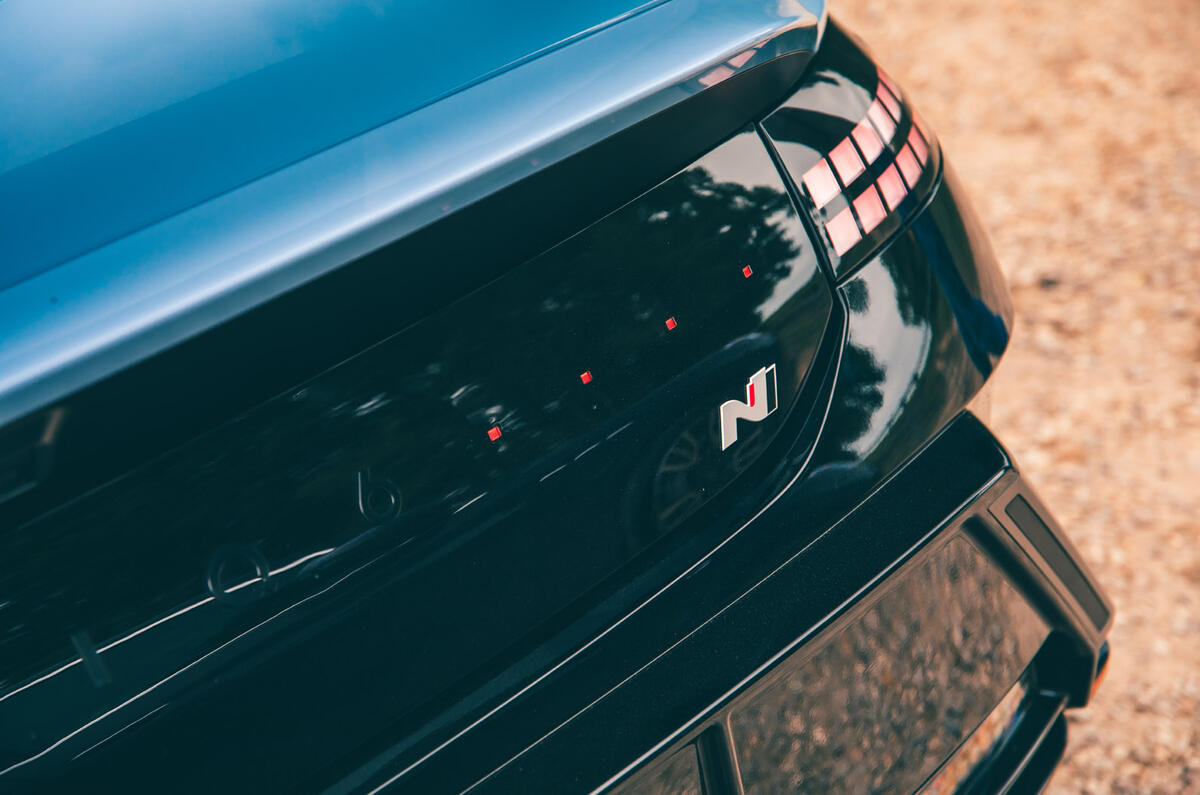
With that large aerofoil plonked across such a tapered rear end, there is plenty of conflict and dissonance about the car’s appearance, but Hyundai’s use of gloss black bodywork at lower levels somehow builds the visual tension cleverly. What results is a car you don’t forget, having seen it - and that can be a powerful tactic for attracting customers who want to stand out.

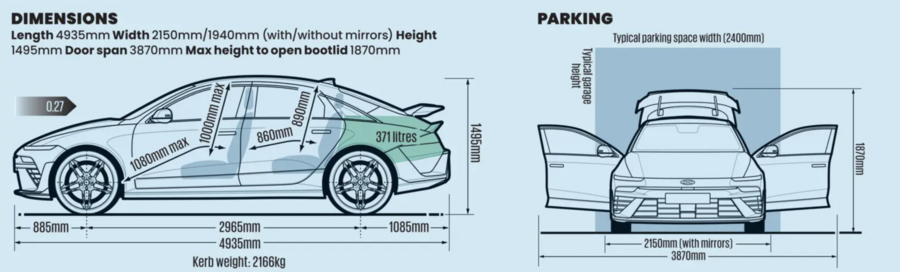
This is, of course, a lower-rise car than the Ioniq 5 N, with its roofline peaking 90mm lower than that of its crossover SUV sibling. But it’s also 220mm longer in the body than the 5 N, stretching to 4935mm overall (BMW i4: 4783mm), and it’s longer between the axles than almost all of its direct rivals.

As for weight, our test car tipped the weighbridge scales at 2180kg. That’s less than 50kg lighter than its crossover sibling – but lighter, also, than the BMW i4 M60 we tested earlier this year and any Porsche Taycan we’ve weighed to date.

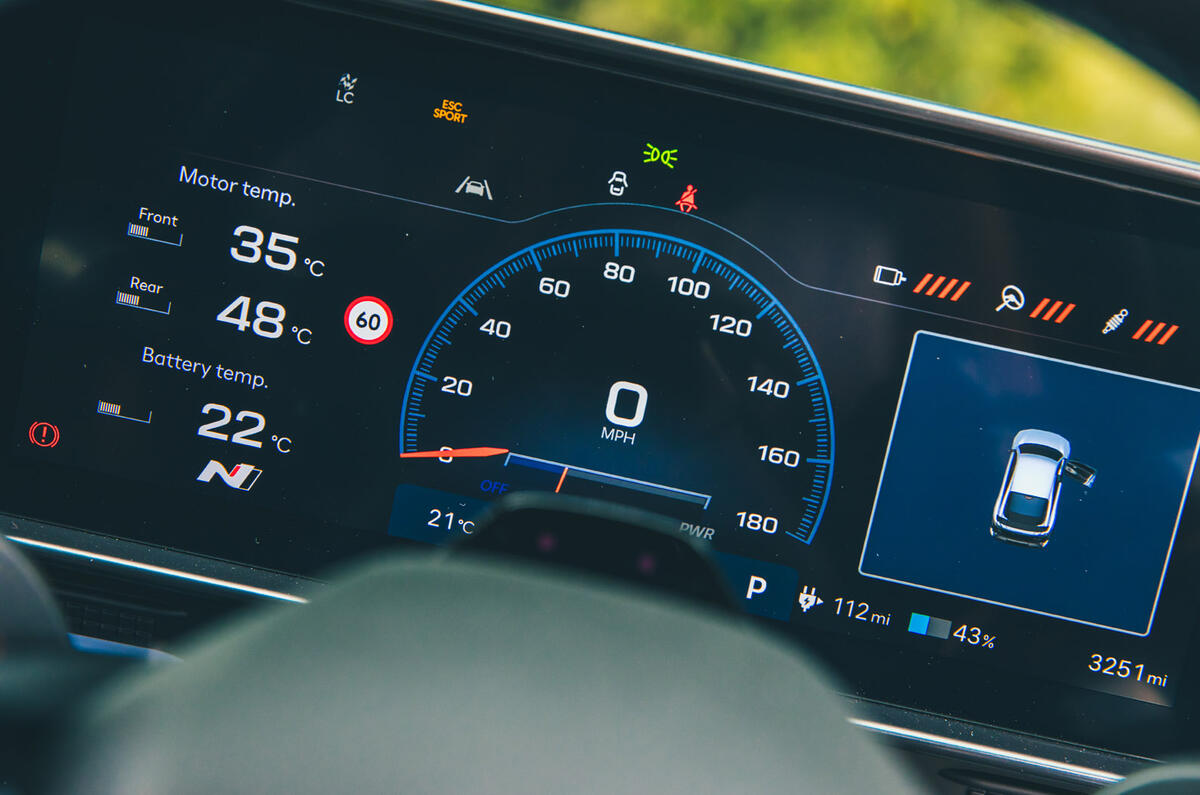
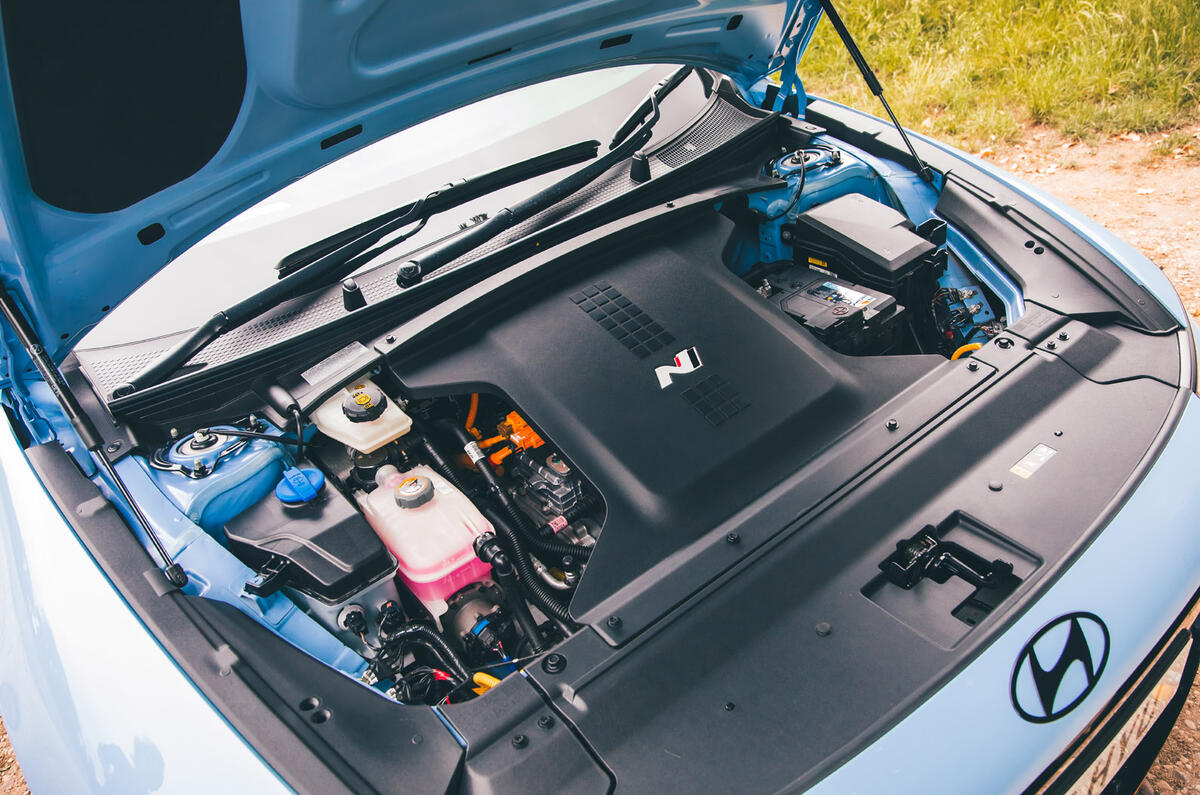
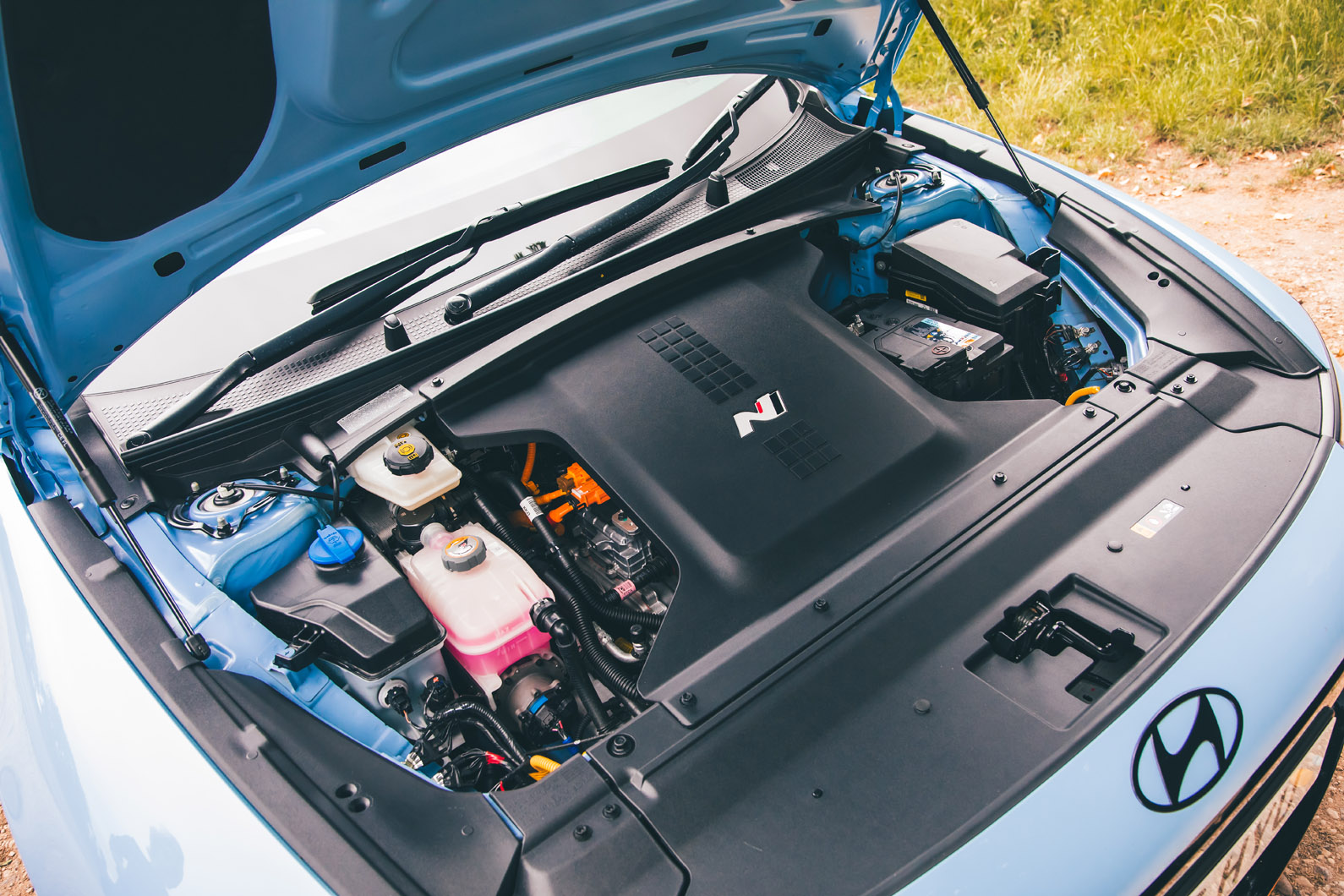
The E-GMP platform bestows a steel unitary chassis on the car and Hyundai’s 84kWh (total) lithium ion performance-grade battery pack is carried under the cabin floor. The car’s primary drive motor sits between the rear wheels and makes up to 407bhp, which is split between those rear wheels via a torque-vectoring mechanical e-diff.

At the front axle, a 235bhp drive motor can be found, which makes for a 37:63 front-to-rear distribution of power, before the effect of any electronic vectoring (of which the car is capable of plenty, as we’ll explain).

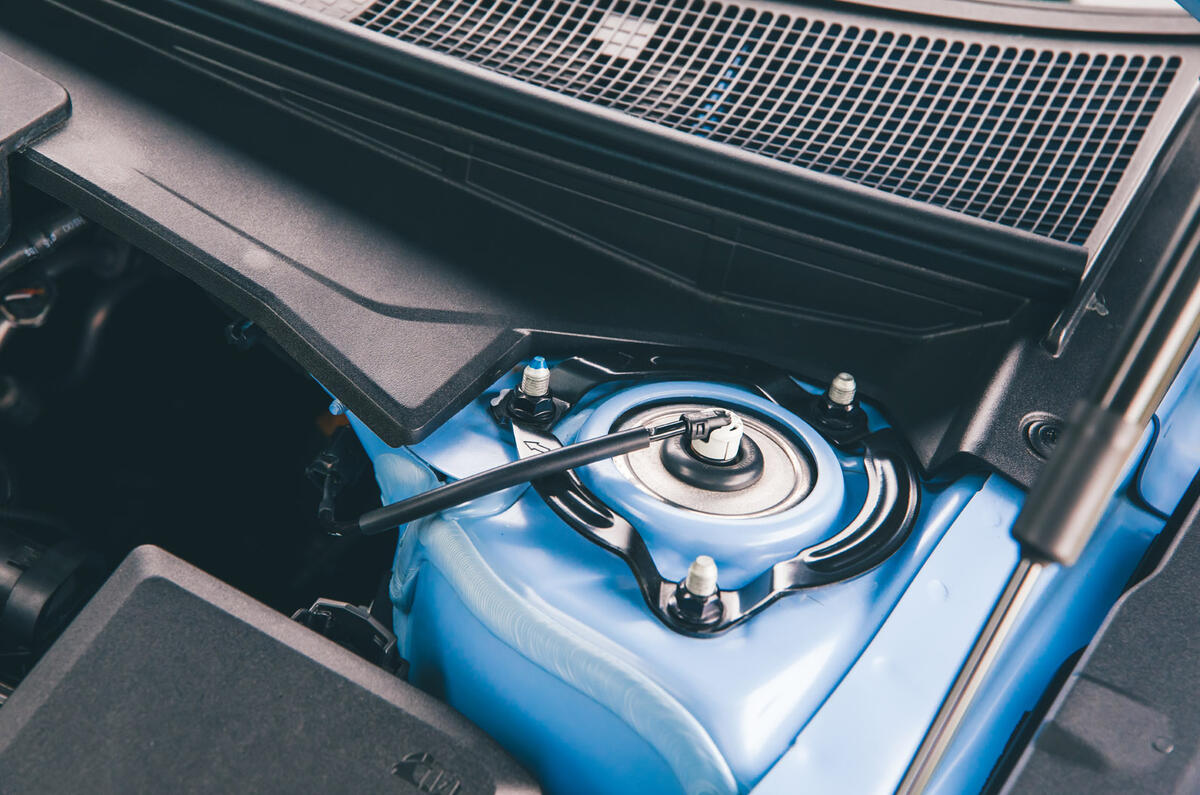
Hyundai’s N division claims plenty of specialist engineering for the suspension. Principally, the car uses MacPherson struts at the front and multiple links at the rear. However, both axles have been modified in order to deliver a lower roll axis than a standard Ioniq 6 has, as well as better camber control and steering precision. New mounting bushes and stroke-sensitive ECS adaptive dampers also feature, working alongside conventional coil springs.

INTERIOR

8
Hyundai Ioniq 6N reveiw 2026 11

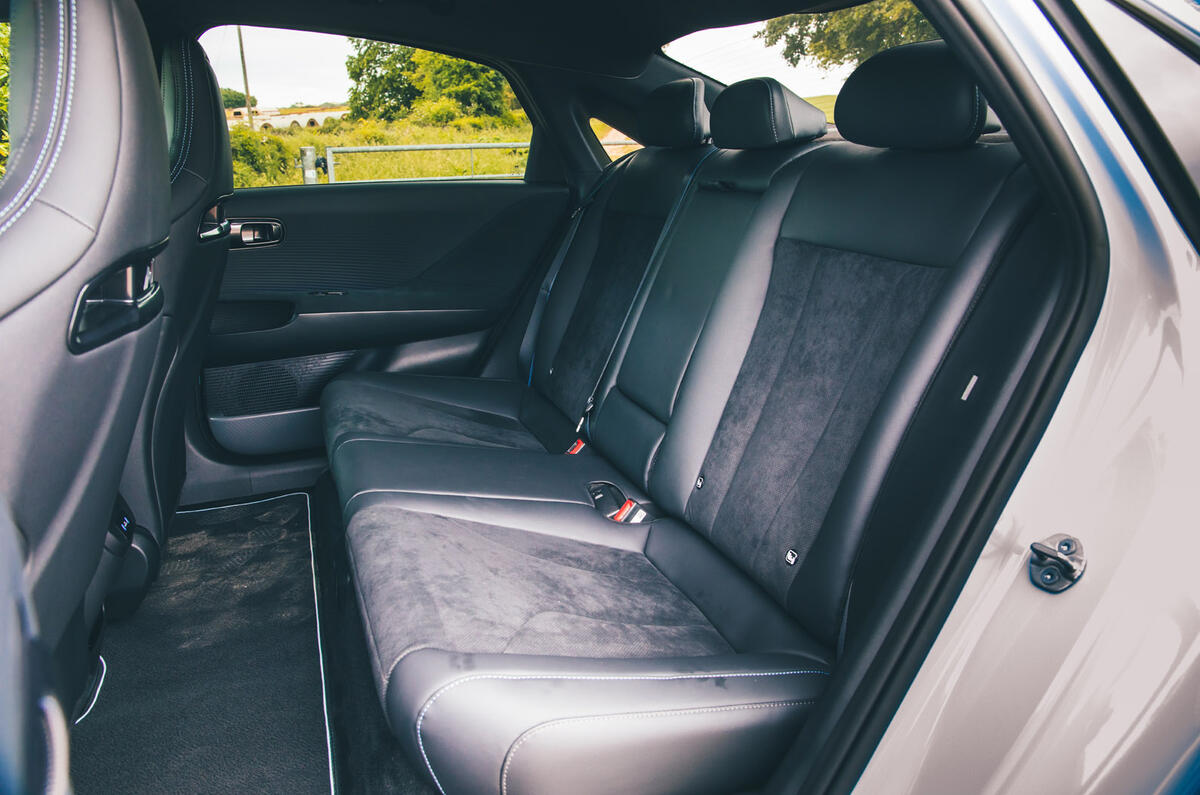
When we road tested the Ioniq 6 in 2023, the packaging of the cabin was one of our chief criticisms. The pre-facelift car simply didn’t offer enough head room. 

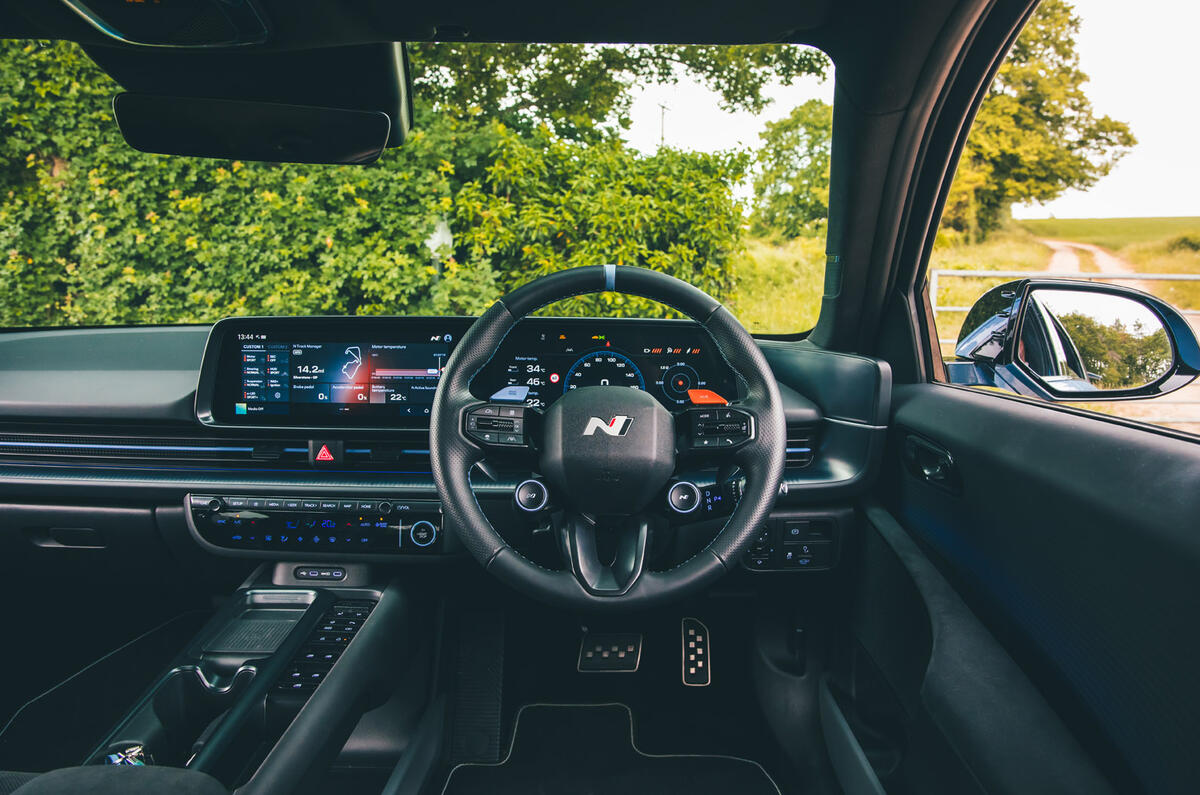
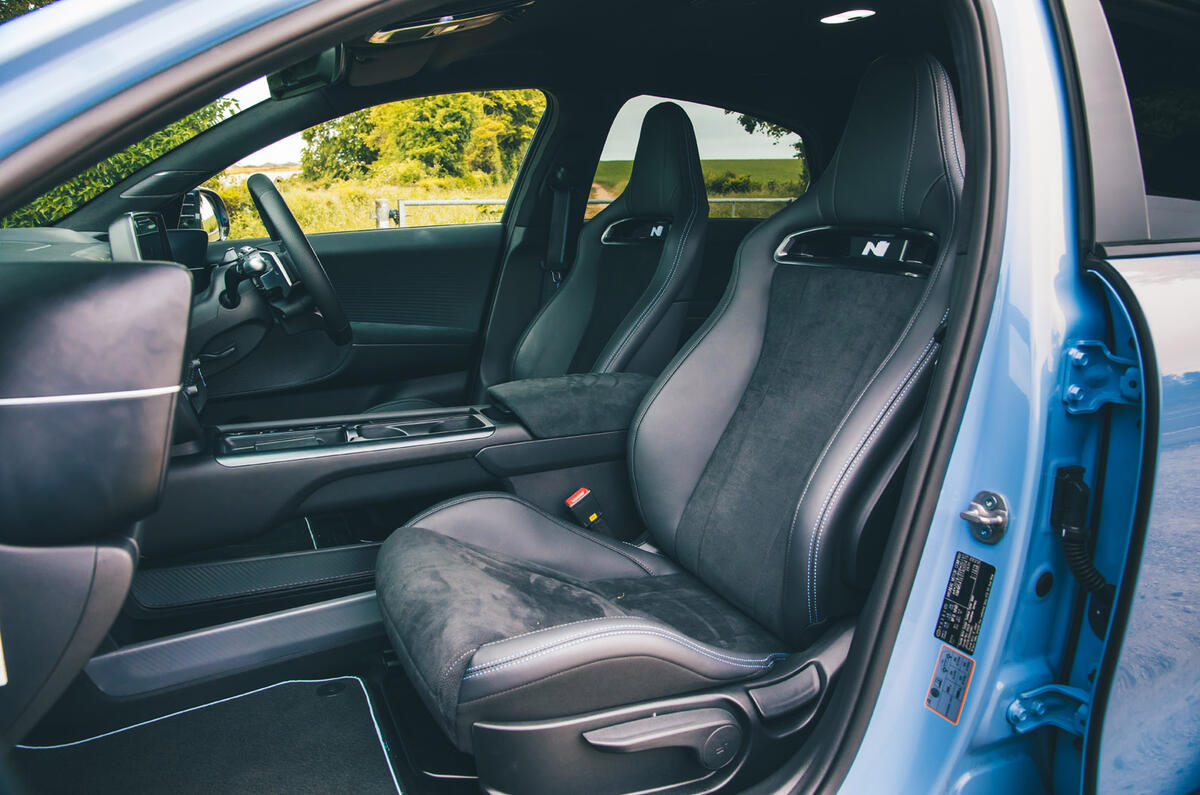
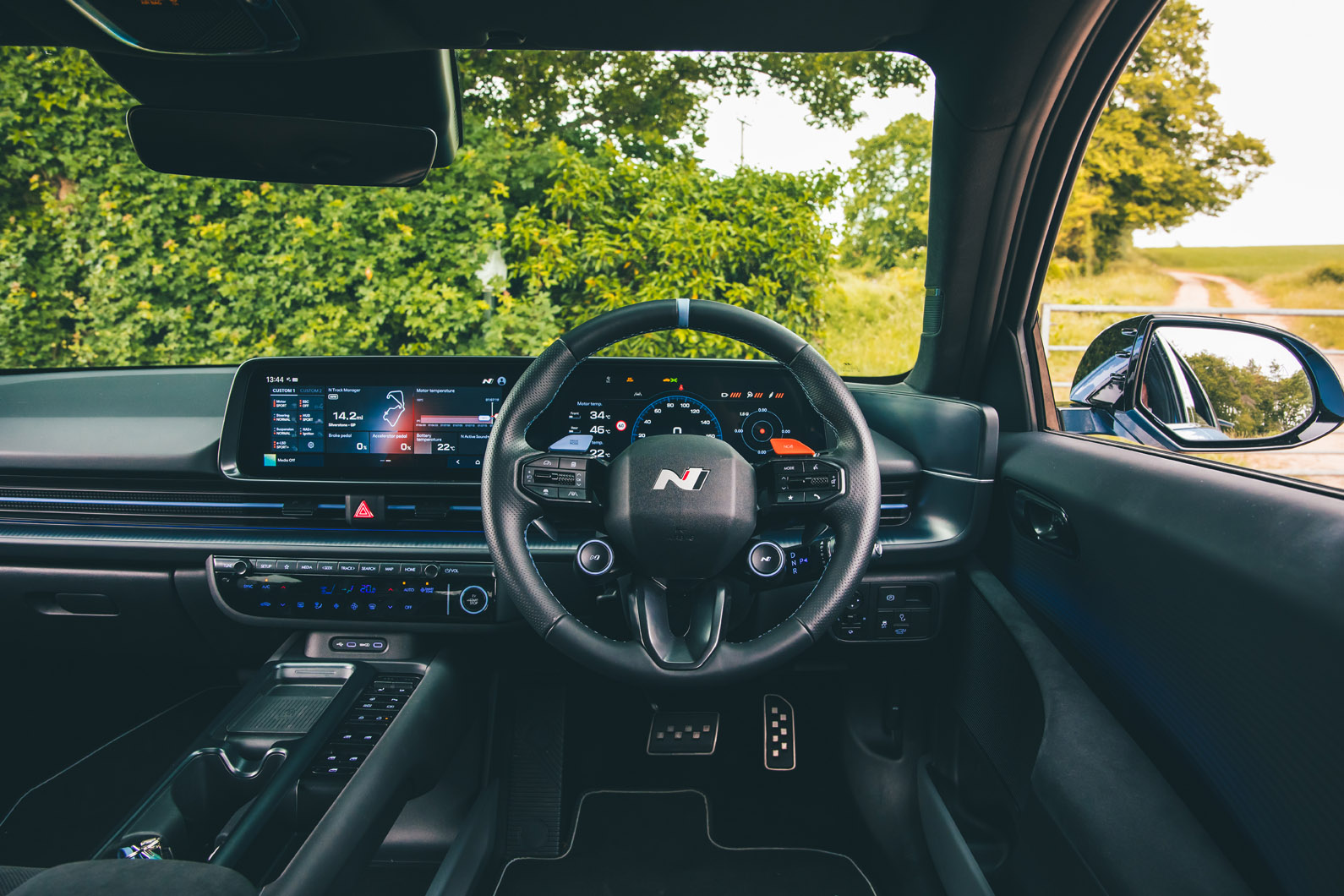
While it’s no silver bullet, this N version does address the situation. You slide in to occupy a seat that continues to position the driver a little bit higher than you’d ideally like relative to the primary controls, the line of the bonnet, and the waistline of the car at your elbow. The result is that you still feel as though you’re sitting ‘on’ the car, rather than being countersunk low within it.

The cabin is a surprisingly monotone place. Hyundai leans on the ambient lighting pretty hard to add performance drama. The colour and trim department could have made the place feel more special.

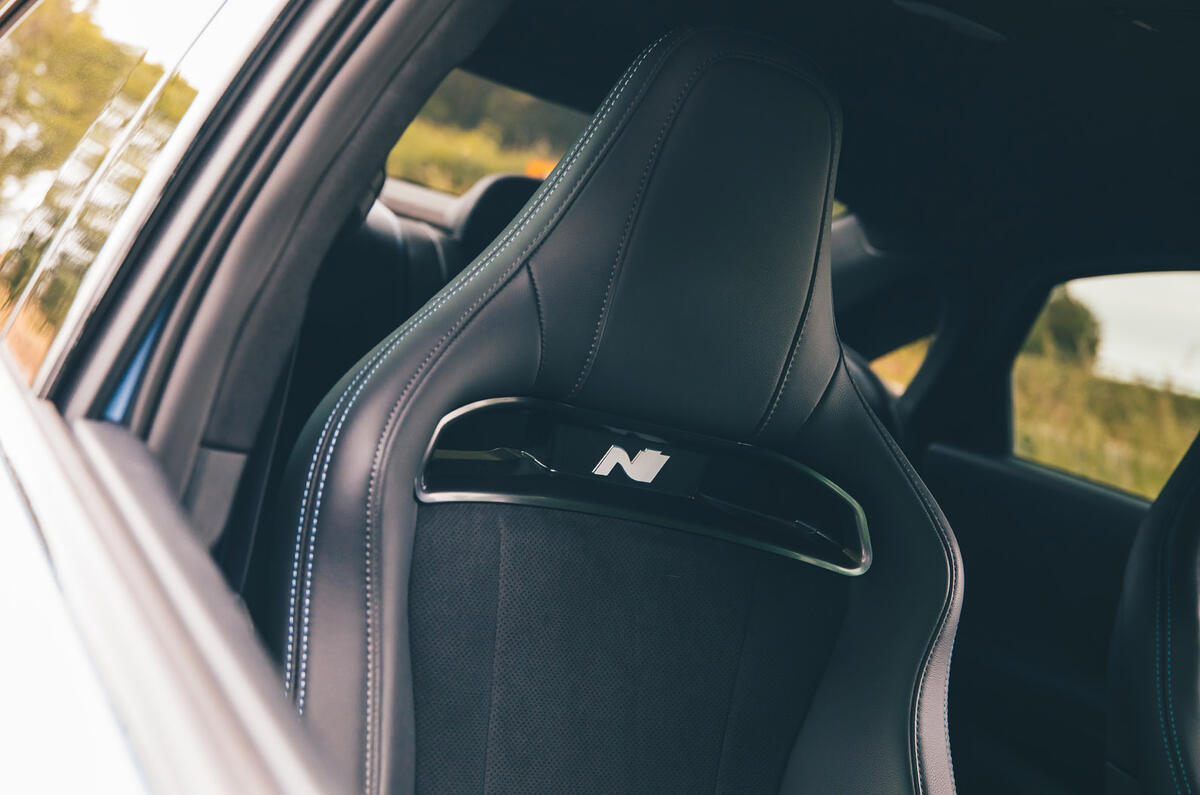
But it’s a good sports seat – usefully supportive laterally, with appealing upholstery, and most of the adjustment dimensions you’re likely to want. Significantly, a 6ft 3in driver can sit in it comfortably while wearing a racing helmet; whereas the same tester struggled to sit in the pre-facelift Ioniq 6, even sans helmet, without his scalp contacting the rooflining.

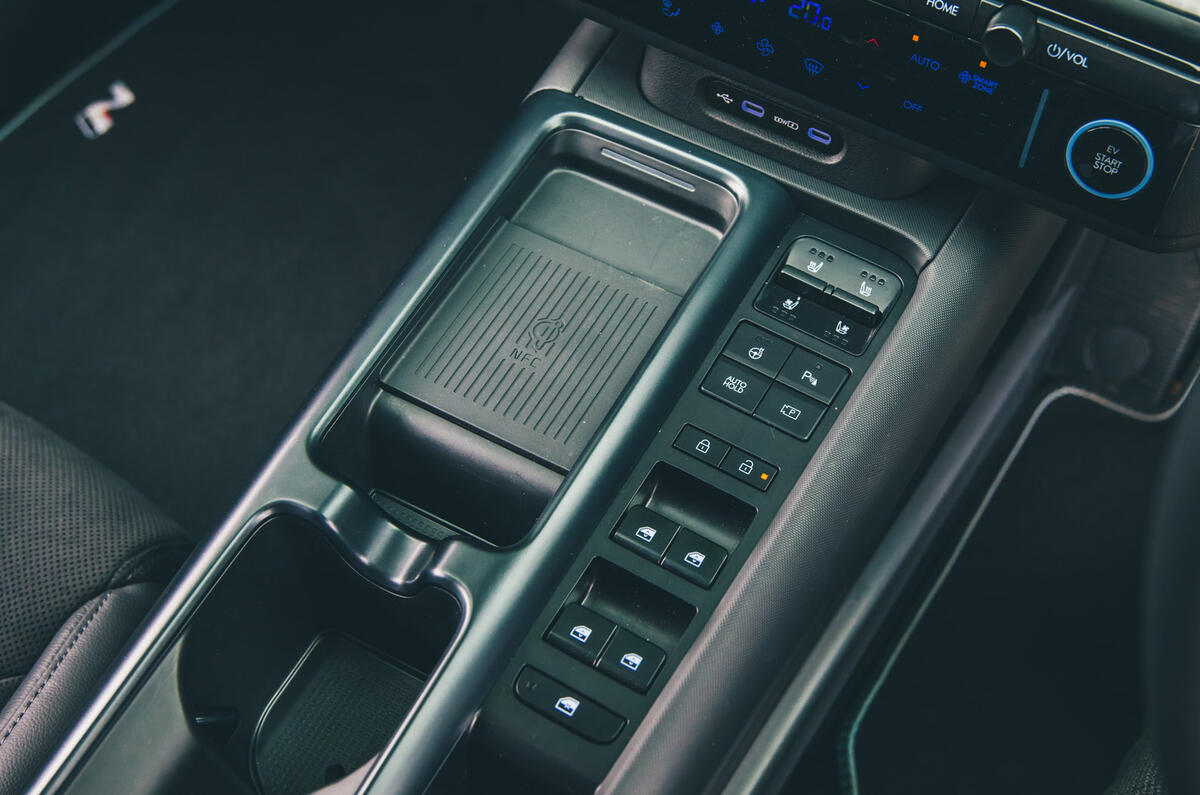
The cabin layout is unconventional. There are slim, reductively designed door panels, with Alcantara armrests in front of ridged door mouldings, to draw the eye, reflect the light and invite the touch. But here at least there are no window switches, nor door lock or mirror controls, and only slim lower storage pockets.

You’ll find the window controls displaced to the centre console and, along with the rest of the console, they float above a fairly generous lower storage area, which provides the space that the door pockets lack and more. 
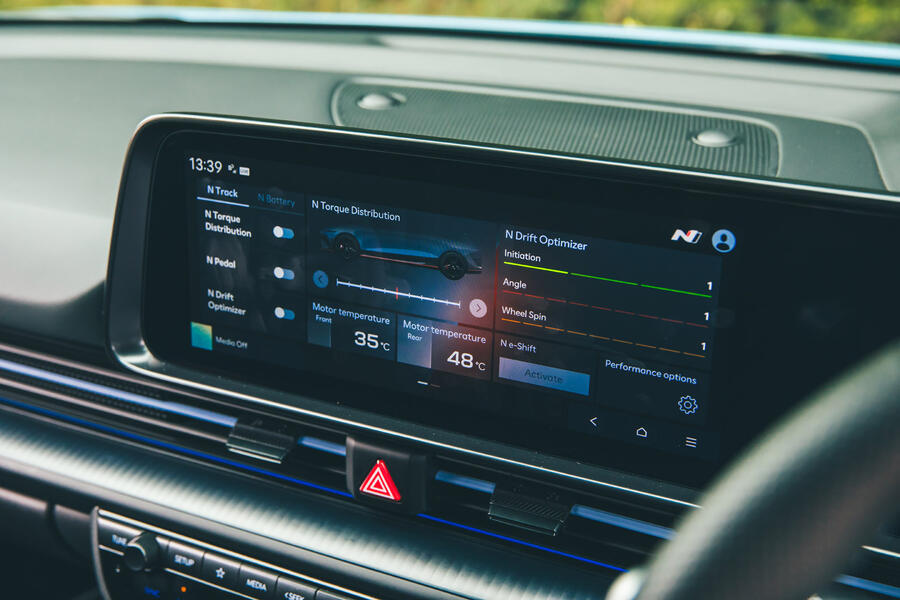
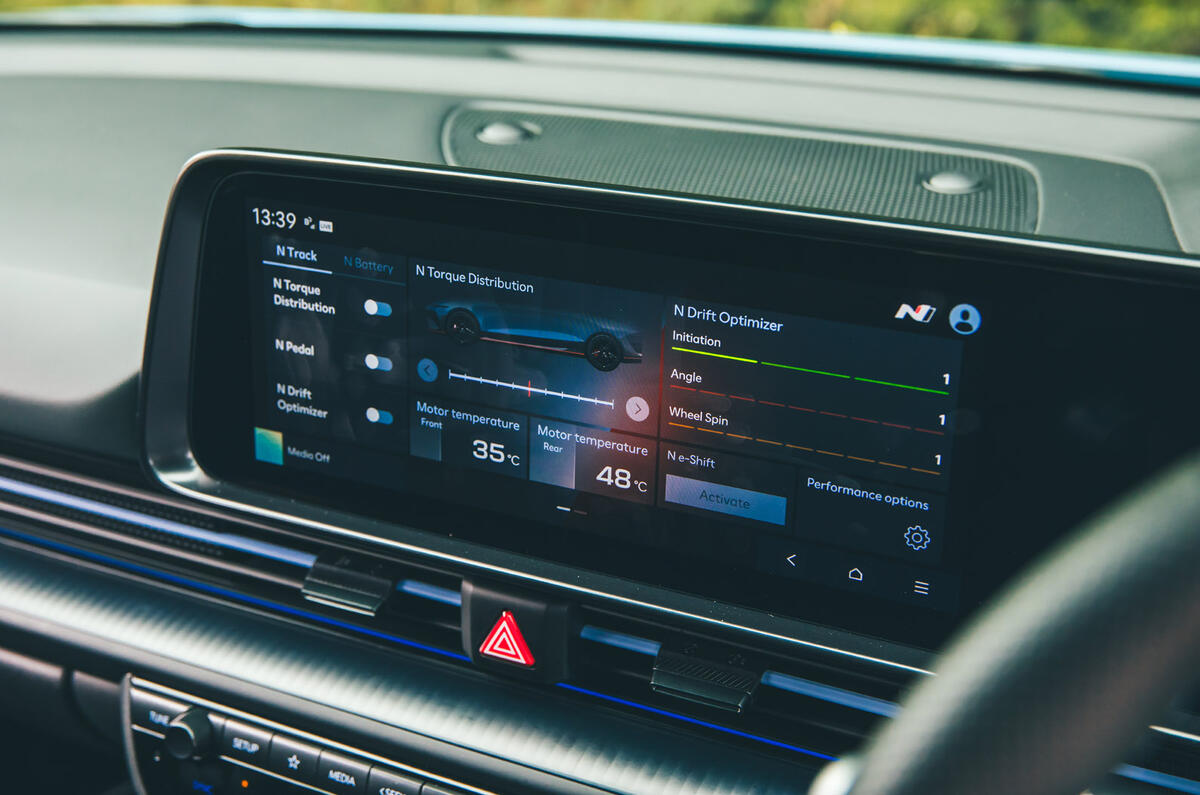
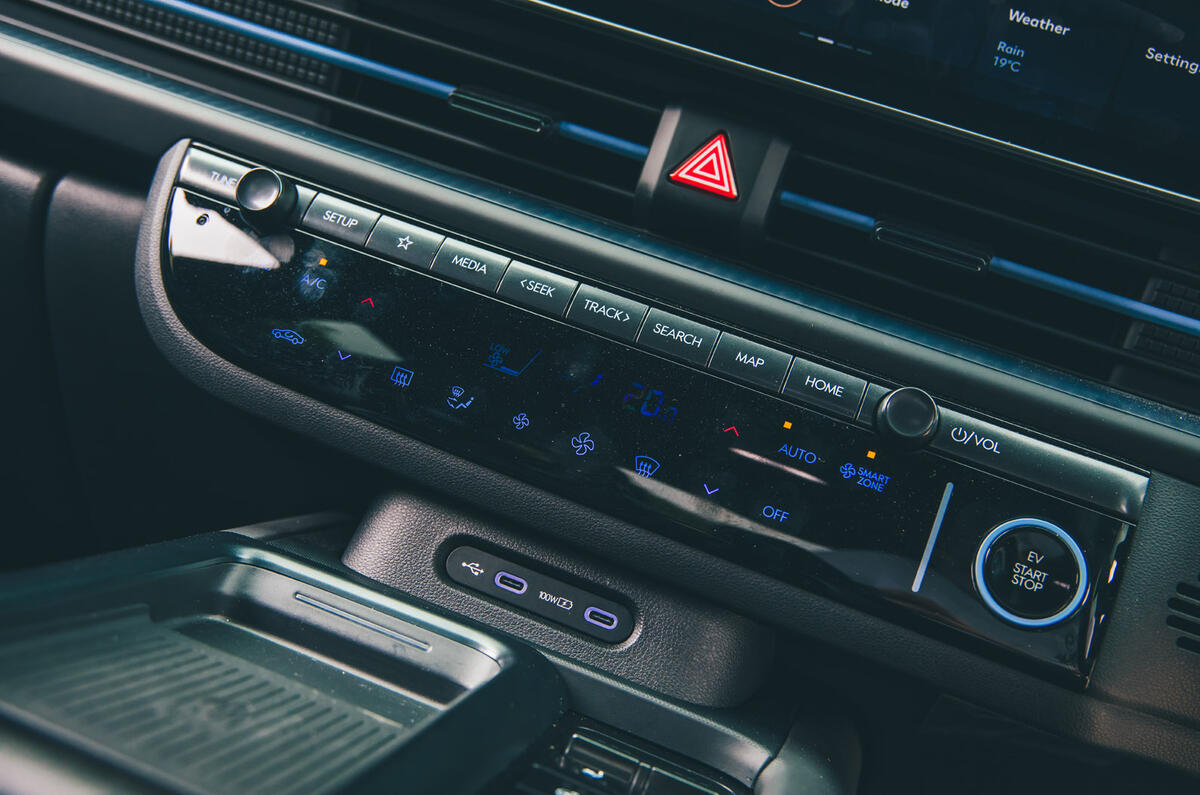
A panel of fixed, mostly physical, easy-to-use HVAC controls and infotainment menu shortcut buttons sits on the centre stack, which keeps the 12.3in main touchscreen from diverting your attention more than it really needs to. The touchscreen itself is quite deeply layered but responsive, well presented and easy to navigate – especially once you’ve assigned the two star-marked user shortcut buttons to your advantage.

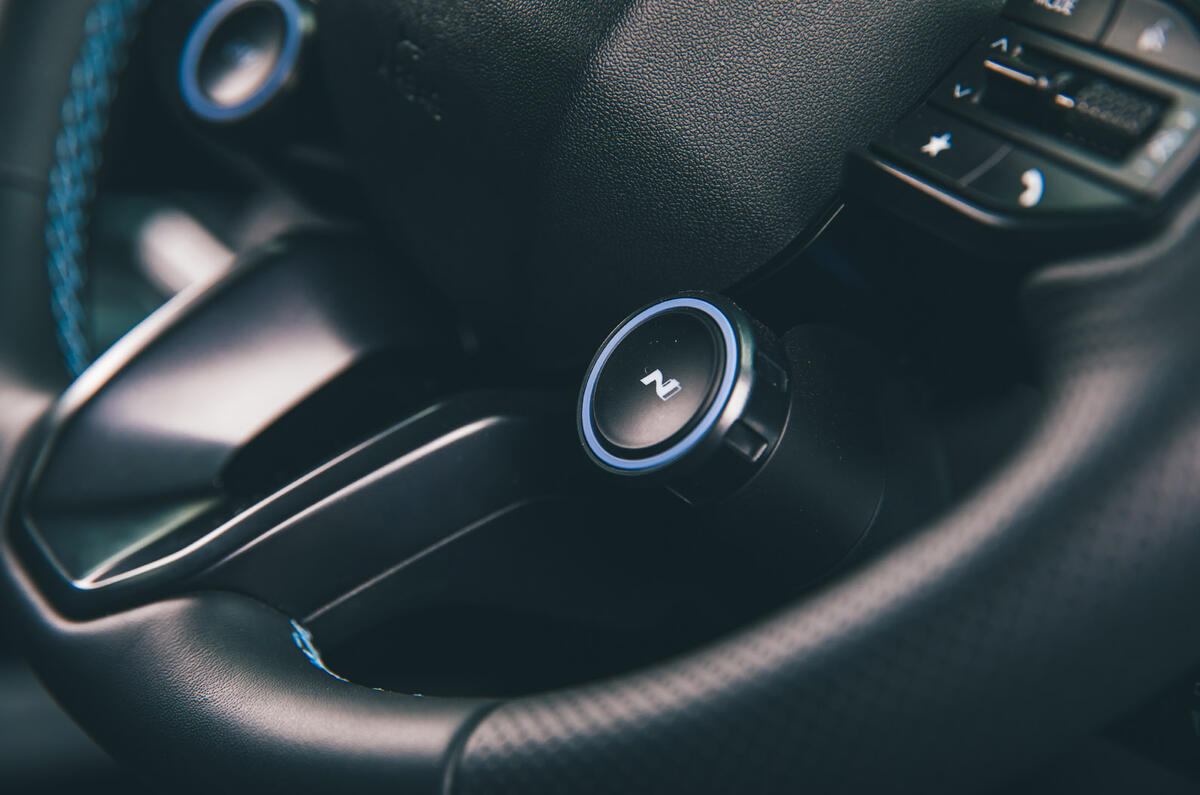
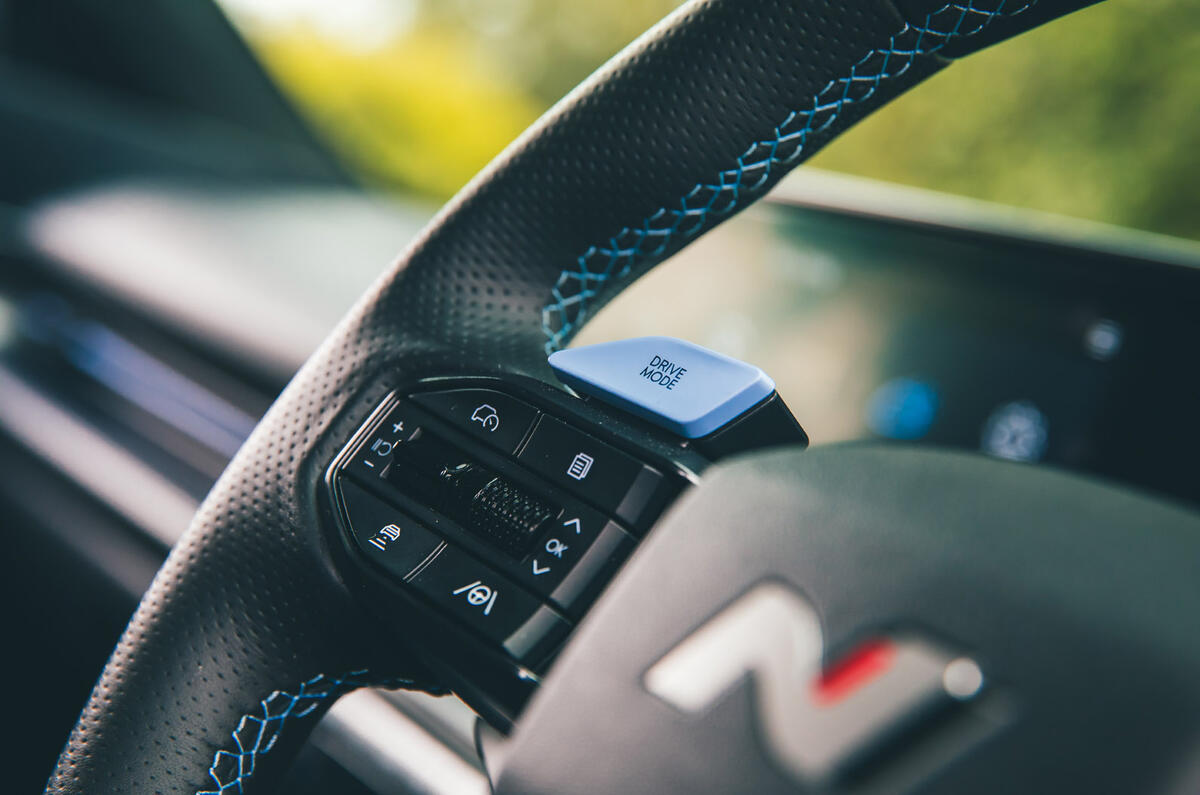
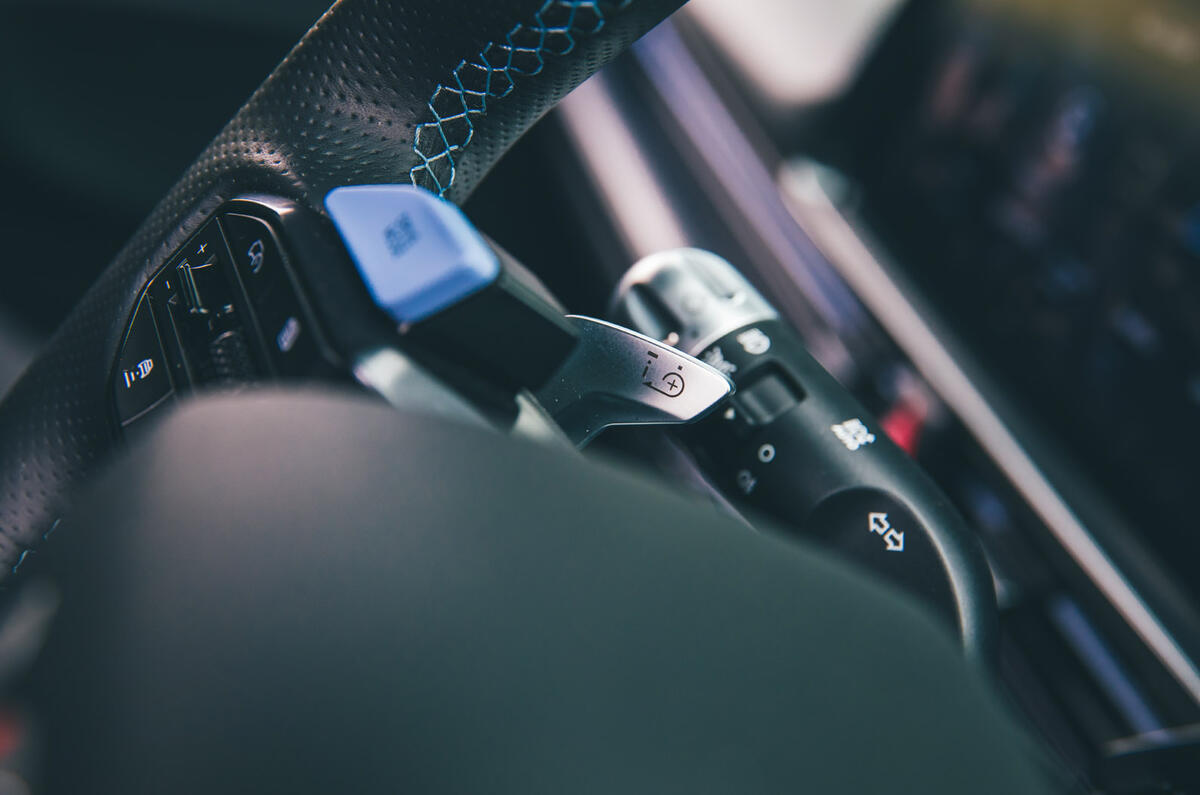
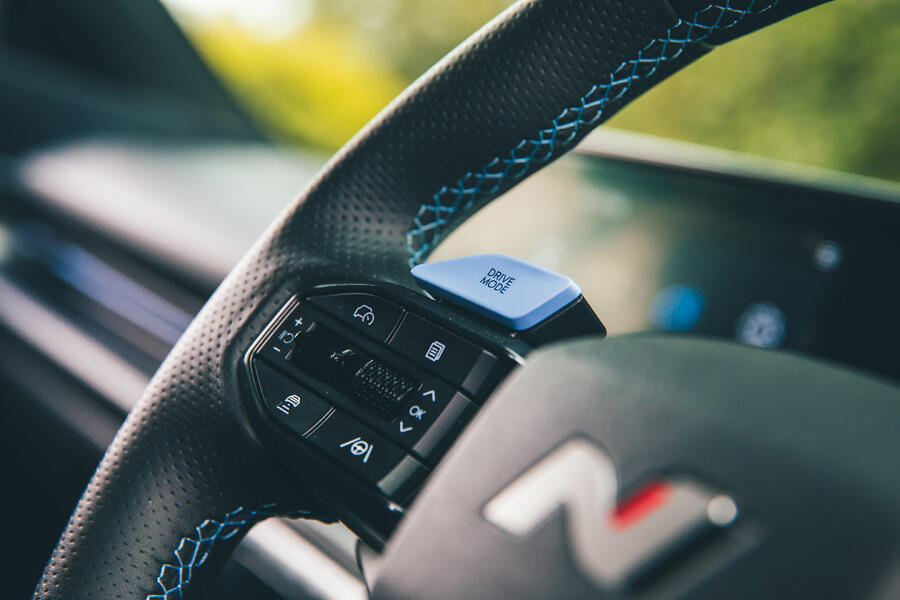
What will divert your attention is the profusion of buttons sprouting from the steering boss and spokes. There’s one to toggle the car’s primary drive modes (Eco, Normal, Sport); a second labelled NGB (for N Grin Boost, which delivers a temporary 40bhp peak power hike); and two N-labelled set-up shortcut buttons, whose functions can be assigned (the left one, for instance, to activate the à la carte N Custom drive mode you’ve been refining for your favourite road; the right one, if you like, to switch the imitation combustion engine noise on and off).

It’s a lot of complexity to get used to and some of it (N Grin Boost) is rather superfluous. But most of it is there to make setting the car up to your liking quicker and easier, which we applaud. Where the N Custom modes are concerned, however, it’s a pity that some of the car’s dynamic settings – its manually configured front-to-rear torque distribution, for instance – still have to be selected separately. 
ENGINES & PERFORMANCE

9
Hyundai Ioniq 6N reveiw 2026 26

Adaptability is the key strength of the Ioniq 6 N’s electric powertrain. It’s very potent – and also very clever indeed in the way that it directs and manipulates motor torque and accompanies it with digital sound effects. 

But if you want to get the best from the car, it’s important first to decide what kind of drive you’re in the mood for. From a quiet, undemanding office commute, to a weekend flit down a traffic-free country road, to a flat-out circuit blast, this car has the range to cover them all – and to do so really well. Well enough, certainly, to surprise the vast majority that an EV could be capable of so much.

But because it’s electric, it doesn’t have that enticing V8 rumble, or much of a sense of as yet unleashed, noisy performance character, by default. Not, that is, unless and until you ask for it. It isn’t naturally forthcoming or effusive, or bubbling with pent-up energy, like so many petrol-engined performance saloons we’re used to.

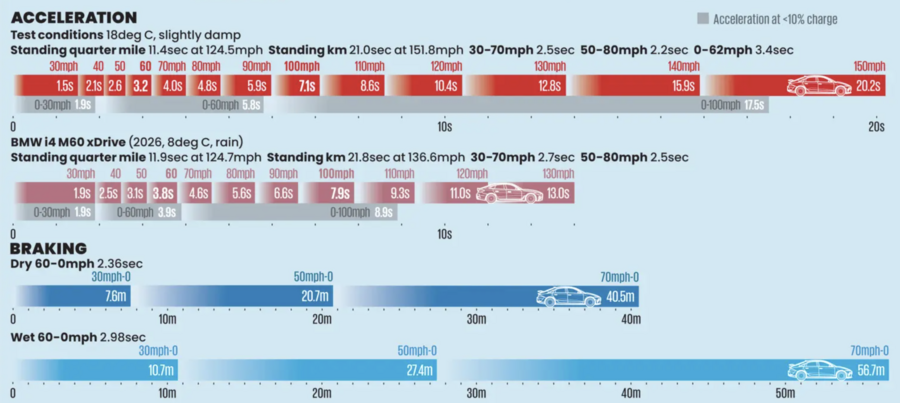
Predictably, it is fast. N Launch Control (available in Sport or any N driving mode) uncorks the full 642bhp from the drive motors but it also cues up a lot of digital audio accompaniment from the car’s various audio speakers. You mightn’t imagine that a 2.2-tonne car capable of 60mph from rest in just 3.2sec (Ioniq 5 N: 3.5sec) would need much audible garnish to make it exciting; but the Ioniq 6 N gets plenty in any case.

It’s very cleverly manufactured, especially if you select the slightly ironically titled N e-Shift paddle-shift gearbox mode. At rest, there’s the initial limiter hysterics of the imagined combustion engine, followed by the simulated pops and bangs of that engine with every ‘upshift’ – with split-second interruptions in torque delivery and a new shape in the torque curve coming along with every ‘gear’.

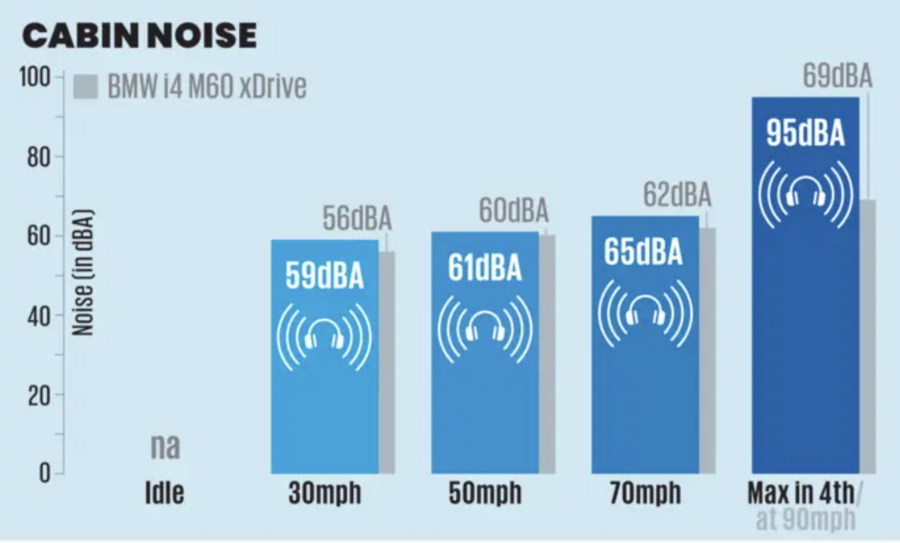
Is it convincing? Surprisingly so. It’s loud too. Our noise meter recorded 95dbA at ‘max revs in fourth gear’, which is a good 10dbA louder than most actual piston-engined performance cars in comparable circumstances (although you can adjust the volume downwards if you prefer).

And for anyone wondering where the car’s outright performance leaves it, a BMW i4 M60 xDrive is 0.8sec slower to 100mph and 0.3sec slower in motorway roll-on acceleration from 50- 80mph. An Audi S E-tron GT – itself a £108k car – is barely any quicker, at least until well beyond 100mph. The BMW M4 CSL we road tested in November 2022 was two tenths slower over a standing quarter mile.

So the Ioniq 6 N has all the grunt you’d expect, and then some.

RIDE & HANDLING

8
Hyundai Ioniq 6N reveiw 2026 32

Just as there is remarkable versatility about the Ioniq 6 N’s electric powertrain, so too is  there a matching quality about its chassis. However, in much the same way, it could probably afford to feel slightly more alert and purposeful right off the bat in its default ‘stick it in D and off we go’ configuration. Instead, the car makes the driver go looking for ways to make it more exciting.

There’s a heft to the steering, a levelness to the body control and an outright amount of apparent lateral grip that does tell you this is a serious performance car, even when you’re only ambling around in it. But the on-centre steering response is gentler than you might expect – and that combines with the effect of the car’s long wheelbase and its outright weight to create just a hint of inertia about the way it turns in. 

In having to follow the Ioniq 5 N, and with a much stronger set of rivals to fight and greater expectations to carry, the 6 N has more to do to stand out than its sibling. Bottom line: this is the better driver’s car of the two.

Once it has started to rotate, this sensation is entirely banished – often to an amusingly dramatic extent where track driving is concerned. But the upshot is that the Ioniq 6 N just doesn’t seem as agile or incisive as it might at everyday speeds. It needs to be driven hard and fast, and thrown around a bit, to become that bit more exciting and special.

Hyundai’s 20in alloy wheels and adaptive dampers do a fine job of keeping the ride smooth and fairly well isolated in Normal mode. They also provide great outright body control for the car on fast country roads and on a circuit. If you configure the torque distribution just so, there are times and corners – even on the road – when the chassis does feel like it’s rotating positively as you feed in power, and has lots of apparent sporting poise about it. 

The harder you probe and the more you tweak and configure, in other words, the more entertaining this car’s handling becomes. It is certainly engaging, but whether it is fully convincing as a driver’s car will depend, perhaps a shade more than it ought, on how willing its driver is to engage with its complexity - and then, critically, to be swept along by its digitally performative character.

Track notes - 4.5 stars

The Ioniq 6 N is fully at home on track, a place where so many EVs feel anything but. Its infotainment system includes an excellent track telemetry system that comes ‘preloaded’ with plenty of UK circuit layouts but can also ‘learn’ the one you happen to be on if it doesn’t already know it.

Excellent battery management and cooling, and a medium-firm, well-tuned brake pedal, make the car ready to be driven quickly at the limit as you hone your lap times, if you so choose. Keeping tabs on tyre pressure, we encountered no de facto limit of the car’s track stamina in 45 minutes of testing that ranged from medium-fast to fairly exuberant in style.

There’s a dedicated ‘drift mode’ – called the N-Drift Optimiser – for those who want some electronic backup to explore the car’s handing limits; but we’d avoid it. The handling is more consistent in N Custom mode, with the ESC fully off and the torque distribution set all the way rearwards. Configured like this, there’s much less that’s odd and unexpected about the steering, torque-vectoring and e-diff settings than when using the dedicated drift manager, yet long, indulgent powerslides are still easy to cue up and execute more predictably.

MPG & RUNNING COSTS

9
Hyundai Ioniq 6N reveiw 2026 01

Hyundai UK’s pricing for the Ioniq 6 N reflects the pragmatic attitude of a company that understands it’s still setting out its stall and making its reputation among performance car clientele.

So if you’ve got £65,800 – the same figure that buys an Ioniq 5 N – you can simply have a 6 N instead, because it’s no more expensive. It comes fully loaded with equipment too, so there’s no gouging with options. You can pay extra for a sunroof, or for matt or pearlescent paint – and that’s it.

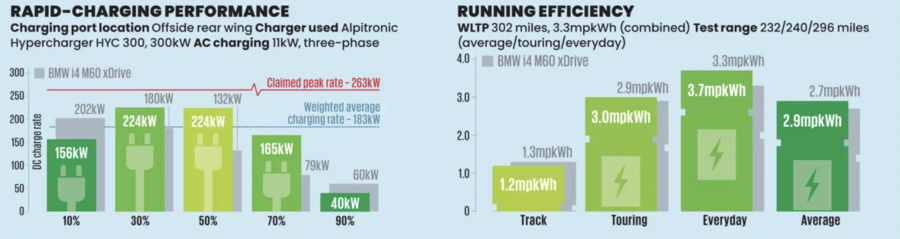
EV owners will likely understand that a car like this imposes something of a compromise on efficiency and range. But it isn’t a particularly problematic one. Our testing indicates that when you need it to, the 6 N should close in on 250 miles between charges when touring, and its DC rapid-charging performance is strong.

VERDICT

9
Hyundai Ioniq 6N reveiw 2026 33

Judged next to electric performance saloons of a comparable price, the Ioniq 6 N is truly exceptional.

Just like the Ioniq 5 N, it’s bold, ambitious and deliciously serious. There’s a wonderful naivety here that ignores the possibility that you might find it a little absurd for an electric car to work so hard at convincing you it’s something else entirely.

There are moments when this car’s ICE tribute act certainly borders on the absurd. But that’s to do scant justice to how entertaining this car is at its very best, and how convincing that cabaret act really can be.

You might still prefer a piston-engined BMW M3 xDrive Competition, of course – and ultimately we would too. But one of those costs 50% more - as, near enough, does an equivalent Porsche Taycan. 

It’s in a much more competitive market segment than the Ioniq 5 N; but for what it is, what it costs, and all that it offers, the Ioniq 6 N is close to brilliant.

Illya Verpraet

Illya Verpraet Road Tester Autocar
Title: Road Tester

As a road tester, Illya drives everything from superminis to supercars, and writes reviews and comparison tests, while also managing the magazine’s Drives section. Much of his time is spent wrangling the data logger and wielding the tape measure to gather the data for Autocar’s in-depth instrumented road tests.

He loves cars that are fun and usable on the road – whether piston-powered or electric – or just cars that are very fit for purpose. When not in test cars, he drives an R53-generation Mini Cooper S or a 1990 BMW 325i Touring.

Matt Saunders

Matt Saunders Autocar
Title: Road test editor

As Autocar’s chief car tester and reviewer, it’s Matt’s job to ensure the quality, objectivity, relevance and rigour of the entirety of Autocar’s reviews output, as well contributing a great many detailed road tests, group tests and drive reviews himself.

Matt has been an Autocar staffer since the autumn of 2003, and has been lucky enough to work alongside some of the magazine’s best-known writers and contributors over that time. He served as staff writer, features editor, assistant editor and digital editor, before joining the road test desk in 2011.

Since then he’s driven, measured, lap-timed, figured, and reported on cars as varied as the Bugatti Veyron, Rolls-Royce PhantomTesla RoadsterAriel Hipercar, Tata Nano, McLaren SennaRenault Twizy and Toyota Mirai. Among his wider personal highlights of the job have been covering Sebastien Loeb’s record-breaking run at Pikes Peak in 2013; doing 190mph on derestricted German autobahn in a Brabus Rocket; and driving McLaren’s legendary ‘XP5’ F1 prototype. His own car is a trusty Mazda CX-5.