8

Kia's performance sub-brand reaches the EV9 electric SUV

Find Kia EV9 GT deals
Other Services
Sell your car
84% get more money with

Kia is riding high and in a ‘why not?’ phase. It has pretty much every relevant market segment covered with EVs and piston cars, so it can afford the odd diversion. Asking why Kia should build a three-row SUV with 501bhp, a limited-slip differential and a simulated gearbox is therefore missing the point. A lot of the parts for the new Kia EV9 GT were on the shelf anyway, so why not put them together?

Kia has taken the well-received EV9 SUV and furnished it with some of the technology from the EV6 GT and Hyundai Ioniq 5 N, as well as a couple of cosmetic upgrades, for something that initially seems like a bit of a niche product.

Then again, Germany and America have been putting seven seats in their large, powerful SUVs for a long time, so why shouldn’t Kia join in? If anything, making it electric and not having to package a large engine up front should mean it is less compromised than those V8 beasts. Still, as Kia’s most expensive car yet, at £82,845, the EV9 GT has plenty to prove.

Advertisement

DESIGN & STYLING

8
KIA EV9 GT review 2026 02

On the surface, making a performance version of an EV seems pretty simple – just stick some more powerful motors in. Over the years, plenty of motors and batteries have been added to the arsenal that is the E-GMP platform.

But dive into the spec of the EV9 GT, and it’s clear the engineers had some choices to make. First off, 501bhp is clearly an awful lot, and it comes from a 186bhp motor at the front and a 315bhp one at the back. Both are permanent magnet synchronous motors, and the front motor has a disconnect clutch so it doesn’t harm efficiency at a cruise.

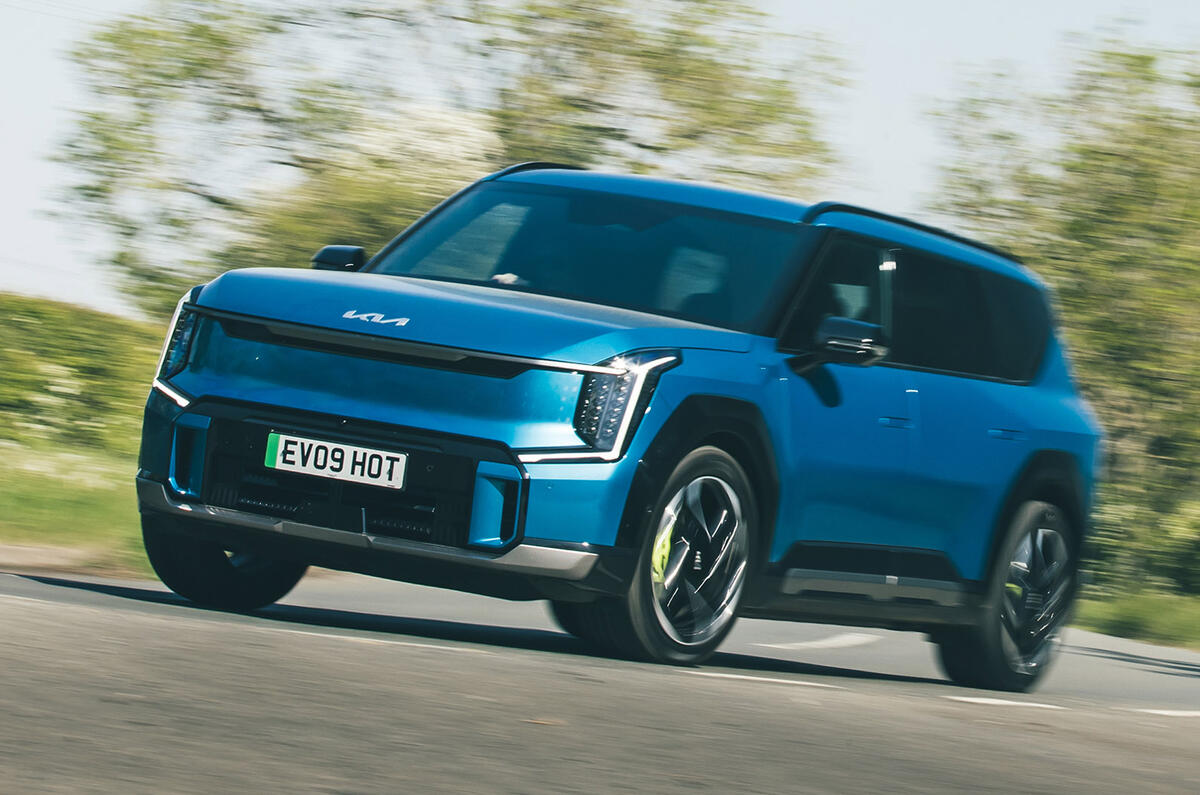
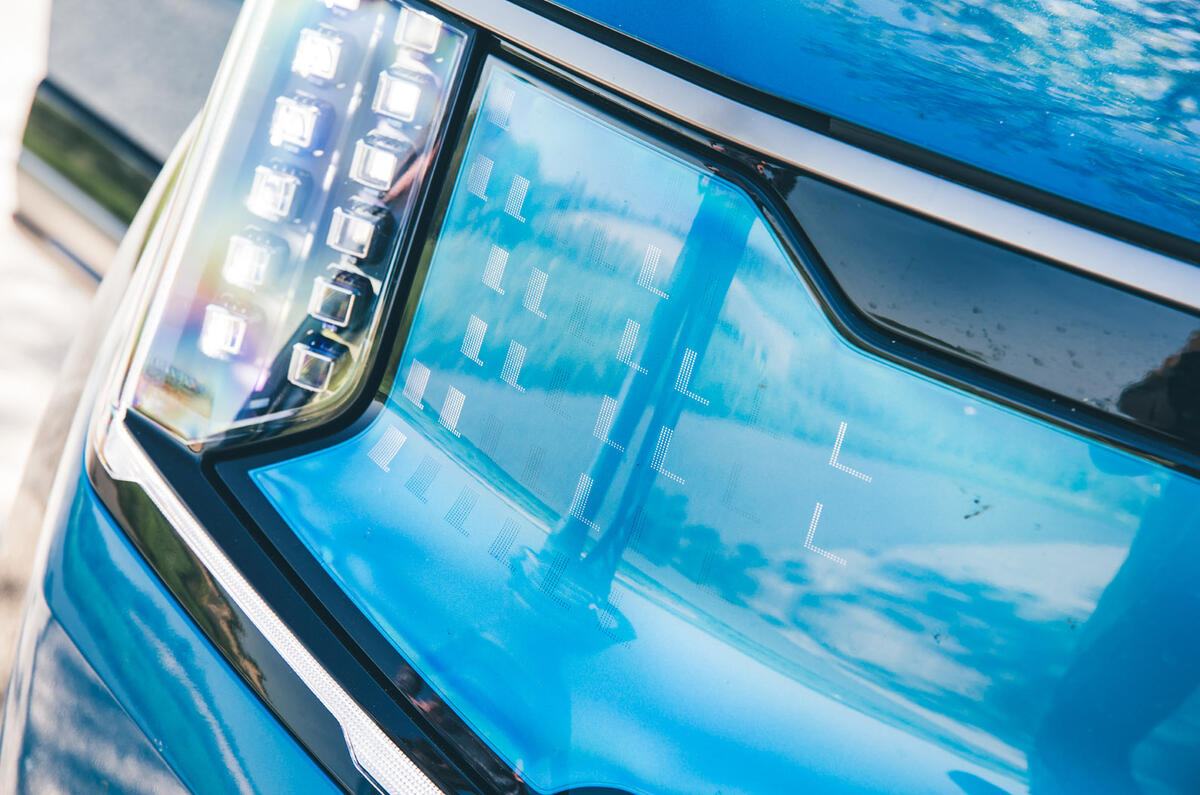
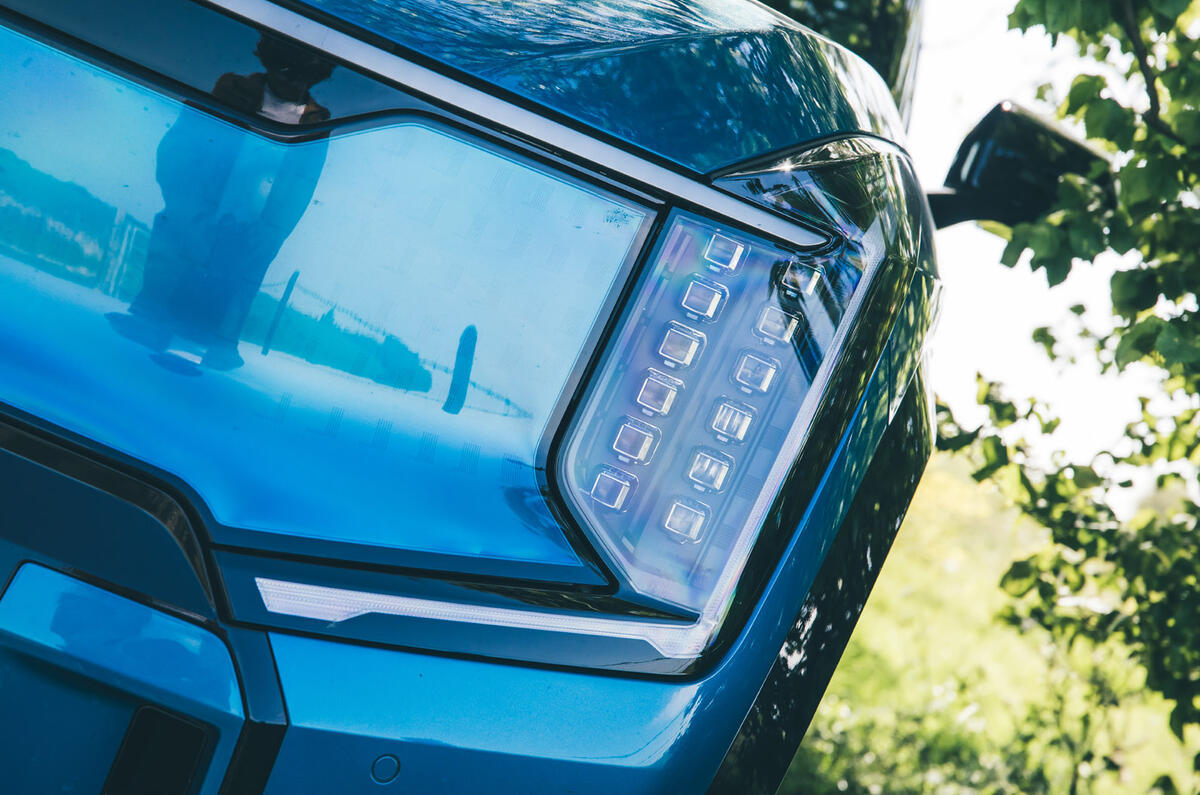
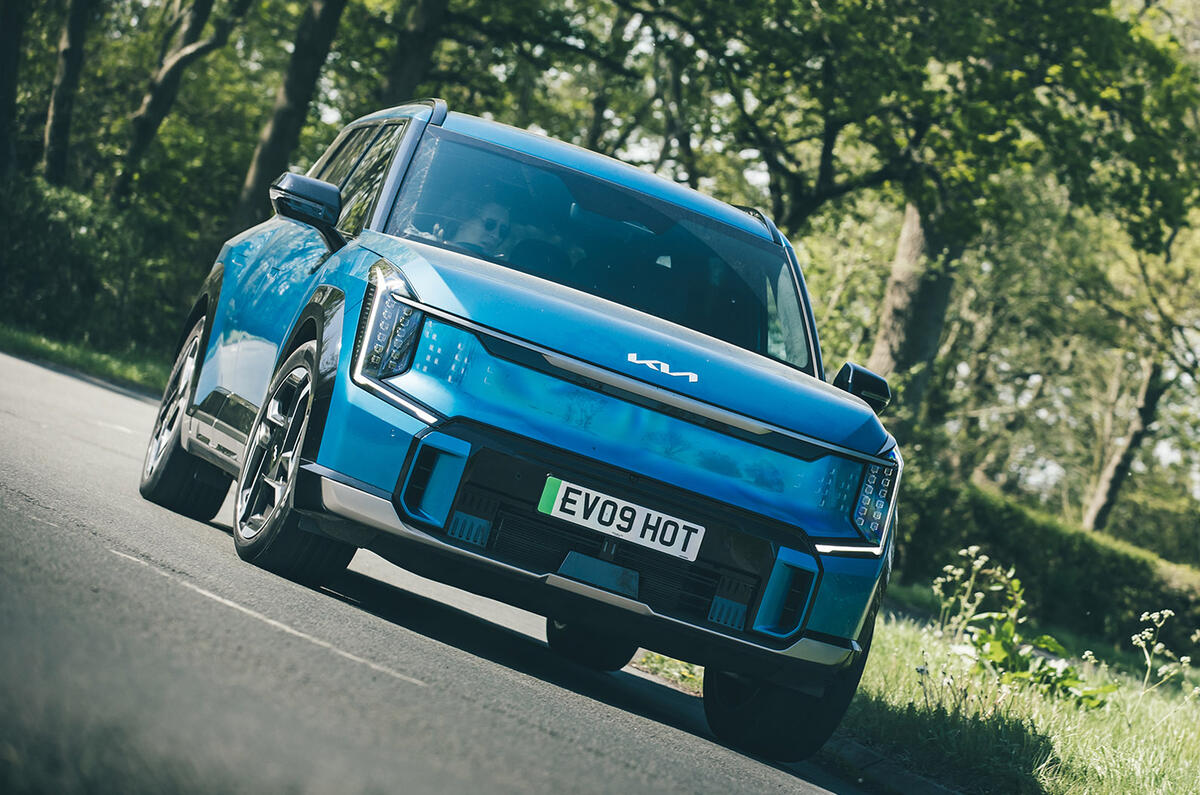
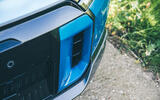
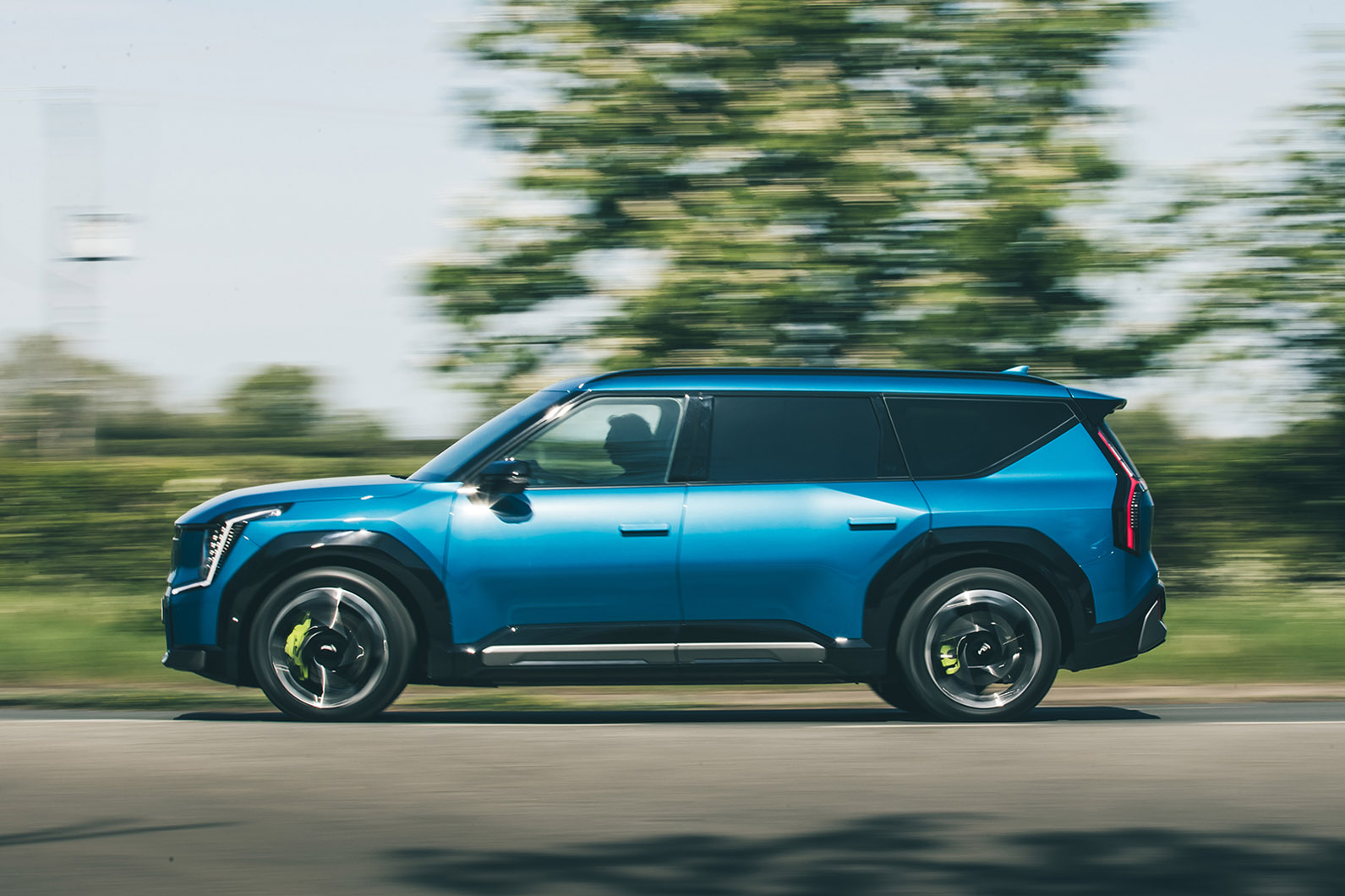
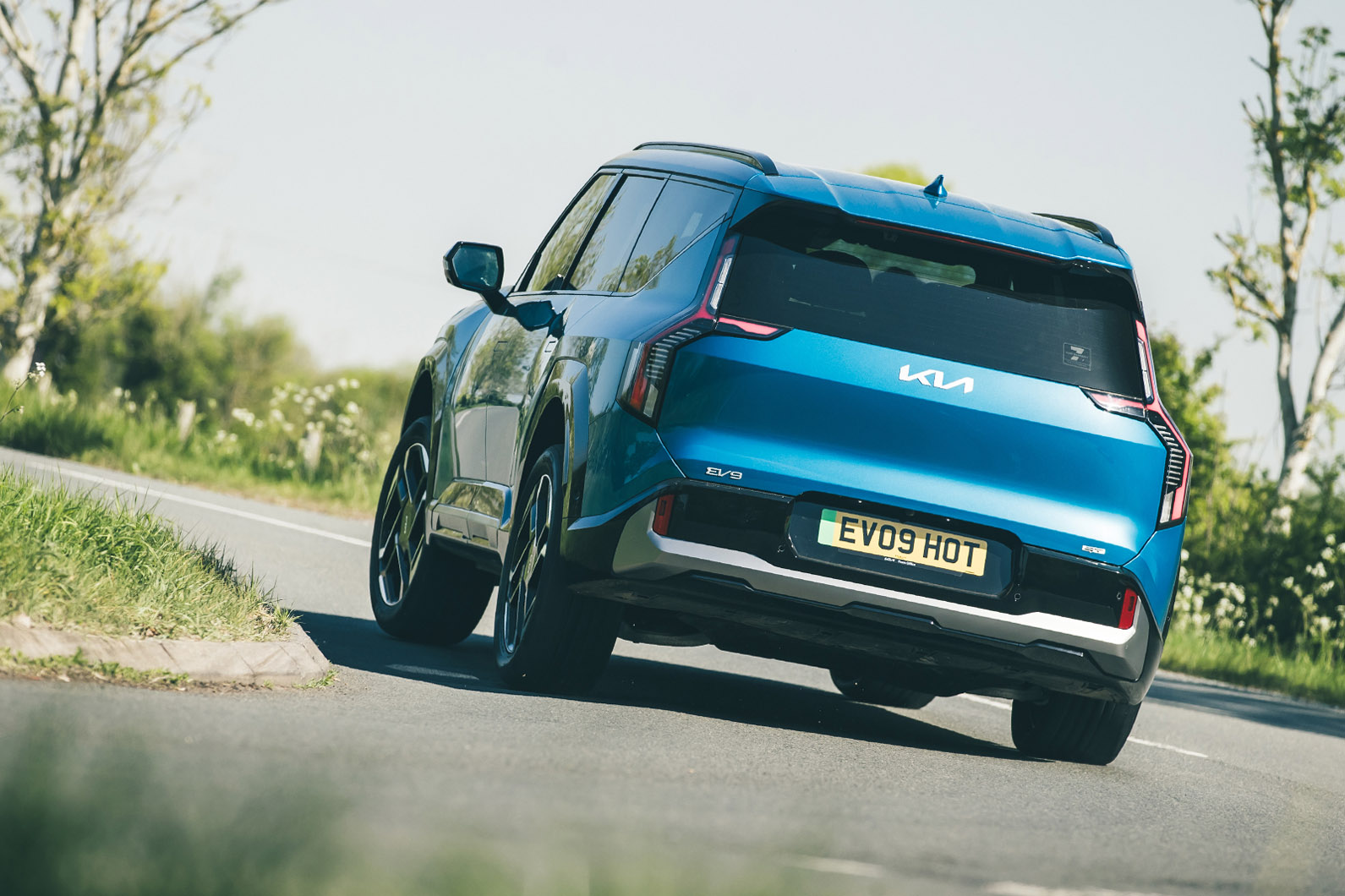
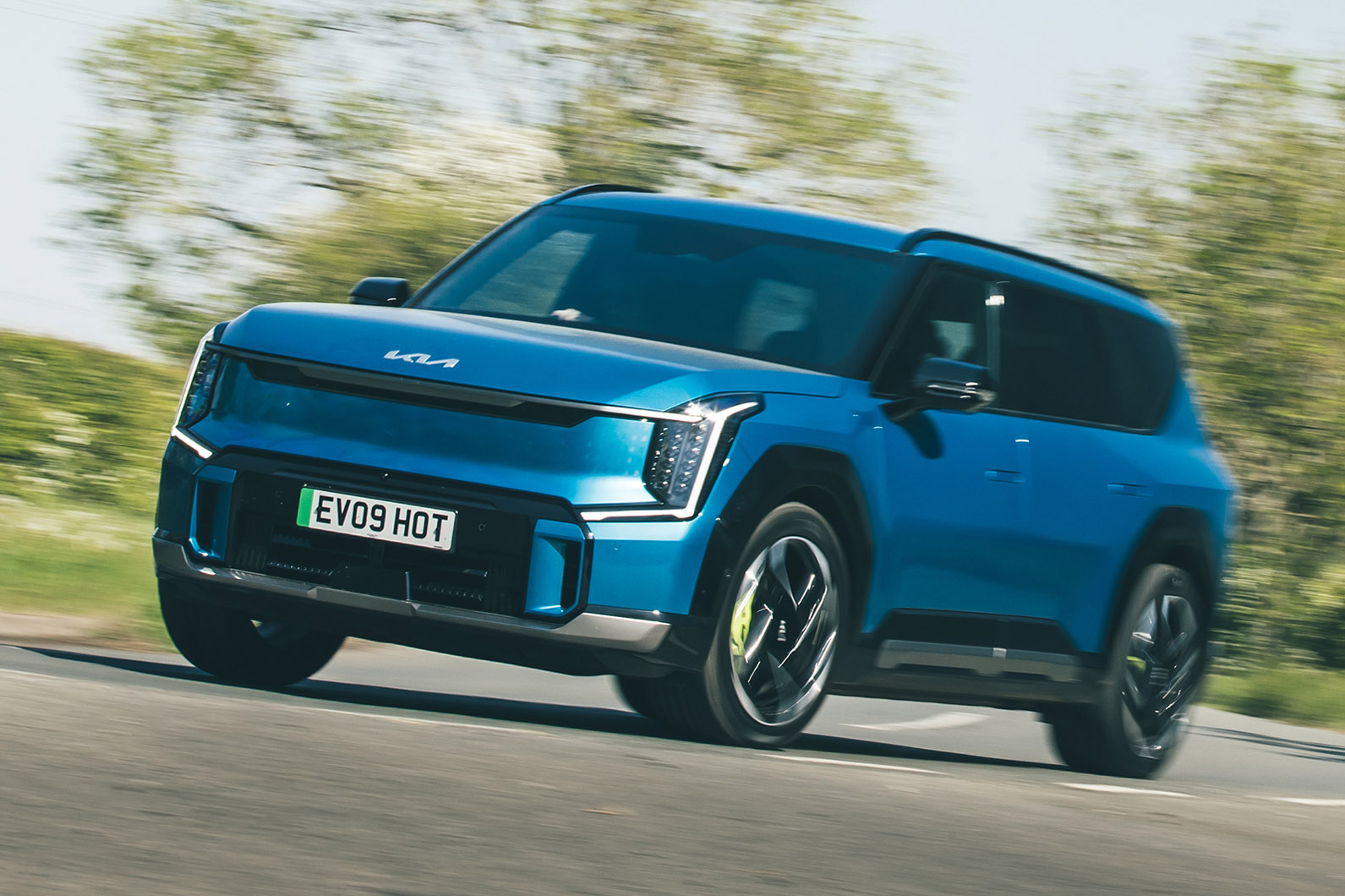
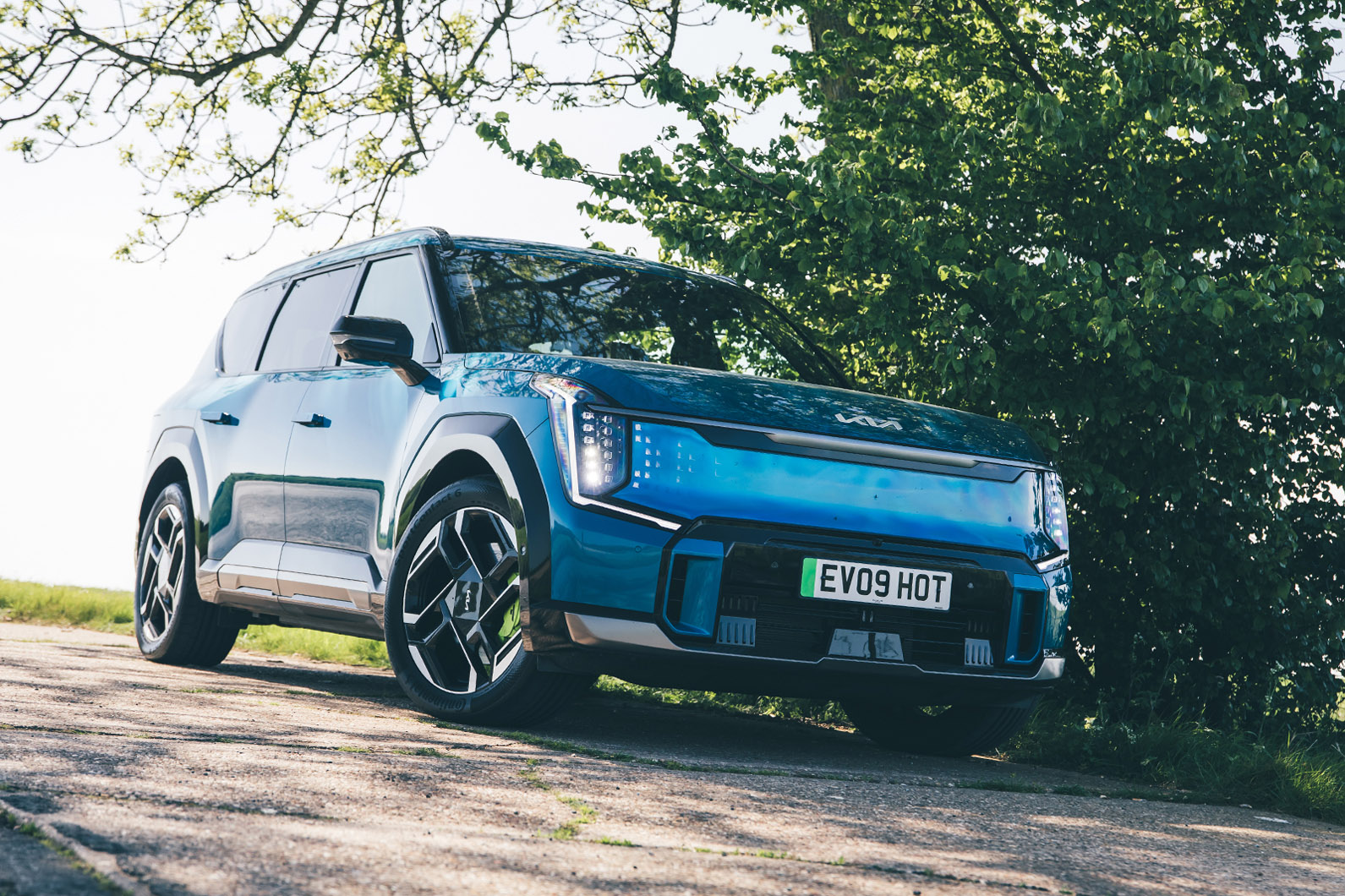
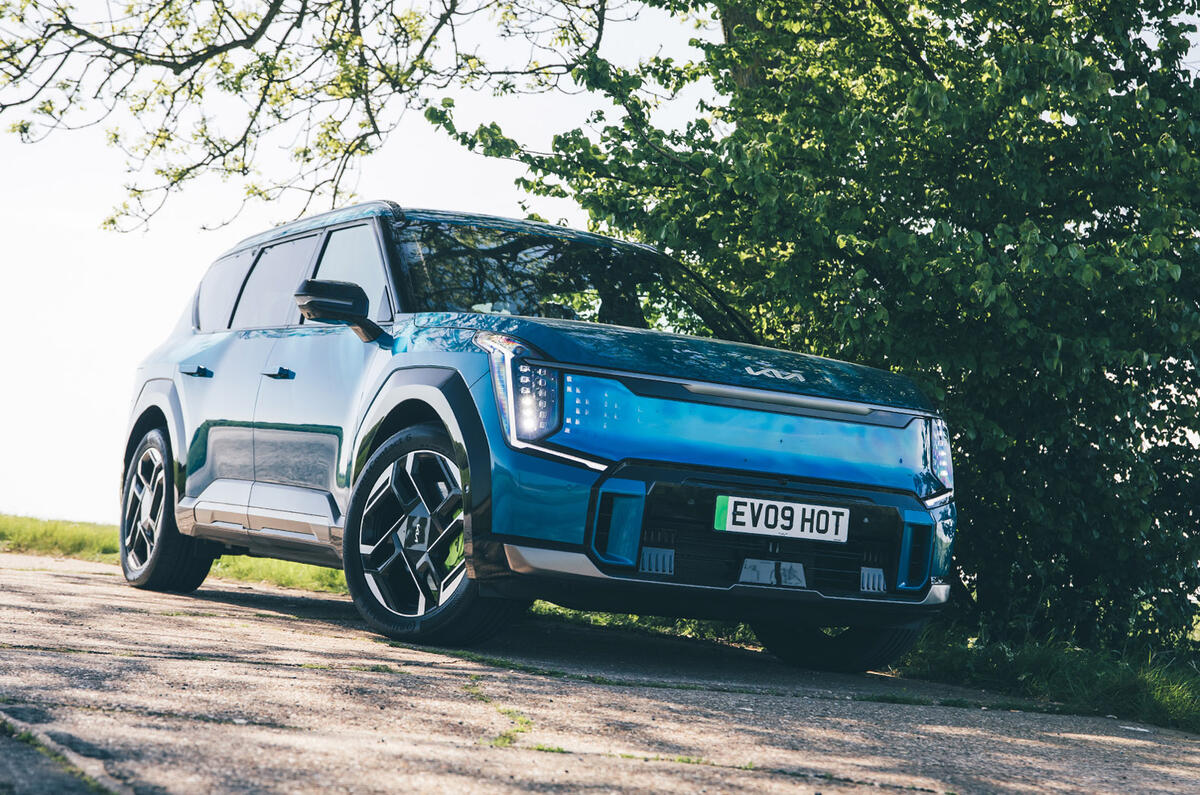
Tiny LEDs in the front mask give the impression of light-up freckles. It lends what could have been an aggressive performance car quite a friendly appearance. Expect them to come to the standard EV9 as well, even though that leaves little to mark out the GT.

The keen-eyed observer will notice that power output is less than is offered in the EV6 GT and Hyundai Ioniq 5 N twins, which both have 641bhp. Kia says it’s just a case of product planning that the EV9 GT doesn’t have the same, more powerful motors, but we suspect that the battery is the limiting factor. The EV9 has a completely different battery (it’s certainly quite a bit bigger at 99.9kWh total capacity), which is capable of supplying ‘only’ 413kW (554bhp). On the subject of batteries, it is also notable that the EV9 still doesn’t get the bigger, 110.3kWh pack from its Hyundai Ioniq 9 sibling model.

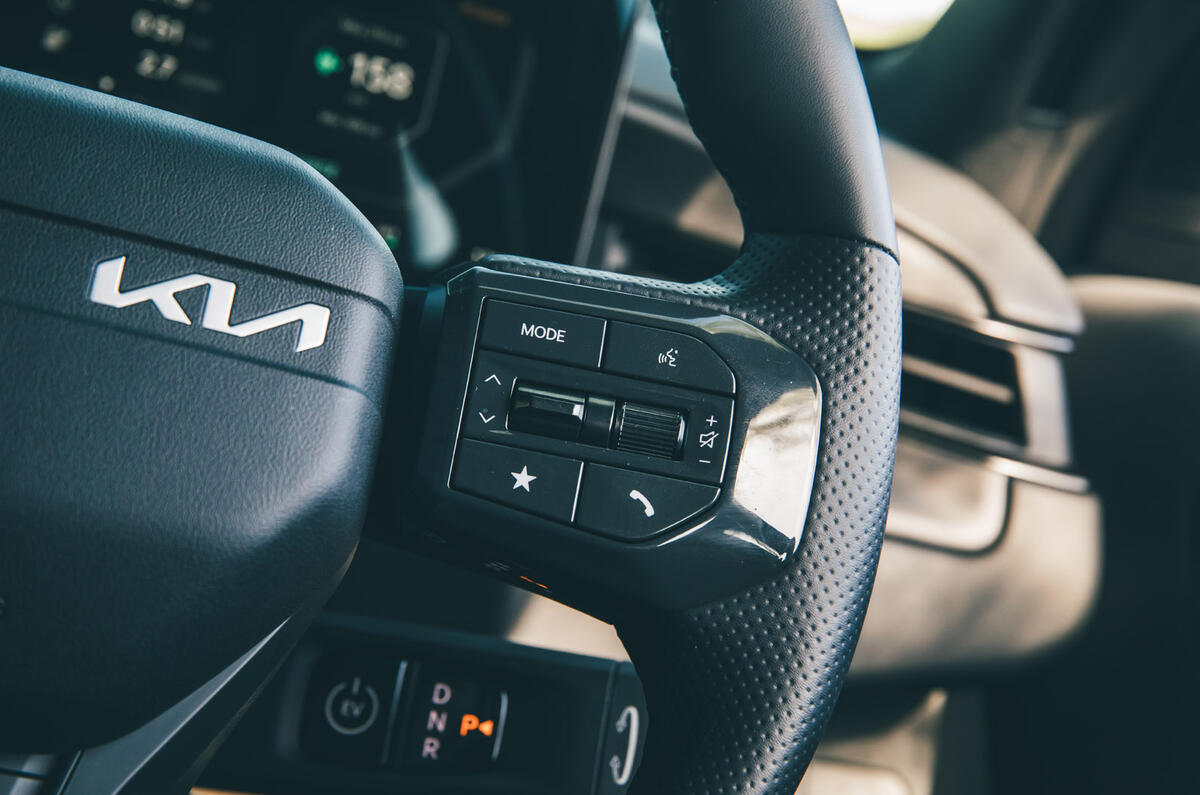
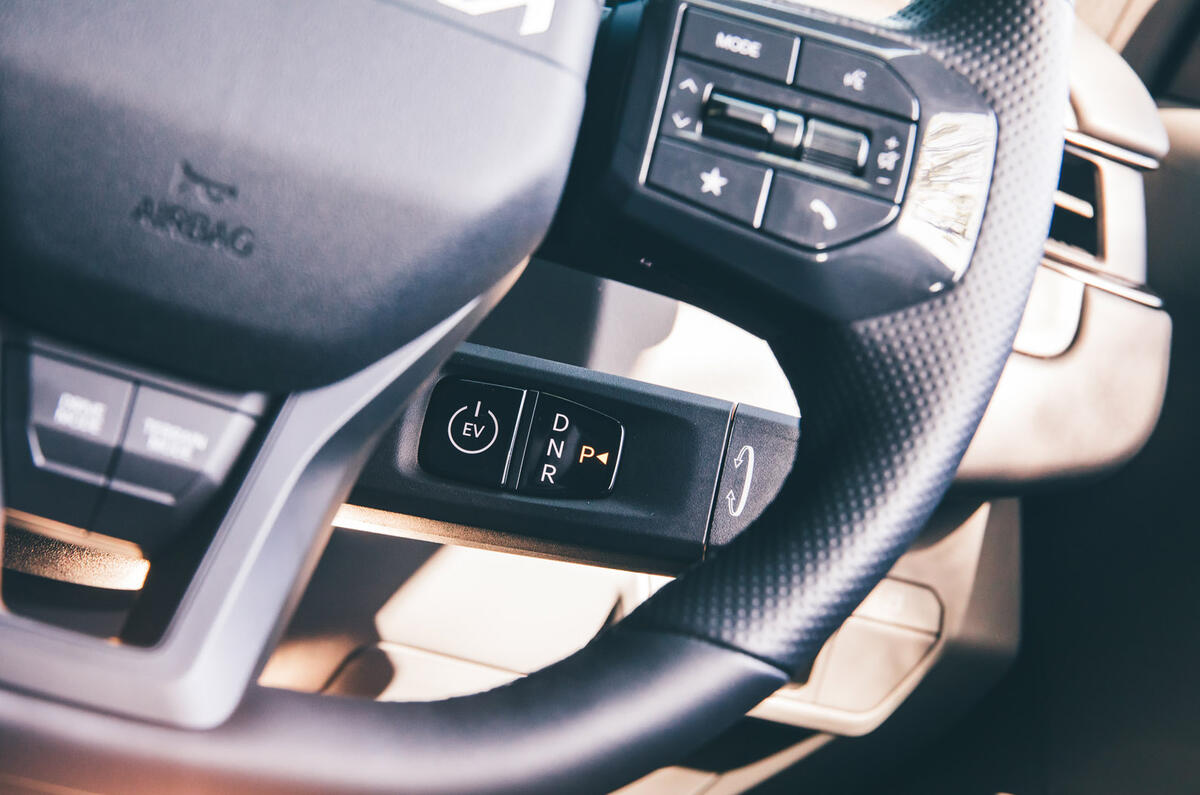
While the EV9 GT isn’t getting the absolute pinnacle of drivetrain hardware available in the Kia-Hyundai stable, it still has plenty to shout about. Literally, in the case of the simulated gearbox. At the press of a button, it’s possible to make the steering wheel paddles, which normally control the regen, into shifter paddles for a pretend eight-speed gearbox, rendered lifelike by engine-adjacent noise coming through the speakers.

Elsewhere, there’s an electronically controlled limited-slip differential on the rear axle, and adaptive dampers for the coil suspension. A forward-facing camera and the navigation system help prime them for upcoming bumps.

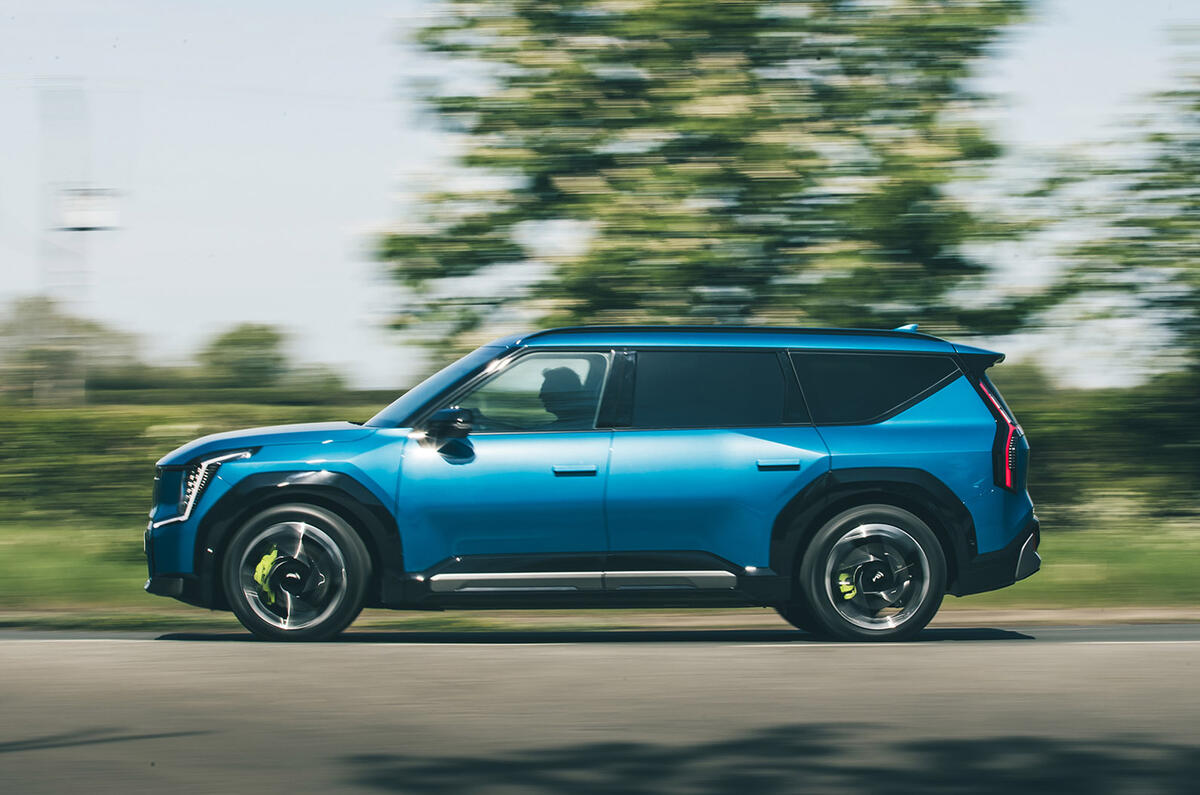
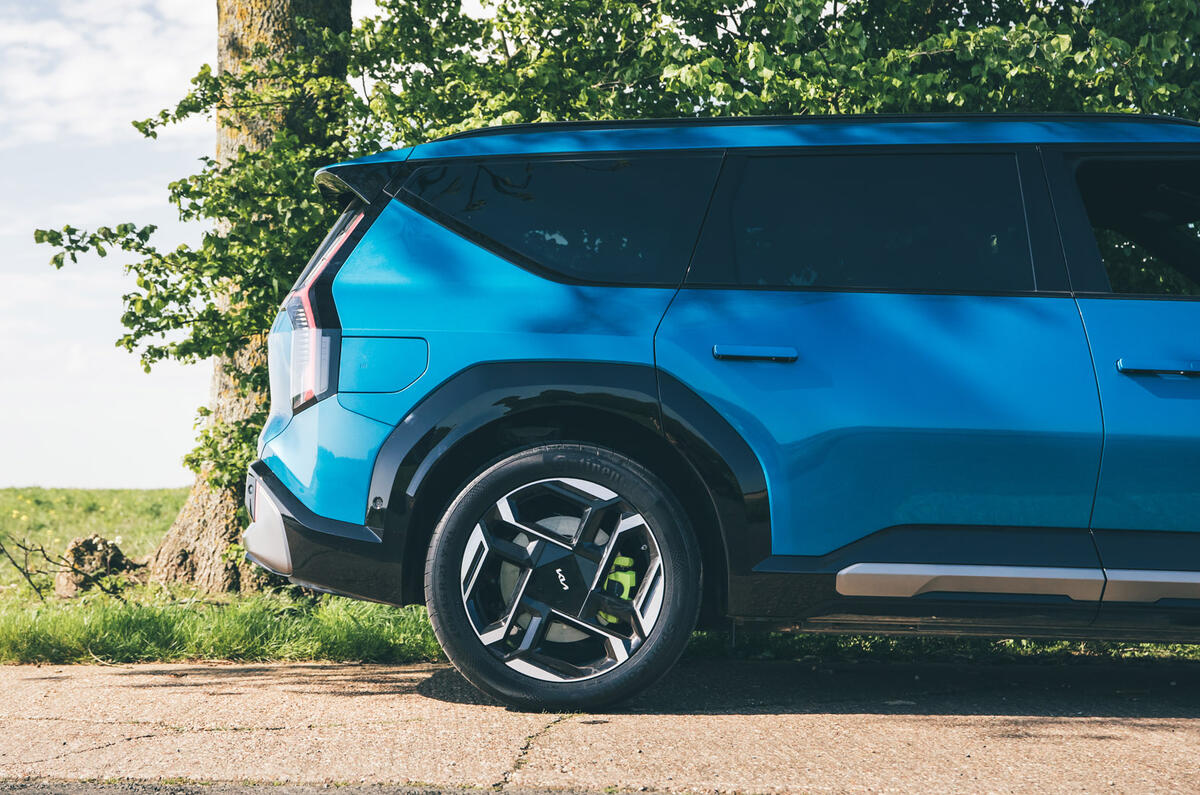
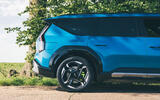
The new 21in alloys are each 2kg lighter than the same-size wheels on the regular EV9. In those huge wheels, the brakes don’t even look all that big. They’re normal steel discs, with two-piston calipers at the front.

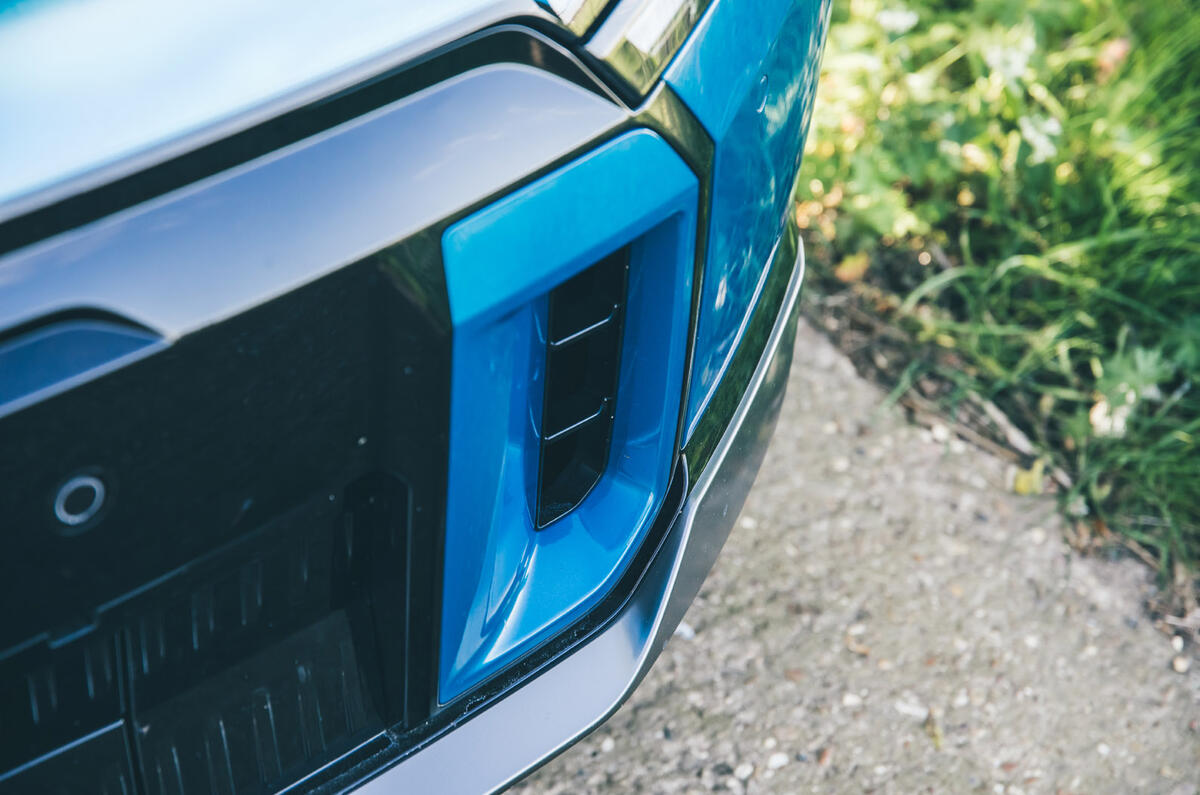
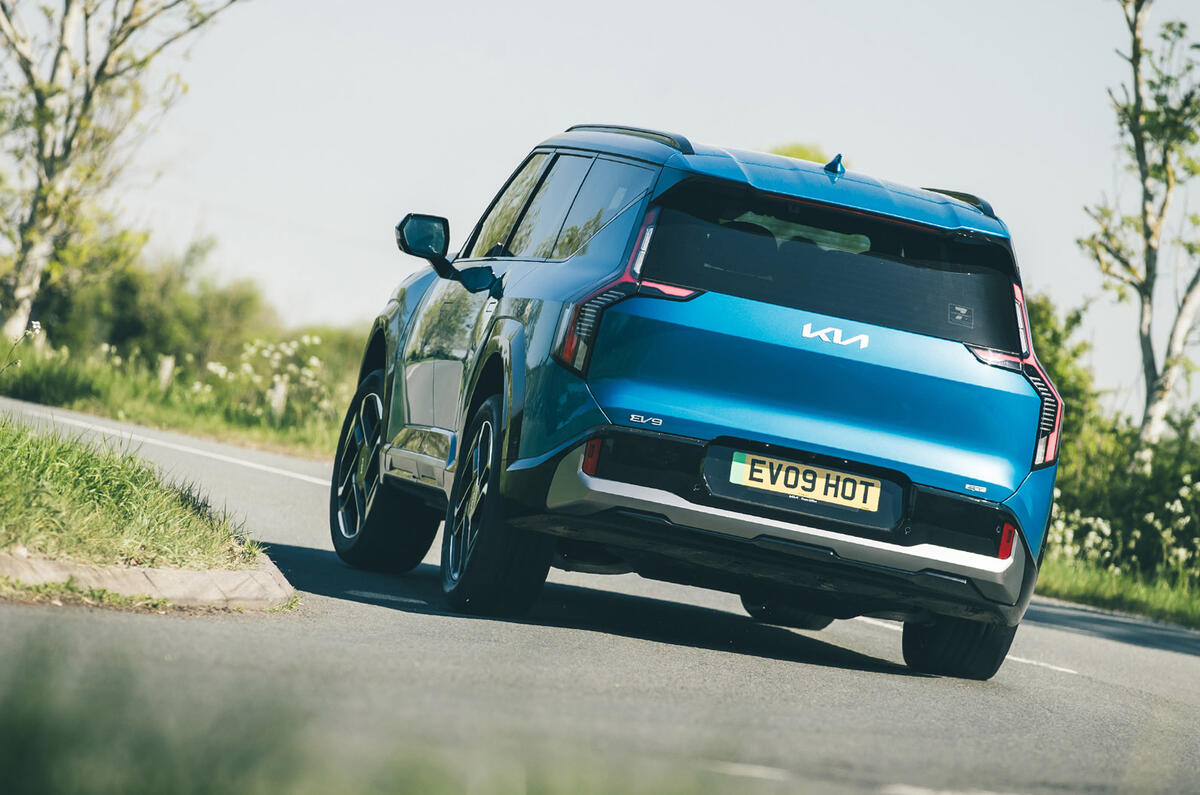
The wheels are the most obvious giveaway that you’re looking at the GT version. Otherwise, the changes are pretty subtle. There’s a slightly different texture on some of the front aerodynamic flaps, the roof rails are lower and the GT has gained some illuminated freckles by way of mini LEDs in the front mask. In other markets, the standard EV9 gets these as well, so there’s a good chance that the same will happen here when the normal EV9 is next facelifted.

INTERIOR

8
KIA EV9 GT review 2026 10

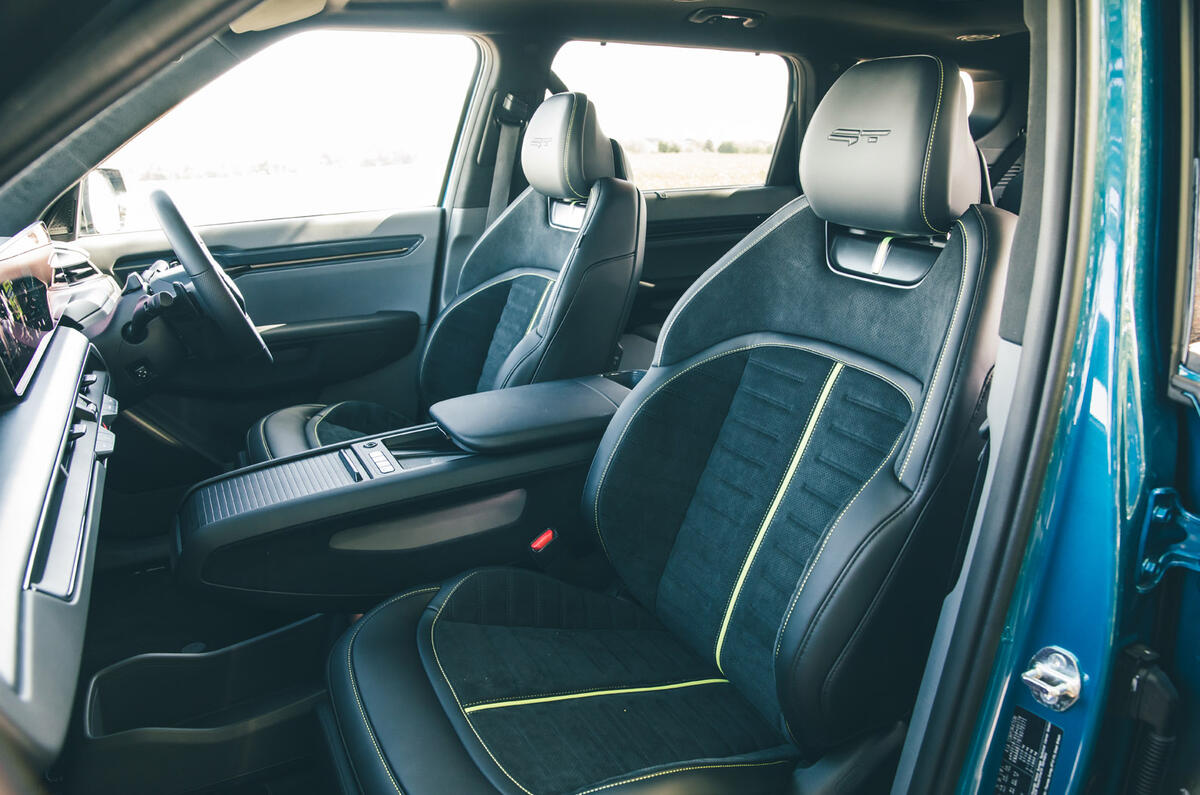
When you board the EV9 GT, the GT-ness is immediately obvious thanks to the heavily bolstered front sport seats. Even if you’re not usually a fan of ‘easy entry’ functionality, which slides the seat back as you open the door, you might find it useful in the EV9 GT because the bolstering can genuinely get in the way. The artificial leather better be reinforced with Kevlar, because it is sure to take a beating in daily use.

Once you are ensconced in them, however, the seats have both a luxurious feel thanks to the soft padding and microsuede upholstery, and offer decent support and adjustability. Some testers did find that the backrest made them hunch a bit, and that the steering column could use some more reach adjustment, but overall it’s a very accommodating environment.

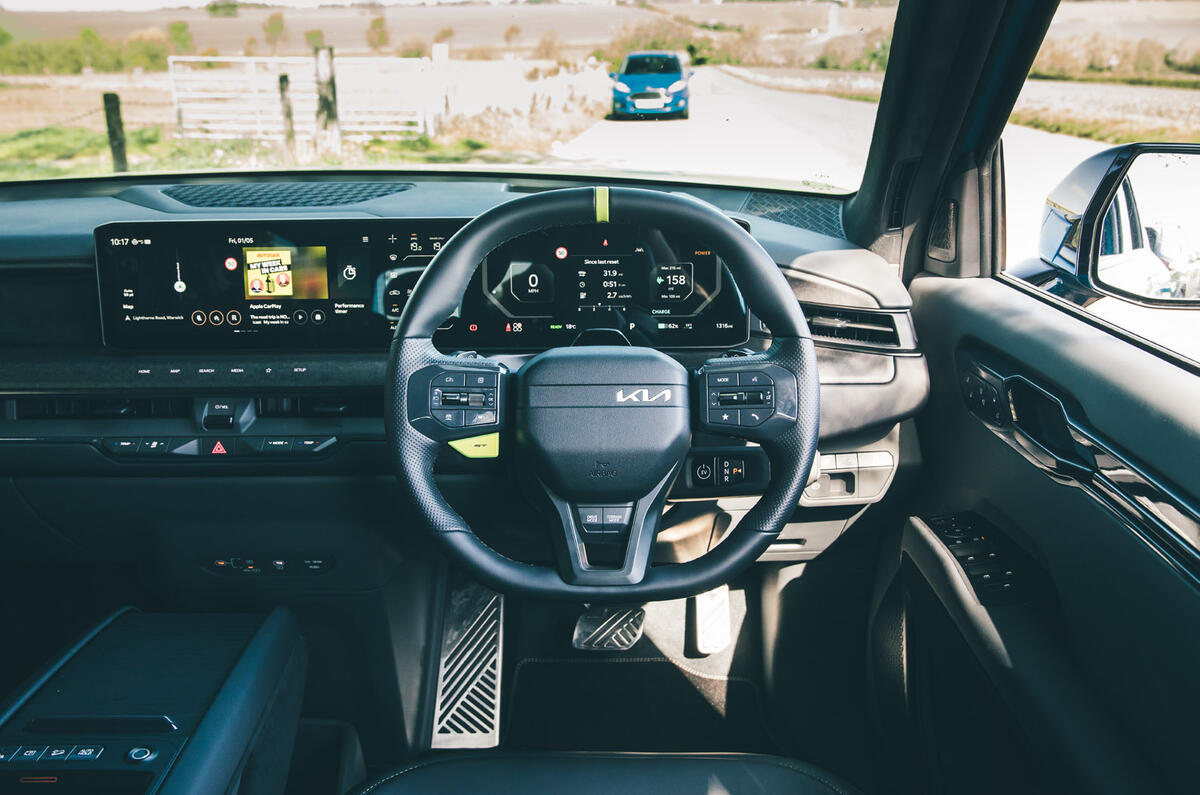
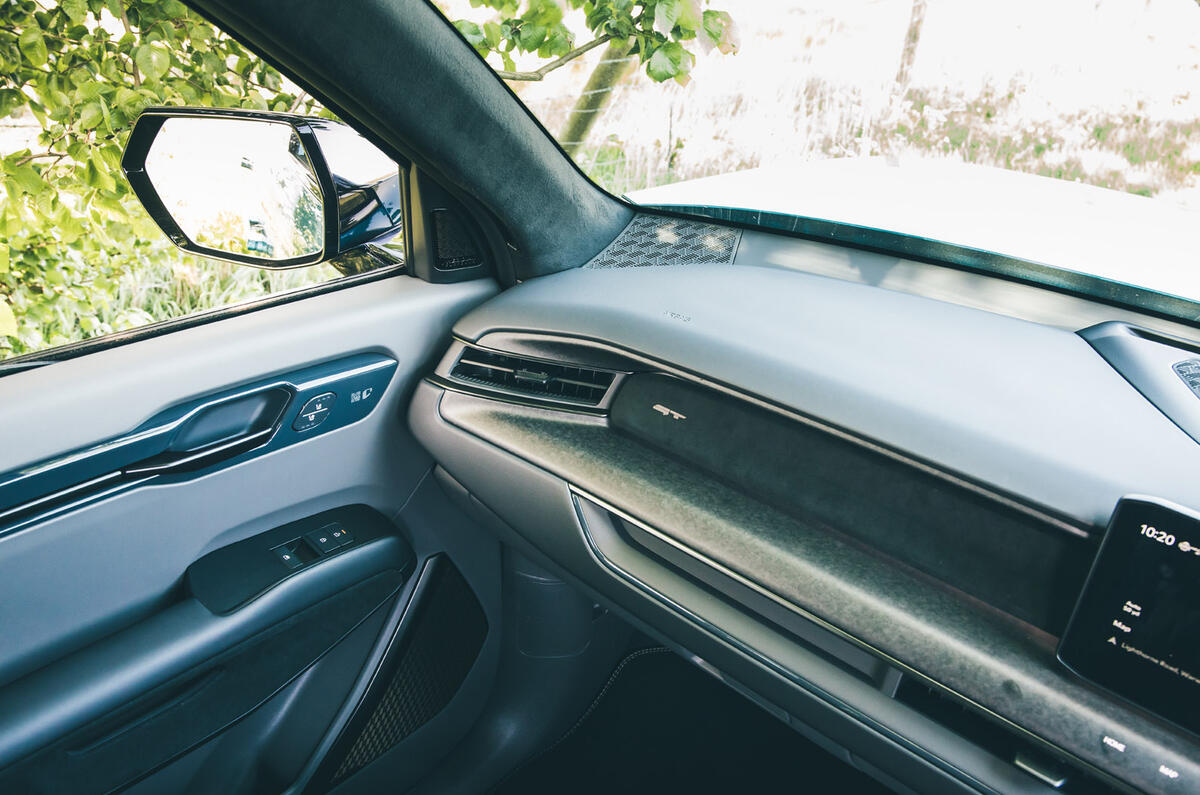
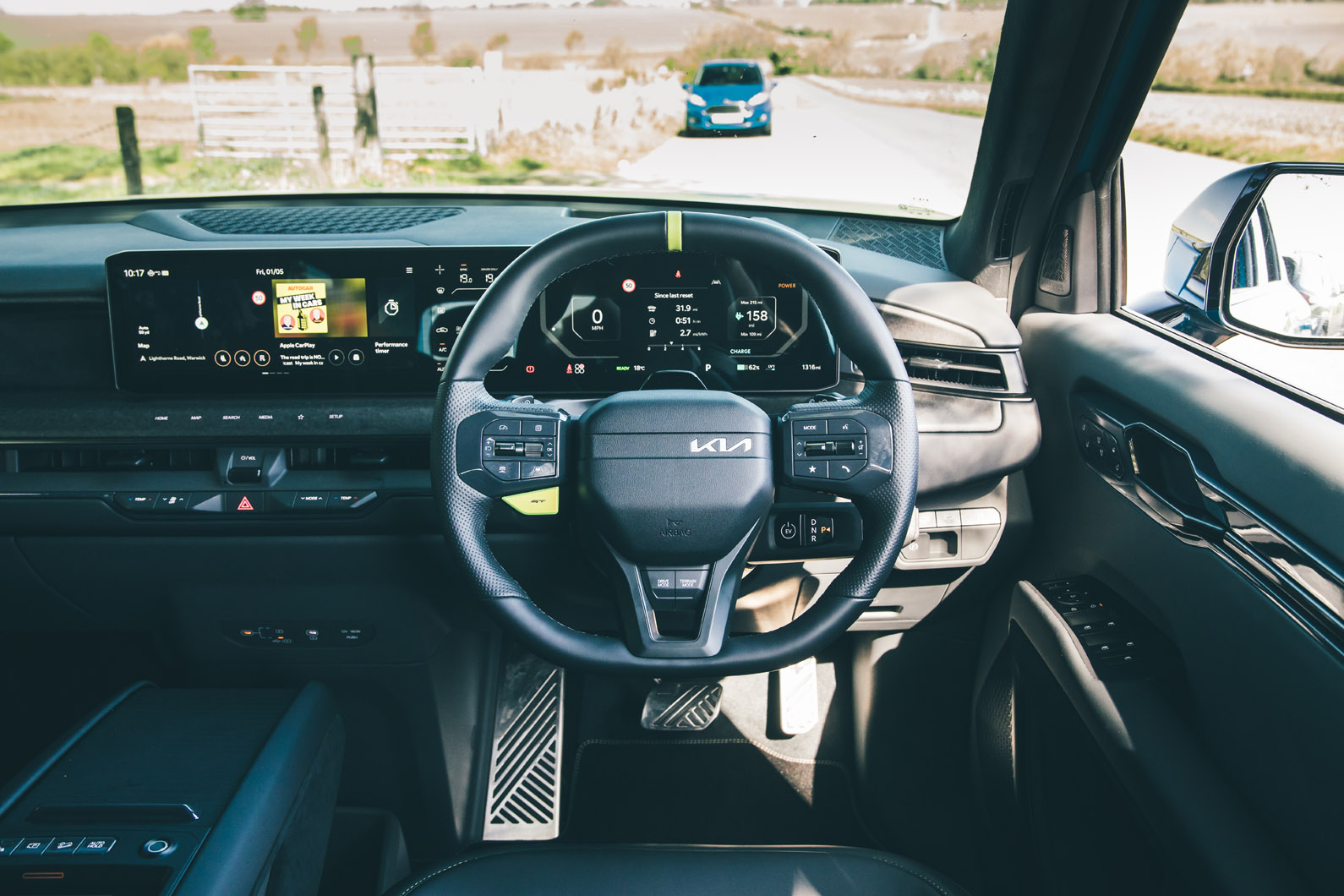
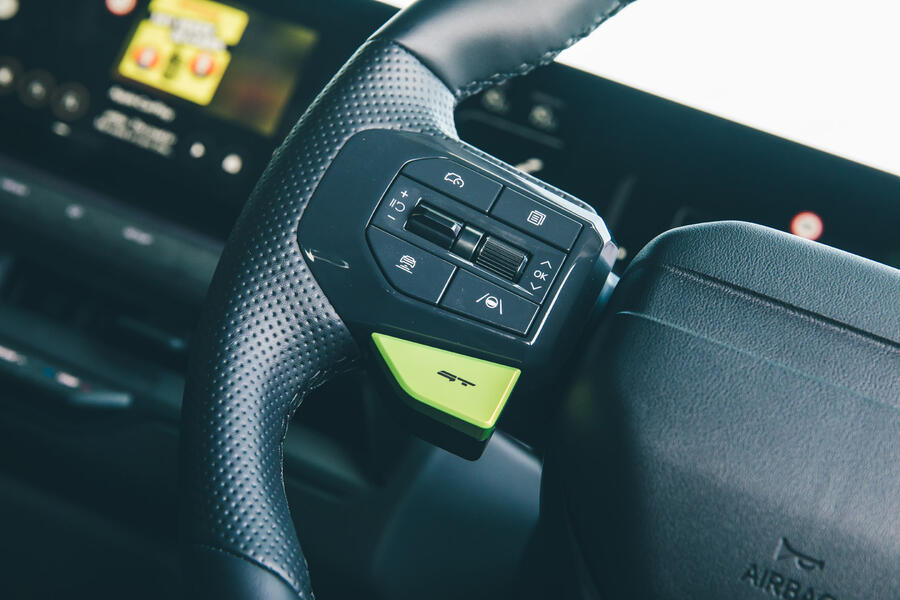
More GT-specific touches come in the form of additional black microsuede on the dash, a plastic trim panel that does a decent impression of the ‘camouflage carbonfibre’ you find in high-end Audis, and a three-spoke steering wheel with a flattened top and bottom and a nuclear green GT button. There’s enough here to put you in the mood without going over the top for what is still a practical family wagon.

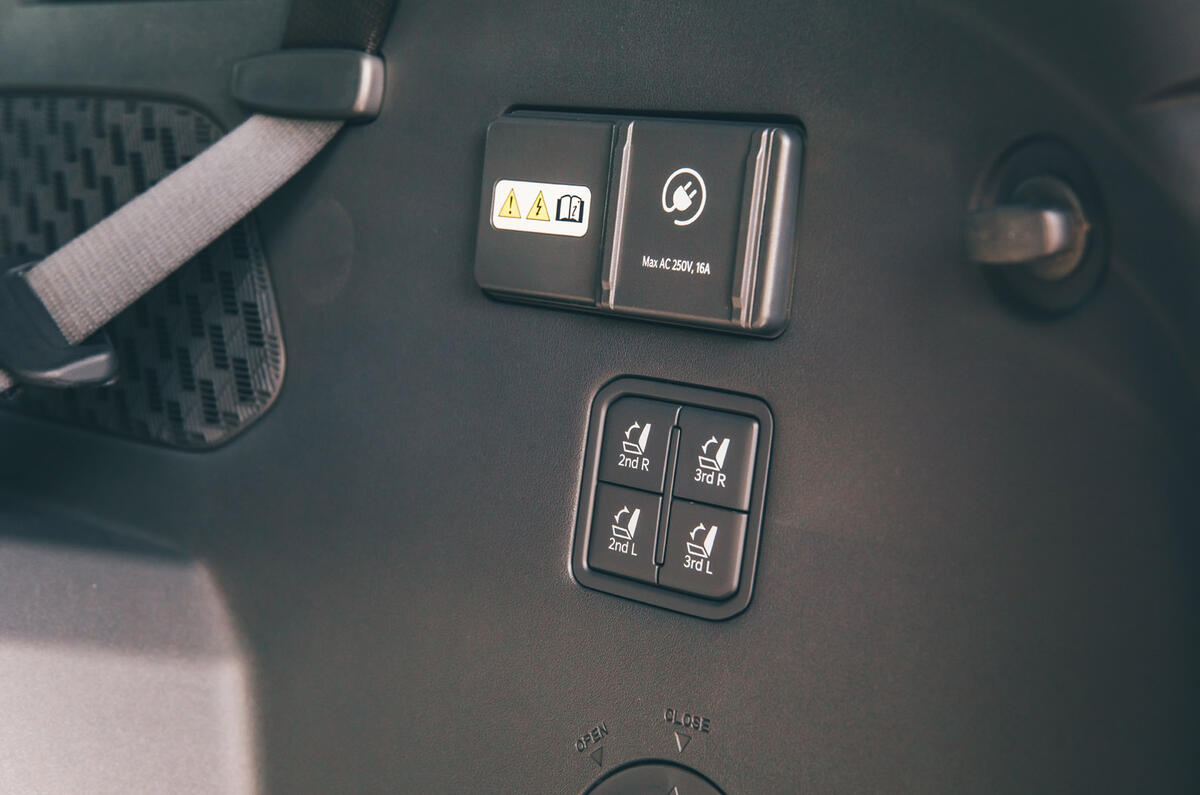
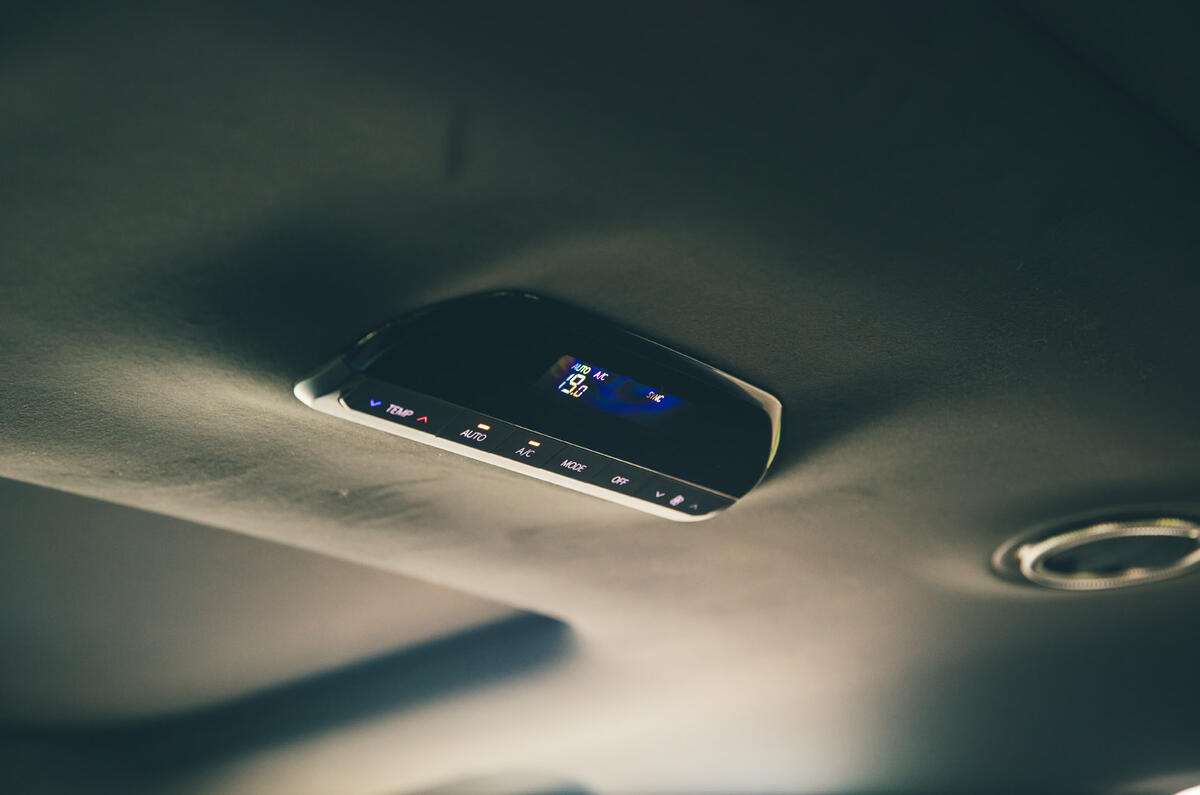
The EV9 certainly is that. You’re never short of versatile storage spaces, no matter which row you’re in. In the front, there’s a huge centre tray, while the centre console harbours a multitude of cupholders, including two that can be deployed as necessary or stowed to create a storage bin. In the back, there’s a pull-out bin/shelf, and even the rearmost row gets large cupholders. All rows are also provided with USB-C ports and air vents; in the boot, there’s a three-pin socket.
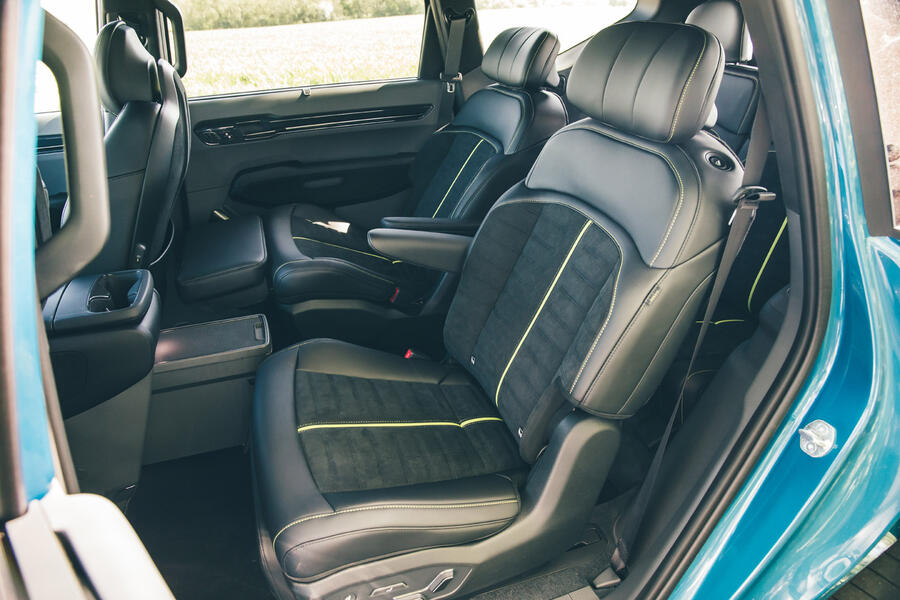
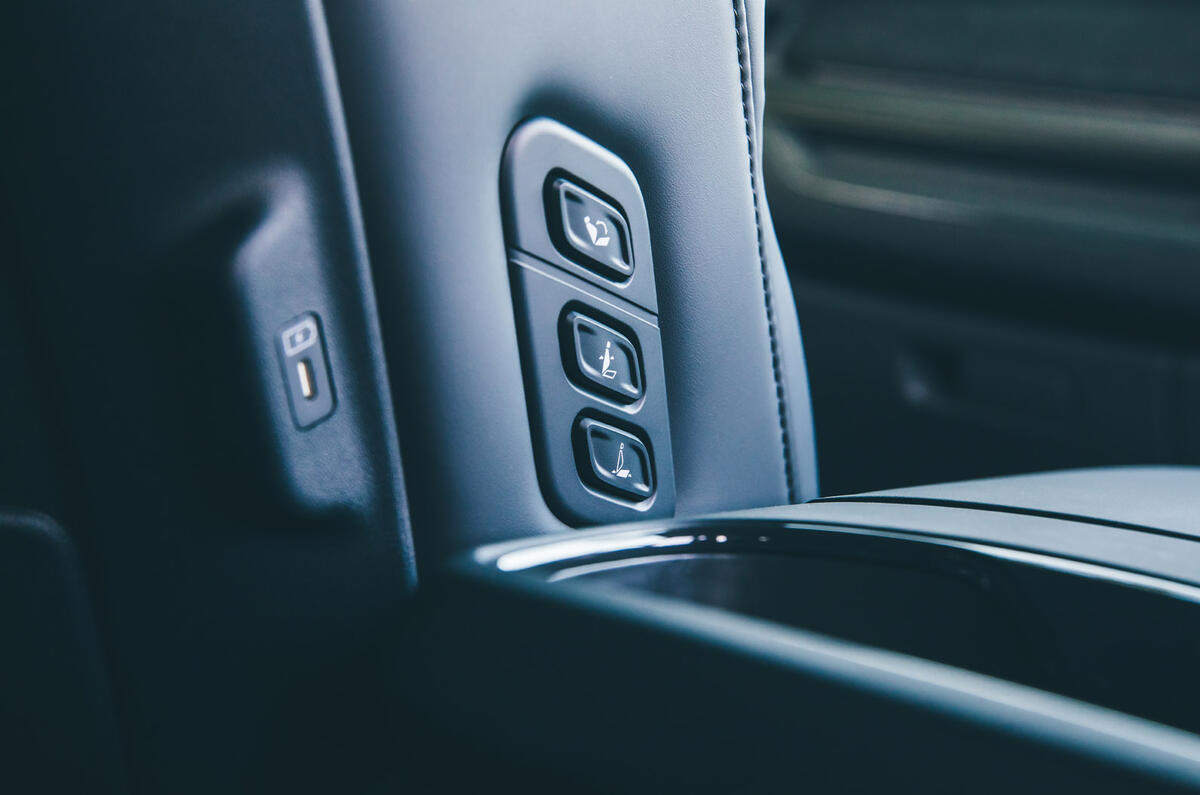
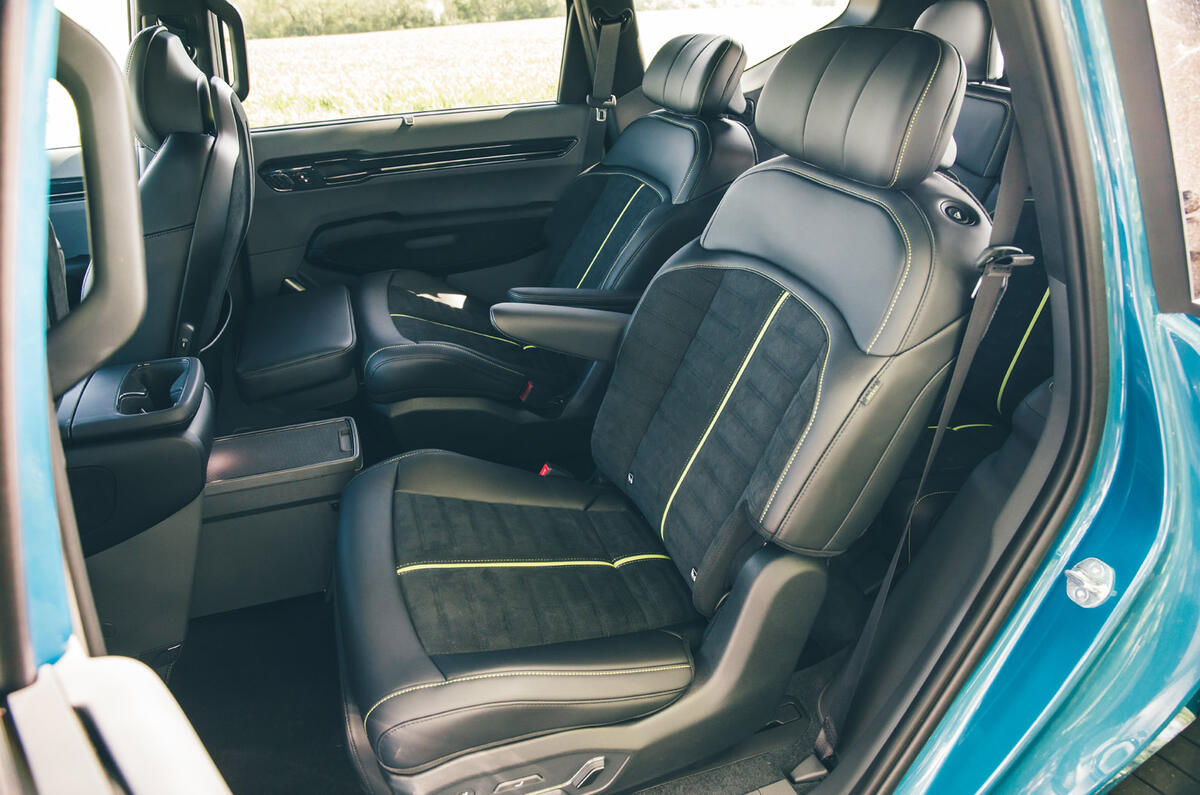
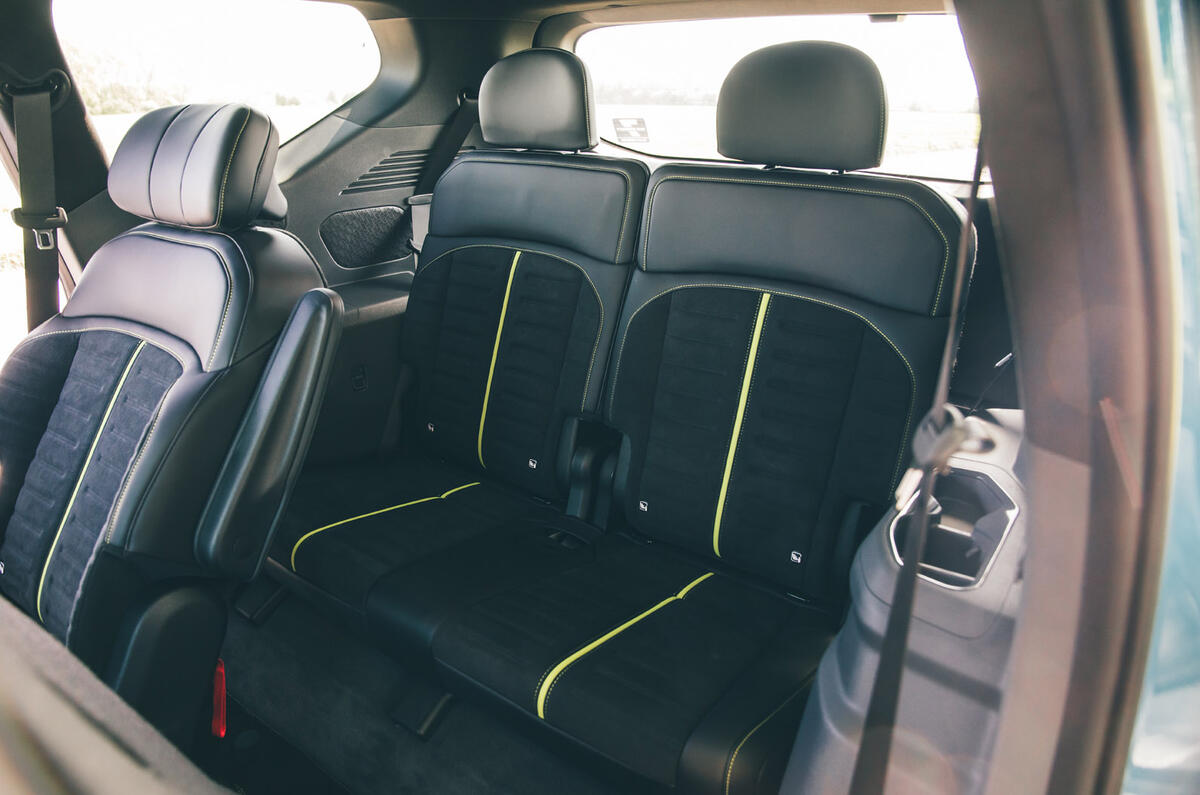
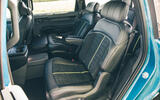
Our test car came with the optional six-seater layout instead of the standard seven seats. This means the rear bench is replaced with two individual ‘captain’s chairs’ that are electrically adjustable and have heating and ventilation. They certainly add an extra level of comfort, so are well worth considering. Note, however, that the deployable leg rest is of limited use because the seats won’t slide far enough back to allow occupants to really stretch out. Being fully electric, they’re also quite slow to move out of the way for third-row passengers to get in or out. That third row has Isofix points, and enough leg room to accommodate adults for short trips, but still shouldn’t be considered a full pair of seats.

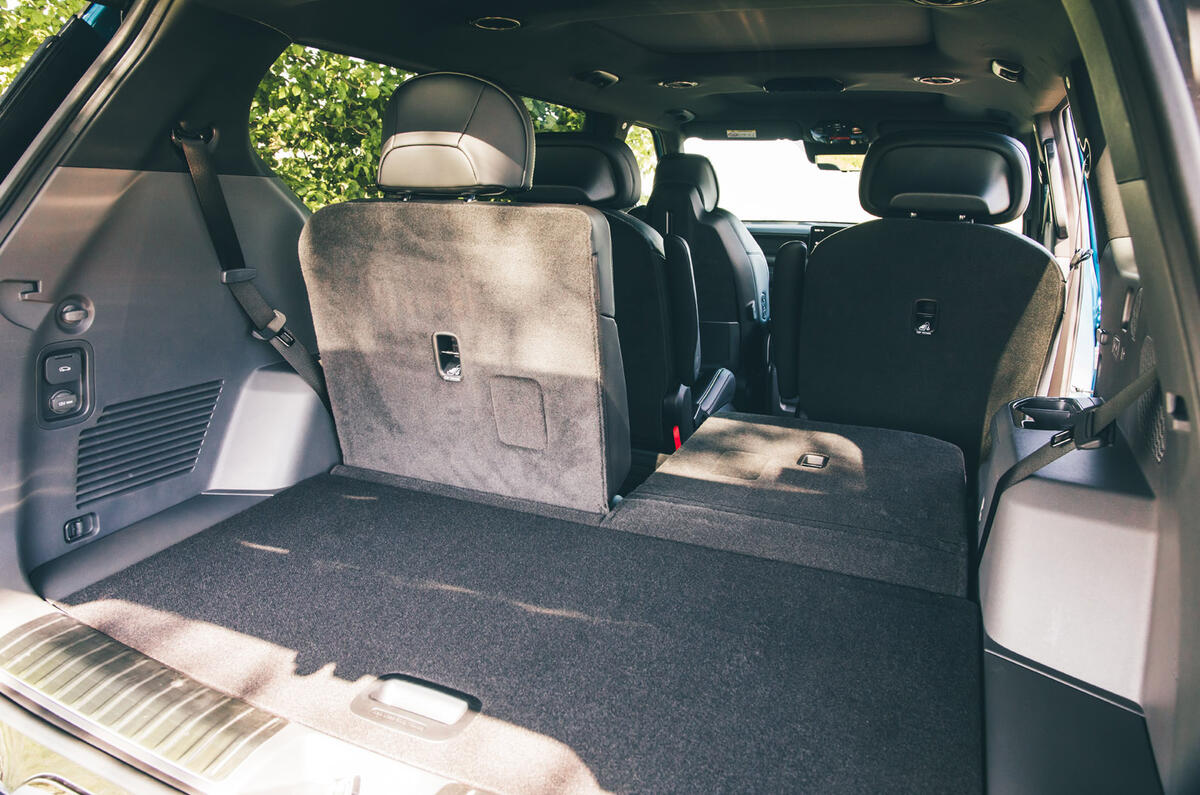
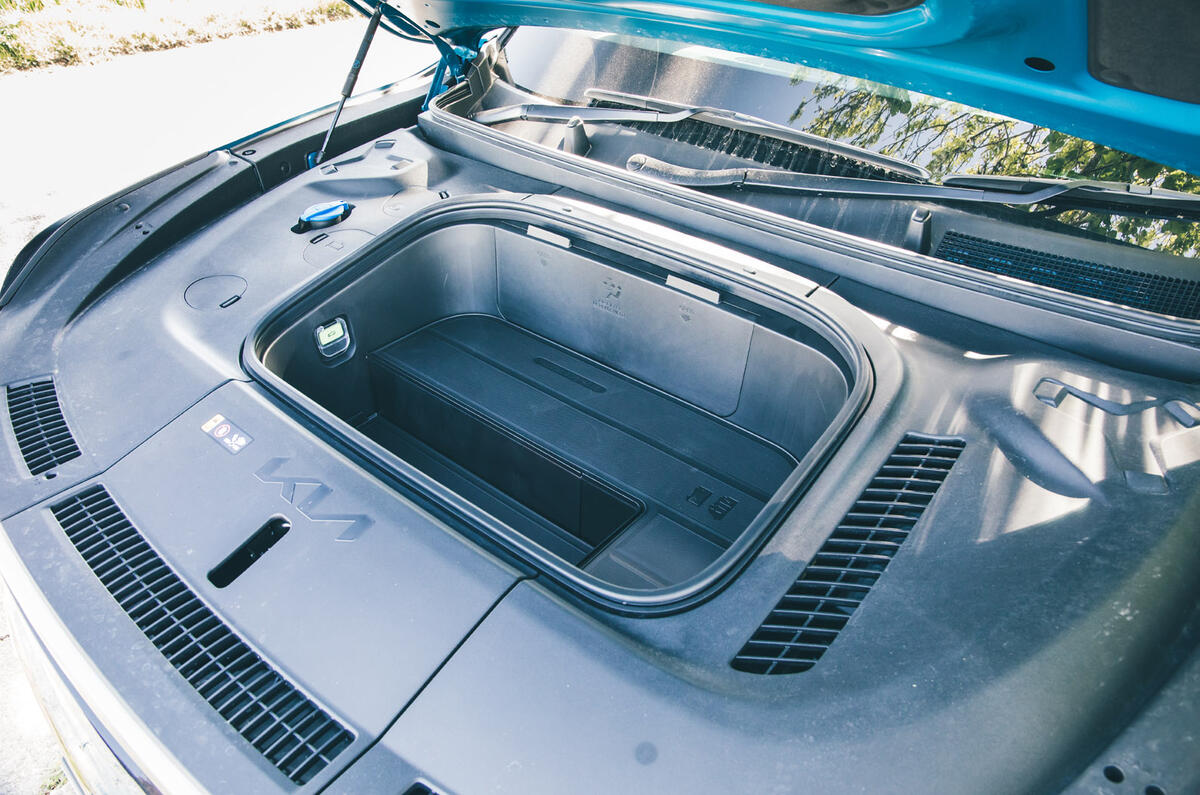
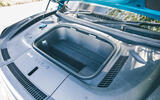
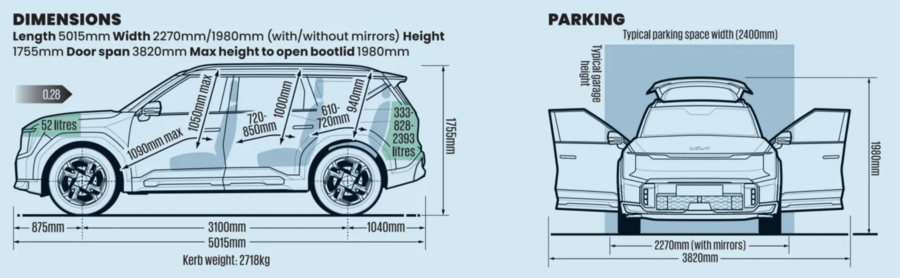
Even with all seats up there’s a usable amount of boot space, and with them down the EV9 GT turns into a very rapid van. The boot roller blind can only be installed behind the second row but does fit under the boot floor to stow it.

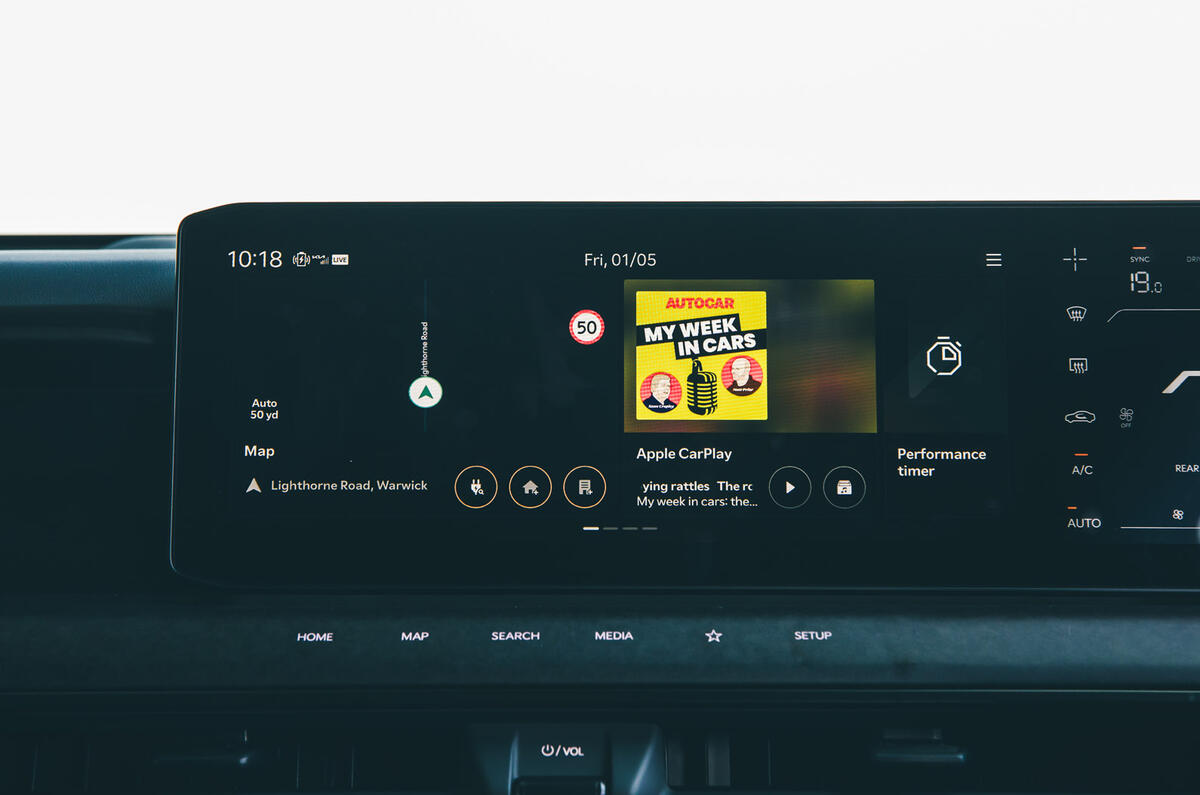
Kia’s user interface is very well known to us by now, and by and large we like it a lot, because important, frequently used functions get physical controls. Detail stuff is handled by the touchscreen, which is quick to respond, logically laid out and has a useful amount of user-configurability. The built-in navigation is clear and gives you plenty of different route options, and while the map itself isn’t Google-based, the search function does integrate Google data so is very good at finding points of interest. Since we tested the standard EV9, a software update has added wireless functionality for Apple CarPlay and Android Auto. Kia’s smartphone app is also pretty slick and feature-rich.

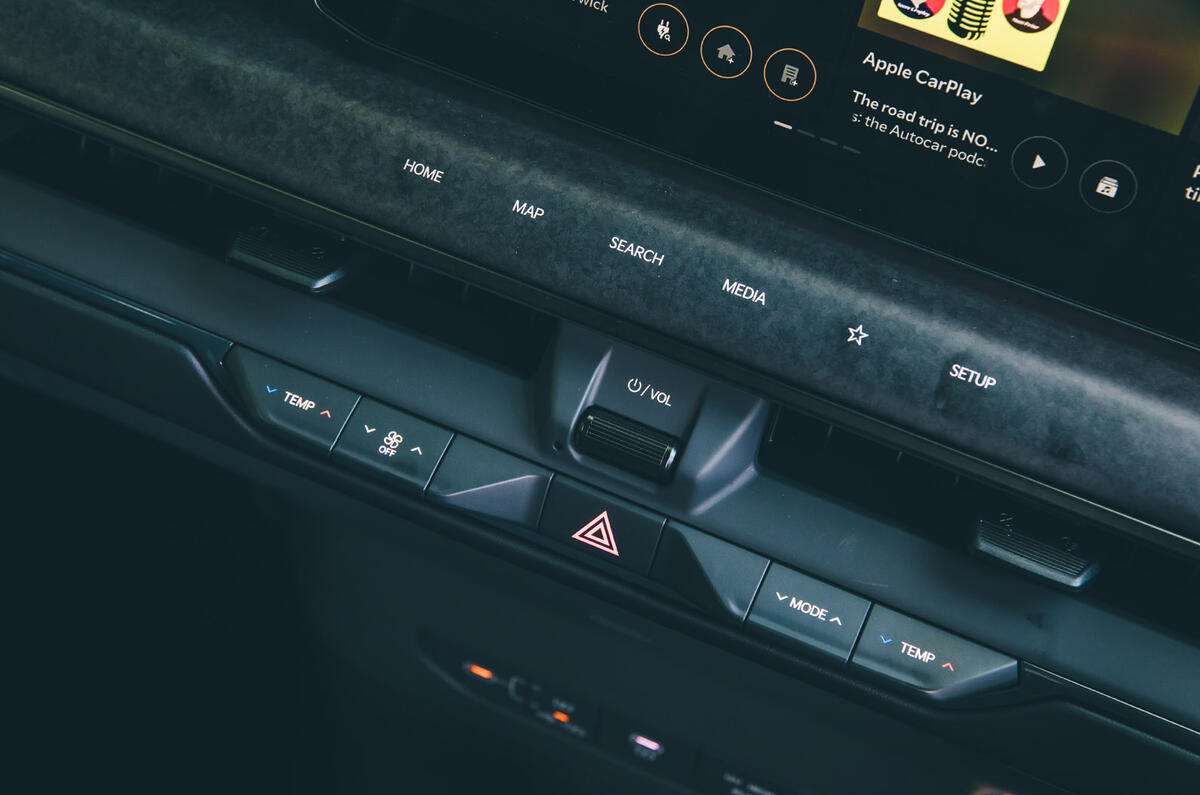
One significant annoyance is that the infotainment shortcut keys are haptic areas on the plastic trim panel. Although it’s a neat visual effect, their response is very inconsistent, and we hope that a facelift will replace these with proper buttons.

ENGINES & PERFORMANCE

8
KIA EV9 GT review 2026 26

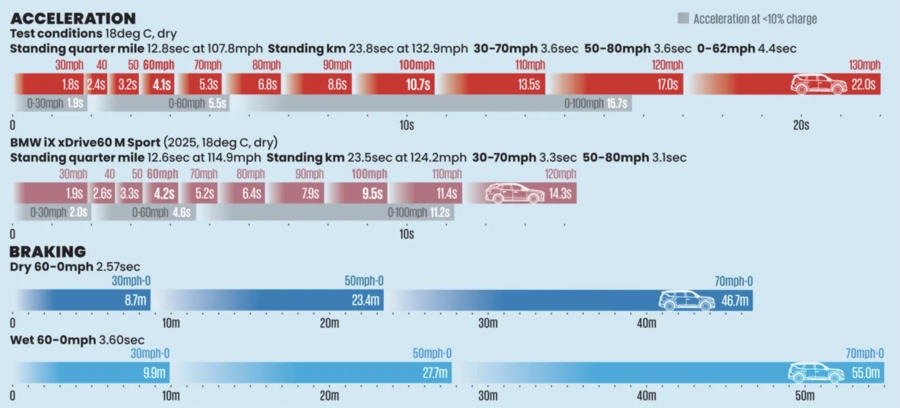
To suit its performance billing, the EV9 GT’s infotainment home screen advertises a performance timer to log your acceleration times. It’s a bit of fun but not all that useful, since a dual-motor EV such as this mostly just does what it does, with little variation. Indeed, although the EV9 GT lacks a launch control function, so long as it’s in one of the sportier drive modes and has the battery sufficiently charged, it will hit a 4.4sec 0-62mph time (verified using our own Racelogic GPS telemetry, of course).

It just managed to hit its 136mph limiter before the end of Horiba MIRA’s mile straights. This is without doubt a very fast car, and although it does lose a bit of performance at a low state of charge, it remains so even then.

However, while this is the fastest EV9, it only matches the middle-rung 60 version of the BMW iX, which doesn’t offer seven seats but is only marginally smaller than the EV9. When we tested the iX, it clocked the same 0-62mph time but had more in reserve for motorway speeds. Still, there is no other way to combine this much electric performance with seven seats without paying significantly more for something like the Performance version of the Volvo EX90.

Most other EVs also lack the EV9 GT’s simulated gearbox. This is effectively the same system we know from the Hyundai Ioniq 5 N and Kia EV6 GT, but in the Kias the noise is more muted and doesn’t mimic a combustion engine quite as slavishly. It’s possible to quickly toggle it on and off on the fly by mapping the function to the star button on the steering wheel, so it’s something you can easily experiment with. It’s very cleverly done: the texture of the noise changes with load, if you’re too low in the revs the ‘engine’ will bog down and if you don’t shift up it will clatter into the limiter.

Turn it off, and the EV9 GT is undiminished as a smooth EV. The accelerator is smooth and progressive, and the paddles give you fine control over the regenerative braking. Kia and Hyundai were among the first to get this ‘right’, but lately some other manufacturers have shown that it’s possible to do this sort of drivability even better. During our loan of the EV9, we also drove the new Volvo EX60, which highlighted that the Kia’s brake pedal is slightly oversensitive, the freewheeling mode still keeps a bit of regen on and the ‘i-Pedal’ mode, which turns off the automatic gearbox-style creeping from a stop, can be a touch inconsistent.

In our emergency braking tests, the EV9 GT performed well for a heavy car with steel (rather than ceramic) brakes. Its stopping distances in the dry didn’t set new standards but also didn’t exhibit notable fade. In the wet, the EV9 GT stopped a whole 10m shorter than the BMW iX. In both conditions, the ABS was smooth and the car pulled up nice and straight.

RIDE & HANDLING

8
KIA EV9 GT review 2026 27

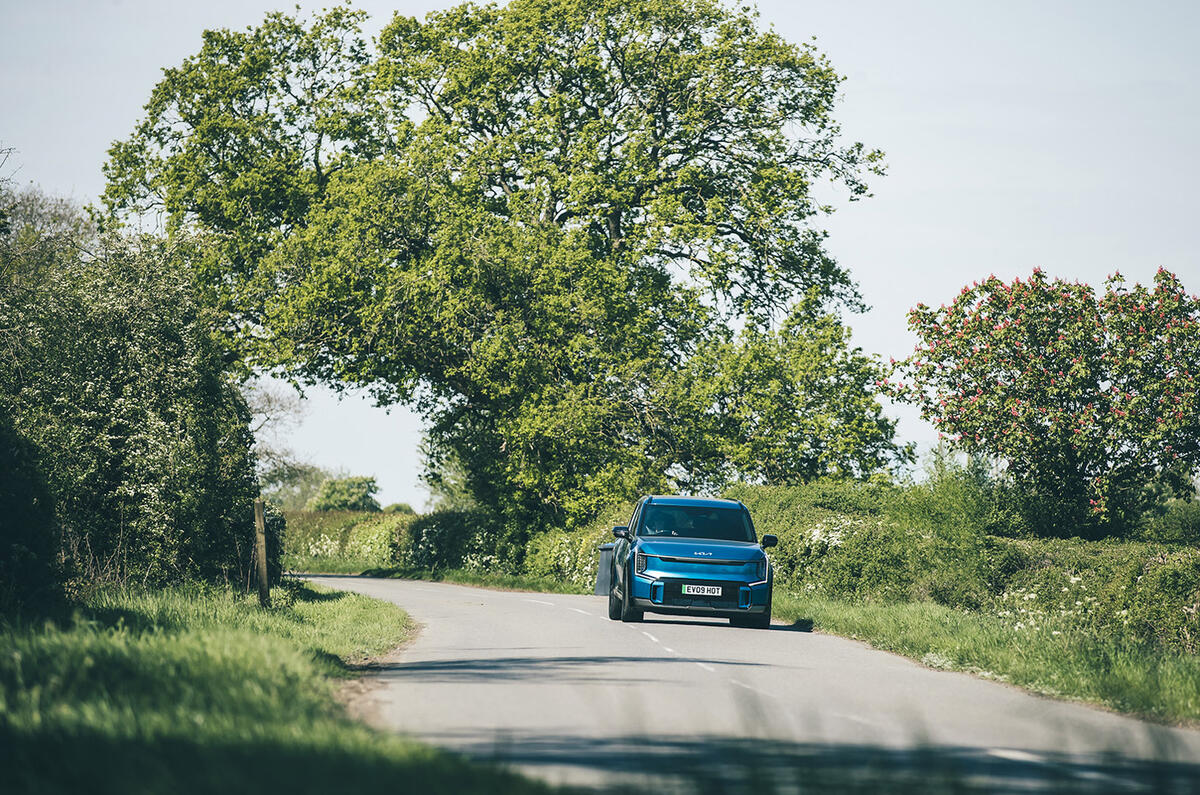
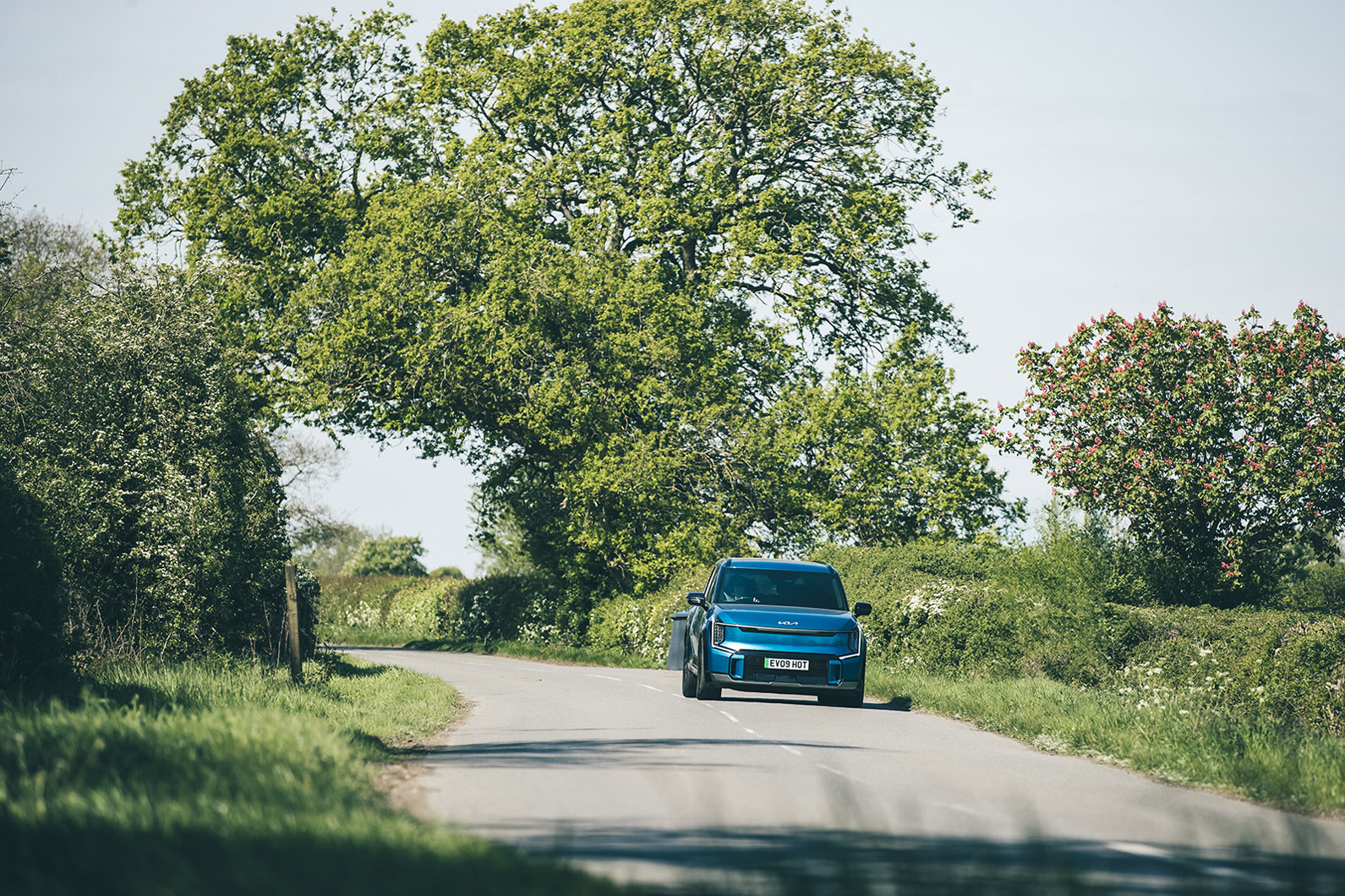
For a car that is called the GT – or grand tourer – the Kia EV9 GT behaves a lot like a sports car in the way it demands to be driven hard. At low speeds and low levels of commitment, there’s a recalcitrance about everything it does.

The steering feels rather stodgy, with cloying weight and an unwillingness to self-centre, as if the rack were filled with thick grease. The ride feels rather firm and thumpy, yet with a hint of float over bigger bumps and a general sense that the body structure isn’t particularly rigid. The latter feeling, characterised by a general restlessness and the occasional shimmy, is something we have noticed with quite a lot of Kias and Hyundais, particularly bigger ones.

Thankfully, everything changes – and starts to make sense – as soon as you up the pace. With some load going through the chassis, the steering seems to free off, the grease seemingly melting into oil and letting messages about grip pass through to your fingers. While the ride never becomes outright smooth, it loses some of the clumsiness it has at low speed. At a motorway cruise, noise isolation is impressive, with only 64dBA making its way into the cabin at 70mph.

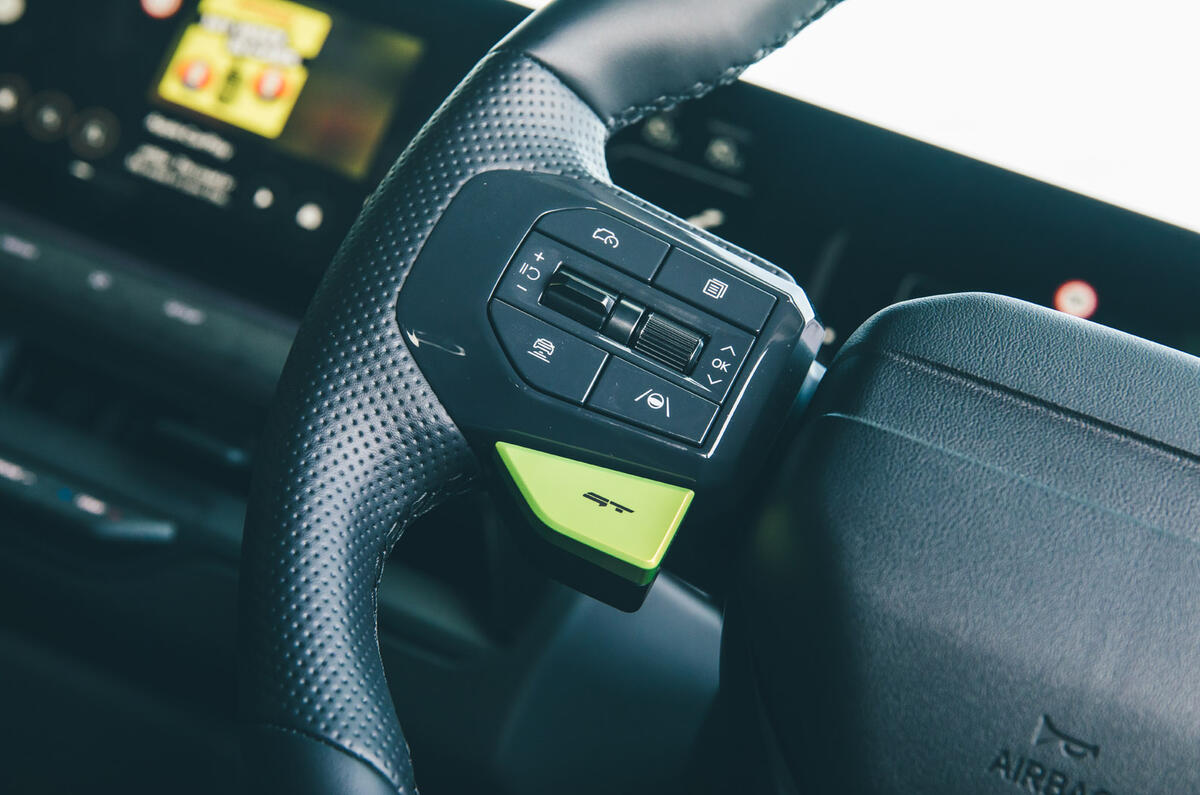
On a twisty road, it certainly pays to press the big GT button on the steering wheel. Although there are three levels for the suspension, powertrain and steering, the individual steps are so subtle as to be indistinguishable. However, going directly from normal to GT mode does reduce the level of body roll slightly, in addition to making the drivetrain more rear-biased. This gives you the ability to tighten the line on the power, which is rather satisfying to find in a car this big and heavy.

Unlike the EV6 GT and the Ioniq 5 N, the stability control can’t be fully disabled, and there’s no drift mode. That may seem sensible given the EV9’s height and girth, but BMW allows it on the iX. What the EV9 GT does offer is a well-tuned ESC sport mode, which is automatically engaged in GT mode. It allows the rear to move around as much as you would want on the road, and stays in the background even on track. Even if you leave everything on, the system is impressively smooth in its interventions.

We criticised early EV9s for their irritating driver assistance systems, but on the 2026 car the driver monitoring system is unintrusive. That still can’t be said for the lane keeping assistance and overspeed warning, but those are easy to turn off by holding the relevant steering wheel buttons. The adaptive cruise control works quite well provided you turn off the Highway Driving Assist function, which automatically engages the lane following and speed limit adoption.
MPG & RUNNING COSTS

KIA EV9 GT review 2026 01

The EV9 GT is the most expensive Kia yet, at £82,845 for the seven-seat version, or £83,845 for the six-seater. Kia’s credibility has developed enough for that not to be completely outrageous, but it’s undoubtedly still a lot of money.

There are no direct rivals, but you might look to a Volkswagen ID Buzz GTX, which doesn’t have the same performance credentials or range but is a fair bit cheaper, at just under £70k. Meanwhile, a dual-motor Volvo EX90 is a fair bit more expensive, particularly if you go for the Performance version, but it does feel a cut above in ride and refinement terms, if not user-friendliness. Possibly the most tempting alternative is the BMW iX xDrive60, which doesn’t have seven seats and has a higher list price, but even with some options is no more expensive than the Kia on finance, and is quite simply superior in the way it drives and its sense of luxury.


The EV9 GT is £16,200 more than the entry-level Air, which seems a lot, but you do get more than double the power and number of motors, the GT-specific chassis and a host of equipment.

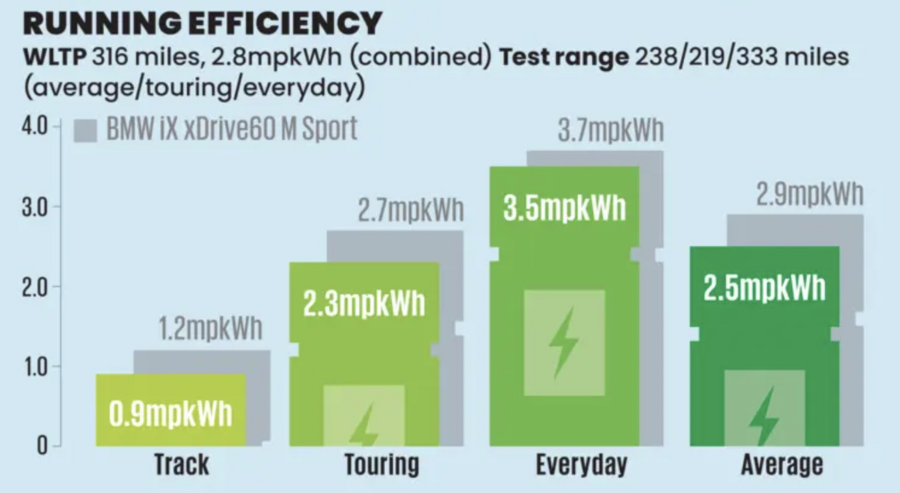
Despite being more powerful, the iX is also more efficient. The EV9 clearly suffers from its aerodynamics, because while it is creditably efficient at lower speeds – as evidenced by the 3.5mpkWh result in our ‘everyday’ test – we found that it struggled to better 2.5mpkWh when there was much motorway driving involved. At our 2.3mpkWh touring average, the EV9 GT would have a range ofonly 219 miles, which is rather short for a ‘grand tourer’.

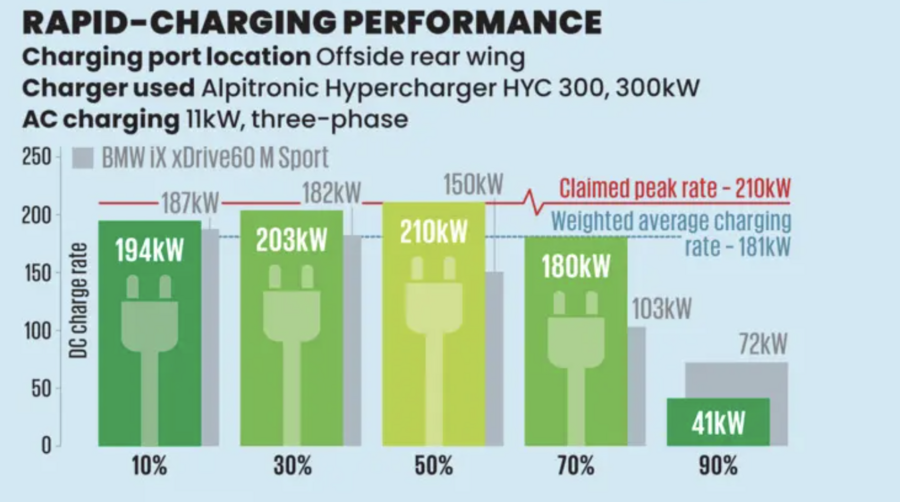
Its rapid-charging performance is decent. Although a peak of 210kW is a little underwhelming for a new high-voltage car with such a big battery, it held over 200kW past 60% full and only dropped off significantly by 80%.

VERDICT

KIA EV9 GT review 2026 29

Judging the Kia EV9 GT is difficult, because there’s no clear standard to judge it against. After all, an electric three-row SUV that’s also trying to be a driver’s car is a rare and unusual thing. Nothing else quite offers the same blend of talents.

The Kia’s steering is engaging and its balance adjustable enough that it does tick the driver’s car box in a way that a VW ID Buzz GTX and Volvo EX90 don’t. While it’s not as good to drive as premium five-seat options like the BMW iX and Polestar 3, it offers a lot more utility. ICE options such as the Mercedes-AMG GLE 53 or Audi SQ7 might be more exciting but aren’t as practical or cheap to run.

Facelift fixes? Upgrade the battery and motors to the next generation for more power and range. Make the comfort setting on the dampers softer.

The EV9 GT’s contradictory formula forces compromises – we would be tempted by the combination of an EV9 Air and a used Mazda MX-5 instead – but as a one-car do-everything solution it’s an appealing package.

Illya Verpraet

Illya Verpraet Road Tester Autocar
Title: Road Tester

As a road tester, Illya drives everything from superminis to supercars, and writes reviews and comparison tests, while also managing the magazine’s Drives section. Much of his time is spent wrangling the data logger and wielding the tape measure to gather the data for Autocar’s in-depth instrumented road tests.

He loves cars that are fun and usable on the road – whether piston-powered or electric – or just cars that are very fit for purpose. When not in test cars, he drives an R53-generation Mini Cooper S or a 1990 BMW 325i Touring.