From £40,5408

Mercedes takes its seven-seat EV below £50,000 and adds 320kW charging for good measure

In the few months it has been on sale, the new Mercedes-Benz CLA has already become a common sight on UK roads. Clearly the idea of a compact premium EV with a long range appeals to buyers.

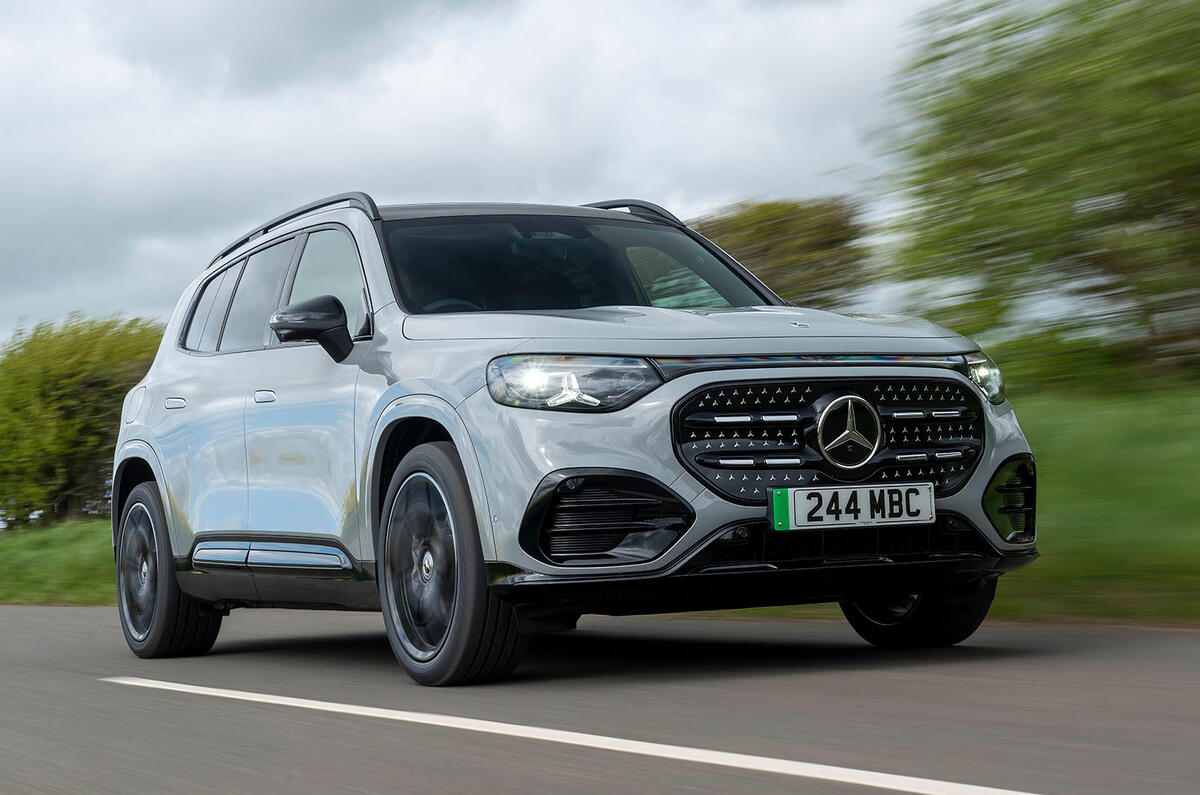
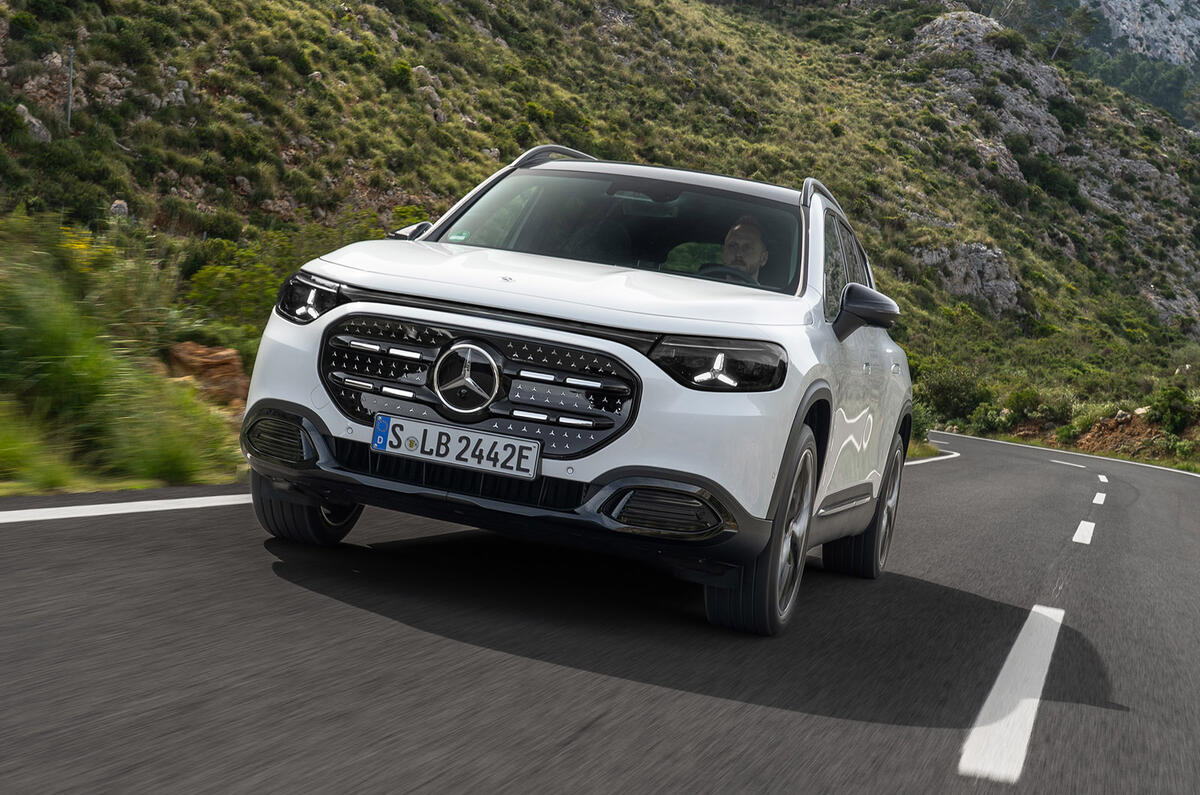
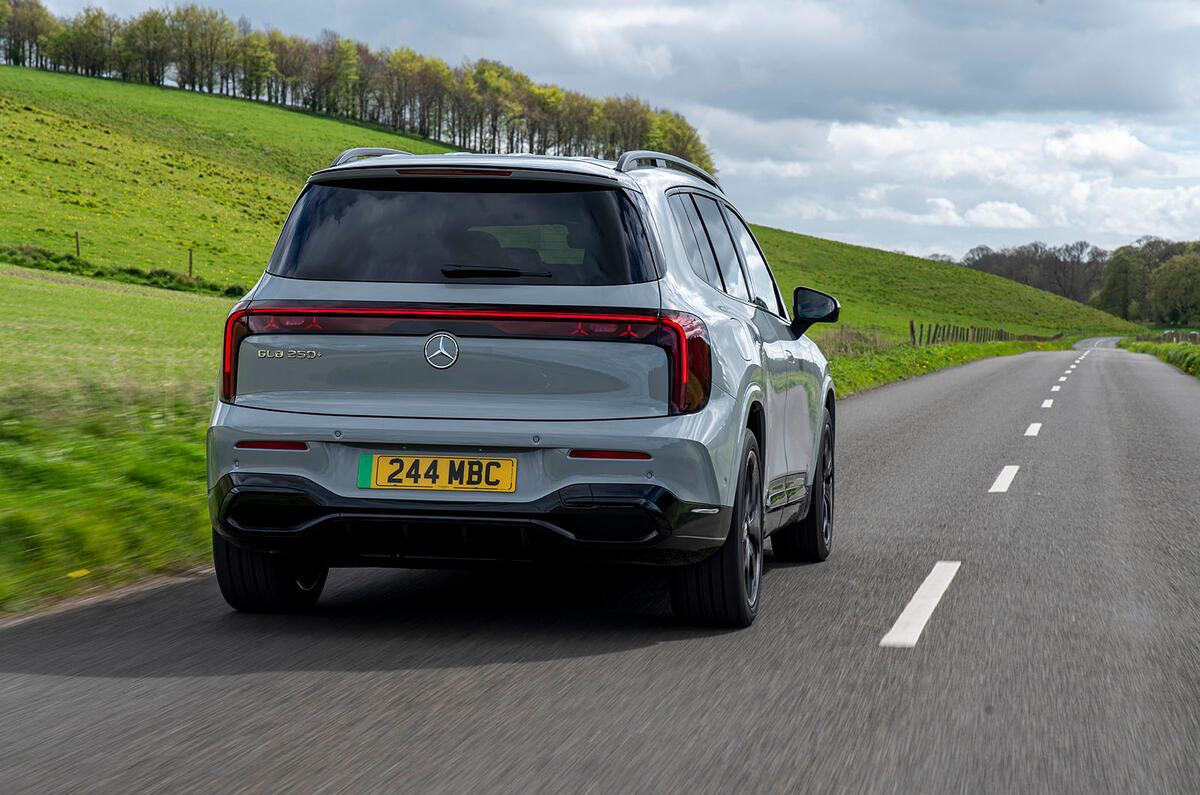
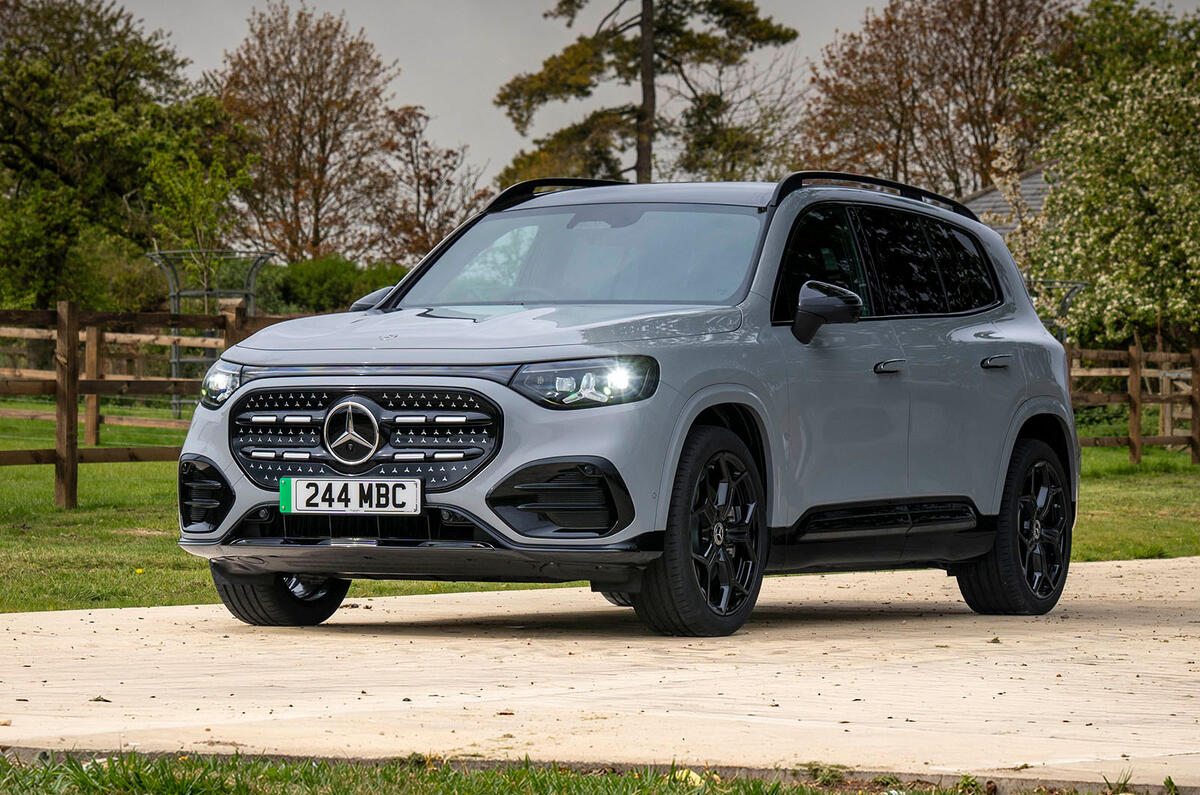
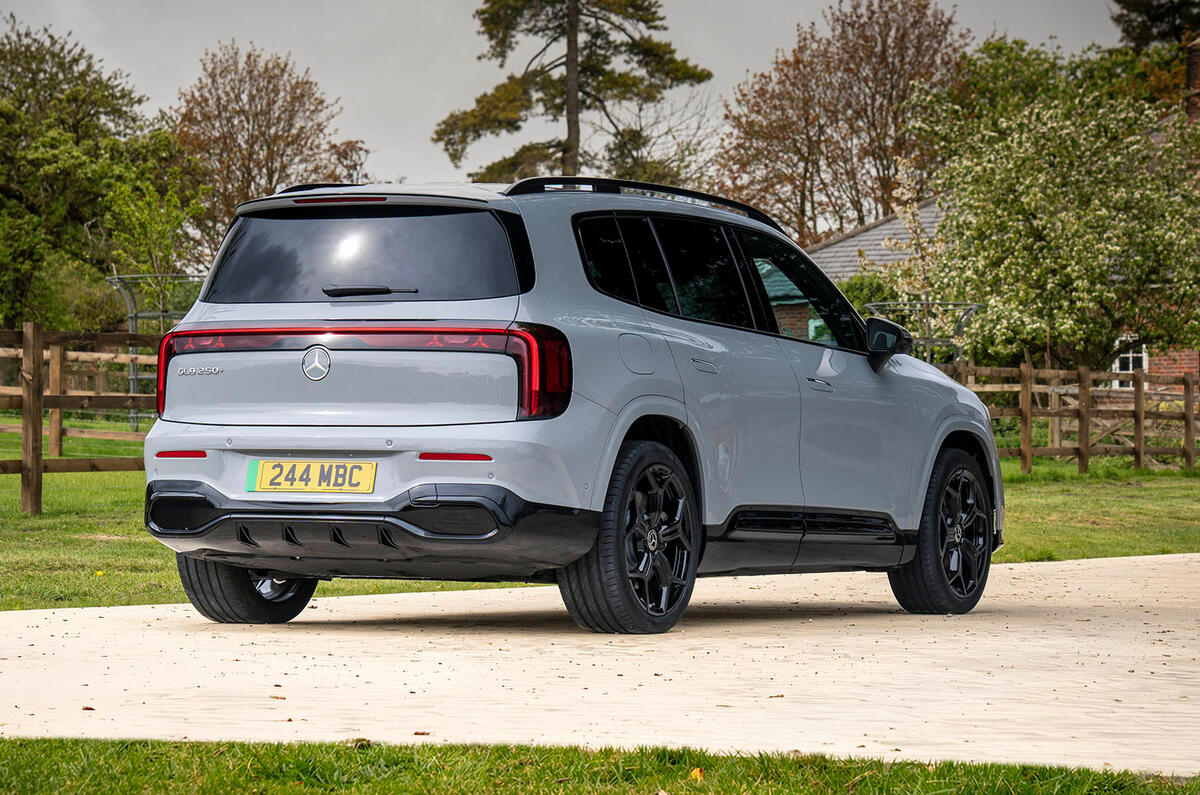
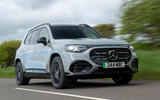
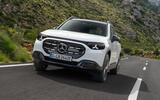
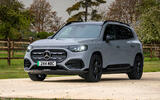
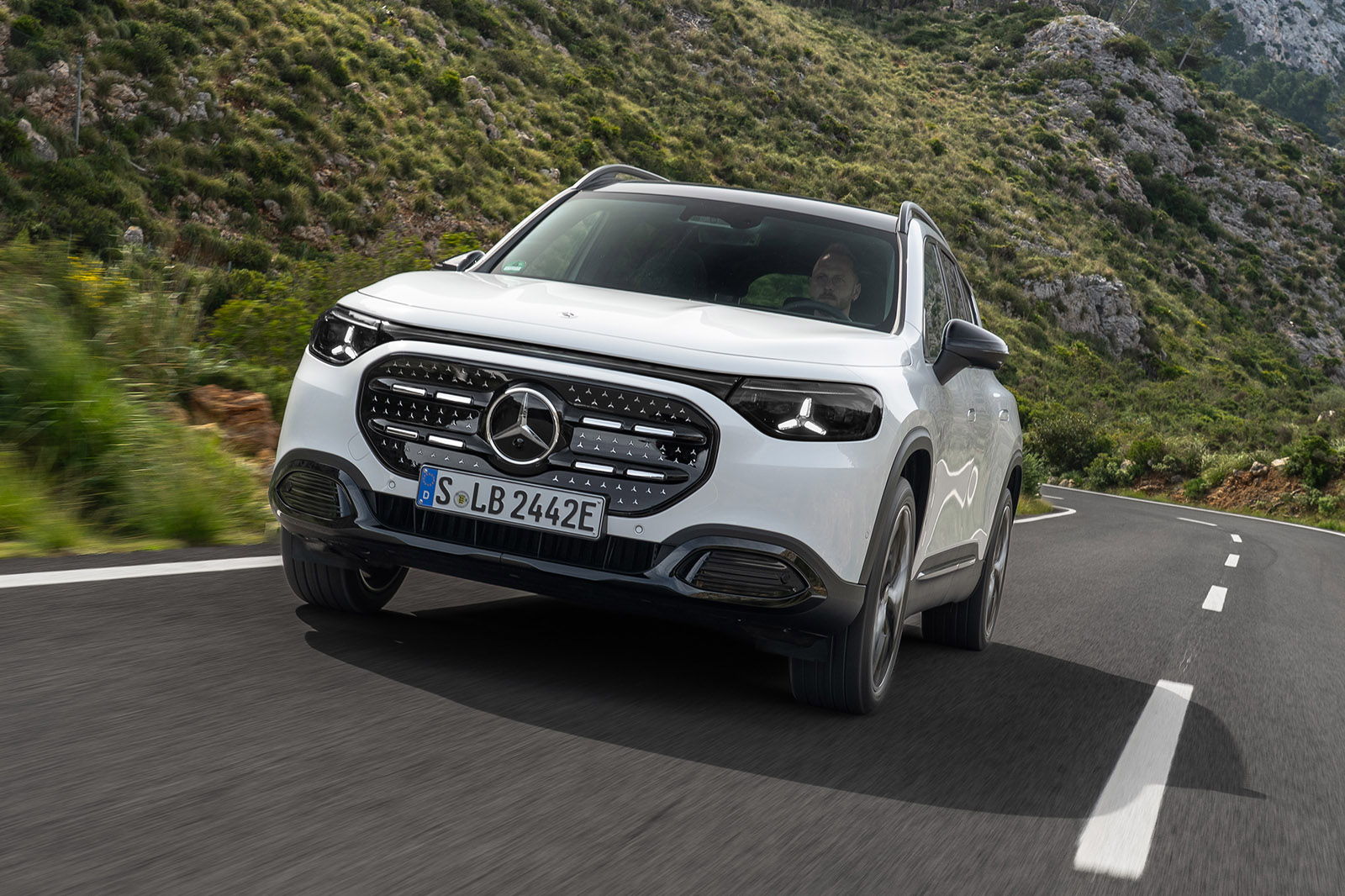
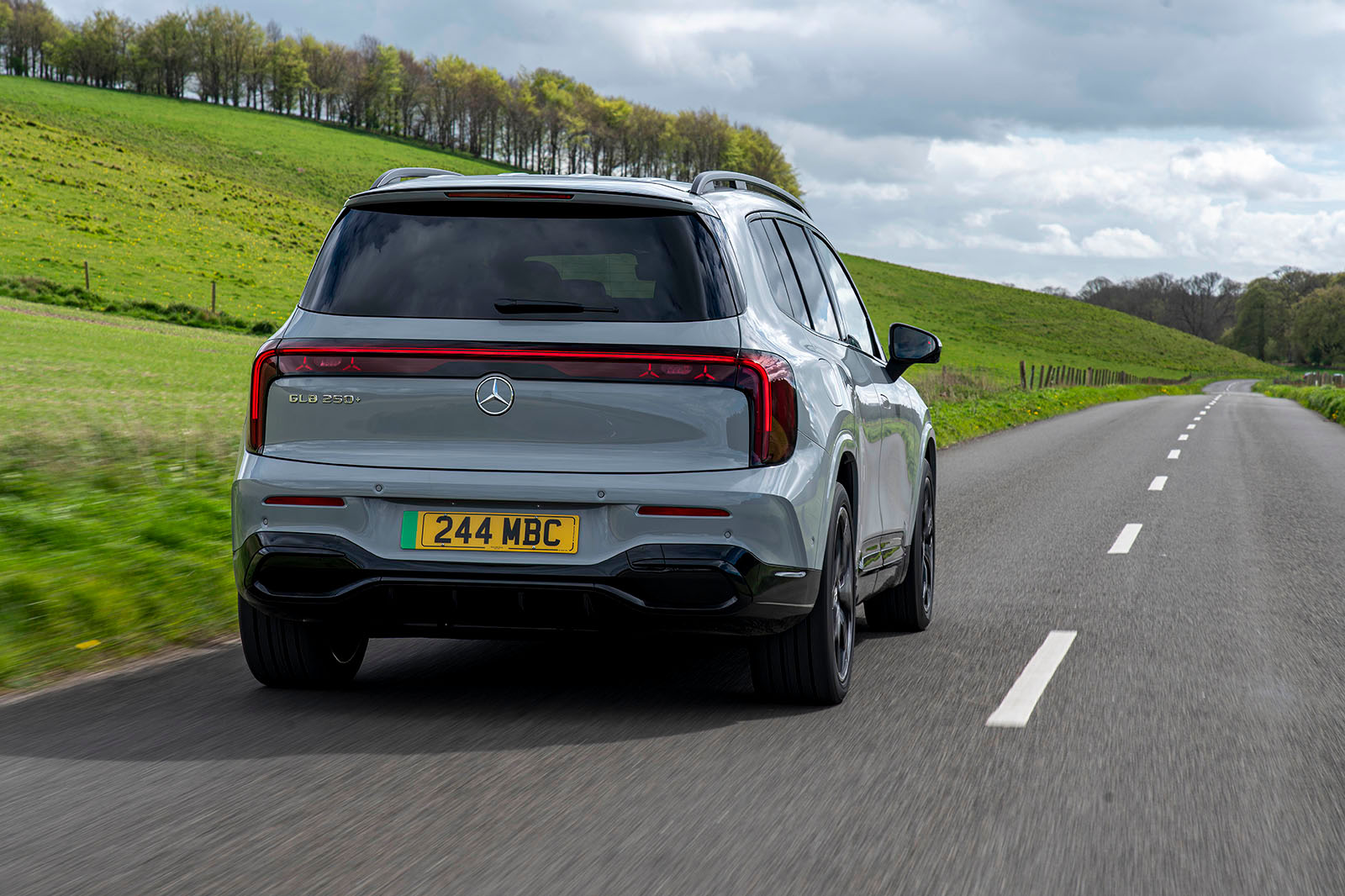
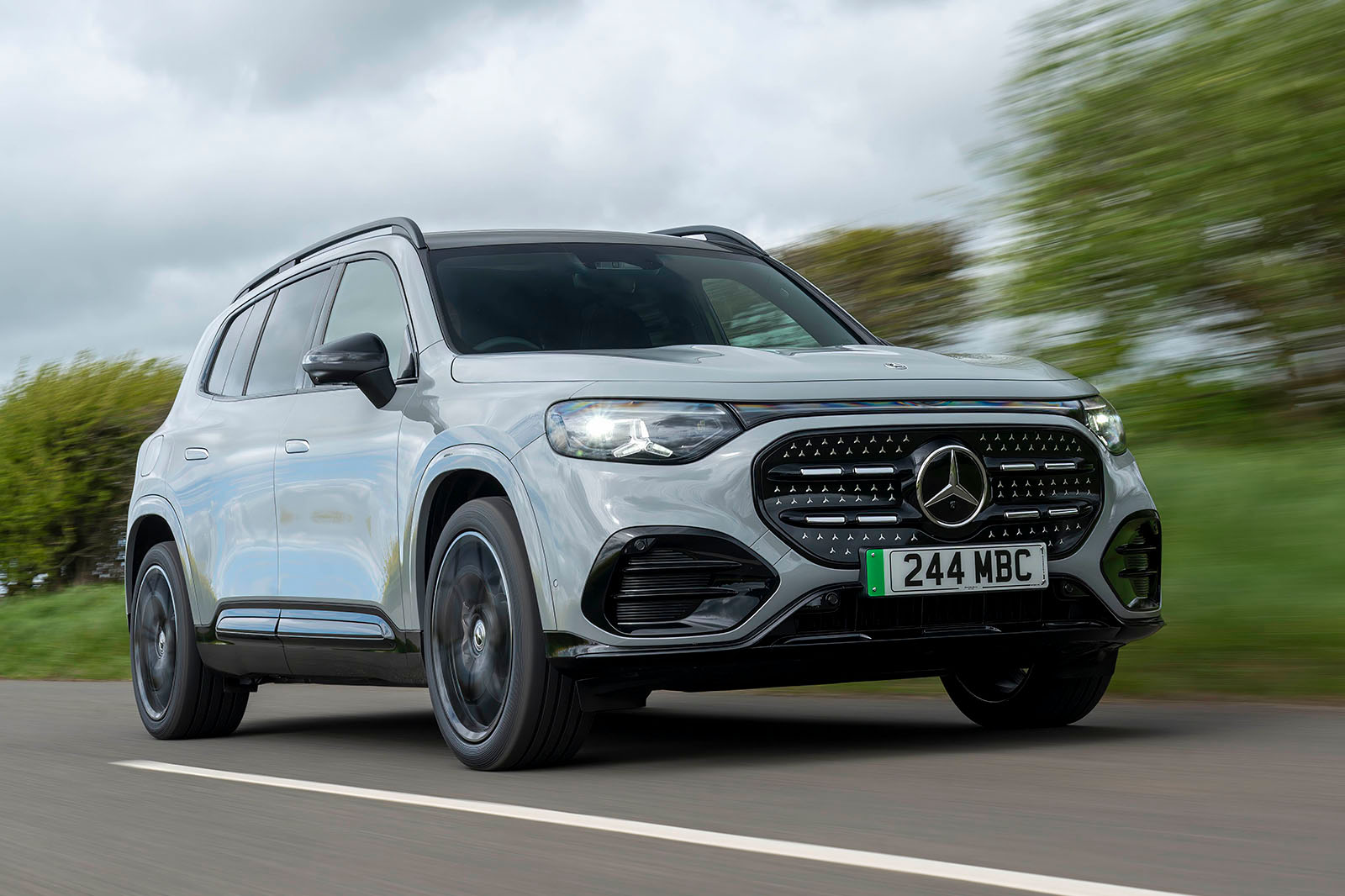
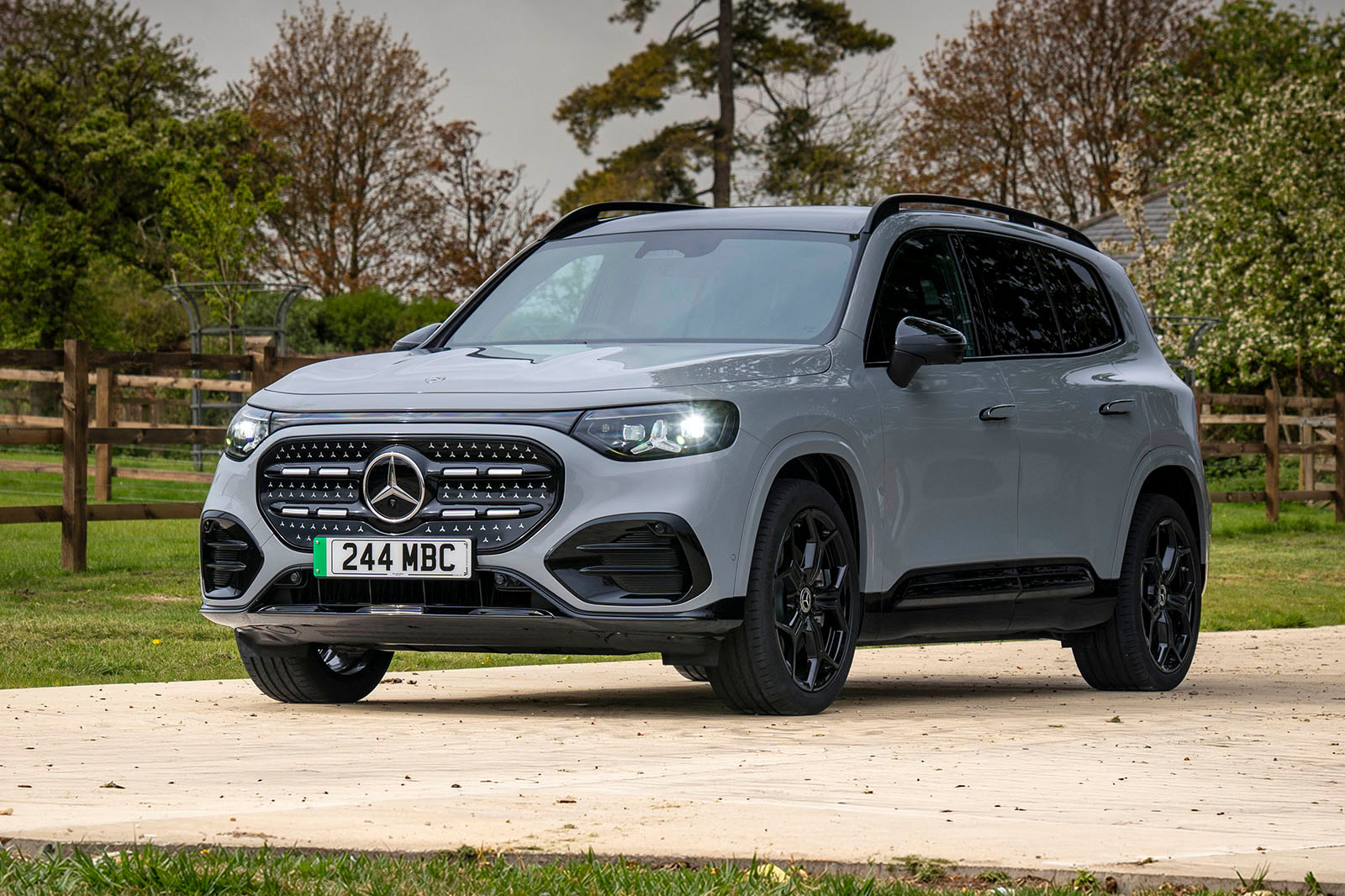
A saloon is all well and good but the SUV is now king, so that’s what we have here. On the same underpinnings as the CLA comes the new Mercedes-Benz GLB. It takes over from both the old piston GLB and its electric EQB sibling. It launches as an EV, but hybrid versions will follow soon. Like its predecessors, the GLB is slightly unusual for a car of this size in offering seven seats. In a market flooded with coupé-aping SUVs, that could give it really distinguishing utility.

In launching the super-aerodynamic CLA first, Mercedes has set an impossibly high standard for the GLB, because the CLA impressed us with its Tesla-chasing efficiency and its mature, balanced ride and handling. Those key strengths will be necessarily diminished in the GLB as a result of being a taller, heavier SUV.

However, if it can maintain enough of those qualities, while adding a useful dose of family-friendly practicality, the GLB could be another winner for Mercedes.

Advertisement

DESIGN & STYLING

8
Mercedes GLB review 2026 003

Like the previous generation, the new GLB is part of a set of compact Mercedes, together with the CLA saloon and the upcoming GLA crossover. All of them use the new MMA platform, which stands for Mercedes Modular Architecture rather than anything fighty. The modular part refers to the fact that it can accommodate both electric and petrol-hybrid powertrains. It is designed as an EV first, hence why the petrol engines are limited to a couple of variations of the same transversely mounted 1.5-litre four-cylinder. The bigger GLC will keep its ICE and EV versions separate, because to have more powerful, longitudinal engines would involve too much of a compromise.

Keeping the focus on the electric version, all GLBs in the UK have the same 85kWh (usable) NMC battery. A GLB 200 with a smaller battery exists but won’t be offered here. There’s a choice of the single-motor GLB 250+ or the dual-motor GLB 350 4Matic. Both have their main 268bhp drive motor on the rear axle – a permanent magnet synchronous motor (PMSM) with a two-speed gearbox. The 350 4Matic adds another 80bhp PMSM on the front axle with a disconnect clutch to stop it creating drag when not in use.

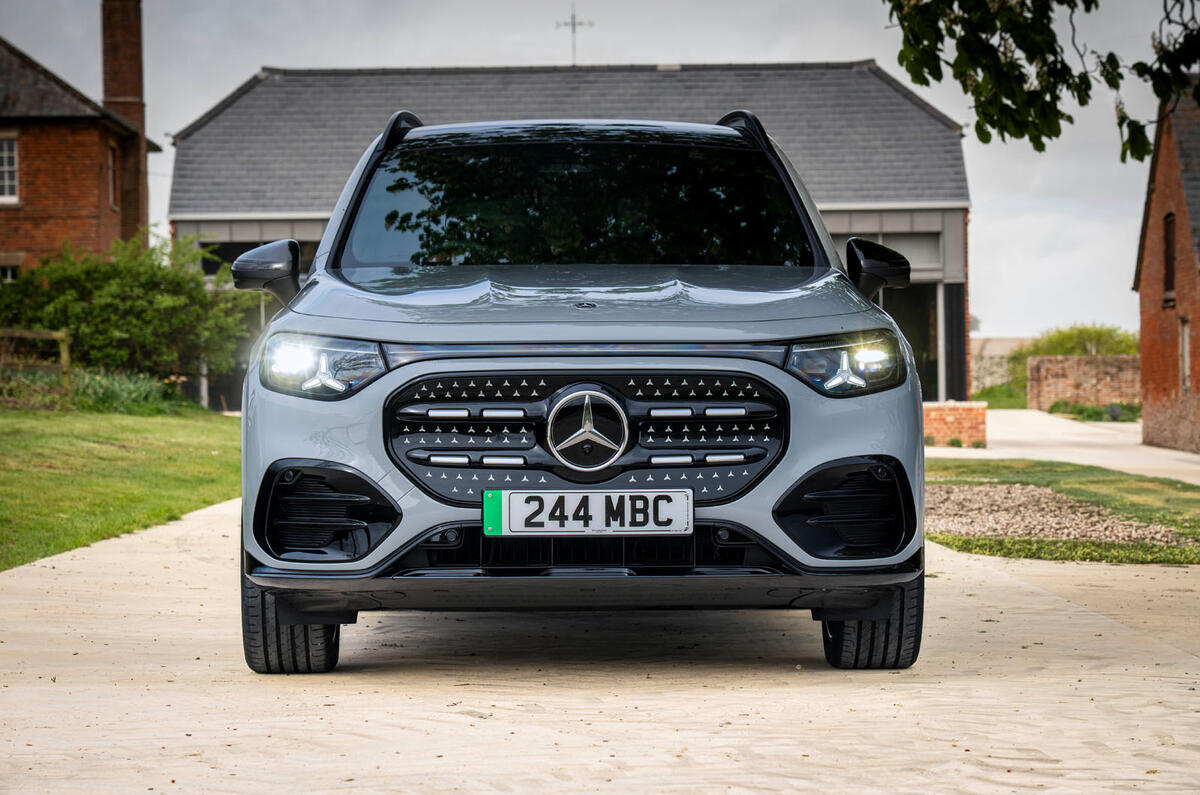
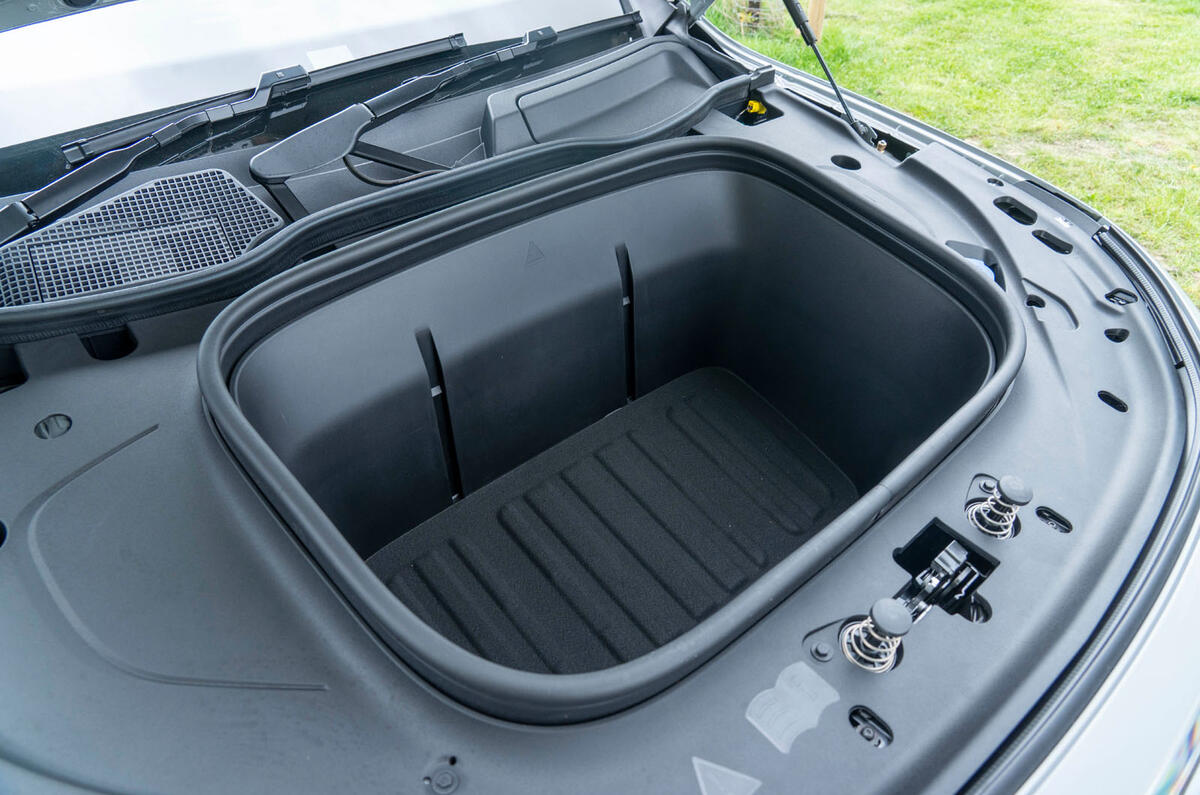
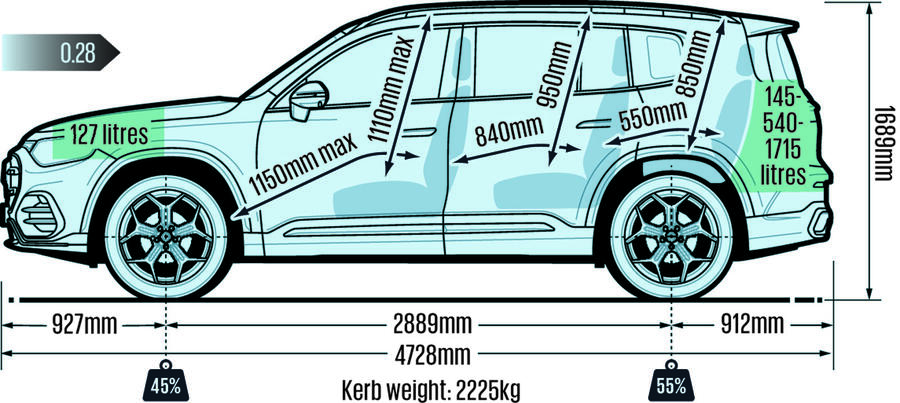
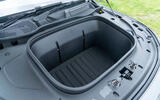
The front luggage compartment is a usefully square shape with 127 litres of capacity, so you can use it for more than just storing the charge cables. Opening it requires pulling a lever in the interior.

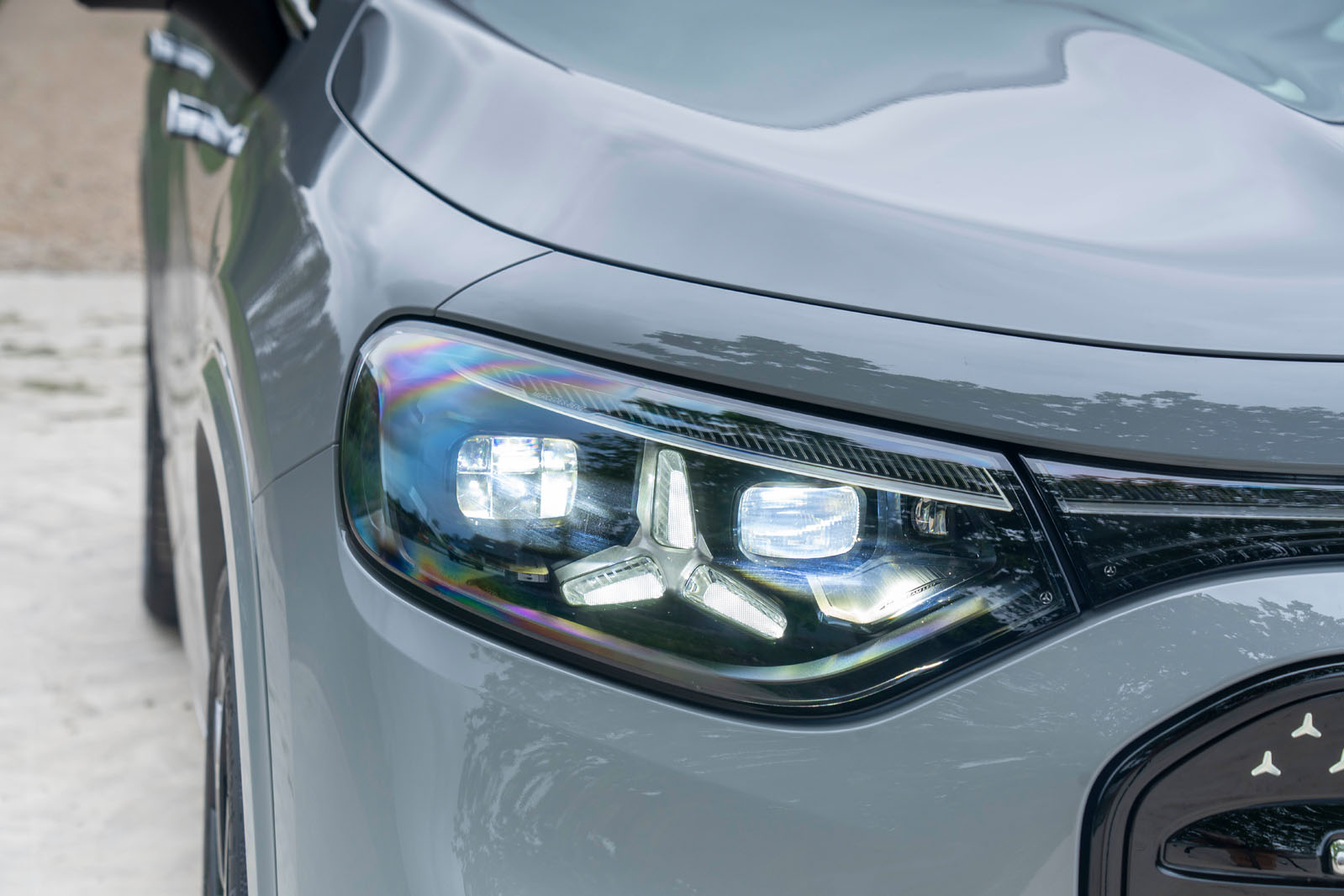
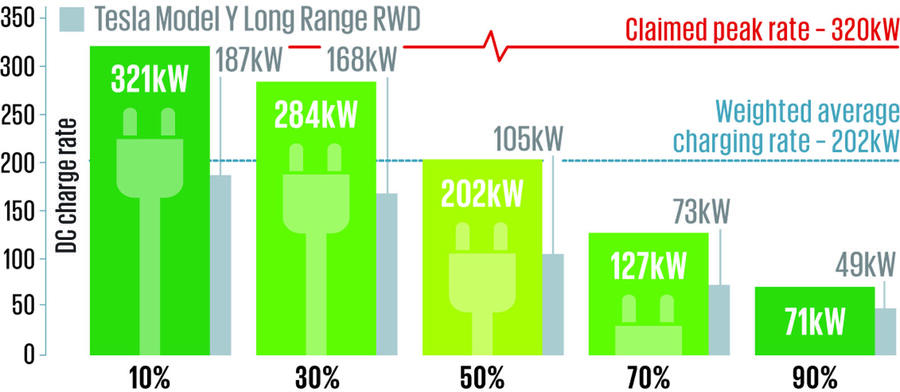
As is expected of a new premium EV, the GLB has 800V electricals for improved efficiency and fast charging (up to 320kW). As standard, it’s not compatible with 400V charging stations (such as Tesla Superchargers), but a converter is available as an option from launch. Note that, even then, DC charging speed on a 400V charger is limited to 100kW.

Suspension is fairly conventional, with struts in the front and a multi-link in the rear. All versions ride on steel coil springs, but high-end versions (AMG Line Premium and Premium Plus trims) come with adaptive dampers.

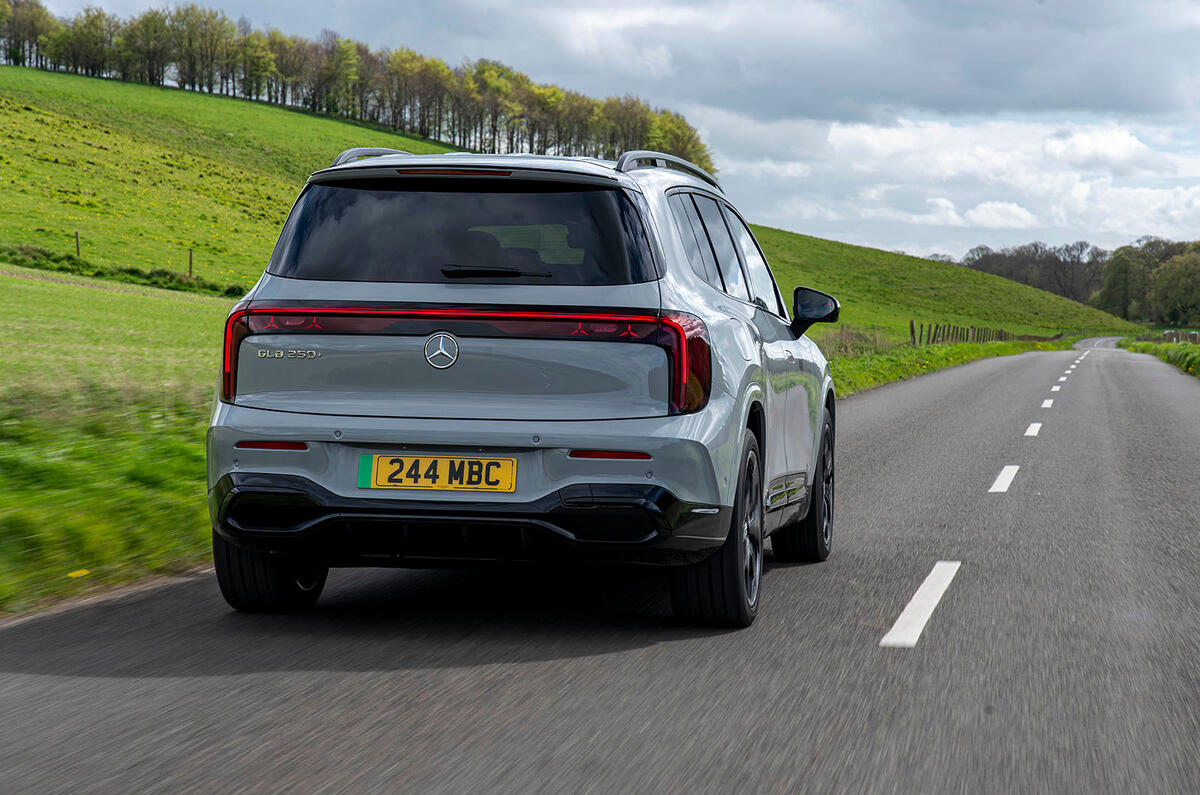
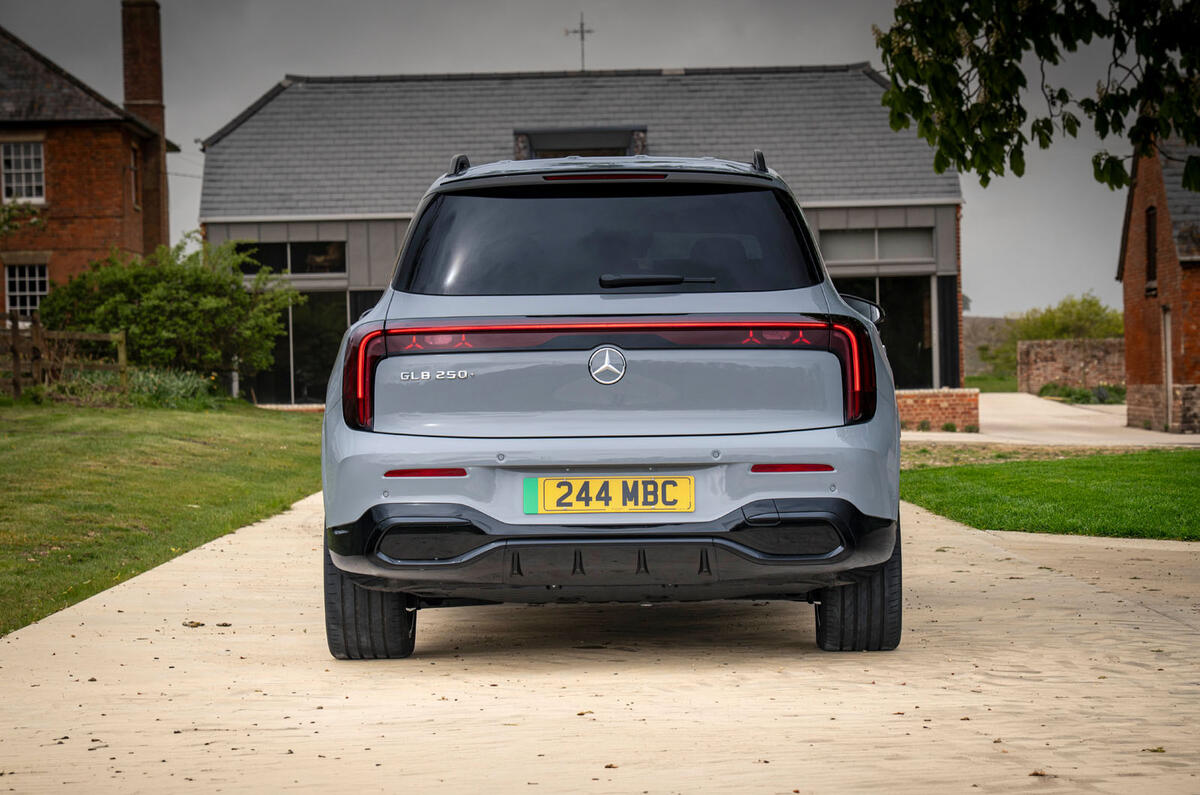
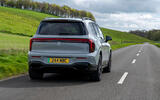
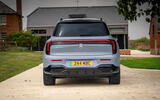
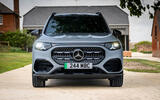
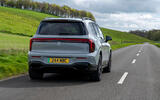
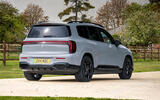
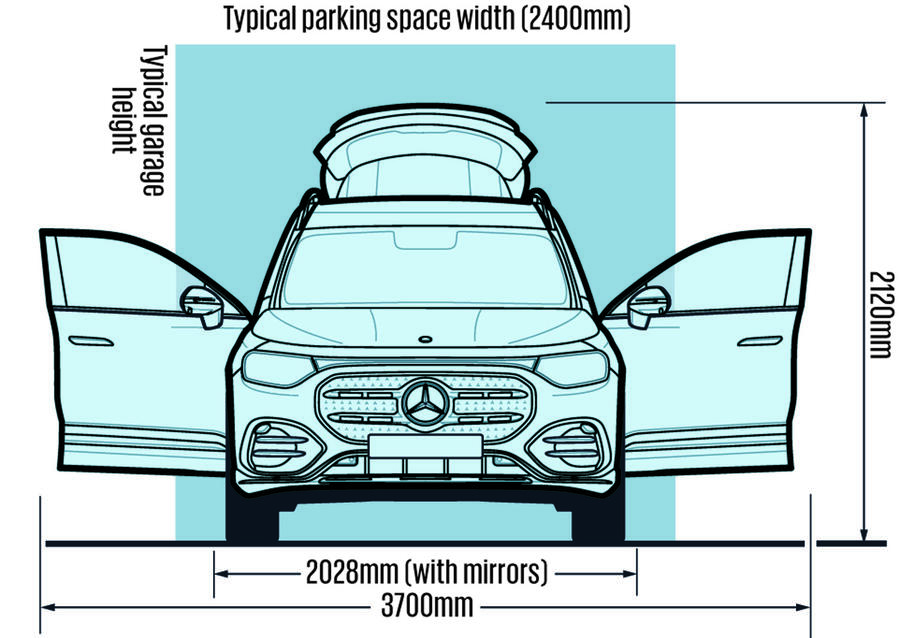
In the UK, the GLB always comes with seven seats – the five-seat version that trades the third row for extra underfloor boot space isn’t offered here. At just 4728mm in length, the GLB is one of the shortest seven-seat SUVs around. Even the Peugeot e-5008 is a bit longer (4790mm), whereas the Kia EV9 is a size up at 5015mm. At barely more than two metres across, the GLB is narrow too: 2028mm compares with 2108mm for the e-5008 and 2270mm for the EV9. That should make it unusually wieldy but doesn’t bode well for interior space.

INTERIOR

8
Mercedes GLB review 2026 007

Fortunately, EV architectures open up possibilities to utilise a car’s footprint very effectively. With no engine to package and a simpler drivetrain, there is useful interior space to be won, but it’s an art that car manufacturers are only just starting to get to grips with.

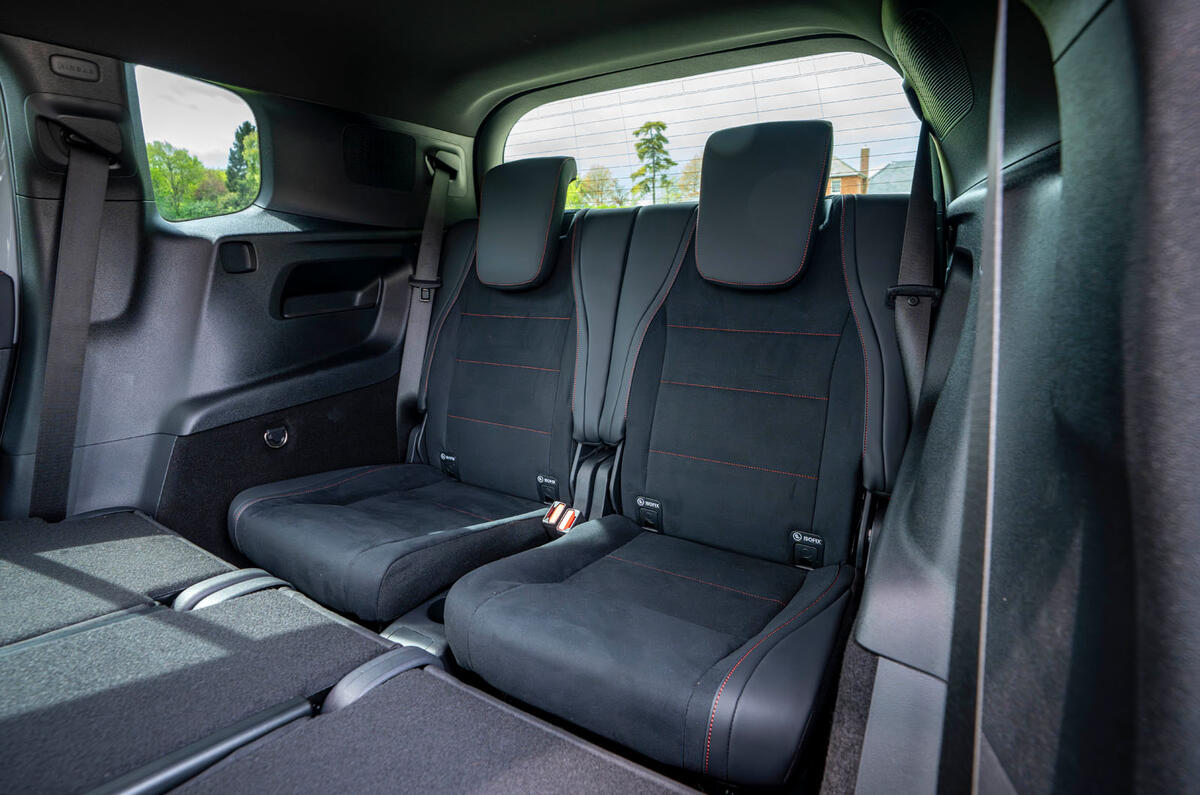
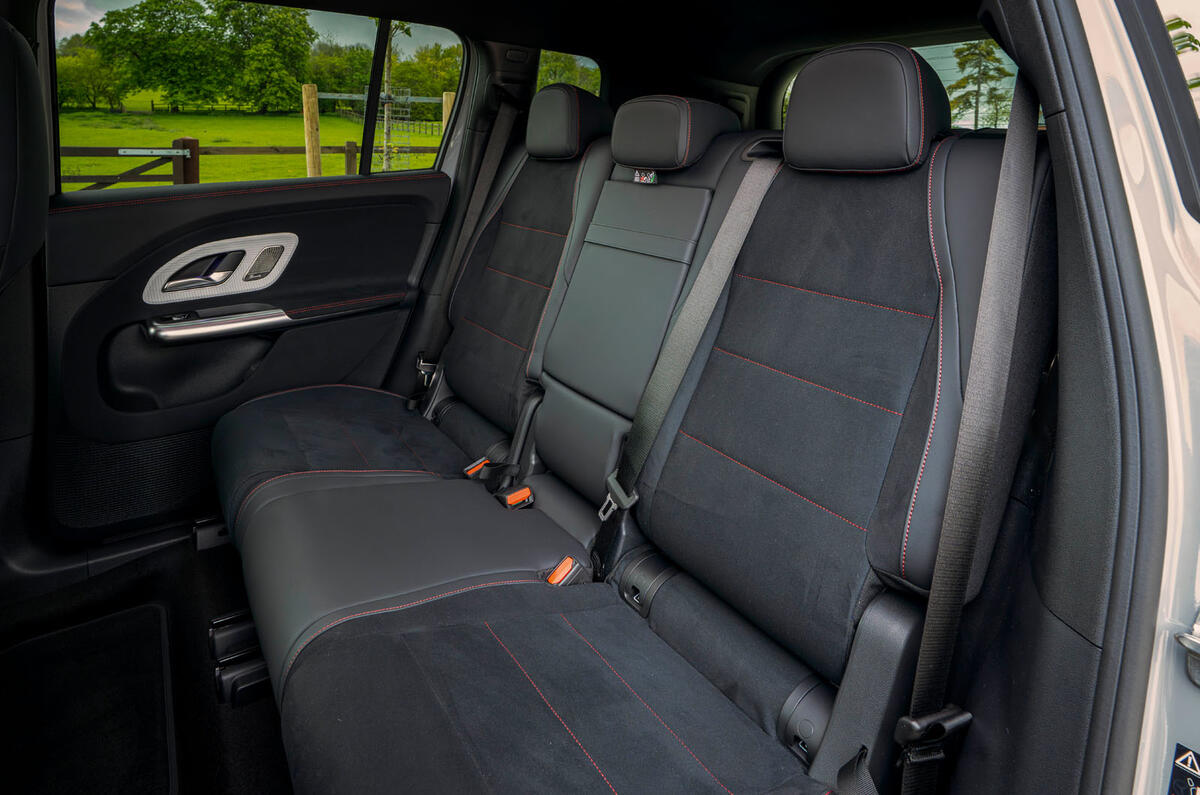
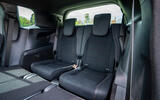
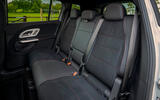
Mercedes has done well here, because the GLB offers the same sort of leg room in the second and third rows as the much larger Kia EV9. Because the sliding and reclining second row in such cars introduces so much variability, this is quite hard to measure, but we were surprised how accommodating the third row is in the GLB. With the second row slid forwards just a bit, even tall adults are able to sit in the rearmost seats with some degree of comfort.
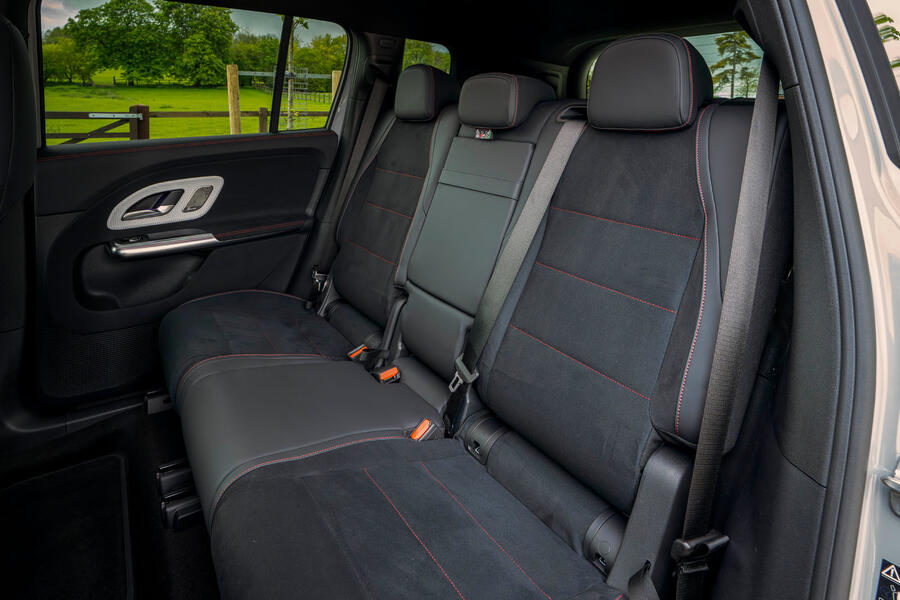
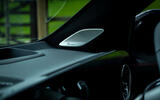
Mercedes still needs to work on interior quality, because this centre air vent pod will flex if your knee leans on it, and our car wasn’t free of squeaks and rattles.

What helps a lot in this respect is how the seats relate to the floor. While in some EVs it can feel as if the battery is taking up a substantial proportion of the cabin height, this is not the case here. The front seats are raised on plinths, which keeps plenty of space free underneath for the second-row occupants’ feet, without making the driving position feel artificially high.

The second row also feels set adequately high to give passengers a natural seating position without affecting head room (950mm under the headliner, 1020mm if sitting further forward, under the glass roof). The relative narrowness of the cabin means it doesn’t feel quite as spacious as some, but a decently large glass area stops you from feeling hemmed in.
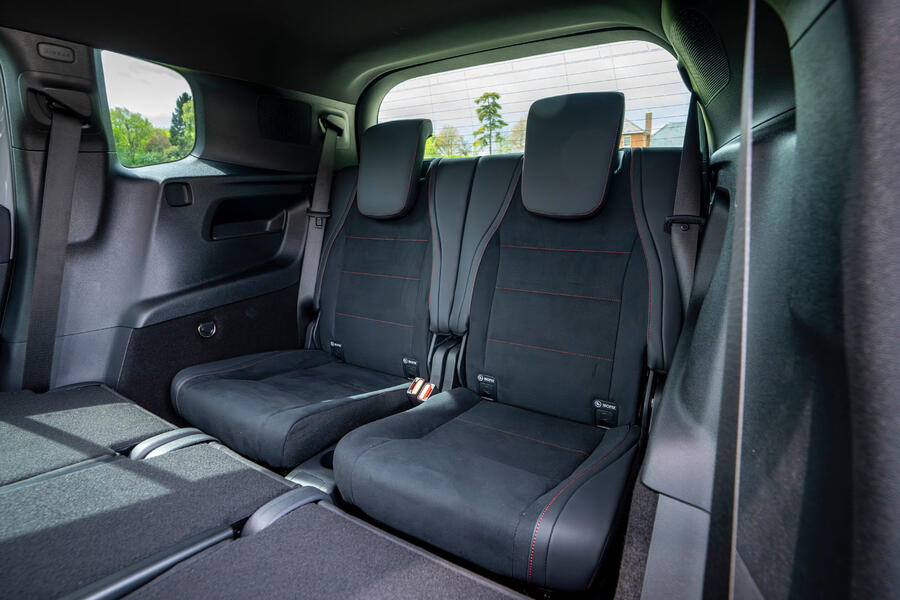
The third row is always a compromise in cars like these, and while in the GLB the seats are only 250mm off the floor, the cushions are sculpted to still offer some thigh support. There are Isofix points for child seats.

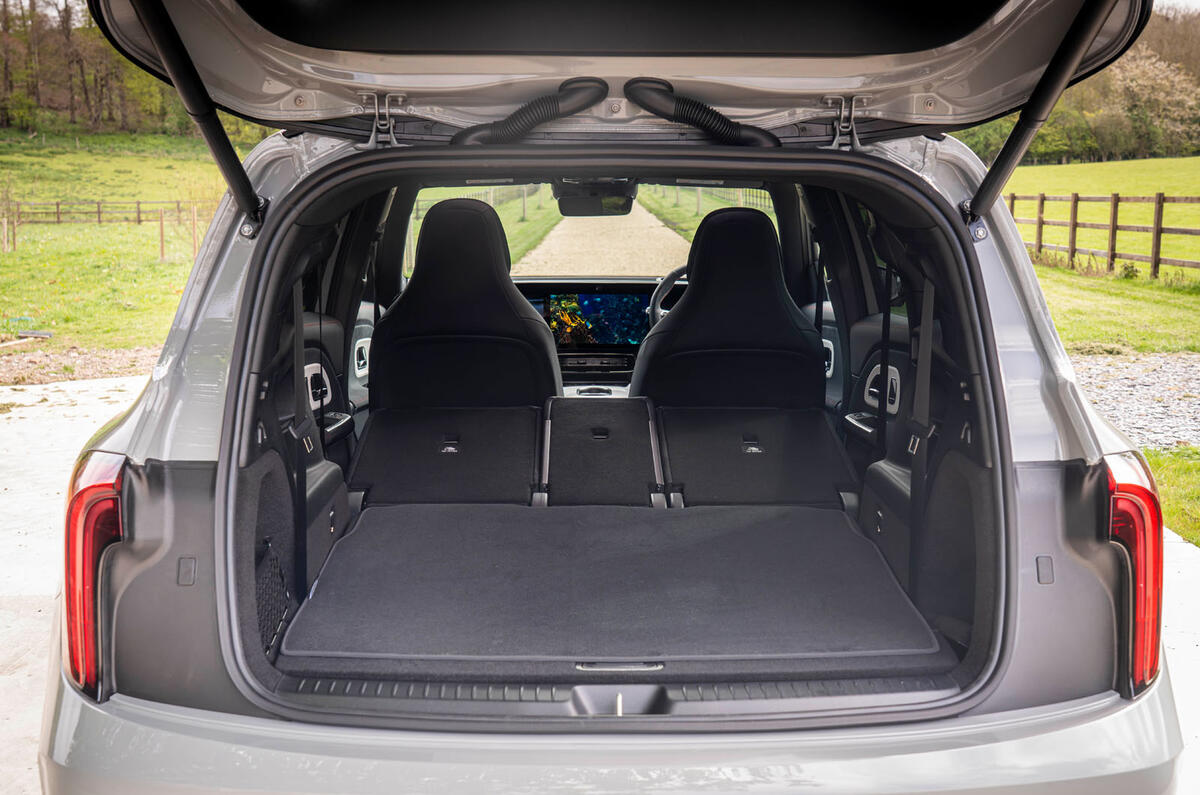
Sliding, tilting and stowing the second and third rows of seats is all done manually. While the lack of electrical adjustment may not sound very premium, we prefer it this way because it’s quicker. Everything is sprung in such a way that doesn’t need much muscle to move it about.

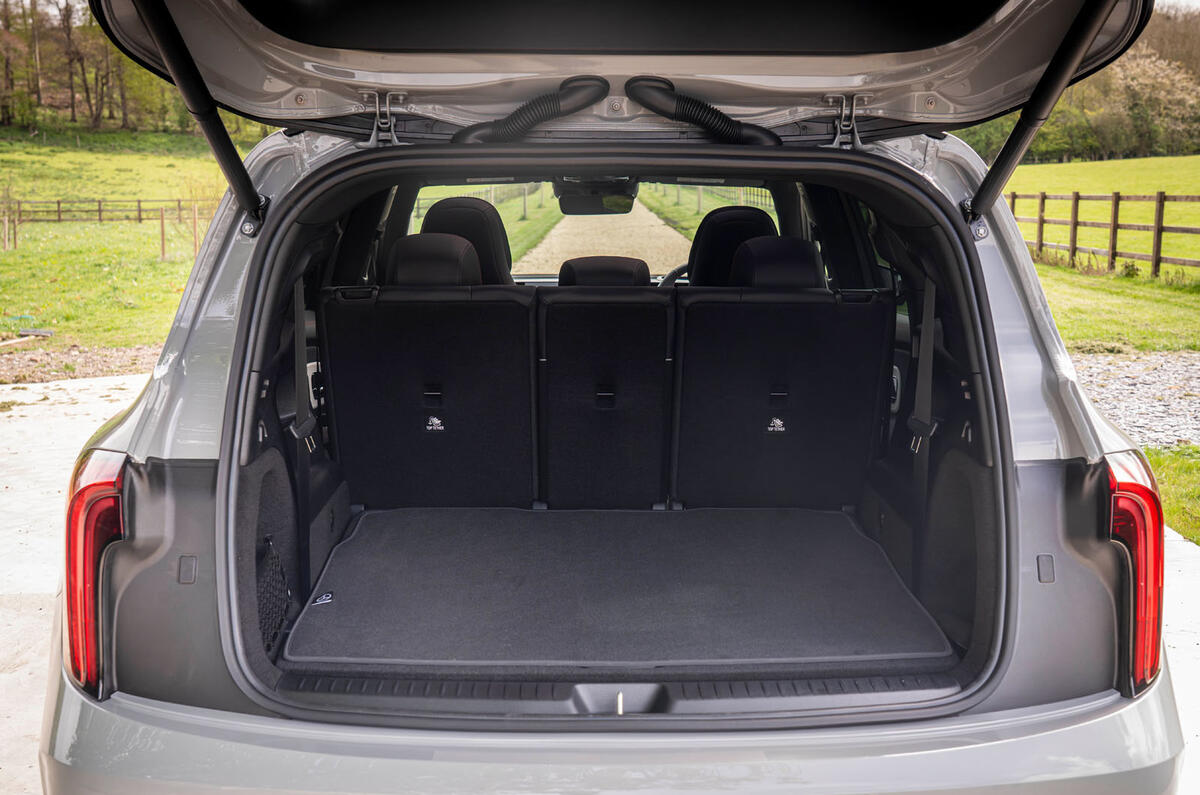
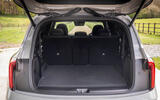
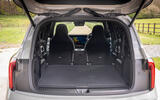
Where the GLB clearly has to concede to the EV9 in terms of space is with the boot. With all three rows up, the boot area becomes very short, with plenty of intrusion from the tops of the seatbacks. Fortunately the frunk is a useful 127 litres, though opening it requires pulling a lever.
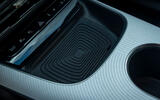
This isn’t a seven-seater with lots of amenities, though. You will look fruitlessly for tray tables or clever storage boxes. The second row gets a pair of air vents and USB ports; the third row lacks even those.

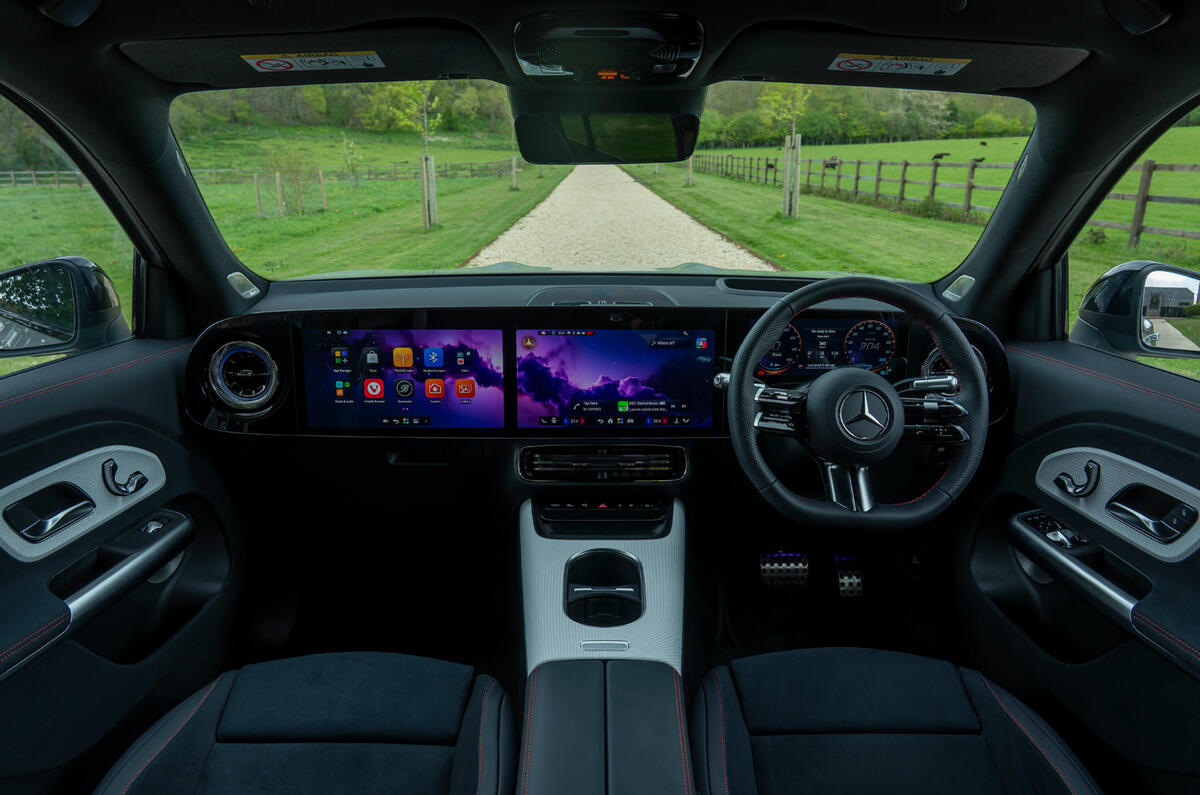
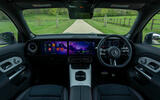
All the way up front, the GLB is essentially a taller CLA. The seats are softer than usual in Mercedes, but are generally comfortable, with good support, although we have two gripes. The first is that the range of cushion angle adjustment is quite limited; the other is that adjustments are generally not as easy as they should be. There are basic electric controls on the door, but lumbar support is buried in the screen, as is the heating.

Multimedia
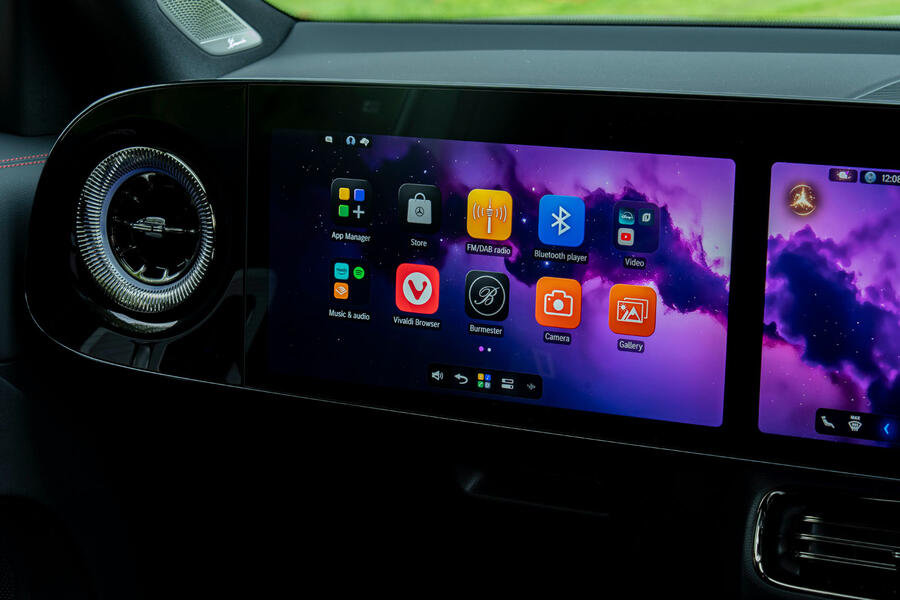
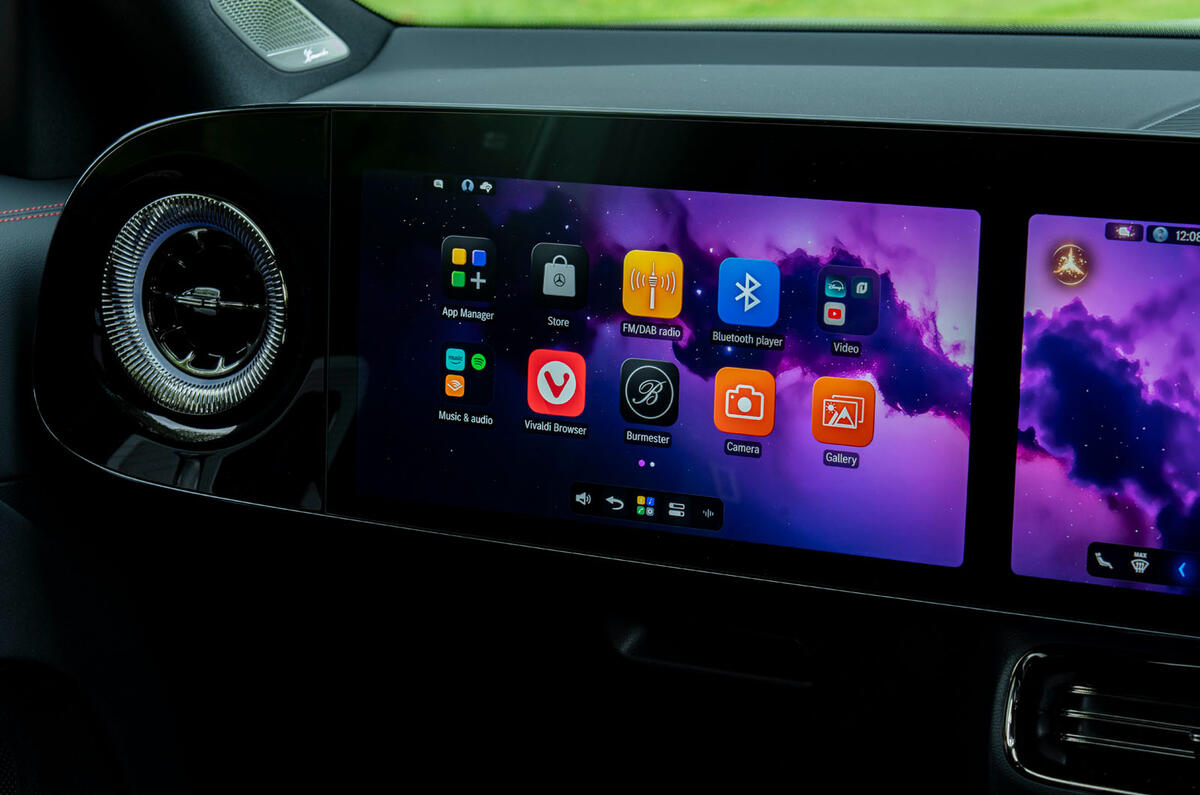
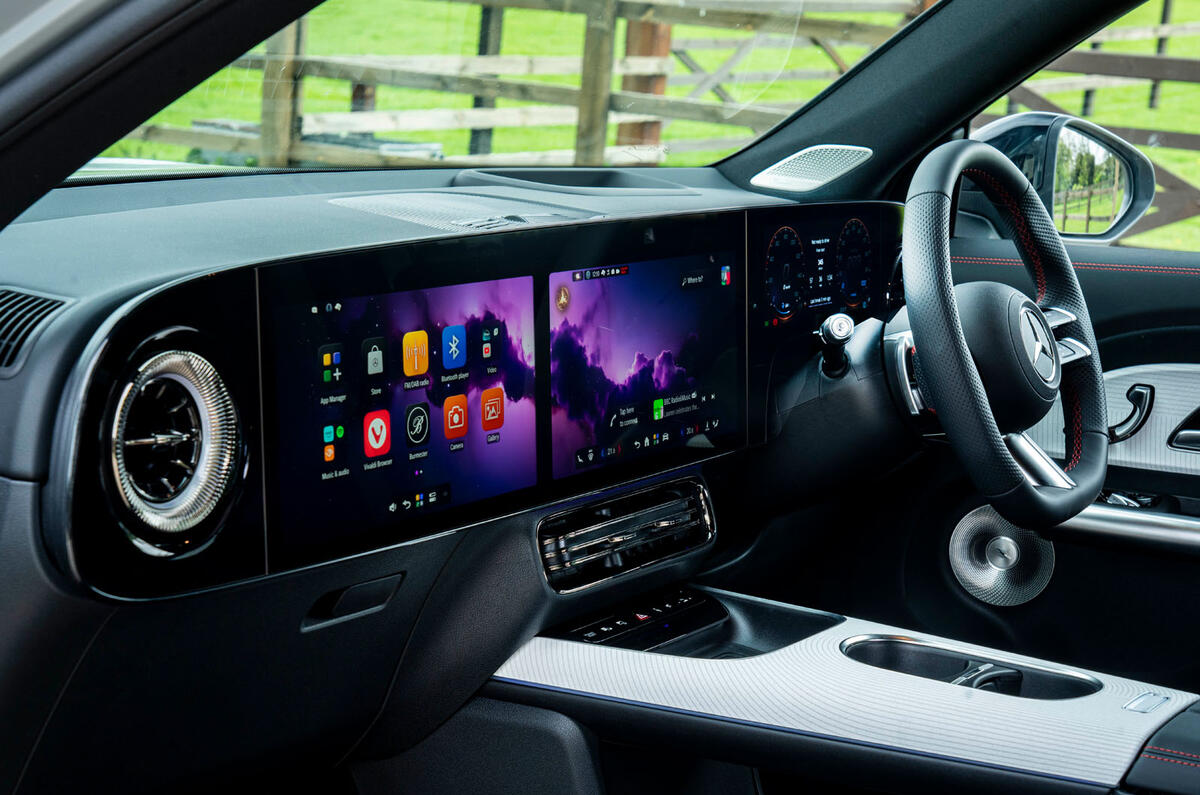
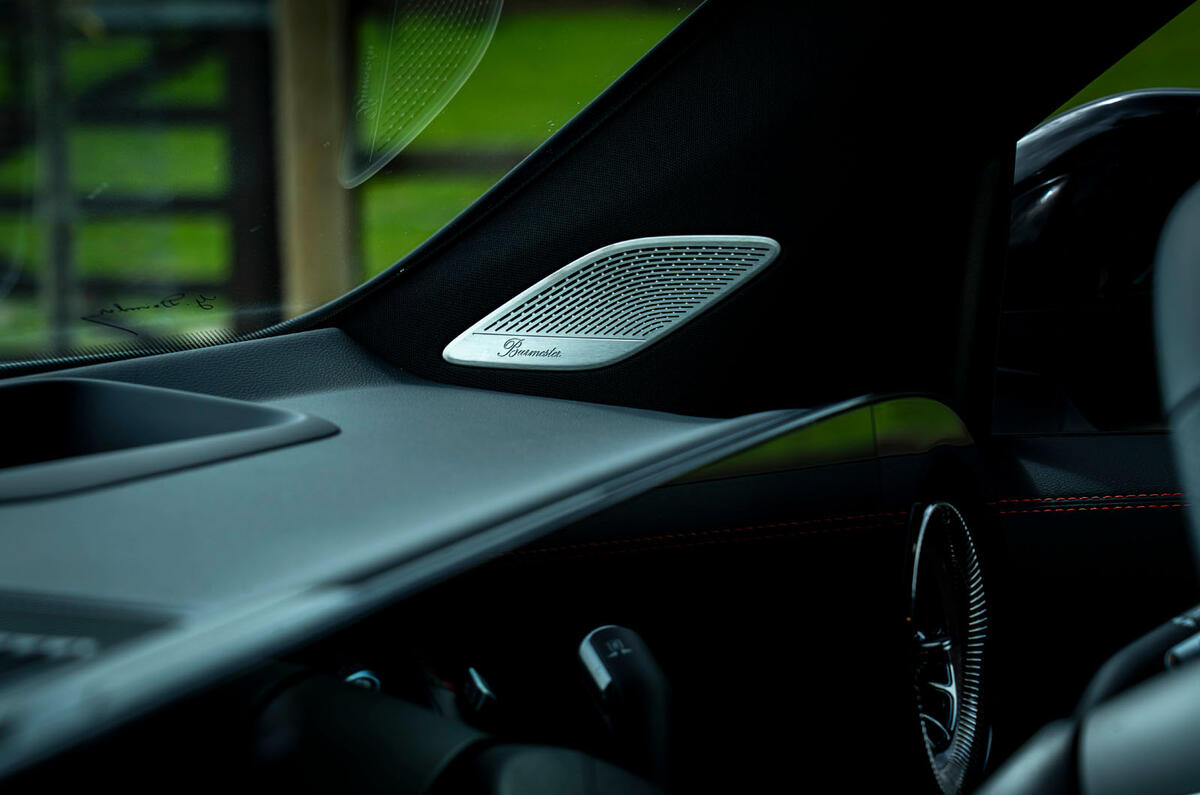
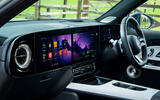
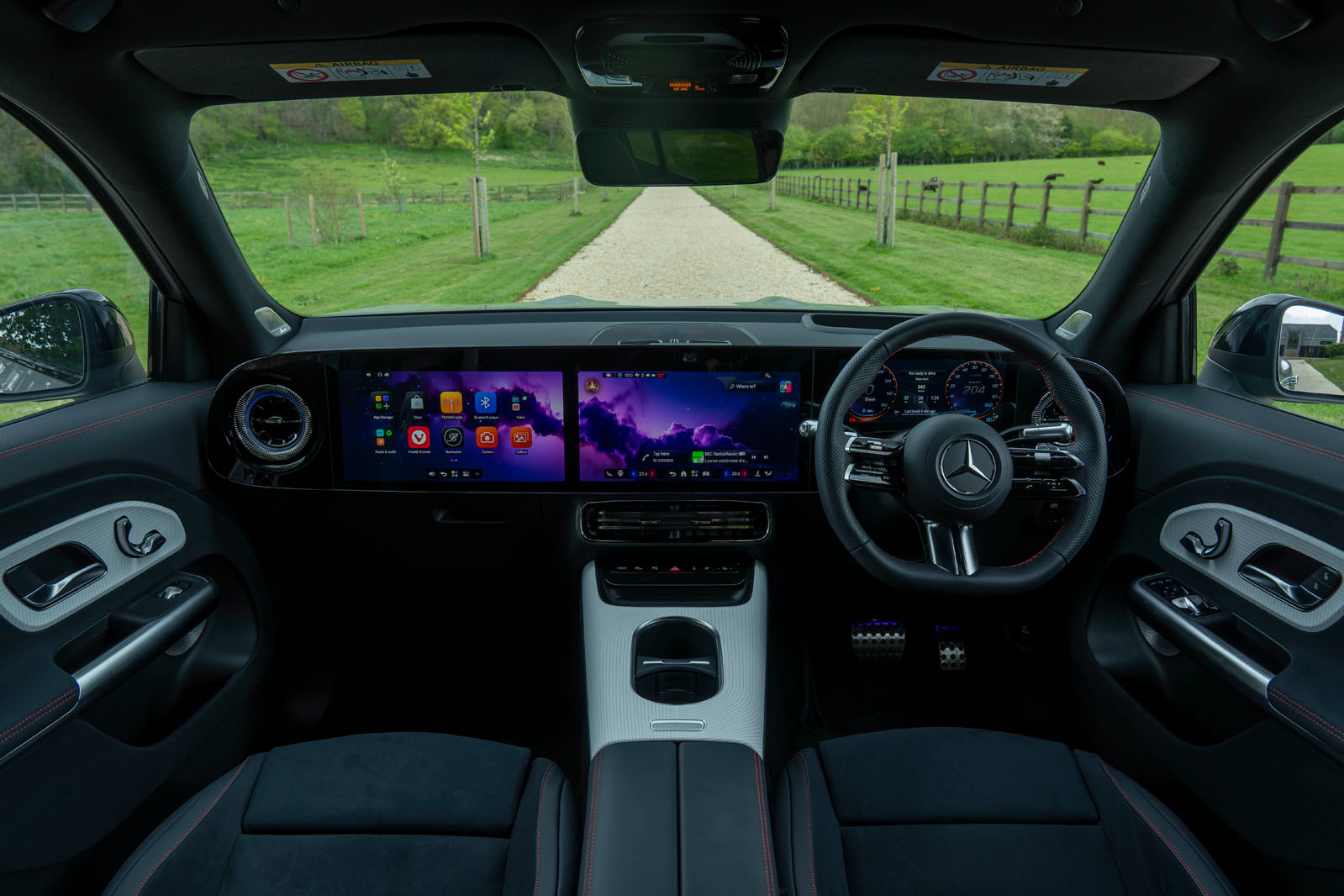
In general, the screens do a lot of heavy lifting and give the cabin quite a stark appearance; some more physical controls and warm materials wouldn’t go amiss. Fortunately, the screens respond quickly, with clear graphics and logically laid-out menus. The voice control is one of the best around, and the built-in navigation is clear and adaptable. The Burmester hi-fi in our Premium Plus test car produced a full sound.

One other feature that’s reserved for the Premium Plus is the passenger screen. Mercedes says it’s safer in a crash than holding a tablet, but apart from that we fail to see the point of it. You can play basic games on it, but this isn’t particularly ergonomic, and while it will stream media well enough, you obviously can’t take it in the house to finish the movie you started watching during a drive.

What’s a particularly poor piece of design is that the screen is visible from the driver’s seat. Using the monitoring camera for the ADAS, the car will notice if the driver looks over and will pause whatever is on the screen, which is annoying if the passenger is watching something, and doesn’t really solve the distraction issue either.

ENGINES & PERFORMANCE

8
Mercedes Benz GLB review 2026 029

Our test car was the GLB 250+, the single-motor long-range version that Mercedes reckons will take the majority of sales in the UK. In other words, the same powertrain as in the CLA 250+ we tested last year, but with 187kg of extra weight to lug around. As it happens, a kerb weight of 2216kg on Horiba MIRA’s scales is not a bad result for this size of car. We have not weighed any of its direct, single-motor competitors, but even going by claimed weights, most rivals apart from the seven-seat Tesla Model Y are heavier.
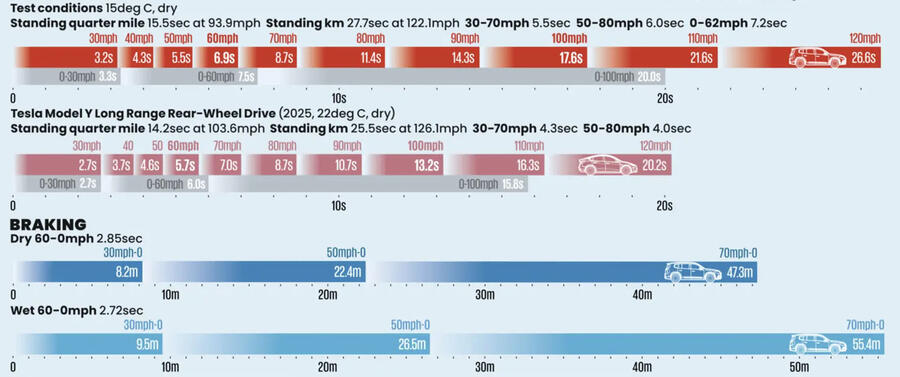
The net result of that extra weight compared with the CLA is creditably slight. Needing 7.2sec to reach 62mph, the GLB is only 0.3sec slower than the CLA. The gap widens with speed, as wind resistance takes hold of the GLB’s bluffer shape. It’s also notable that, unlike the CLA, the GLB lost some performance when the battery was at a low state of charge.

On all GLBs, you can adjust the level of trailing-throttle regen by pushing the column-mounted gear selector forwards and backwards. AMG Line cars add paddles that do the same job. It feels oddly redundant, but it’s nice to have options.

The GLB posts perfectly respectable numbers for a family car with no sporting ambitions, but it can’t be ignored that the Model Y reaches motorway speeds noticeably sooner and with greater ease – after all, Mercedes is the only marque in this class to employ a two-speed gearbox on the rear axle.

The gearchange is imperceptible most of the time but does manifest itself as a slight hesitation around 60-70mph when accelerating hard. Occasionally, you can also feel it kick down with sudden acceleration. Depending on your viewpoint, you will find it adds some much-needed texture to the EV experience, or that it sullies its purity.

With only 70bhp more, the dual-motor GLB 350 4Matic shouldn’t be viewed as the high-performance model, but having tried it briefly at the GLB’s launch, we can confirm it adds a useful turn of pace, plus the improved traction on slippery surfaces you’ll most likely buy it for.
Overall, drivability is well managed. We would have liked the standard drive mode to have a slightly calmer accelerator, but there is actually an interesting progression to it. Unlike in a Tesla, it’s not entirely immediate, but nor is there an obvious hesitation after you press the pedal, as with many Chinese EVs. Instead, it seems to mimic the build-up of propulsive force you get with a torque-converter automatic gearbox, which is quite pleasing. The brake pedal is nicely progressive, and it’s possible to cycle through various regen modes on the fly, including freewheeling, one-pedal and adaptive modes.
One of the weaknesses of the CLA is its long braking distance in the wet. We speculated that Mercedes fitted tyres that disproportionately favour efficiency over wet performance. Our GLB test car was fitted with Continental EcoContact 7 tyres and performed much better.

RIDE & HANDLING

8
Mercedes GLB review 2026 002

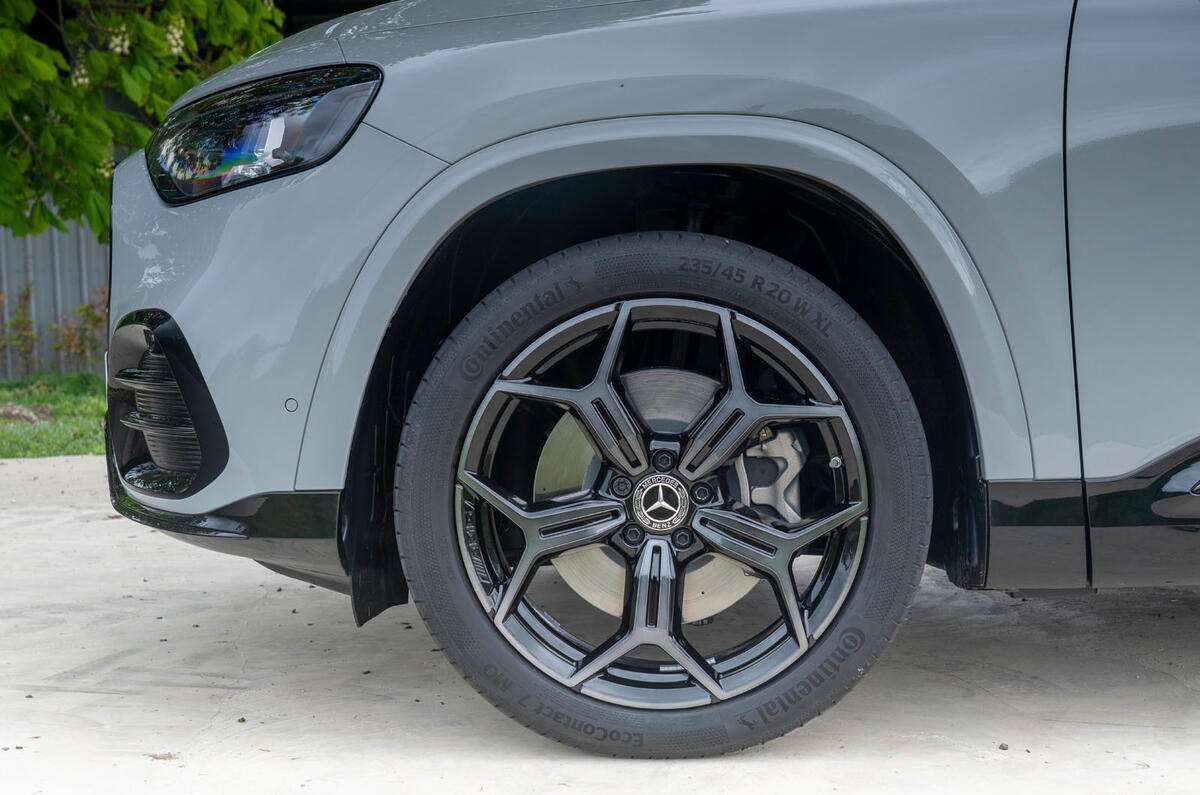
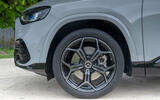
It’s something of an Autocar cliché to recommend the version with the fancy suspension and the small wheels – a spec that, no matter the car in question, few people ultimately end up ordering. With the way the GLB range is structured in the UK, you simply can’t have both. Lower trims have smaller wheels and passive suspension, whereas AMG Line Premium and Premium Plus have 20in wheels with adaptive dampers.

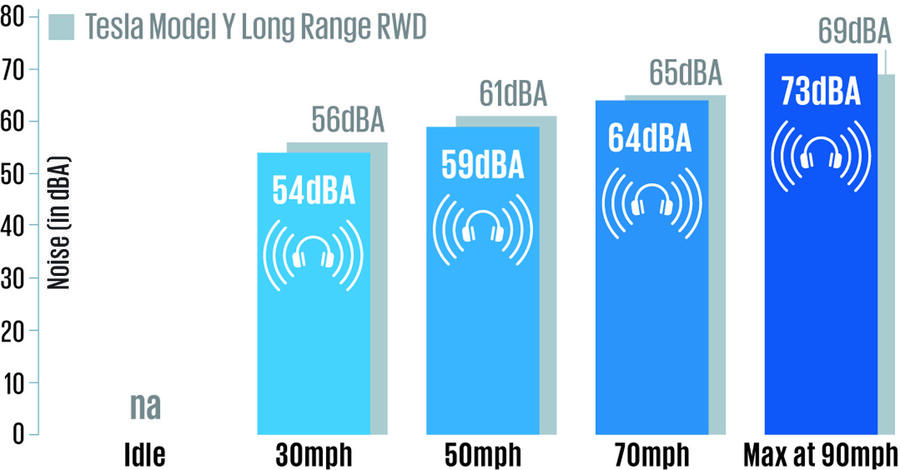
The good news is that you can’t go too far wrong. The standard suspension is dubbed ‘comfort’, with a fairly gentle set-up. Our test car had the adaptive option, which feels set up with a similar philosophy, one that’s quite refreshing in the way it lets the suspension breathe over undulations. At the same time, the body doesn’t move any more than is necessary, and the finer isolation of vibrations and secondary impacts is impressive as well. With 64dBA at 70mph, the GLB is a creditably refined cruiser, too.

None of this comes at the expense of handling. Sport mode firms up the suspension for just a little more precision and body control in the corners, but even then the GLB maintains an impressive level of ride comfort. The steering is perfectly progressive, with a gentle, oily-slick feel that transmits a bit of feedback. With the rear axle pushing the car out of the corner, it all makes the GLB a fluid, intuitive car to pilot.

Whereas the CLA has the same wheels and tyres front and rear, the GLB adopts a staggered set-up. Lower-end versions have 215-section tyres in the front and 235 in the back; higher-end ones like our test car have a 235 front and a 255 rear. This means the GLB defaults more readily to understeer than the CLA, and isn’t as keen to neutralise it on the power. That’s obviously not the end of the world in a family-friendly SUV, but the staggered sizes also mean owners won’t be able to rotate the tyres for even wear.

In terms of ADAS, the GLB’s mandatory safety systems are mostly unintrusive and/or easy to disable. The adaptive cruise control is decent, but can occasionally react less than smoothly. To get active active steering assist and automatic lane changes, you need to subscribe to 'MB Drive Assist' after you take delivery. It's £35.90 per month, or £849 for 36 months, which seems rather expensive and inconvenient for something that comes as standard on plenty of Kias.

MPG & RUNNING COSTS

8
Mercedes GLB review 2026 001

Prices for the electric GLB start at £46,100 for a GLB 250+ Sport, which isn’t as stripped out as you might expect from an entry-level Mercedes, because you don’t have to pay extra to get heated seats, the big centre screen, the panoramic sunroof or adaptive cruise control. It’s also the only version to get normal door handles, which is surely a benefit rather than a drawback. The flush pop-out ones on our test car were well behaved, but we struggle to see the added value. The base version’s all-black and grey interior does look a bit sombre, though.

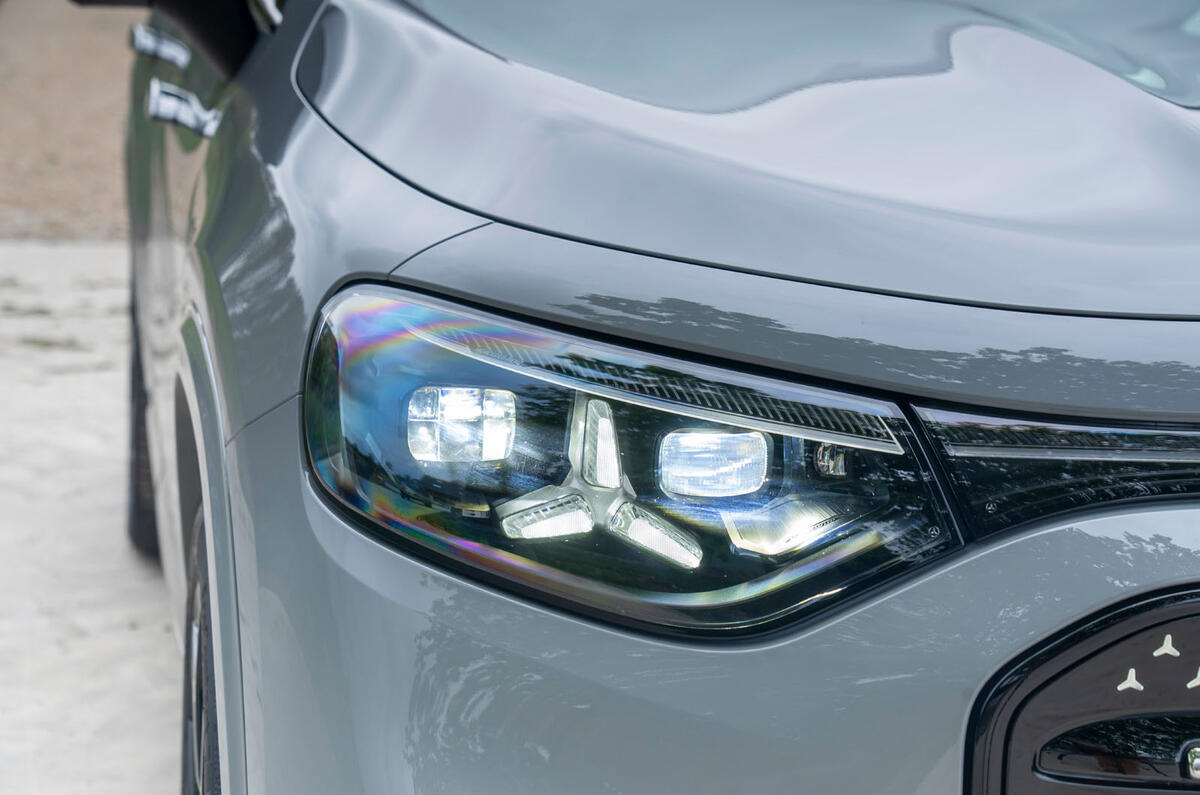
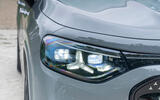
Successive trims add more equipment such as keyless entry, AMG styling and privacy glass but, if upgrading, we would only bother with the top AMG Line Premium Plus. At £56,800, it’s some £10k more than the base version, but it does get you the adaptive dampers, matrix LED lights, acoustic glass, heated steering wheel, Burmester stereo and a choice of more luxurious interior trims. For the 350 4Matic, add around £5000.

The only directly comparable car is the Peugeot e-5008, which is a good few thousand pounds cheaper, even in 400-mile long-range guise. At least, it is in cash. Mercedes has fairly attractive finance offers that can make the GLB comparatively very good value, depending on trim. The Kia EV9 is quite a bit more expensive in any case.

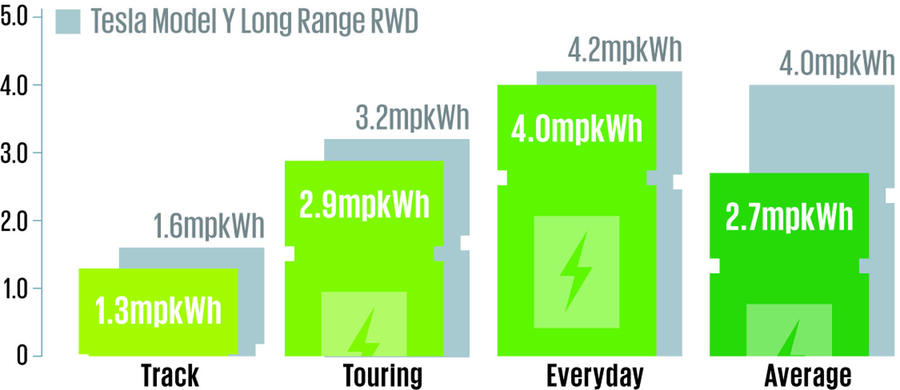
Given all the work Mercedes has done on efficiency, we found the GLB a little disappointing in that respect. We saw about 3.3mpkWh in normal use, and while 2.9mpkWh and 4.0mpkWh are decent touring and ‘everyday’ numbers for a car of this kind, they are the same as for the bigger, more powerful BMW iX3 50 xDrive, and far below those for the Tesla Model Y RWD. Holding over 200kW past 50% state of charge, the GLB put in a very strong DC charging performance.

VERDICT

Mercedes GLB review 2026 017

The GLB can’t rely on being a technical showcase the way the CLA could. Its more utilitarian shape means it can’t achieve the same efficiency as the saloon, and the novelty effect of some of the tech and innovations has worn off somewhat.

However, the GLB does successfully take the CLA’s base and adds impressive practicality. It remains compact and wieldy on the road, while offering real seven-seat SUV interior space. The excellent drivability, ride and handling we loved in the CLA also carry over to the GLB and remain a highlight.

Mercedes should continue to work on drivetrain efficiency and try to inject some warmth and quality into the interior. The bottom line is that the GLB is a relatively compact and well-priced EV with the practicality and driving sophistication of a bigger, more expensive car.

Illya Verpraet

Illya Verpraet Road Tester Autocar
Title: Road Tester

As a road tester, Illya drives everything from superminis to supercars, and writes reviews and comparison tests, while also managing the magazine’s Drives section. Much of his time is spent wrangling the data logger and wielding the tape measure to gather the data for Autocar’s in-depth instrumented road tests.

He loves cars that are fun and usable on the road – whether piston-powered or electric – or just cars that are very fit for purpose. When not in test cars, he drives an R53-generation Mini Cooper S or a 1990 BMW 325i Touring.

Matt Saunders

Matt Saunders Autocar
Title: Road test editor

As Autocar’s chief car tester and reviewer, it’s Matt’s job to ensure the quality, objectivity, relevance and rigour of the entirety of Autocar’s reviews output, as well contributing a great many detailed road tests, group tests and drive reviews himself.

Matt has been an Autocar staffer since the autumn of 2003, and has been lucky enough to work alongside some of the magazine’s best-known writers and contributors over that time. He served as staff writer, features editor, assistant editor and digital editor, before joining the road test desk in 2011.

Since then he’s driven, measured, lap-timed, figured, and reported on cars as varied as the Bugatti Veyron, Rolls-Royce PhantomTesla RoadsterAriel Hipercar, Tata Nano, McLaren SennaRenault Twizy and Toyota Mirai. Among his wider personal highlights of the job have been covering Sebastien Loeb’s record-breaking run at Pikes Peak in 2013; doing 190mph on derestricted German autobahn in a Brabus Rocket; and driving McLaren’s legendary ‘XP5’ F1 prototype. His own car is a trusty Mazda CX-5.