
-
Car Reviews
- Latest car reviews
- New car reviews
- Used car reviews
- Long-term tests
- Top 10s: Best Cars on sale
- Video reviews
-
Car News
- Latest news
- Podcasts
- Advice
- Opinions
- Features
- Awards
- From the archive
-
Used cars
- Used car home
- Used car reviews
- Used car deals
-
Electric
- Electric cars home
- Skoda electric | promoted
-
Best cars
-
Business
-
Company cars
- Company car tax calculator
- Company car advice
-
- New cars for sale
- Used car deals
- Tyres
- Gap Insurance
- Warranty
- What Car? Leasing
- Sell your car
-
Subscribe
- Subscribe to magazine
- Subscribe to Autocar Business
- Autocar Newsletter
…
-
Car Reviews
- Latest car reviews
- New car reviews
- Used car reviews
- Long-term tests
- Top 10s: Best Cars on sale
- Video reviews
-
Car News
- Latest news
- Podcasts
- Advice
- Opinions
- Features
- Awards
- From the archive
-
Used cars
- Used car home
- Used car reviews
- Used car deals
-
Electric
- Electric cars home
- Skoda electric | promoted
-
Best cars
-
Business
-
Company cars
- Company car tax calculator
- Company car advice
-
- New cars for sale
- Used car deals
- Tyres
- Gap Insurance
- Warranty
- What Car? Leasing
- Sell your car
-
Subscribe
- Subscribe to magazine
- Subscribe to Autocar Business
- Autocar Newsletter
Log in
Sign up for free to unlock:
- In-depth features
- Expert opinions
- Autocar Business news
- Post comments on stories
- Receive newsletters
Sign up
Log in
Sign up for free to unlock:
- In-depth features
- Expert opinions
- Autocar Business news
- Post comments on stories
- Receive newsletters
Sign up
Menu
main menu
-
Car Reviews
- Latest car reviews
- New car reviews
- Used car reviews
- Long-term tests
- Top 10s: Best Cars on sale
- Video reviews
-
Car News
- Latest news
- Podcasts
- Advice
- Opinions
- Features
- Awards
- From the archive
-
Used cars
- Used car home
- Used car reviews
- Used car deals
-
Electric
- Electric cars home
- Skoda electric | promoted
-
Best cars
-
Business
-
Company cars
- Company car tax calculator
- Company car advice
-
- New cars for sale
- Used car deals
- Tyres
- Gap Insurance
- Warranty
- What Car? Leasing
- Sell your car
-
Subscribe
- Subscribe to magazine
- Subscribe to Autocar Business
- Autocar Newsletter
Close
Find a car review
MakeAbarthAC CarsAC SchnitzerAionAiwaysAlfa RomeoAllardAlpinaAlpineAnalogue AutomotiveArielAston MartinAudiAustinBentleyBMWBovensiepenBrabusBugattiBYDCadillacCaterhamChanganCheryChevroletChryslerCitroenCupraDaciaDallaraDavid BrownDenzaDodgeDonkervoortDSEagleElectrogenicFerrariFiatFiskerFordGeelyGenesisGinettaGreat British Sports CarsGreat WallGunther WerksGWMHispano SuizaHondaHuman HorizonsHyundaiIneosInfinitiIsuzuJaecooJaguarJannarellyJeepJIAJohn Deere 9RX 830Kamm ManufakturKGMKiaKimeraKoenigseggKTMLadaLamborghiniLand RoverLeapmotorLEVCLexusLight Car CompanyLightyearLincolnLMCLotusLucidMaseratiMaxusMaybachMazdaMcLarenMercedes-AMGMercedes-BenzMercedes-MaybachMG MotorMiaMicroMikaMiniMitsubishiMobilizeMorganMSTMurraynew itemNioNissanNobleOmodaOpelPaganiPaul StephensPembleton Motor CompanyPeugeotPininfarinaPolestarPorscheProdriveProtonQ3Q3QorosRadicalRamRenaultRivianRMLRoeweRolls-RoyceRoverRufSaabSeatSenovaShelbySilenceSinSkodaSkywellSmartSpartan Motor CompanySpykerSRTSsangyongSubaruSuzukiTataTeslaTheon DesignTigerToniqToyotaTushekTwistedVauxhallVencerVolkswagenVolvoWellsWestfieldXpengYangwangZeekrZenosZenvo
Model
You are here
- Car reviews ›
- Polestar ›
- Polestar 4
Polestar 4 review
From £60,7506
Can Polestar’s sportified SUV-cum-coupe rival the class hegemony?

Richard Lane
Published:
3 October 2025
Share
How we test cars
- Introduction
- Design & styling
- Interior
- Engines & performance
- Ride & handling
- MPG & running costs
- Verdict
- Prices & specs
Open gallery
Close


Find Polestar 4 deals
New car deals
From £60,750

Nearly-new car deals
From £34,399
Other Services
Sell your car
84% get more money with
It has taken us a while to run the road test rule over the Polestar 4 but here we finally are, with an electric car that seeks to combine the minimalistic tech-luxury appeal of an Apple product with the automotive practicality of Tesla’s Model 3.
Owners might also reasonably expect a good level of satisfaction from the driving experience. Until the recent arrival of the Porsche Taycan-rivalling 5, the 4 was the quickest car in the Polestar stable, and its platform is related to the one slid underneath the Lotus Emeya. The rakish design, which to our eyes neatly disguises the fact that the 4 is, strictly speaking, an SUV-coupé crossover, is also suggestive of handling appeal that ought to get the attention of BMW i4 owners.
We will now discover whether the Polestar 4 makes good on its considerable promise as an agreeably priced but desirable and versatile electric option. Or could its ambitious conception as a part-executive, part-SUV, part-sporting, tech-heavy crossover leave it in something of a no-man’s land?
New Polestar 4 cars in stock
Polestar Polestar 4 Coupe Dual Motor 100kWh Long Range Performance Prime Coupe Auto 4WD 5dr 
£69,250
Polestar Polestar 4 Coupe Dual Motor 100kWh Long Range Performance Prime Coupe Auto 4WD 5dr
£67,750
Polestar Polestar 4 Coupe Dual Motor 100kWh Long Range Performance Prime Coupe Auto 4WD 5dr
£68,800
Polestar Polestar 4 Coupe Dual Motor 100kWh Long Range Performance Prime Coupe Auto 4WD 5dr
£68,950
Polestar Polestar 4 Coupe Dual Motor 100kWh Long Range Performance Prime Coupe Auto 4WD 5dr
£68,800
Polestar Polestar 4 Coupe Dual Motor 100kWh Long Range Prime Coupe Auto 4WD 5dr
£65,050
Polestar Polestar 4 Coupe Dual Motor 100kWh Long Range Prime Coupe Auto 4WD 5dr
£65,300
Polestar Polestar 4 Coupe Dual Motor 100kWh Long Range Performance Prime Coupe Auto 4WD 5dr
£69,600
Polestar Polestar 4 Coupe Dual Motor 100kWh Long Range Performance Prime Coupe Auto 4WD 5dr
£68,400
View all 47 cars
Verdict

Model tested:
Rating: 6
Polestar 4
Desirable but something of a missed opportunity
Good
Certainly looks distinctive
Big battery and strongish electric range
Competitive price once you factor in options
Bad
Ride and refinement could be better
Digital rearview solution has pros and cons
Multimedia isn't the most intuitive
Screenless design concept doesn't actually deliver much
Advertisement
DESIGN & STYLING
7
Pros
Striking looks
Good aero qualities
RWD option
Big battery
Cons
Slightly awkward silhouette
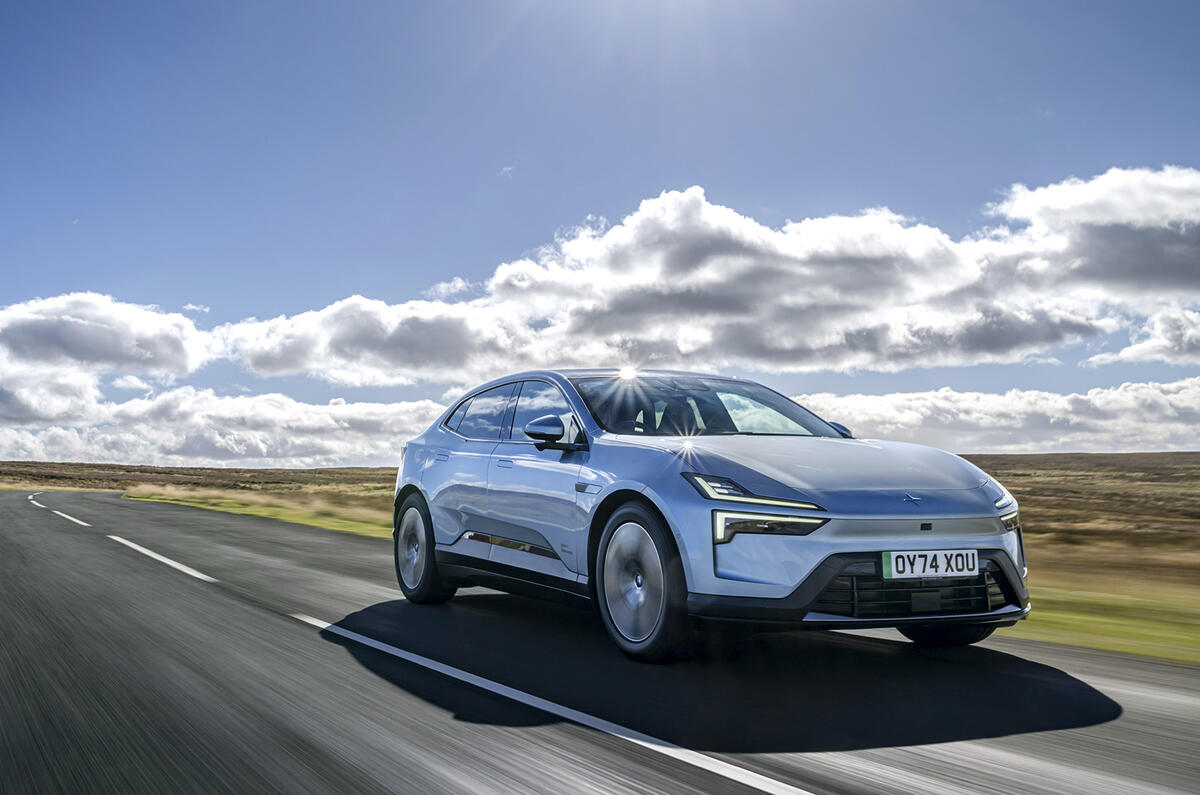
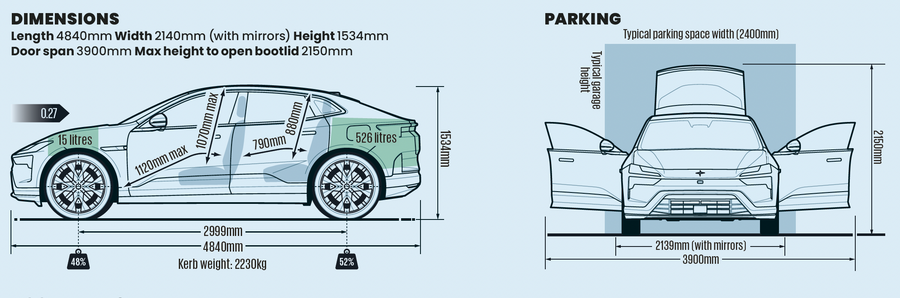
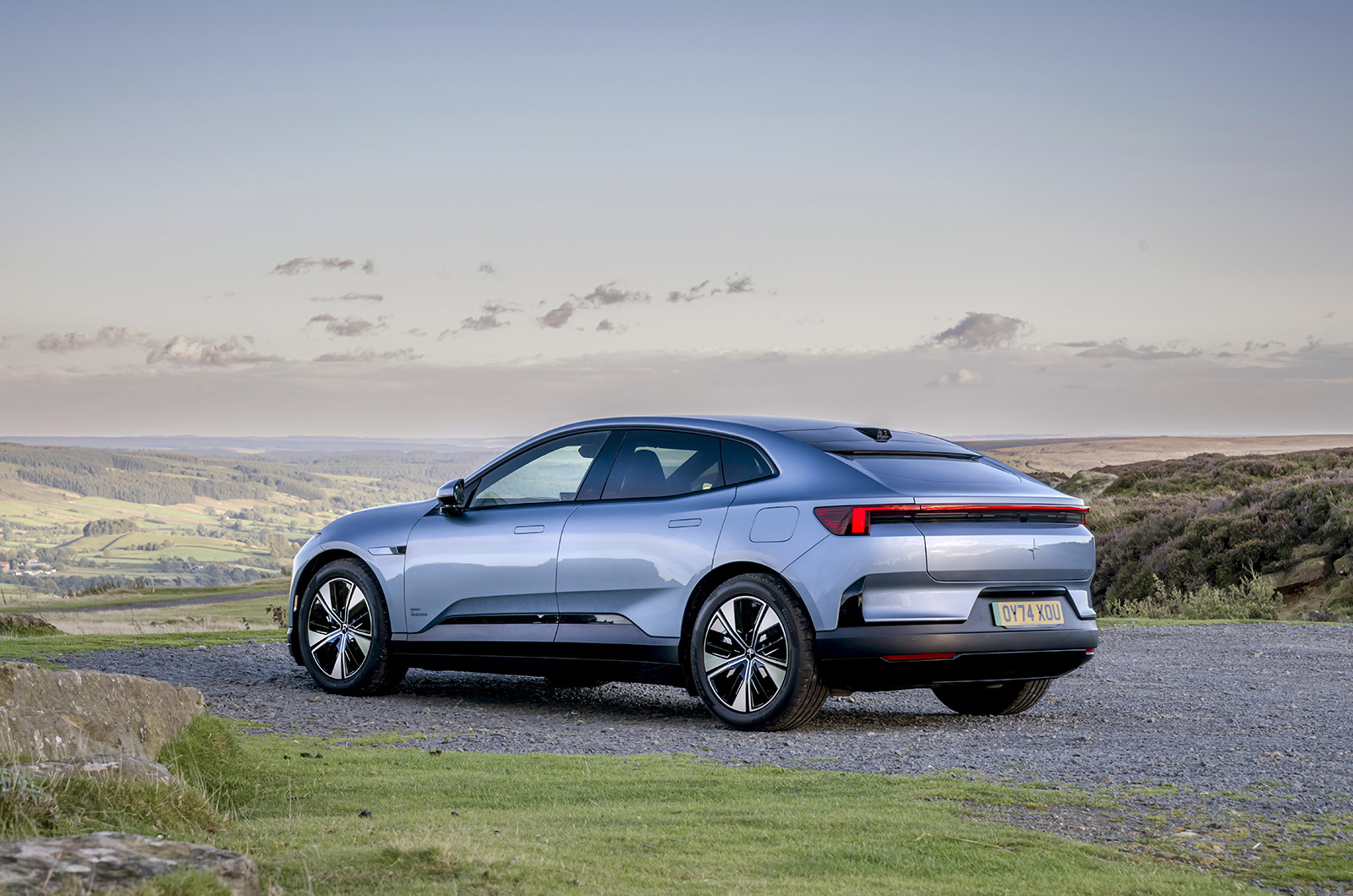
At 4.84m long and 1.53m tall, the 4 is comparably sized to not only the Porsche Macan Electric and the hotly anticipated BMW iX3 but also the Tesla Model Y. However, see this Polestar in the metal and it is clear that it would sit quite comfortably alongside dedicated saloon alternatives such as the BMW i4 and Hyundai Ioniq 6, which have a similar footprint. The 4’s coupé lines are strong, and that roofline is so low that it’s actually only 2cm higher than that of the Mercedes-Benz EQE. In short, it is challenging to pigeonhole this car.
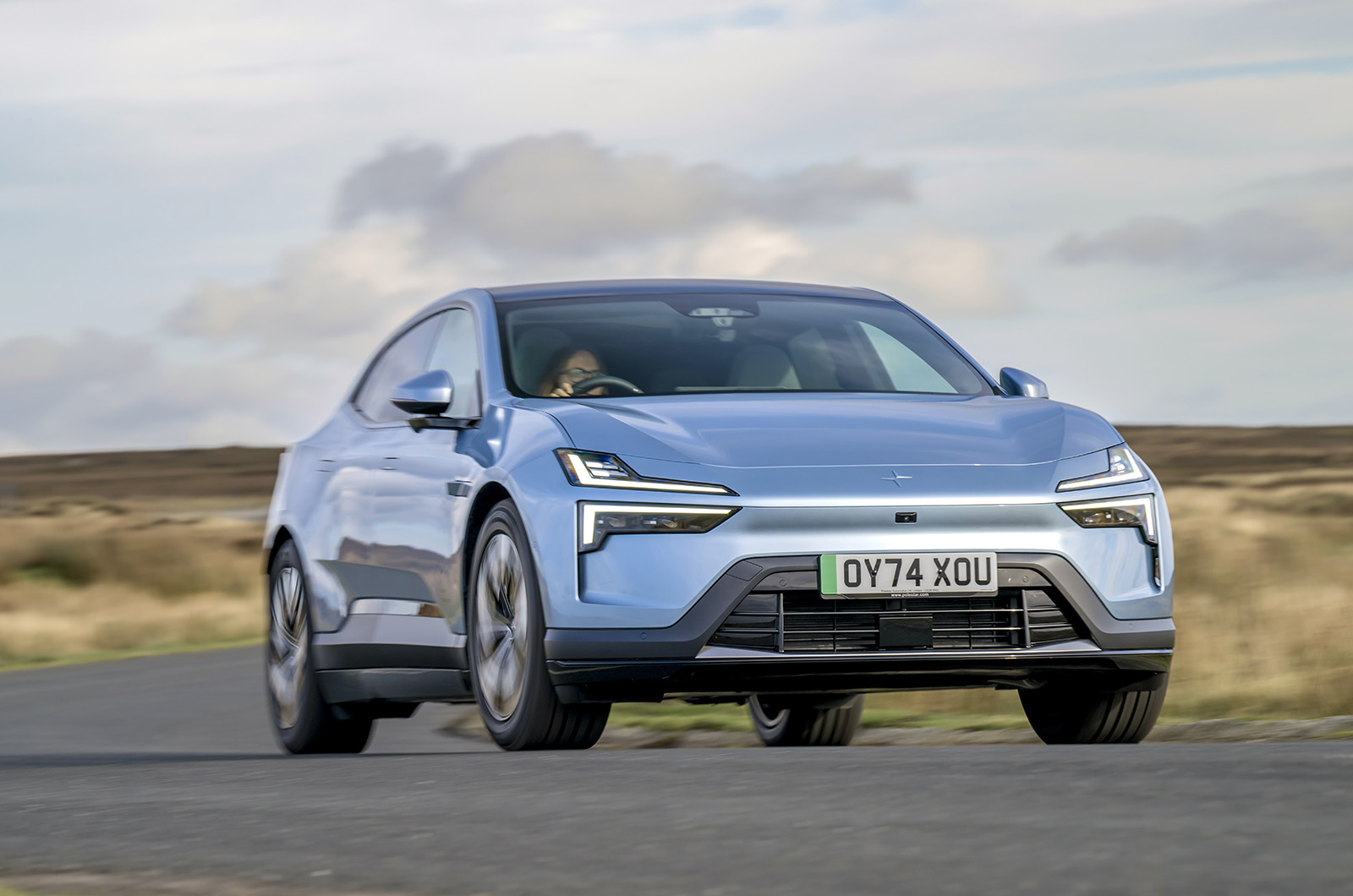
The separation of the headlights between the running lights and projector units marks out the Polestar 4 from its siblings and should help you recognise it in your rear-view mirror (assuming your car has one).
Matt Saunders
Road test editor
Polestar could have taken this car in any number of directions, at least as far as the silhouette went. The underlying platform is Geely’s Sustainable Experience Architecture (SEA), which, as well as being the engineering bedrock for the Lotus Emeya, albeit in modified form, is also used for a number of Zeekr models, the Smart #1 and even the Volvo EM90 luxury MPV, which we don’t get in the UK.
The platform can support electric motors at each end, and the 4 is available either in rear-drive Long Range Single Motor form or as the Long Range Dual Motor, which adds another motor at the front axle. Only the dual-motor model is available with the Performance Pack, which brings 22in wheels, a sportier tune for the electronically adjustable dampers from ZF, and Brembo brakes that use sizable, 392mm front discs and brightly painted calipers.
What it doesn’t bring is any more power, but the performance disparity between the two variants is already significant. The single-motor car, which we test here, makes 268bhp, while the dual-motor set-up hikes that to 536bhp – about the same as a BMW M3 CS.
Whichever version of the 4 you pick, the motor or motors are the same: a three-phase permanent magnet synchronous motor design, driving through a single-speed reduction gear transmission.
While the 5 is made largely from aluminium, the smaller 4, built in Geely’s Hangzhou Bay plant in China, is more steel-intensive. The claimed weight of 2230kg is therefore unsurprising, and we weighed the car at 2247kg. By comparison, our scales logged the updated Tesla Model Y Long Range at 1921kg and the basic, rear-driven Porsche Macan Electric at 2220kg.
Some of that uplift is due to the European cars using batteries about 20% bigger in capacity than those of the Tesla. The Polestar’s 100kWh unit uses NMC chemistry, contains 110 prismatic cells, and is supplied by CATL. The maximum 200kW DC charging rate is par for the class.
Suspension is by double wishbones at the front and a multi-link rear. The rear-drive car, as here, controls matters with passive dampers and coil springs, while the dual-motor car has adaptive dampers with selectable Standard, Nimble and Firm modes. Polestar-branded products have in the past featured manually adjustable Öhlins dampers, but they always felt somewhat incongruous and don’t appear here. Wheel choice is broad, with designs from 20in to 22in. In a nod to Polestar’s performance positioning, tyres are supplied by either Michelin or Pirelli; our car uses the latter.
The 4’s design has plenty of traditional premium touches: frameless doors, a striking rear light bar, retracting door handles and a panoramic roof, plus a wheel and tyre package that fills the arches snugly.
However, the big talking point is the lack of a rear windscreen. Why would Polestar choose to dispense with that, you may wonder? Its designers argue that, by doing
so, they’ve been able to move the car’s rear header rail backwards, lowering the roofline and extending the glass roof so it runs over the heads of the rear passengers, making the cockpit feel even more open and spacious, Tesla-style. It’s a controversial move, but one that the firm has repeated on the Polestar 5.
WEIGHTS AND MEASURES
Model tested:
Polestar 4 Long Range Single Motor
Price:
£60,000
Price as tested:
£64,500
Model tested
Polestar 4 Long Range Single Motor
Price
£60,000
Price as tested
£64,500
View all specs
Claimed weight
2230kg
Weight on scales
2247kg
Wheel size (as tested)
8.5J x 20in
Length
4840mm
Width (with/without mirrors)
2140/2008mm
Doorspan
3900mm
Height
1534mm
Height with boot open
2150mm
Wheelbase
2999mm
Claimed weight
2230kg
Weight on scales
2247kg
Wheel size (as tested)
8.5J x 20in
Length
4840mm
Width (with/without mirrors)
2140/2008mm
Doorspan
3900mm
Height
1534mm
Height with boot open
2150mm
Wheelbase
2999mm
Advertisement
INTERIOR
6
Pros
Plenty of functionality
Comfy up front
Lounge-like atmosphere
Cons
Too digital-heavy
Air-con vents controlled in-screen
Infotainment usability is hit-and-miss
Second row feels unnecessarily dark
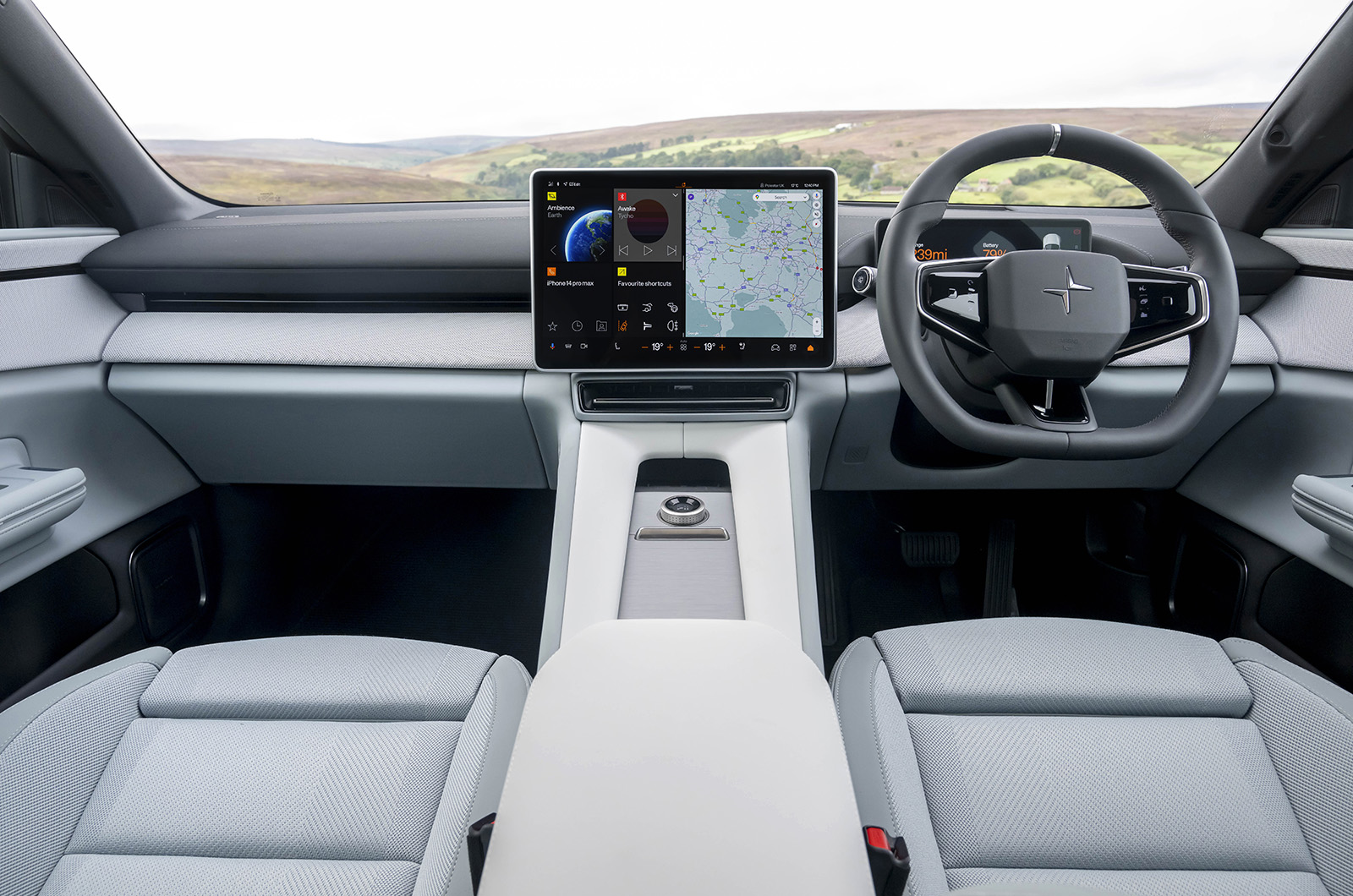
Slide into the driver’s seat and there’s a real sense that this is more coupé than SUV, owing to the geometry of the driving position – the relationship between hands, backside and feet – and the lowish scuttle ahead of you. You still sit higher than in ‘classic’ saloons or coupés, but not by much.
The dashboard has strong horizontal lines, complete with hidden vents that you adjust via the touchscreen (a frustrating way of doing it, all testers agreed). Thankfully, there’s a simple instrument display behind the steering wheel, and if you add the Plus Pack, as our car had, you also get a head-up display.
This is a striking bit of design inside and out, but I don’t get the thinking behind the rear screen. Polestar does lounge-like, light-infused cabins so well; so why block out the back of the car, racing car-style?
Richard Lane
Deputy road test editor
The cabin’s materials palette is made up of some rather lovely textured textiles, or nappa leather if you prefer. There’s certainly that unmistakable, restrained, Scandi-chic feel in the ambience, and it feels refreshingly different from the obvious rivals from Germany – which is another selling point for any Polestar fan who may well revel in a car that’s anything but the norm.
As for comfort, fine seats have long been part of the Volvo-Polestar equation, and the 4 is no different. The padding is a little softer than you might expect, and the bolstering is a touch less generous than might sometimes be required of what is potentially a 500bhp-plus car; but for long drives and everyday use, these are superb and broadly adjustable.
The simplicity of the driving environment is also welcome, although this approach does slip into functional issues: there is no physical control to adjust the mirrors, for example, and the indicator stalks don’t always feel reassuringly sturdy. But does it all feel £60,000-premium? Mostly, yes.
There is at-least reasonable headroom in the second row, at 880mm (920mm for the Model Y; 930mm for the Macan Electric), although not quite enough for particularly tall adults to sit without feeling a little enclosed, with the header rails dropping down on either side. The lack of a rear screen certainly adds to the feeling that it is slightly enclosed and dark, although there’s good forward visibility, no so risk of it feeling outright claustrophobic.
However, from the driver’s perspective it’s just annoying not to have a direct view out of the back of the car. While the rear-view camera that makes up for the solid metal shell at the back is high-definition, it’s not as crisp or sharp as a regular mirror, and you can’t use it like a mirror to judge distance by slightly moving your head. It’s also problematic if you happen to wear glasses to correct short-sightedness, because you will need to look over your specs to focus on the screen, whereas with a mirror your focus is farther away.
You can recline the back seats, but doing so doesn’t create any more space (although it does slightly lessen the impact for the Polestar’s higher, EV-typical floor). However, overall, and as in the front of the car, material ambience is plush and luxurious, and for adult passengers of average height the cabin is roomy enough. The hatchback boot has a decent 526 litres of space, including 31 litres under the floor, so there’s some useful SUV-ness in the mix, and a 15-litre frunk adds further storage. While these elements cover the everyday practical bases, the Renault Scenic E-Tech electric takes a more dedicated family-SUV approach, utilising two standard rear ISOFIX points and up to 30 advanced driver-assistance systems as part of Renault’s Human First safety programme to secure its five-star Euro NCAP safety rating.
Infotainment - 3.5 stars
The car’s landscape touchscreen uses a reskin of the infotainment software from the Volvo EX30, and there are some neat touches to it. The icons are sizable, and the adaptive dynamic functions light up orange when they’re activated, so they’re not difficult to hit and it’s easy to see how the car is set up. The climate controls are also permanently displayed along the bottom of the screen.
Configurable shortcuts on the home page mean lane keeping assistance, regenerative braking modes and more can all be a single finger prod away. The inbuilt Google Maps sat-nav is also very good, and you can have it showing on the driver display as well as the main screen if you choose.
Still, there are some properly irritating usability issues. Yes, you can choose what ambience you want according to planetary theme (pick your favourite planet and the car’s ambient lighting adjusts accordingly), but you still have to go three or four prods into the menus to change some adaptive drive features and find ways to turn on your foglights or adjust a door mirror. It’s not as hard to navigate as the EX30’s system, but it’s still not a user-friendly delight – and there’s no mistaking that a few too many physical controls have been taken away by those who would worship at the altar of touchscreen technology.
The steering wheel controls are also a bit fiddly to operate, and they don’t have a premium feel.
INTERIOR DIMENSIONS
Model tested:
Polestar 4 Long Range Single Motor
Price:
£60,000
Price as tested:
£64,500
Model tested
Polestar 4 Long Range Single Motor
Price
£60,000
Price as tested
£64,500
View all specs
Driver’s headroom
1070mm
Driver’s legroom
1120mm
Throttle pedal offset
180mm right
Rear headroom
880mm
Typical rear legroom
790mm
Boot height (seats up/seats down)
320-640mm
Boot length (seats up/seats down)
970-1890mm
Boot width (seats up/seats down)
1050-1189mm
Boot capacity (seats up/seats down)
526 litres
Driver’s headroom
1070mm
Driver’s legroom
1120mm
Throttle pedal offset
180mm right
Rear headroom
880mm
Typical rear legroom
790mm
Boot height (seats up/seats down)
320-640mm
Boot length (seats up/seats down)
970-1890mm
Boot width (seats up/seats down)
1050-1189mm
Boot capacity (seats up/seats down)
526 litres
Advertisement
ENGINES & PERFORMANCE
6
Pros
Intuitively calibrated accelerator
Some regen modes
Cons
Single-motor car's straight-line pace borders on the lacklustre
Regen selection
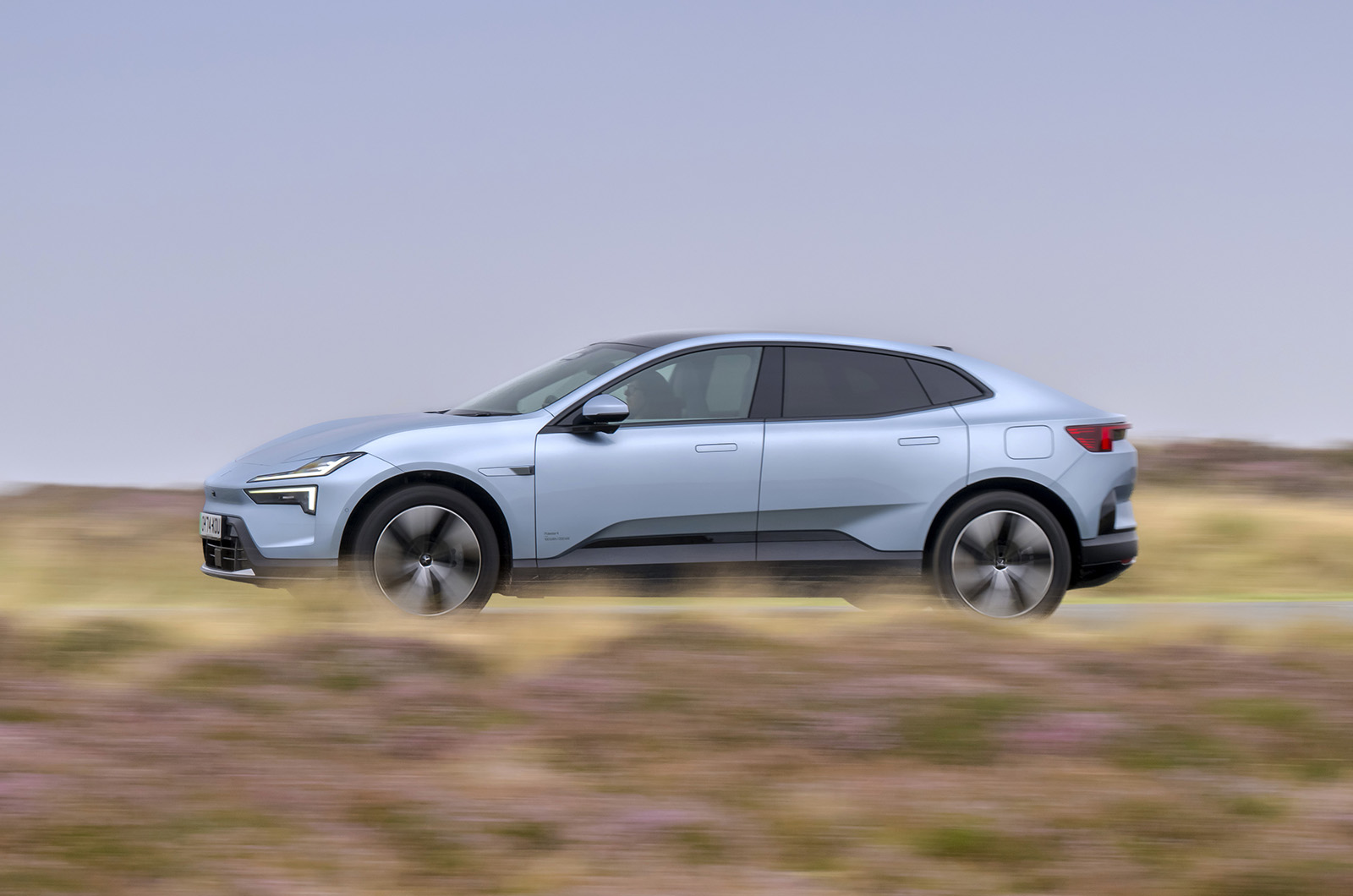
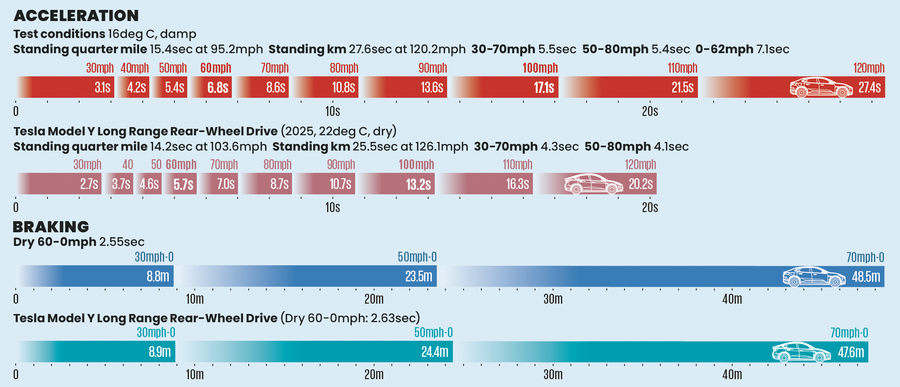
Polestar makes some very fast cars, but the single-motor 4 exists at the sedate end of the company’s spectrum. Our tested 0-62mph of 7.1sec matches the claim exactly, and while it is plenty quick enough for the kind of driving in which these cars will mostly engage, something more exciting might have chimed better with the rakish overall aesthetic.
Overtaking would also be easier if the 4 had some additional shove: its 5.5sec 30-70mph time actually looks pretty slow next to the 4.3sec of the rear-drive Tesla Model Y and 4.2sec for the basic Porsche Macan Electric over the same metric. There is always the dual-motor version, with its sub-4.0sec 0-60mph time.
Elsewhere, in everyday progress around town, it can be a bit hard to judge bringing the car to a smooth standstill. Brake energy regeneration is adjusted in the screen and has three settings – Off, Low and Standard – with Standard being a heavy one-pedal drive mode, Low being fairly mild brake regen, and Off being, well, off. It would be nice to have a slightly more varied range of regen, not to mention easier control of them via paddles on the wheel, with a couple of mid-range settings to choose between. As it is, the Standard regen is intuitive enough and easy to get used to, provided you don’t mind a ‘one-pedal’ approach; so most will most likely stick with that.
PERFORMANCE
Model tested:
Polestar 4 Long Range Single Motor
Price:
£60,000
Price as tested:
£64,500
Model tested
Polestar 4 Long Range Single Motor
Price
£60,000
Price as tested
£64,500
View all specs
0-62mph - claimed
7.1sec
0-62mph - tested
7.1sec
0-100mph - tested
17.1sec
30-70mph - tested
5.5sec
30-to-70mph in 4th - tested
na
Standing 1/4 mile (time & speed)
15.4sec at 95.2mph
Top speed (claimed)
124mph
Power to weight
120bhp per tonne
Torque to weight
113lb ft per tonne
Specific output
na
rpm at 70/80mph in top gear
unspecified
Stopping distance from 30/50/70mph
8.8-/23.5-/48.5m (16 deg C, damp)
0-62mph - claimed
7.1sec
0-62mph - tested
7.1sec
0-100mph - tested
17.1sec
30-70mph - tested
5.5sec
30-to-70mph in 4th - tested
na
Standing 1/4 mile (time & speed)
15.4sec at 95.2mph
Top speed (claimed)
124mph
Power to weight
120bhp per tonne
Torque to weight
113lb ft per tonne
Specific output
na
rpm at 70/80mph in top gear
unspecified
Stopping distance from 30/50/70mph
8.8-/23.5-/48.5m (16 deg C, damp)
RIDE & HANDLING
6
Pros
Reasonably agile-feeling in normal driving
Quiet at a cruise
Primary ride is often very supple indeed
Cons
Lack of rear screen hampers visibility
Low-speed reactivity
Broadly unengaging
Lacks body control on challenging roads
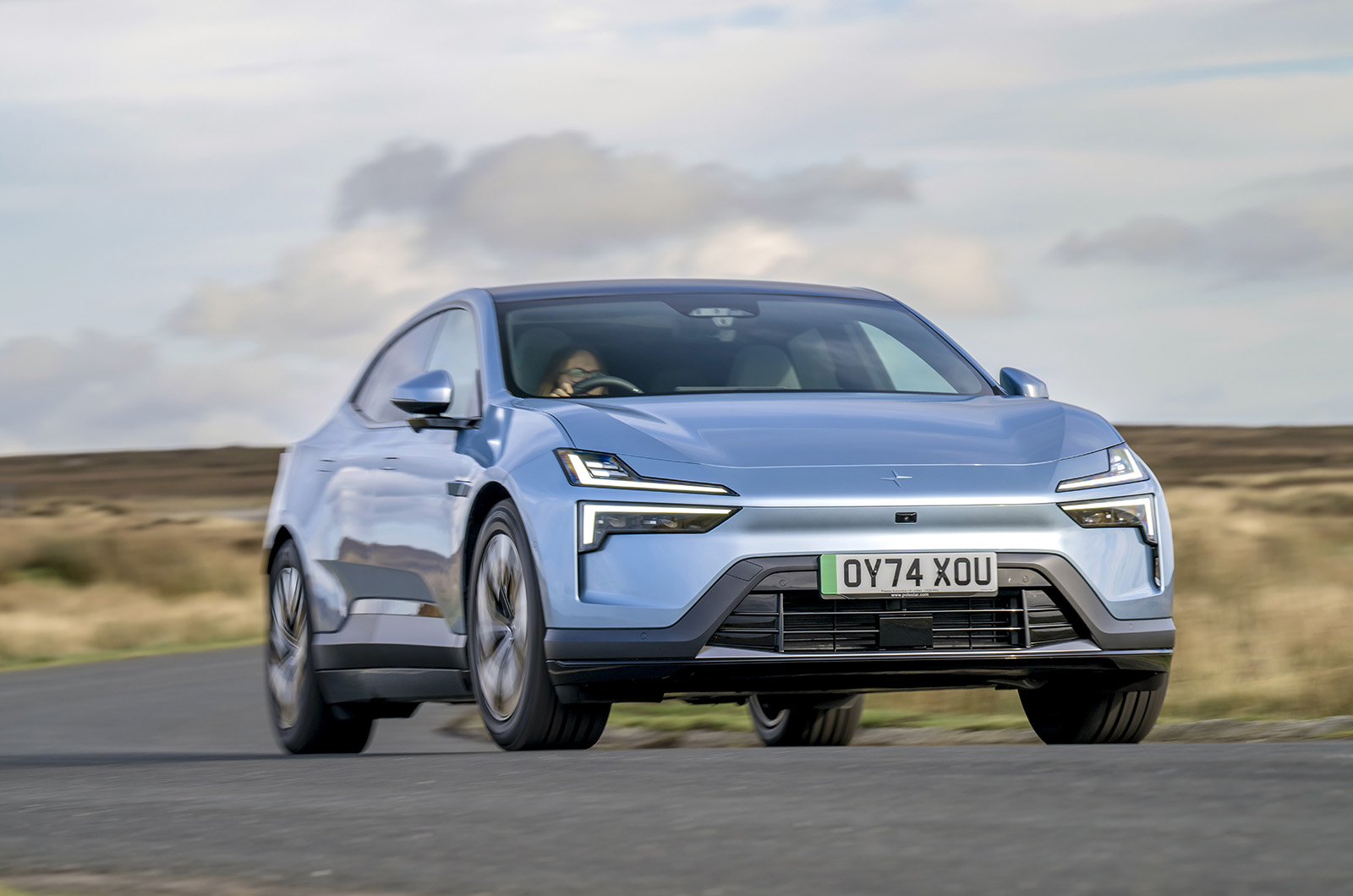
A rear-wheel-drive coupé-crossover from Polestar ought to have some intent about its handling, but in truth the 4 is fairly lukewarm.
There is nothing in particular that’s ‘wrong’ with the driving experience: the steering is direct, of agreeable speed and ever accurate, and balance when cornering is easily established. However, there’s little to get your teeth into, and the passive dampers often don’t offer enough support on a challenging road. Of course, by opting for the dual-motor version with its three-mode adaptive dampers you can address that concern, but in our experience this causes ride quality to take a turn for the worse. In short, there’s no sweet spot.
The 4’s balance is okay, but I had hoped for a bit more natural poise from this rear-driven model. There’s potential here, but for now the result is just a bit inert, at the times when a Macan starts to get interesting. A staggered tyre set-up would be a good start.
Matt Saunders
Road test editor
If one thing irks, it’s that the EPAS lacks a sense of mechanical connection and has a feeling of being over-assisted, especially when compared with the more natural rack of the Macan Electric.
The 4 doesn’t display much in the way of fun-loving deftness when you put it through a series of bends, either. That it wears the same-size tyre on each axle feels like a compromise made to streamline the production process in favour of the dual-motor car. It’s a shame, because in that latent balance the car displays, there is evident potential for something more entertaining.
All this needs to be put into context, of course. Driven in the way most owners will, the Polestar 4 is cohesive and responsive. However, for anybody looking for that little bit ‘more’, as Autocar readers surely do, the overall experience is unmemorable.
Comfort & isolation - 4 stars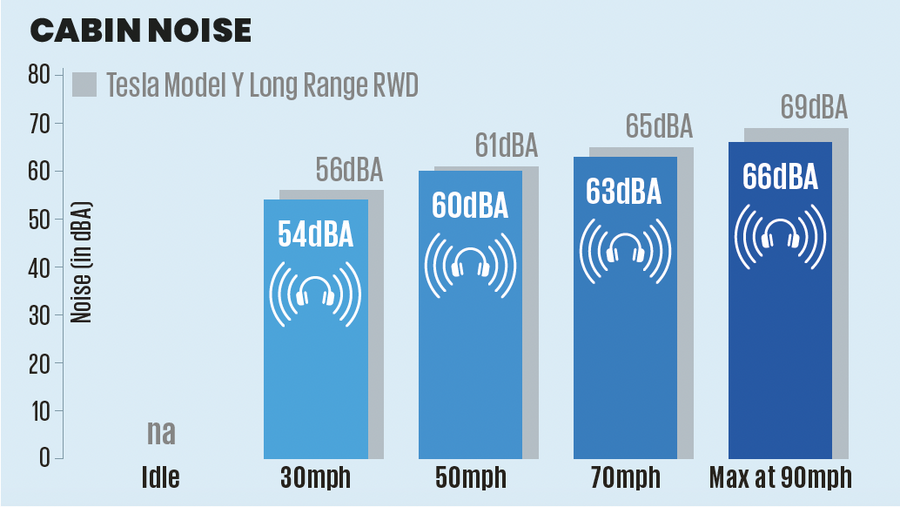
We have driven the 4 on all three wheel sizes, and the SEA platform’s habit of thumping or shivering over sharp inputs is exacerbated as the diameter grows. Given the 4’s limited appeal as a driver’s car, most people will be best served by the 20in wheel and the 50-section tyre sidewalls it brings.
This combination is worn by our test car, which in the main rides very nicely. The softness that makes the handling a little underwhelming on a B-road translates to an indulgent primary ride quality when you just want to waft in comfort. Along with those excellent seats, it means the Polestar 4 is a fine motorway cruiser - among the very best in the class.
Polestar 4 news
Polestar design chief: 'I don’t want revolution - I want evolution'
Polestar design chief: 'I don’t want revolution - I want evolution'
The trait is underscored by our recorded 63dBA of cabin noise at 70mph – 2dBA quieter than the Tesla Model Y, and a match for the sturdier-feeling Porsche Macan Electric. At speed and away from more threadbare surfaces, it is a pleasure to while away the miles in the Polestar.
NOISE
Model tested:
Polestar 4 Long Range Single Motor
Price:
£60,000
Price as tested:
£64,500
Model tested
Polestar 4 Long Range Single Motor
Price
£60,000
Price as tested
£64,500
View all specs
Cabin noise - idle
na
Cabin noise - 30mph
54dbA
Cabin noise - 50mph
60dbA
Cabin noise - 70mph
63dbA
Cabin noise - max revs in 4th gear
66dbA (max power at 90mph)
Cabin noise - idle
na
Cabin noise - 30mph
54dbA
Cabin noise - 50mph
60dbA
Cabin noise - 70mph
63dbA
Cabin noise - max revs in 4th gear
66dbA (max power at 90mph)
Advertisement
MPG & RUNNING COSTS
7
Pros
Loads of equipment
Competitive charging speeds
Cons
Cruising range isn’t that good
Finance deals could be cheaper
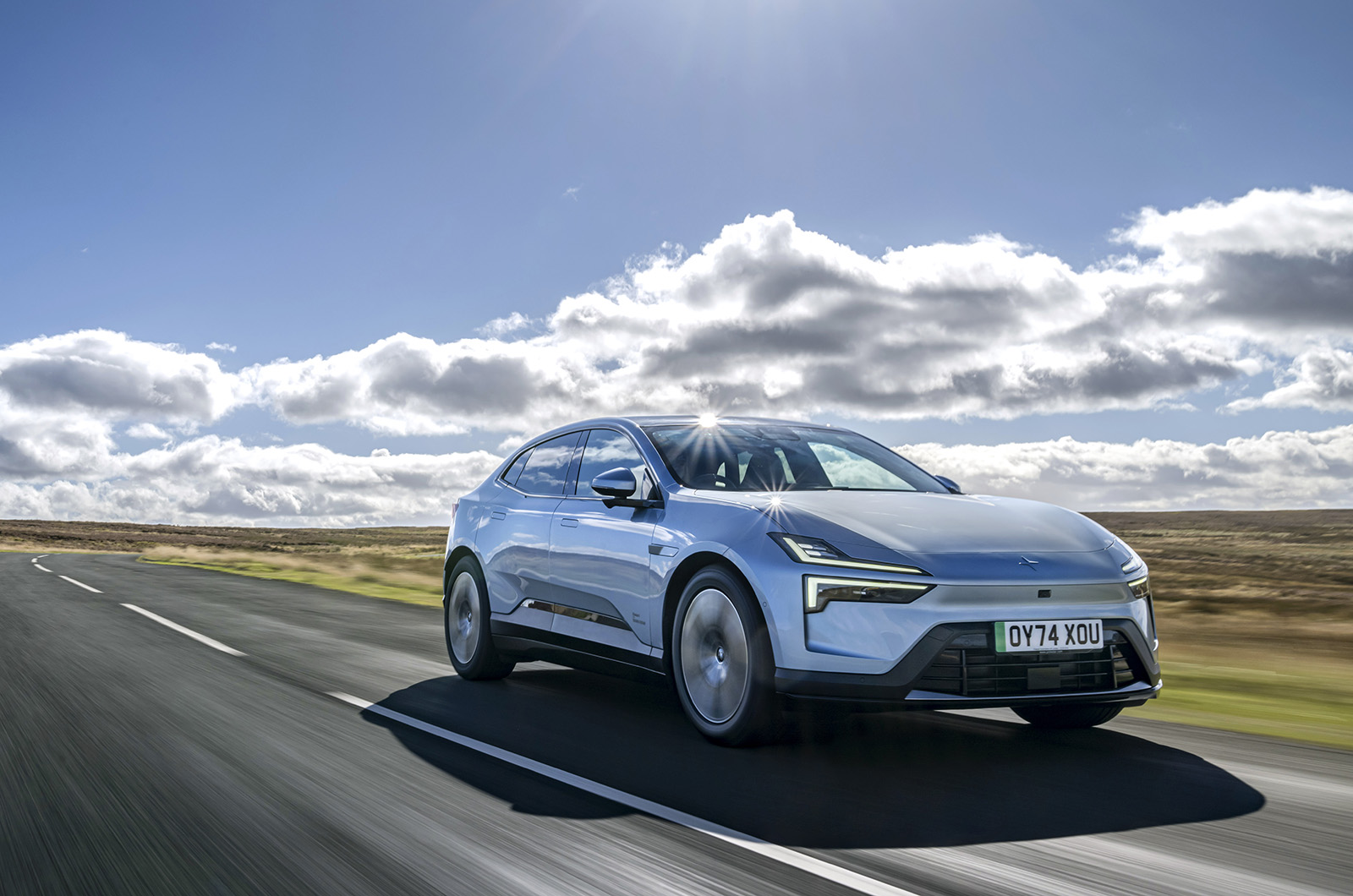
The entry-level Polestar 4 costs £60,000, but that is likely to increase with either £900 worth of Mist Tailored Knit upholstery or the £3100 Bridge of Weir leather. At least the Plus Pack is standard, with the Harman Kardon sound system, pixel-LED adaptive headlights and higher, 22kW AC charging rate, plus power-adjusting rear seats and other amenities.
The Polestar undercuts the £68,500 Macan Electric, then, but it can’t match the German car’s handling, performance or perceived quality. The entry-level Audi Q6 E-tron, starting at £60,515 in entry-level Sport guise, is perhaps a closer match, and we can see why somebody might elect for the Polestar’s style and ambience over the Q6’s better low-speed ride.
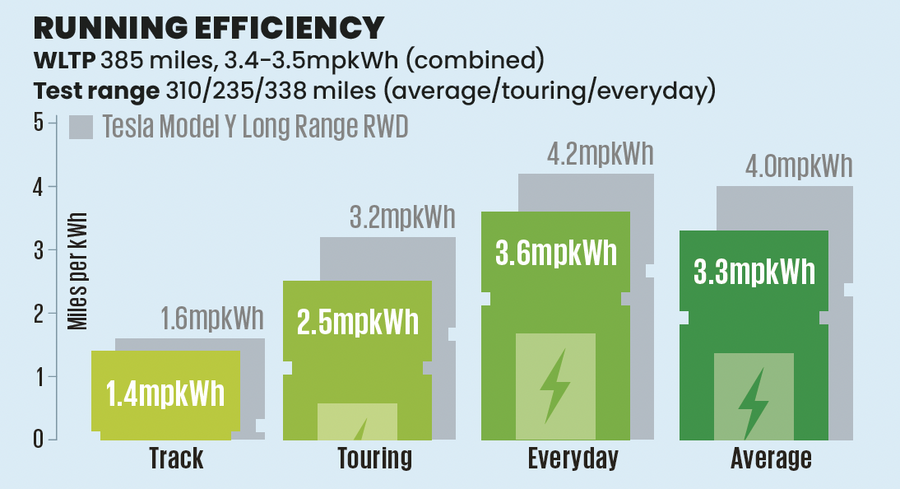
In terms of efficiency, damp weather during the 4’s test wouldn’t have helped, and a touring economy of 2.5mpkWh (versus 3.0mpkWh and 3.2mpkWh for the entry-level Macan and Model Y respectively) isn’t great. Neither is an ‘everyday’ figure of 3.6mpkWh, but that does yield a reasonable 338-mile range.
In terms of charging speed, the Polestar’s claimed 200kW is still respectable in a fast-improving environment. Between 10% and 90%, our test car’s weighted average of 120kW bettered that of the Tesla, but it conspicuously trailed the Porsche’s 163kW.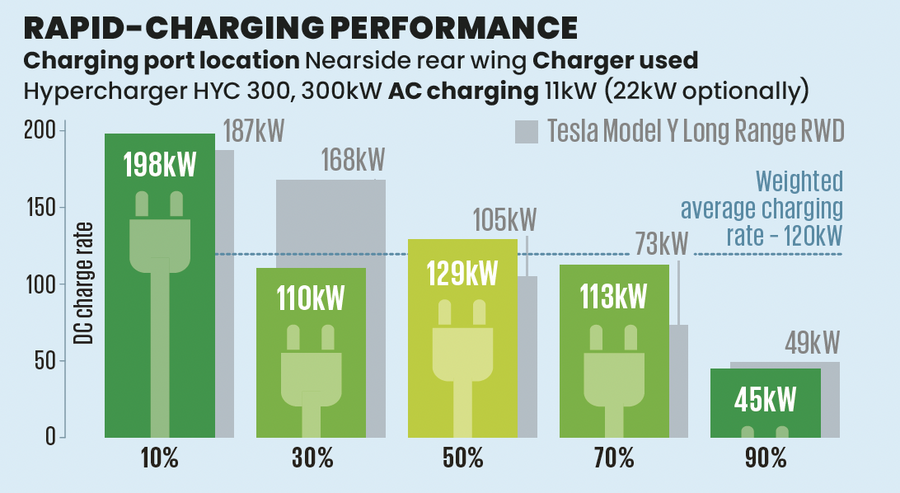
RUNNING COSTS
Model tested:
Polestar 4 Long Range Single Motor
Price:
£60,000
Price as tested:
£64,500
Model tested
Polestar 4 Long Range Single Motor
Price
£60,000
Price as tested
£64,500
View all specs
Claimed fuel economy
3.4-3.5mpkWh
Test fuel economy - track
1.4mpkWh
Test fuel economy - 70mph touring
2.5mpkWh
Test fuel economy - average
3.3mpkWh
Fuel tank capacity / Battery capacity
100/94kWh (nominal/usable)
Claimed range (EV only)
385 miles
Test range
310-/235-/338 miles (test ave/touring/everyday)
Typical BIK cost at 20% income tax
£30
Typical BIK cost at 40% income tax
£60
Typical monthly PCP quote
£603 (£10,900 deposit; 36 months, 18,000 miles)
Claimed fuel economy
3.4-3.5mpkWh
Test fuel economy - track
1.4mpkWh
Test fuel economy - 70mph touring
2.5mpkWh
Test fuel economy - average
3.3mpkWh
Fuel tank capacity / Battery capacity
100/94kWh (nominal/usable)
Claimed range (EV only)
385 miles
Test range
310-/235-/338 miles (test ave/touring/everyday)
Typical BIK cost at 20% income tax
£30
Typical BIK cost at 40% income tax
£60
Typical monthly PCP quote
£603 (£10,900 deposit; 36 months, 18,000 miles)
Advertisement
VERDICT
6
Verdict
Model tested:
Rating: 6
Polestar 4
Desirable but something of a missed opportunity
Good
Certainly looks distinctive
Big battery and strongish electric range
Competitive price once you factor in options
Bad
Ride and refinement could be better
Digital rearview solution has pros and cons
Multimedia isn't the most intuitive
Screenless design concept doesn't actually deliver much
It’s not difficult to see why somebody might be drawn to the Polestar 4. It is instantly recognisable as a car at the premium end of the class, and it is competitive enough in terms of range, charging speed and practicality. It is also, in its own quiet way, satisfying to drive during everyday tasks and has a memorable cabin ambience in the front.
The reason it doesn’t score more highly here is partly down to its positioning. At £60,000 it is in the conversation with the Porsche Macan, whose driver appeal it can’t touch, and the Audi Q6, whose all-round refinement it struggles to match, particularly at low speeds. The Polestar’s case is not helped by the fact that the Tesla Model Y, which matches it closely on paper, costs a lot less. The lack of rear windscreen and an over-reliance on digital controls cements its modest score.
TECHNICAL SPECS
Model tested:
Polestar 4 Long Range Single Motor
Price:
£60,000
Price as tested:
£64,500
Electric motor/s:
1 x AC permanent magnet synchronous motor; rear-mounted
Drive battery:
Nickel manganese cobalt
Driveline layout:
Rear/transverse; rear-wheel drive
Model tested
Polestar 4 Long Range Single Motor
Price
£60,000
Price as tested
£64,500
View all specs and rivals
Electric motor/s
1 x AC permanent magnet synchronous motor; rear-mounted
Drive battery
Nickel manganese cobalt
Driveline layout
Rear/transverse; rear-wheel drive
Power
268bhp
Torque
253lb ft
0-62mph
7.1sec
Top speed
124mph
Kerb weight (DIN)
2230kg
Battery size
100/94kWh (total/usable)
Energy efficiency
2.9mpkWh
Range
385 miles
Max. charge rate
200kW
Rivals Tesla Model Y Performance Porsche Macan Electric Audi Q6 E-tron
Power
268bhp
Torque
253lb ft
0-62mph
7.1sec
Top speed
124mph
Kerb weight (DIN)
2230kg
Battery size
100/94kWh (total/usable)
Energy efficiency
2.9mpkWh
Range
385 miles
Max. charge rate
200kW
Rivals Tesla Model Y Performance Porsche Macan Electric Audi Q6 E-tron
Richard Lane

Title: Deputy road test editor
Follow:


Richard is Autocar's deputy road test editor. He previously worked at Evo magazine. His role involves travelling far and wide to be among the first to drive new cars. That or heading up to Nuneaton, to fix telemetry gear to test cars at MIRA proving ground and see how faithfully they meet their makers' claims.
He's also a feature-writer for the magazine, a columnist, and can be often found on Autocar's YouTube channel.
Highlights at Autocar include a class win while driving a Bowler Defender in the British Cross Country Championship, riding shotgun with a flat-out Walter Röhrl, and setting the magazine's fastest road-test lap-time to date at the wheel of a Ferrari 296 GTB. Nursing a stricken Jeep up 2950ft to the top of a deserted Grossglockner Pass is also in the mix.
Newsletter
Get all the best car news, reviews and opinions direct to your inbox three times a week. You can unsubscribe via any email we send See our full privacy notice for more details
Subscribe
Never miss an issue of the world's oldest car magazine – subscribe to Autocar magazine today.
Subscribe
More from Autocar
Top 10s
- The best SUVs
- The best electric cars
- The best family SUVs
- The best seven-seaters
- The best sports cars
Latest car reviews
Top manufacturers
Quick search
- Autocar's YouTube channel
- My Week in Cars Podcast
- Best cars
- Latest news
- Latest car reviews
We recommend
- Bestselling cars
- Longest-range electric cars
- What is Android Auto?
- What is Apple CarPlay?
- Autocar Archive
Legal bits
About Autocar
- Why you can trust Autocar
- How Autocar tests cars
- Get in touch
- RSS feed
- Sitemap
Autocar is part of Haymarket Media Group, a Certified B Corp™
© Haymarket Media Group 2026
Follow Autocar on our social channels
Login