








From £82,235

Stalwart luxury SUV gets an electric double for its next generation – with an astonishing peak output of 1141bhp

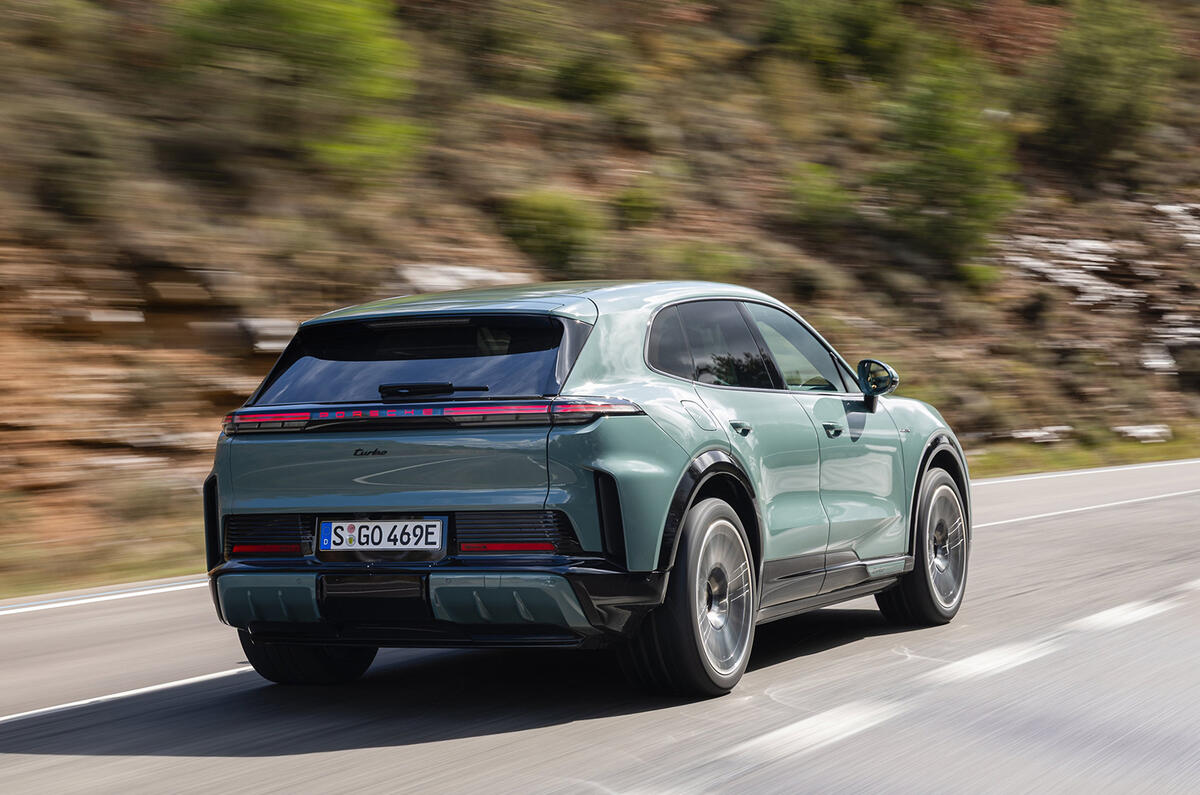
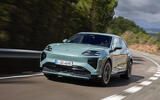
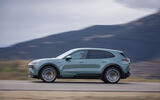
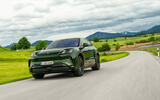
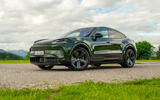
The all-electric, fourth-generation Porsche Cayenne has now landed on UK roads. Before the summer is out, we should have Autocar’s very own set of benchmark measurements and numbers, a full set of impressions, and a definitive UK verdict on what might be Zuffenhausen’s most important and interesting electric model yet.

For now, we’ve tested the Porsche Cayenne Electric on three separate occasions. As a regular SUV, and in both Turbo and base-model powertrain form, on Porsche’s first press launch in Barcelona back in March; subsequently in Cayenne Coupé form, as both Turbo and mid-range Cayenne S, in Munich; and now on British roads, in right-hand drive, range-topping Turbo Electric form.

The new electric version becomes the fourth Cayenne model generation in a near-25-year history. Back in 2002, the car arrived on a tsunami of scepticism from enthusiasts arguing that the sports SUV ‘wasn’t even a thing’; and who would want that swollen SUV-that-swallowed-a-911 abomination anyway?

Well, lots of people wanted it: more than 1.5 million people since then, in fact. The Cayenne has been one of the biggest sellers and biggest profit-makers for Porsche, and we have long passed the point where anybody questions the validity and demand for performance SUVs.

And yet still, the Cayenne is a magnet for controversy. It is not only battery-bowered but it's also - in Turbo derivative form - the most powerful series-production Porsche there has ever been. It makes 1140bhp and 1106lb ft of torque. Yes, you read that right.

Put it in launch control and this 2.6-tonne luxury electric family conveyance will give everything it’s got, in order to do 0-62mph in 2.5sec. Mind you, in default Normal mode it musters a mere 845bhp; in Sport Plus, some 1019bhp.

Advertisement
Back to top

Even if you're modest enough to go for the entry-level Cayenne Electric, you’re still getting 436bhp and 616lb ft. Remember when even those numbers would have been shocking?

Here we are again, then, with Porsche’s halo SUV getting lips flapping left, right and centre. Read on to find out whether the regular body, or the Coupe, might suit you better; whether you're a Cayenne Electric type of person at all; and, assuming you are, which model would likely convince you to say 'when' (or possibly even 'enough already', or 'STOP!')

DESIGN & STYLING

331402 6000x4000

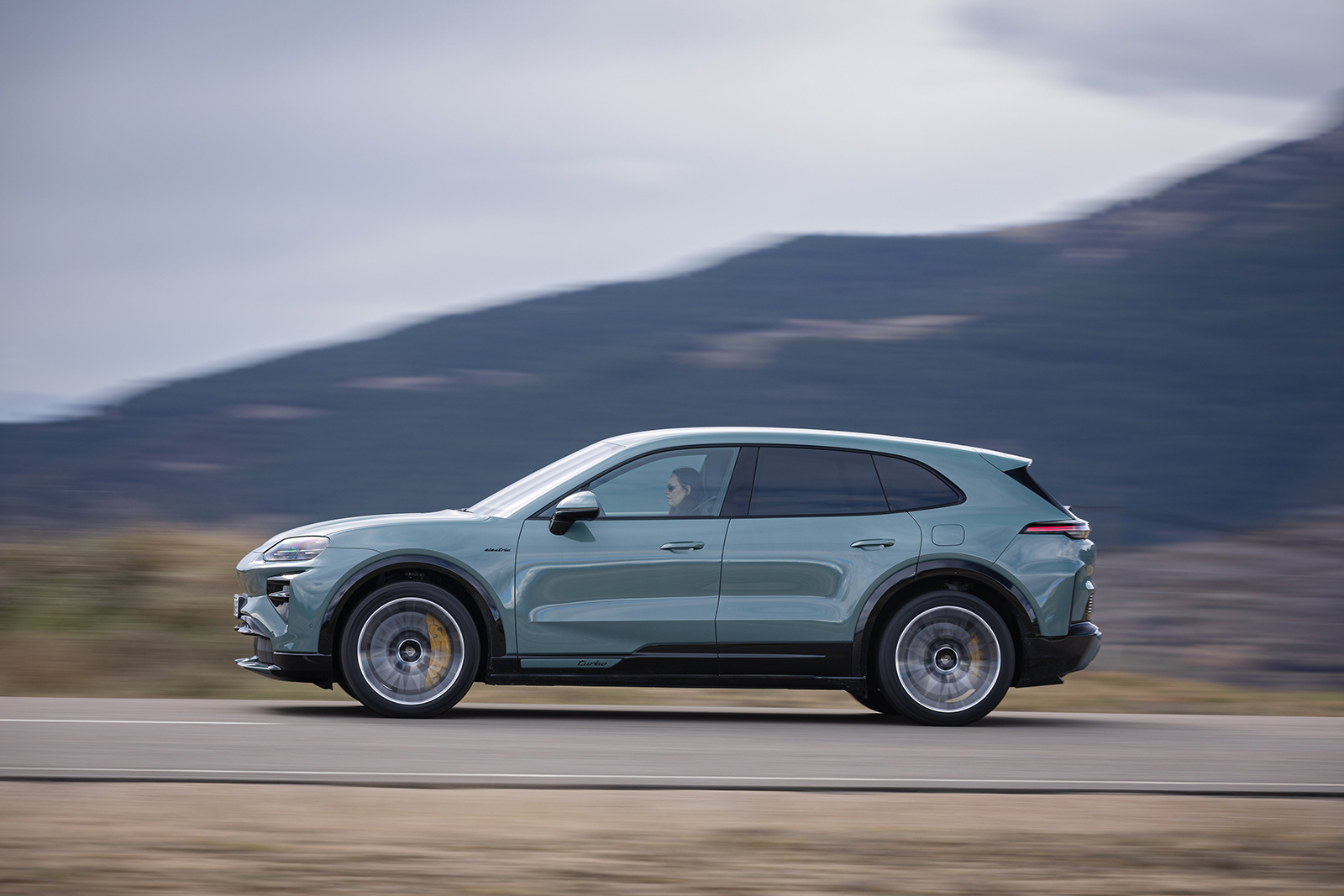
There are probably two reasons why Porsche saw fit to tear through the thousand-horsepower barrier with the range-topping version of the Porsche Cayenne Electric: the Turbo. 

Firstly - as obvious as it may sound - because it could. It’s a flex; a demonstration of its commitment and engineering might. The luxury EV market is tough enough, afterall, without making space for cars that don’t come to the table with every selling point they can muster. Maybe Zuffenhausen decided it simply couldn’t leave anything to chance.

Or maybe - and perhaps this is the cynic in us talking - it’s compensating. Porsche’s providing one transformative, industrial-strength reason for people to open their wallets where, in piston-engined Cayennes previous, there were many. It’s using a key four-figure number, and a 2.5sec 0-62mph claim, to chivvy away at the agnostic, ambivalent and unconvinced.

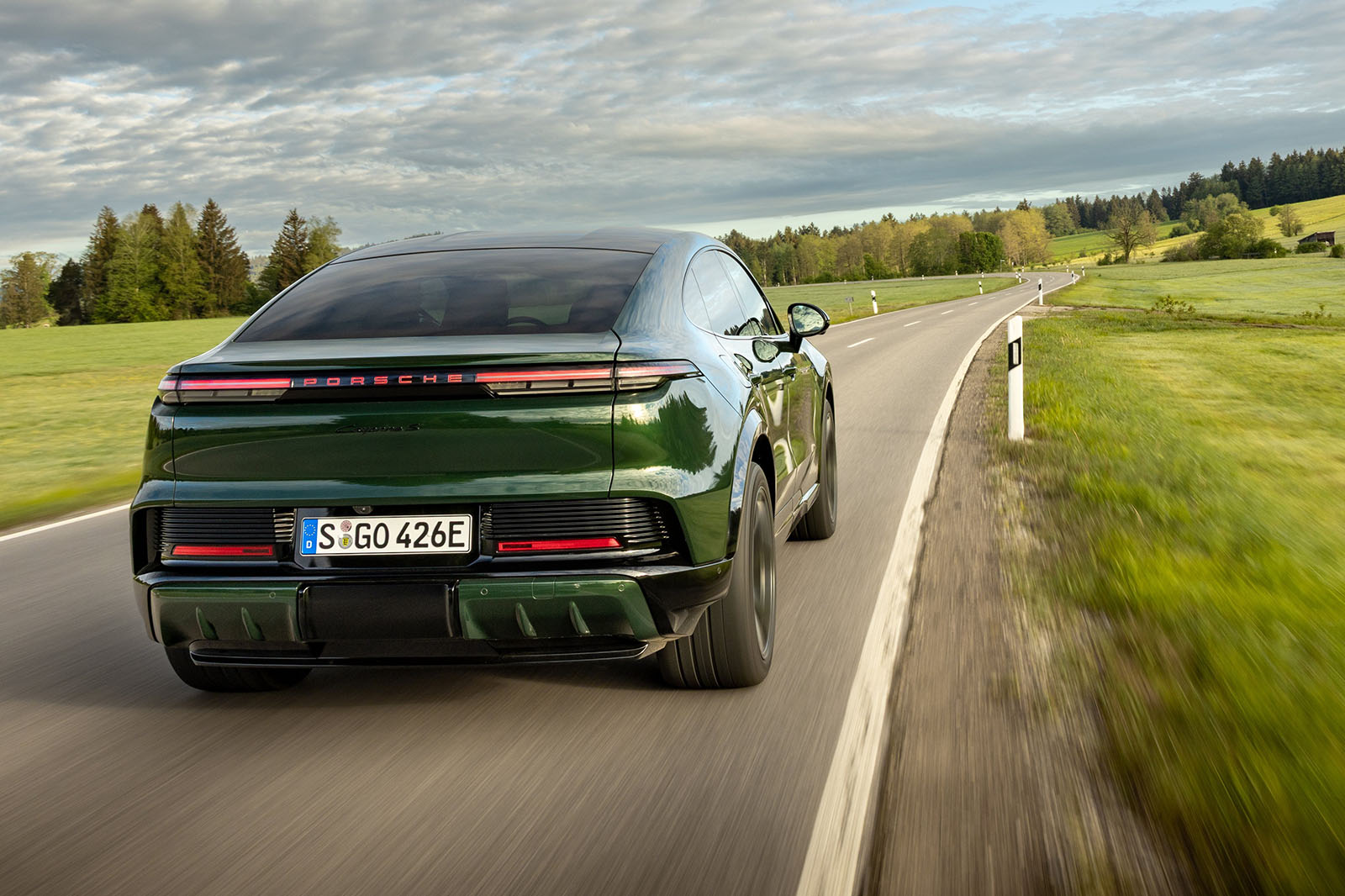
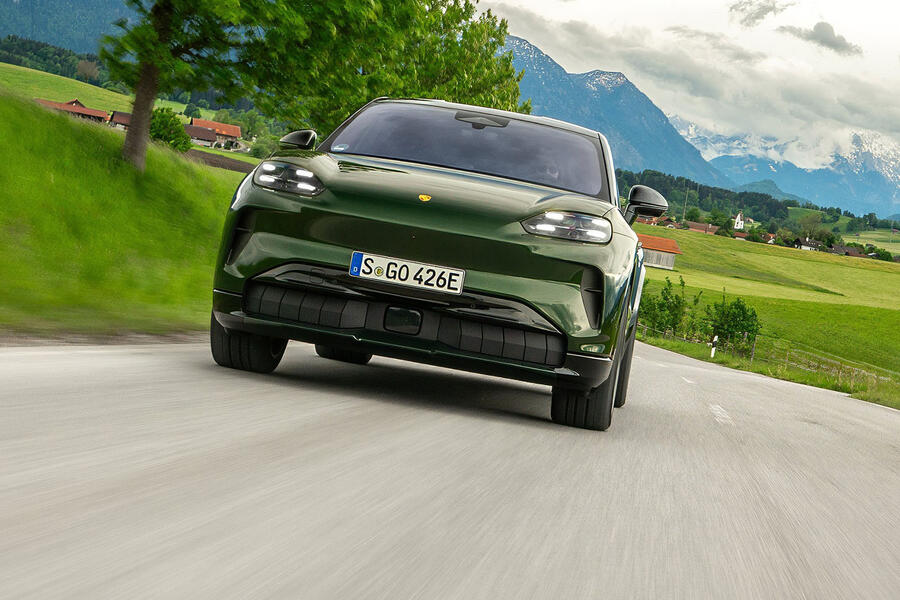
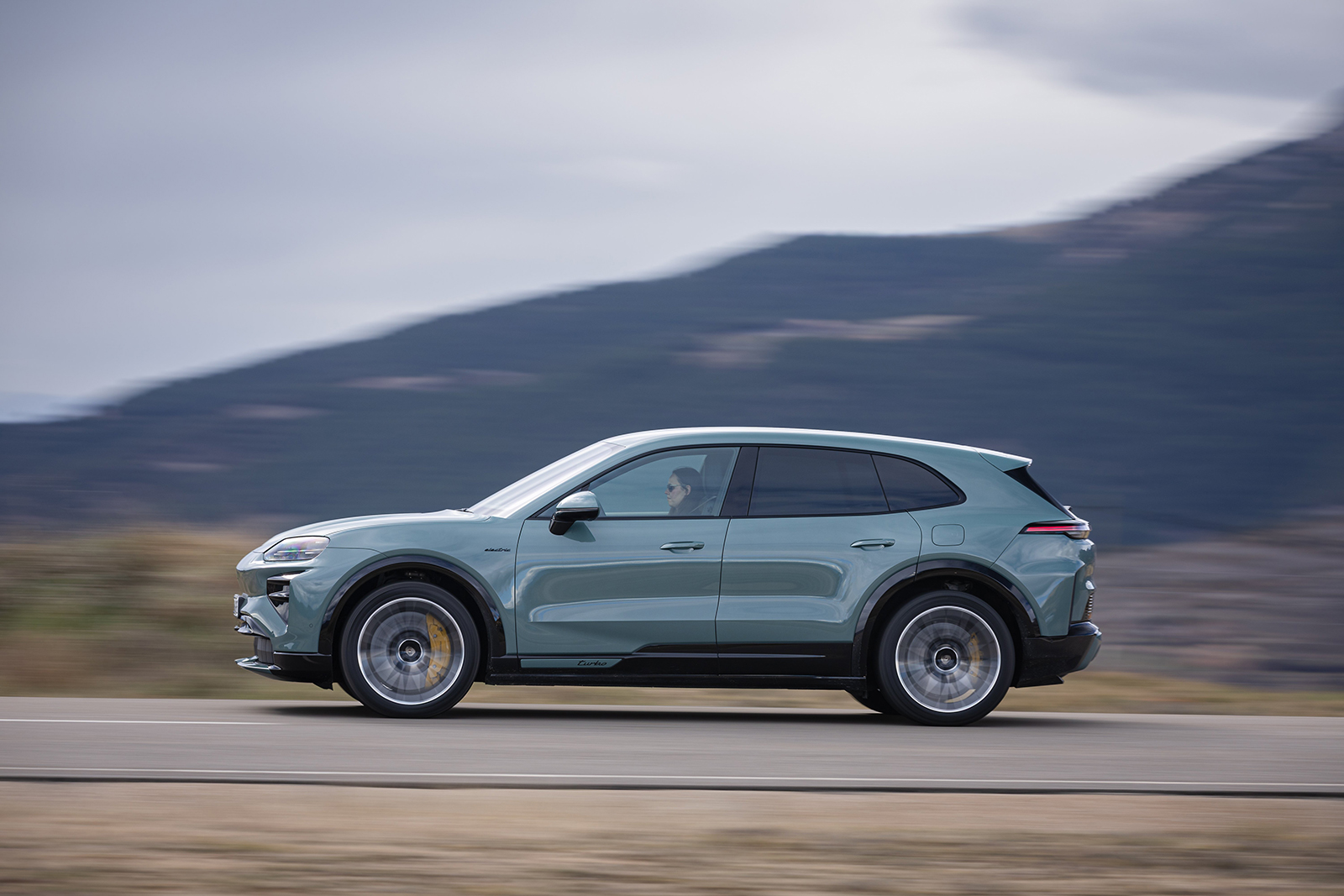
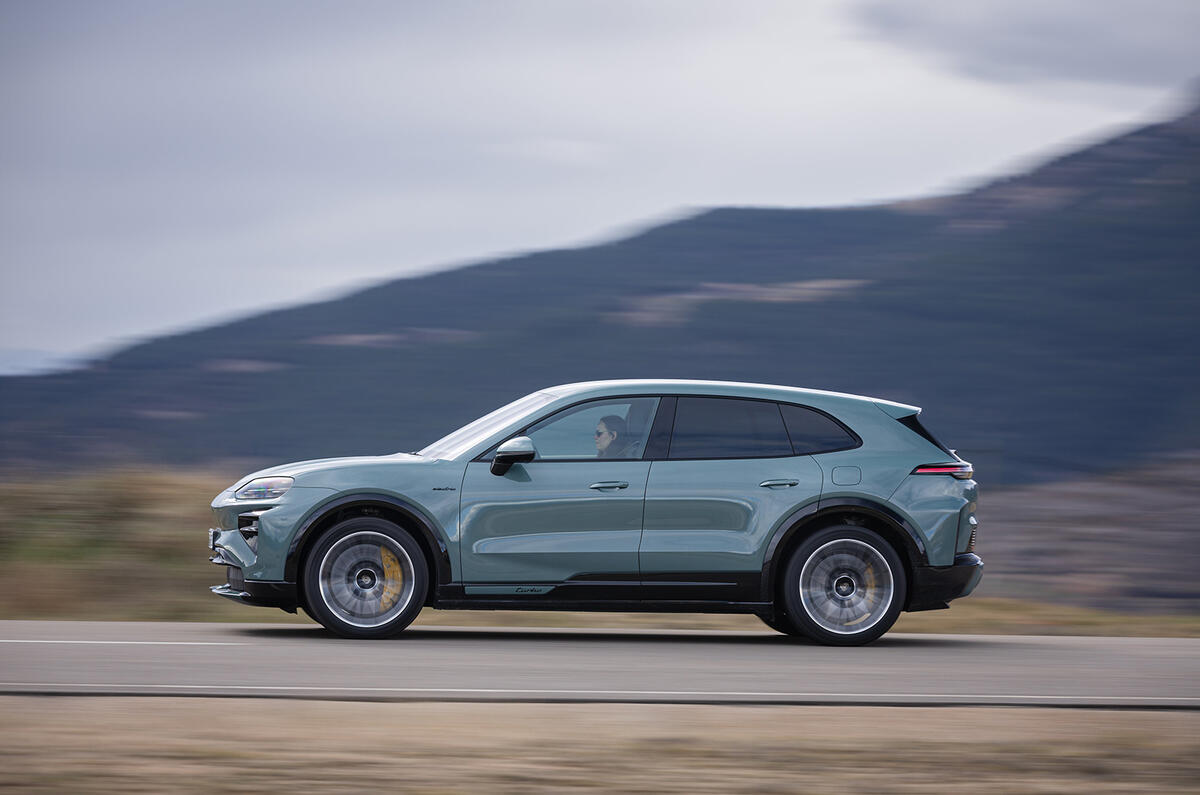
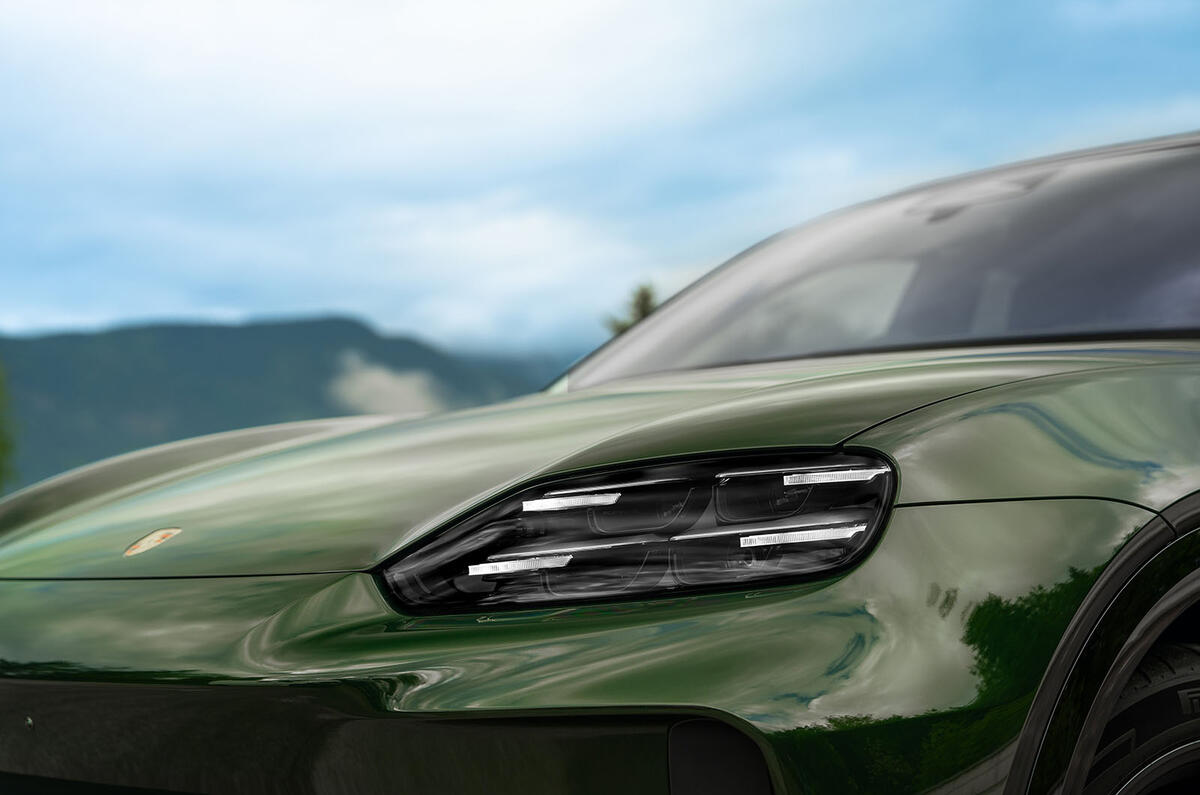
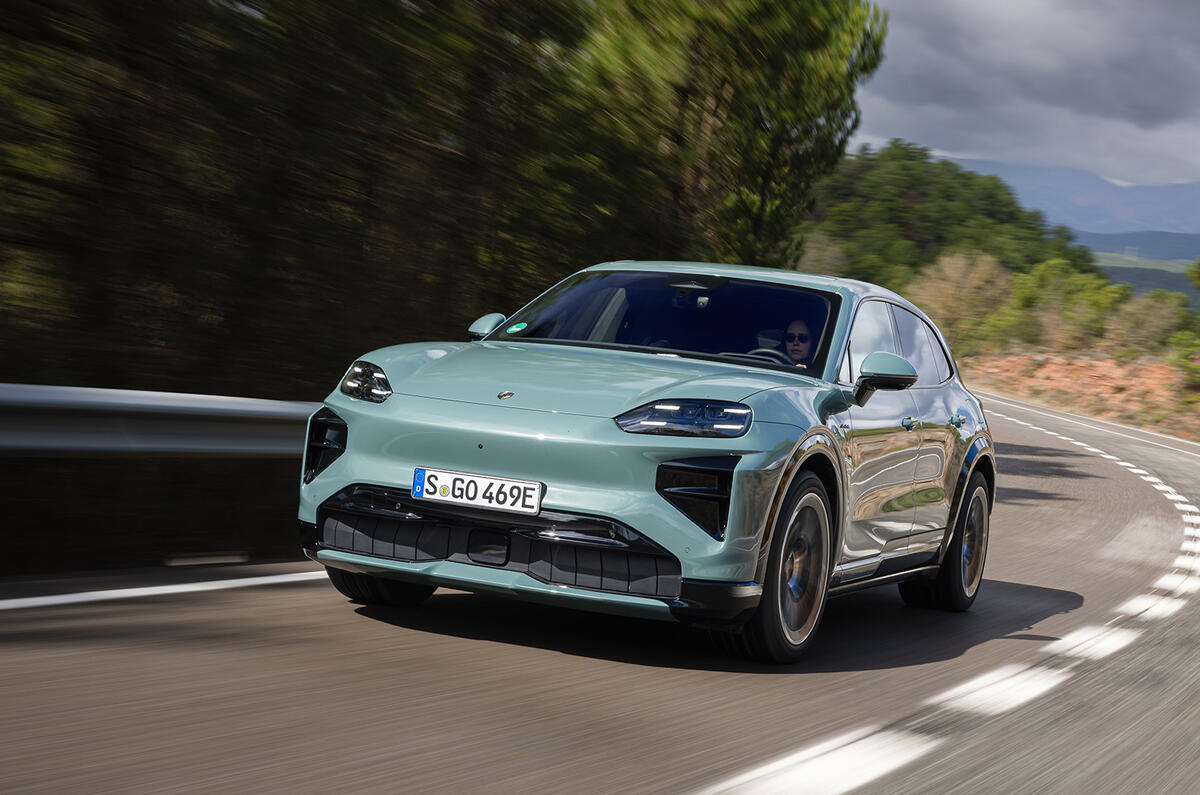
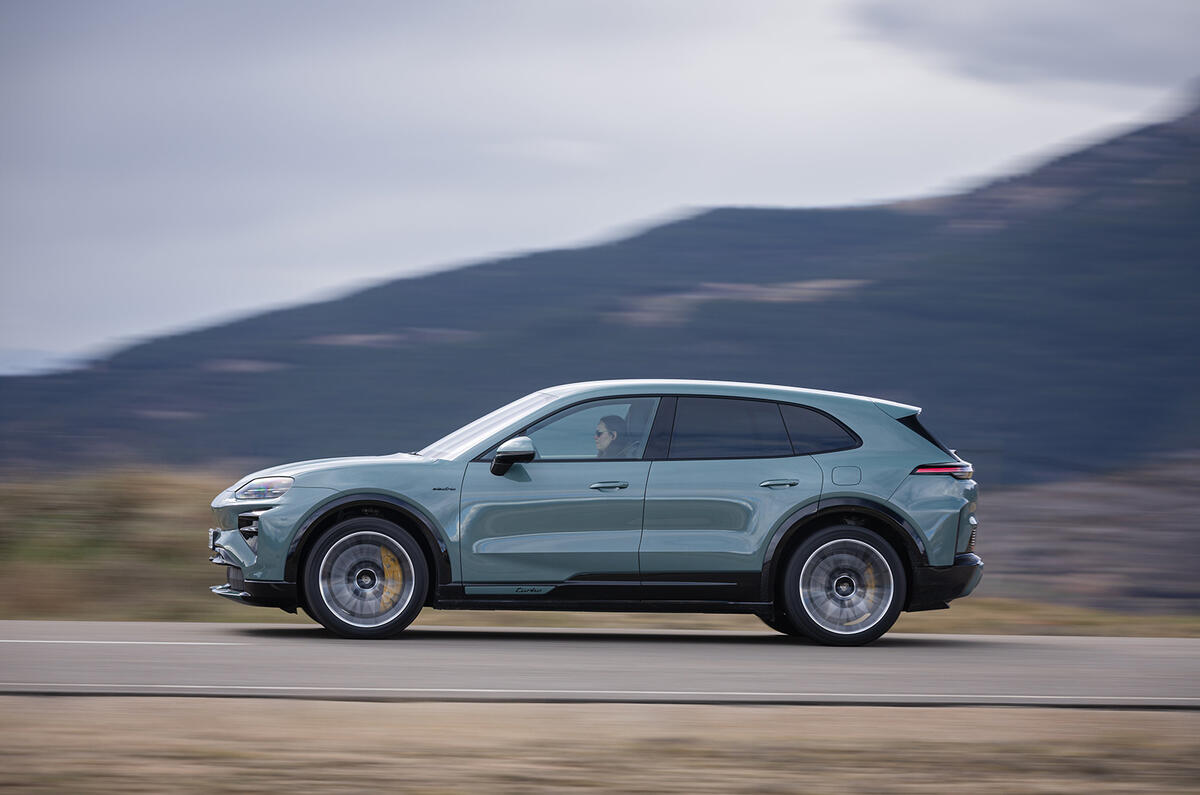
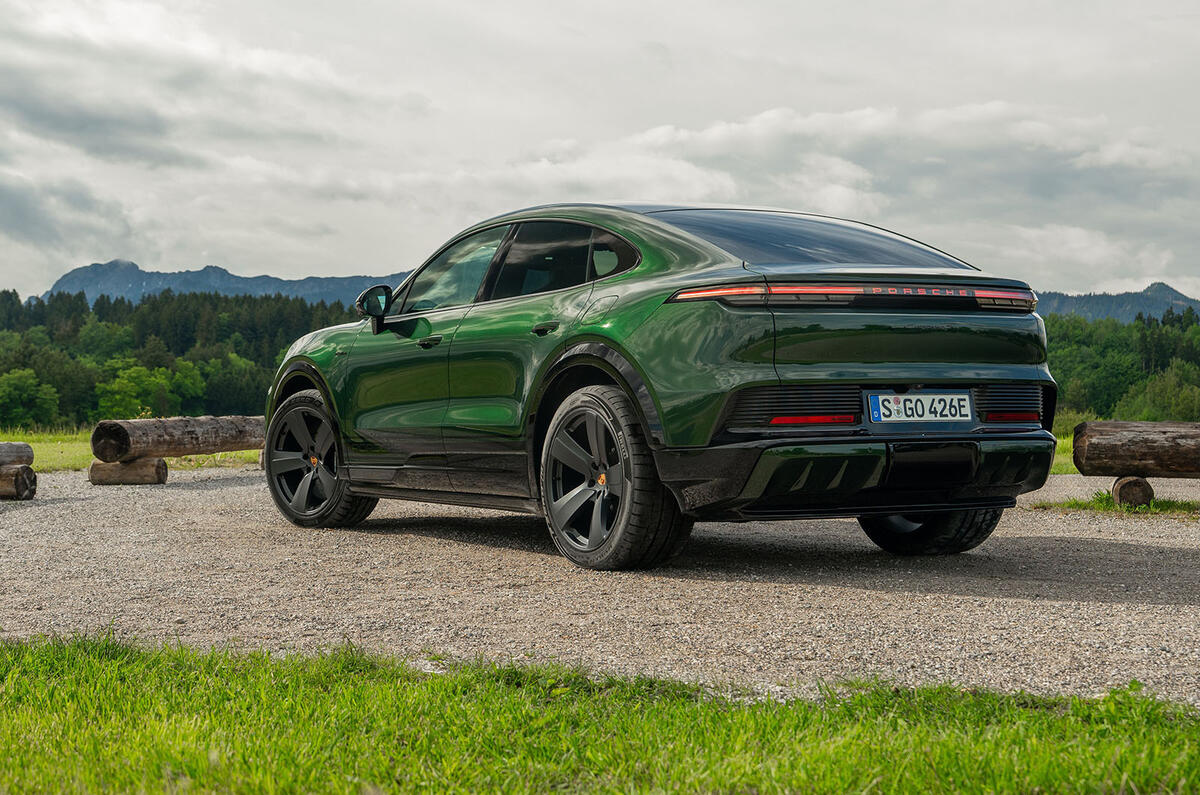
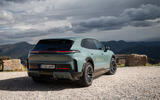
Whatever explains the headline-making power output, this formatively antagonistic fast SUV certainly isn’t a good-looking car. Never has been; probably never should be. Because up yours, it’s a Cayenne.

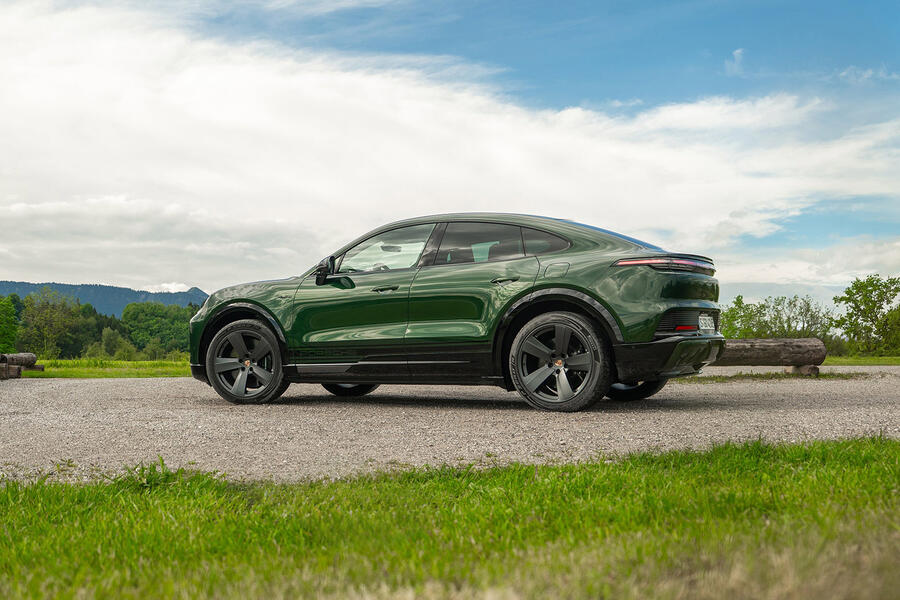
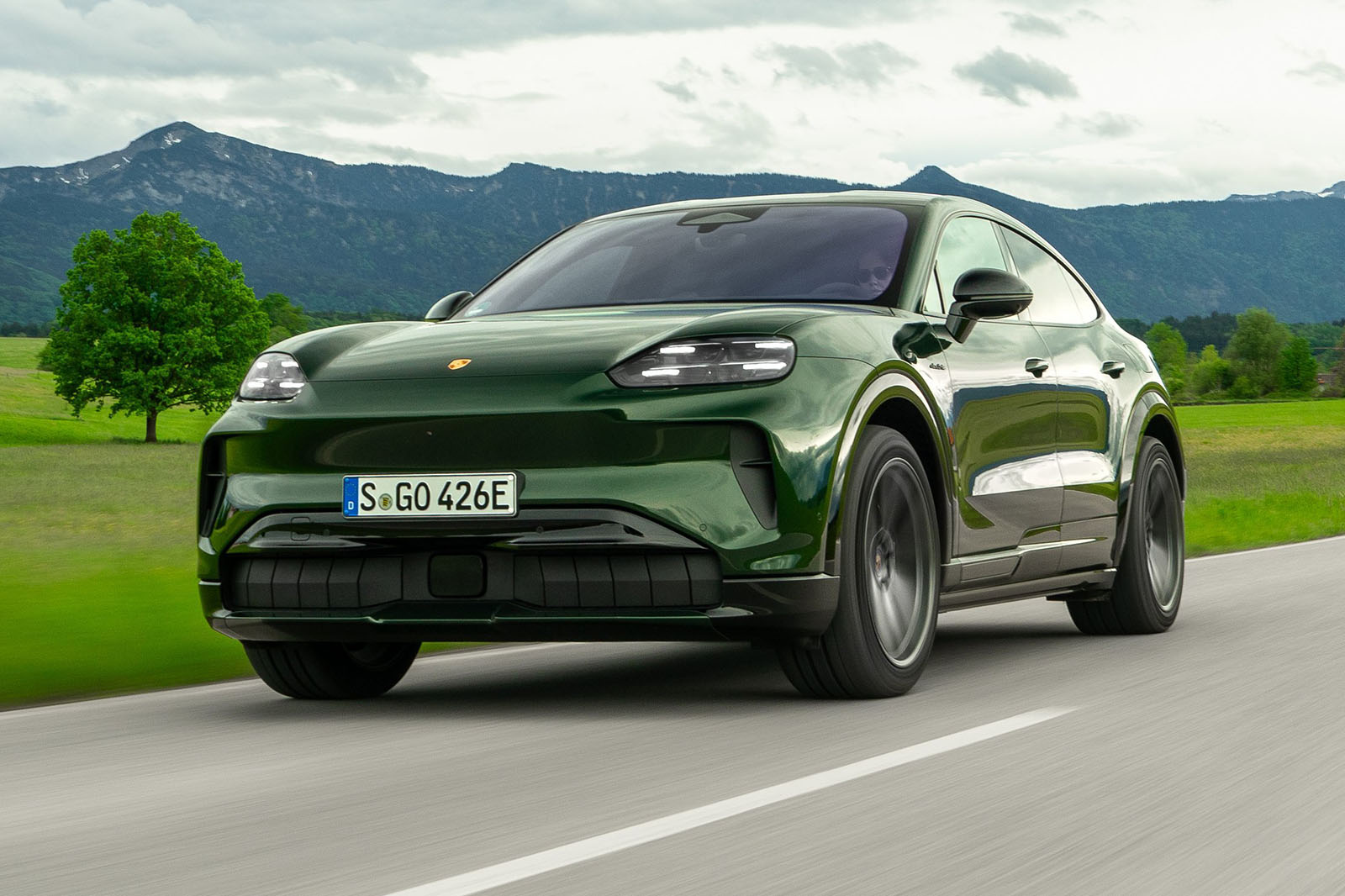
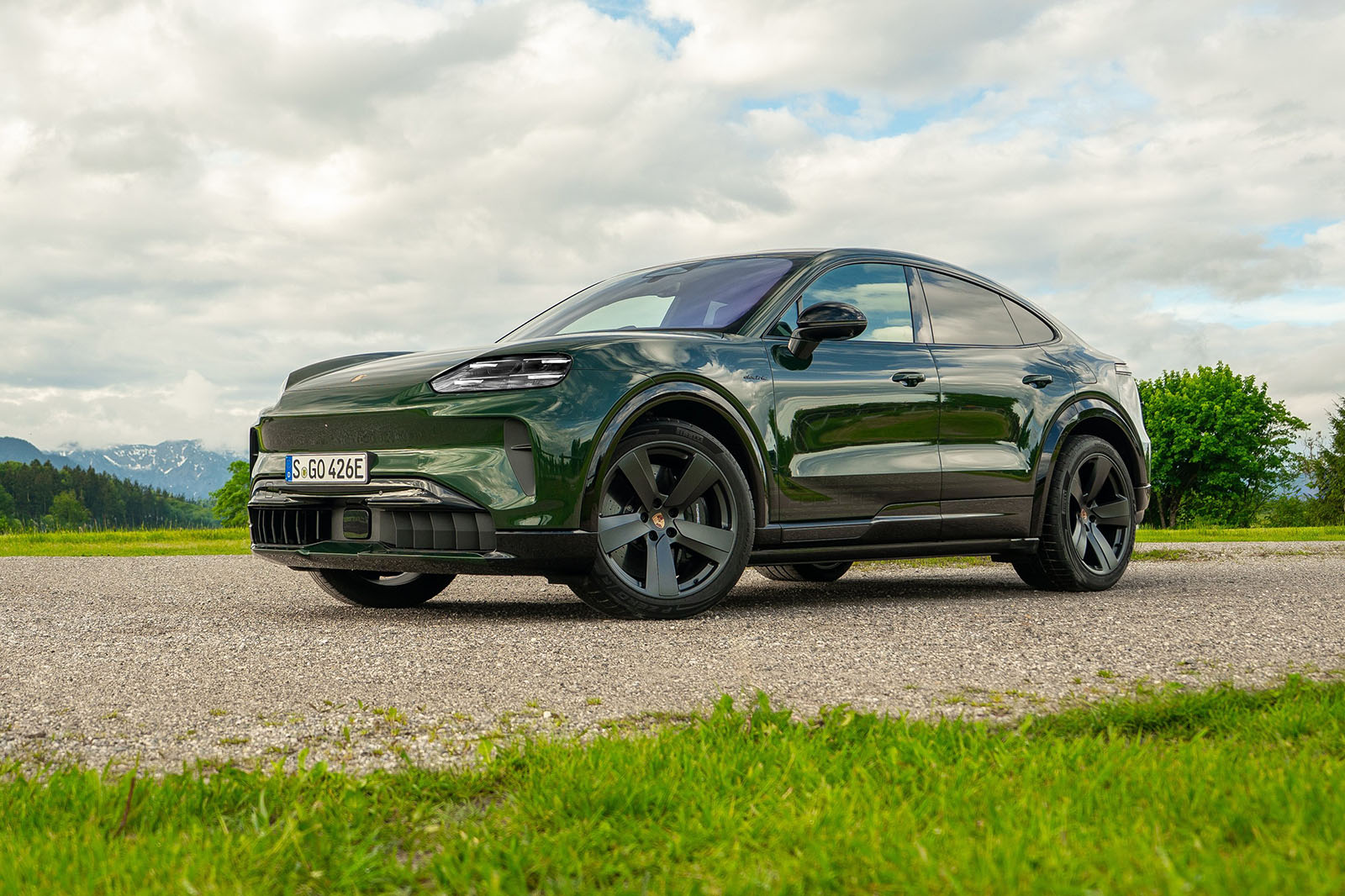
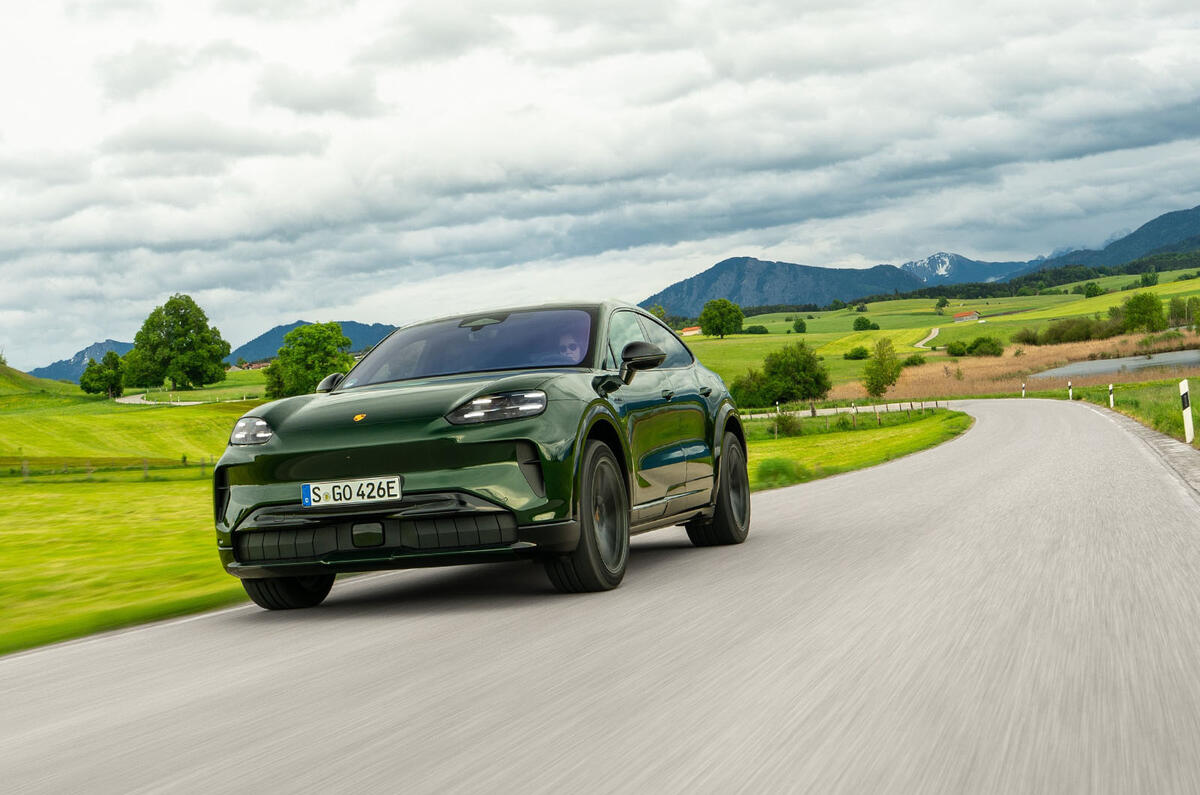
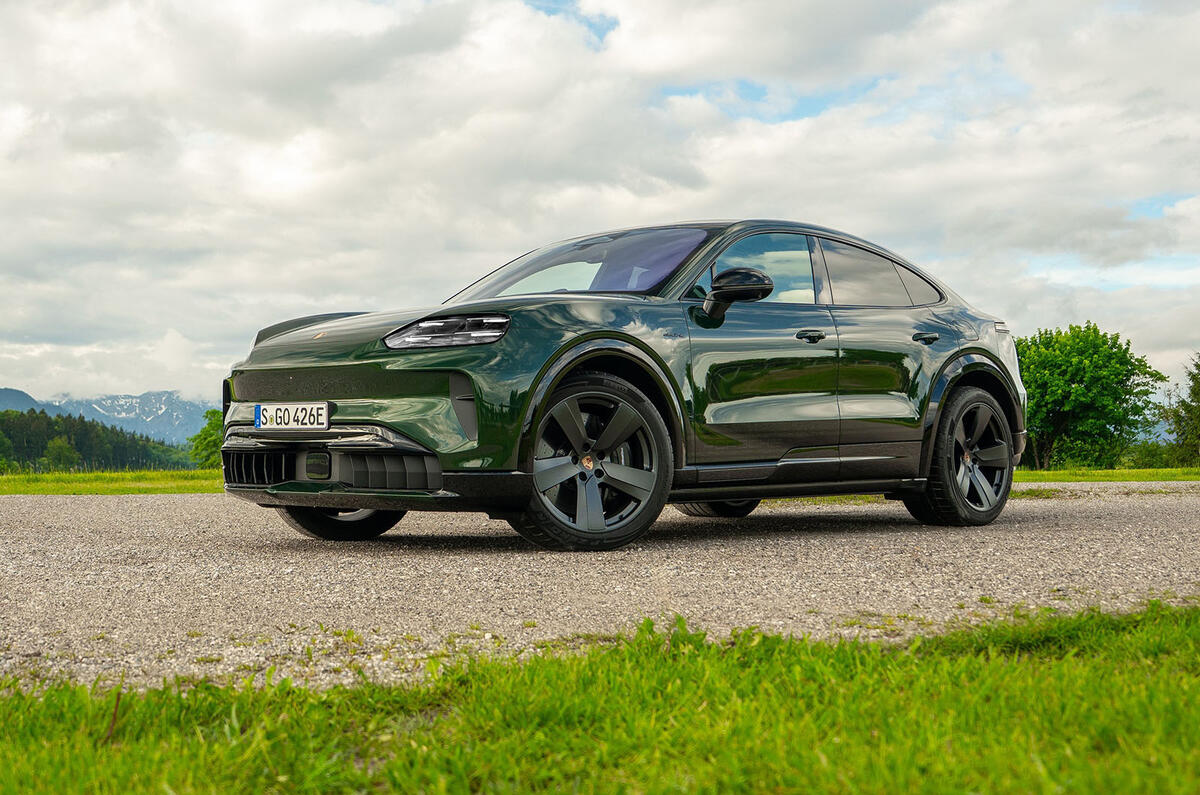
Perhaps that’s why the more curvaceous Cayenne Coupe version exists, as an alternative to the regular SUV bodystyle. It has done since the third-generation Cayenne came along, and has accounted for roughly a third of global Cayenne sales since.

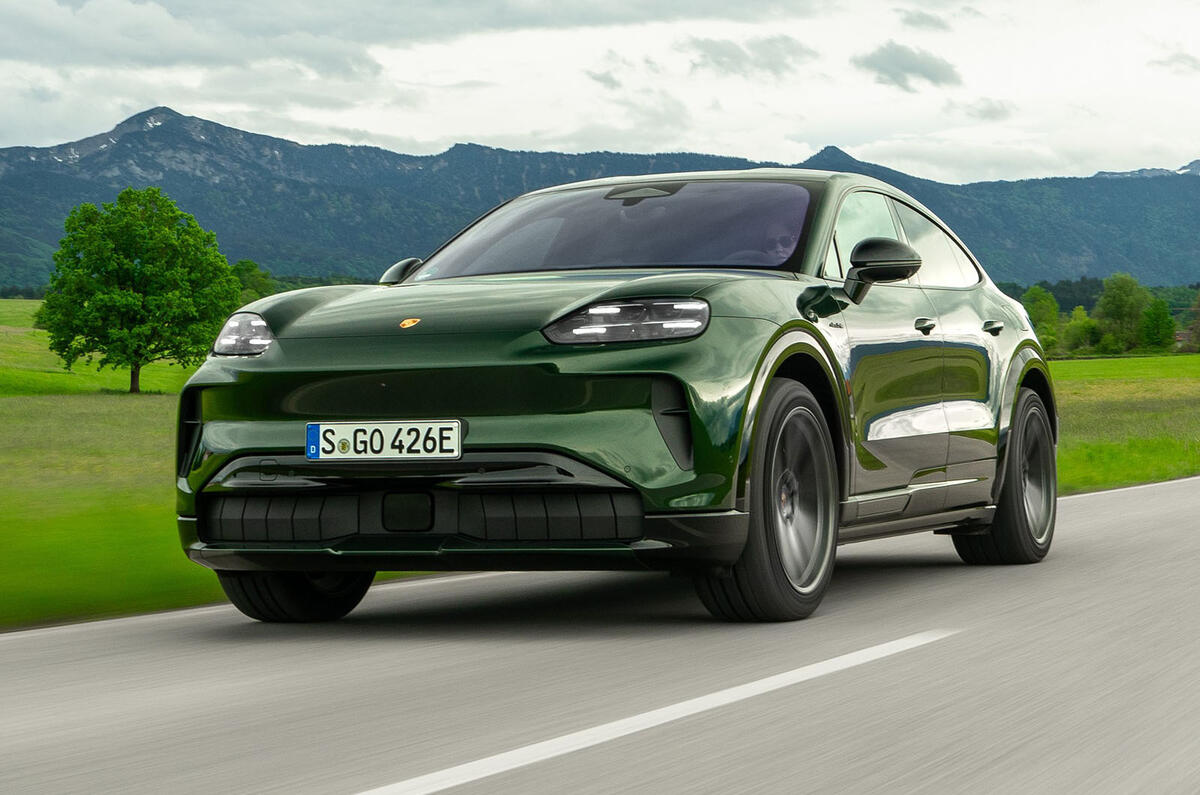
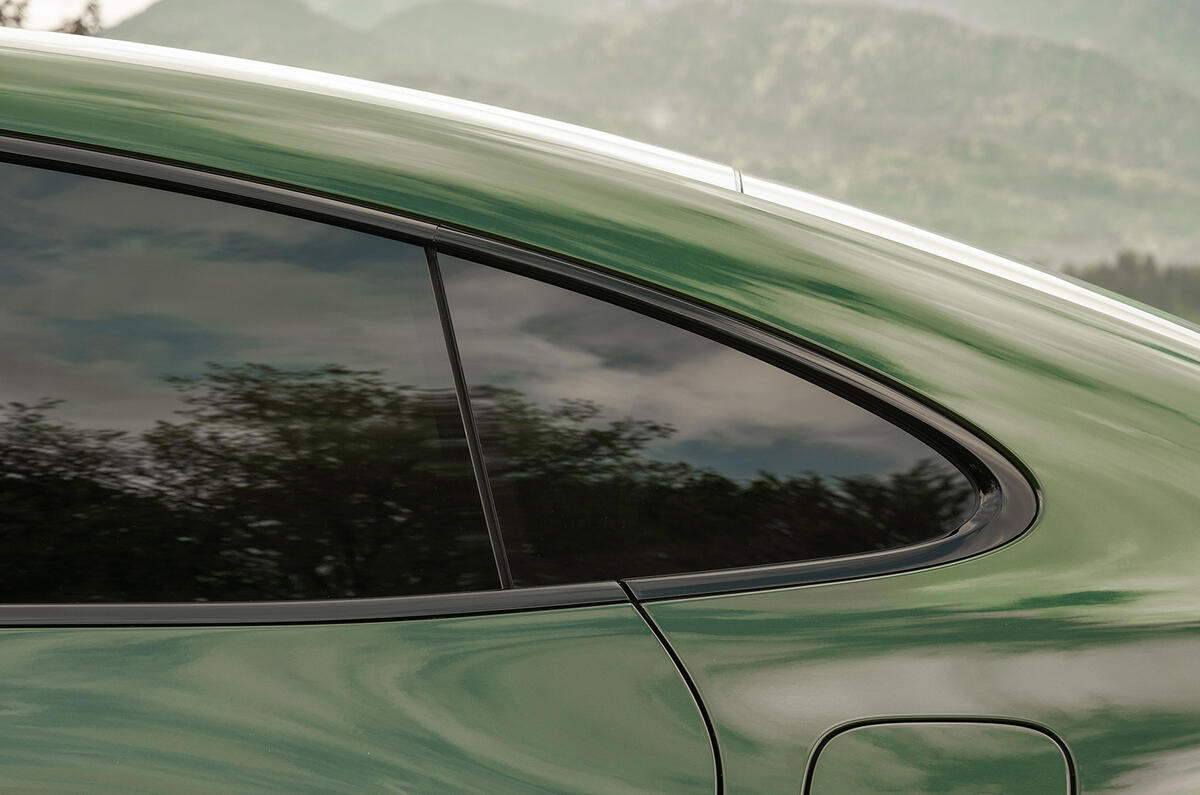
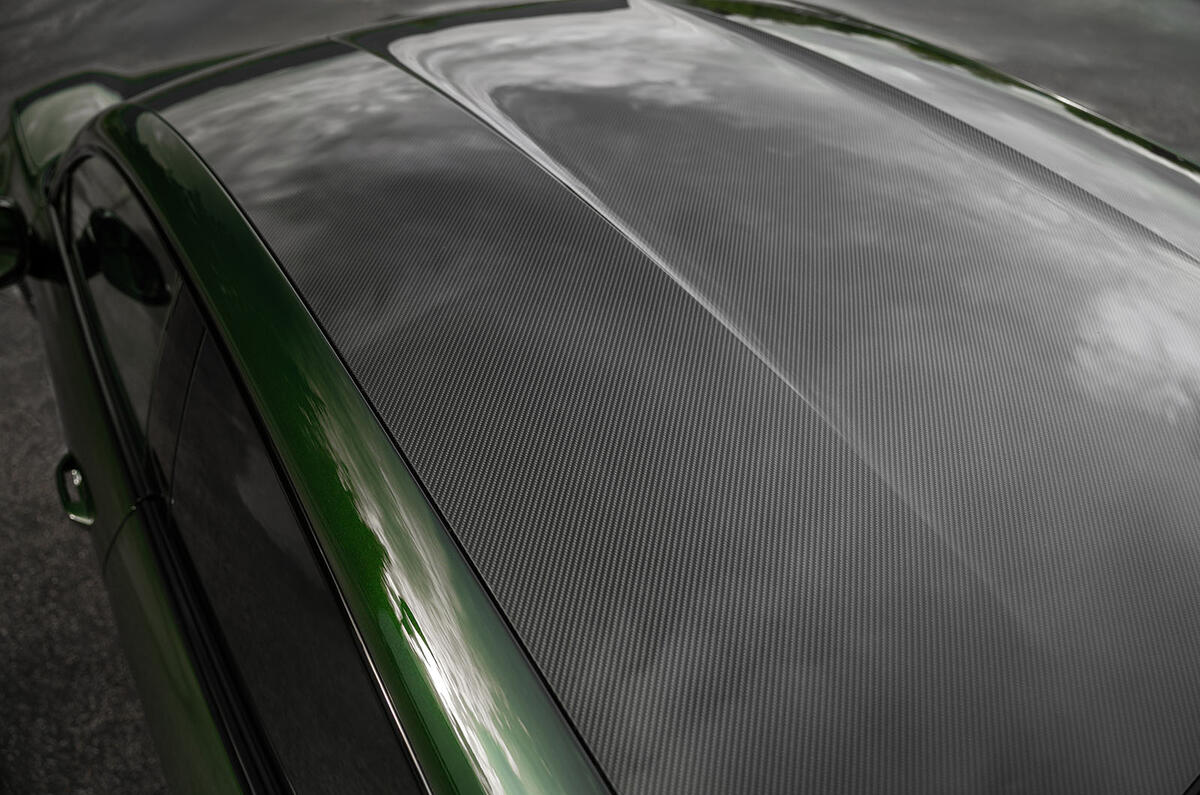
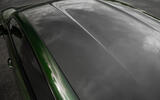
The Cayenne Coupe Electric gets an better-distinguished body than the equivalent ICE Cayenne, though, thanks to a more raked windscreen angle, and a roofline that extends some 24mm lower than that of a regular Cayenne Electric. Unlike the regular Cayenne Electric SUV, the Coupe also gets a panoramic glass roof as standard; and a carbonfibre one, if you want it, as part of a special Lightweight Sport package. On the inside, it can be had as either a four- or five seater.

But mechanically, the Coupe is entirely undistinguished from the ‘normal’ Cayenne Electric - which means you can choose from a 436bhp base model, 657bhp S- or an 1141bhp Turbo-. All have twin-motor powertrains, though the motors are differently geared as well as differently powered. All share the same 800v architecture and 108kWh drive battery.

The S is the sort of ‘Turbo light’ version, if you like (just as is the case of the Macan 4S vs the Turbo in that model lineup). Like the Turbo, it can be had with a torque-vectoring differential between its rear wheels (standard on a Turbo, optional on an S, unavailable on the base model). Just as on the Turbo, Porsche Active Ride active hydraulic suspension and four-wheel steering are options. All that’s missing, you might say, is the big cheese’s monumental power. Which, if you’re willing to be at least a little bit grown up about your choices, isn’t really that much to miss.

The Cayenne Electric is based on the same platform as the Audi Q6 E-tron, but its battery gets new nickel-manganese-cobalt cell chemistry for better energy density. A maximum charging rate of 400kW means you can have a 10-80% charge in 26 minutes; or a 100-mile top-up will take as little as five minutes.

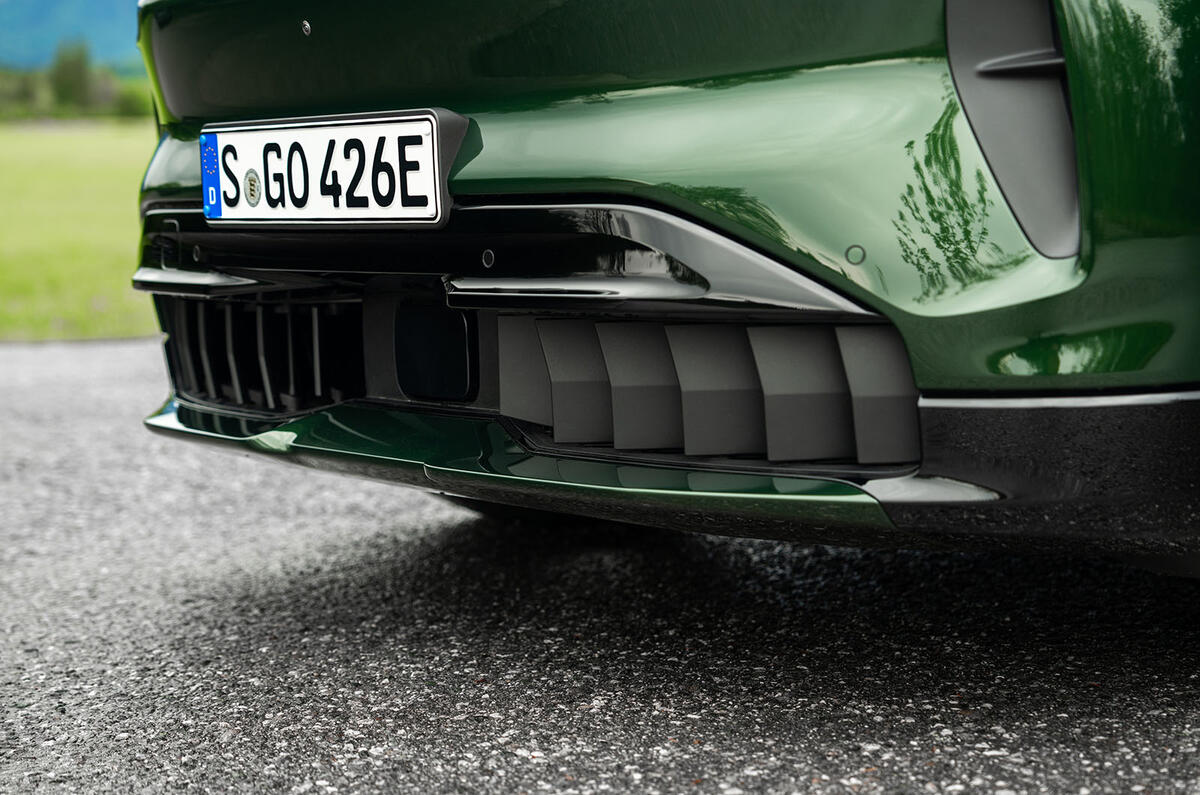
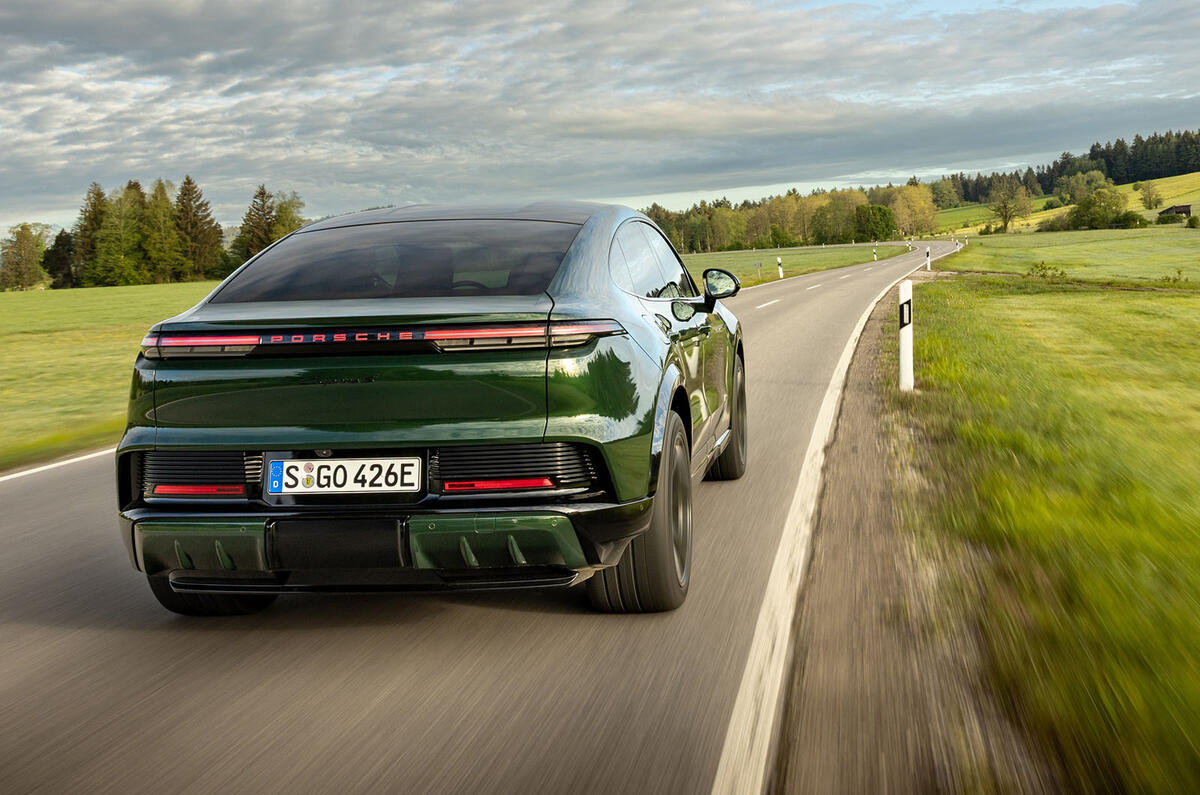
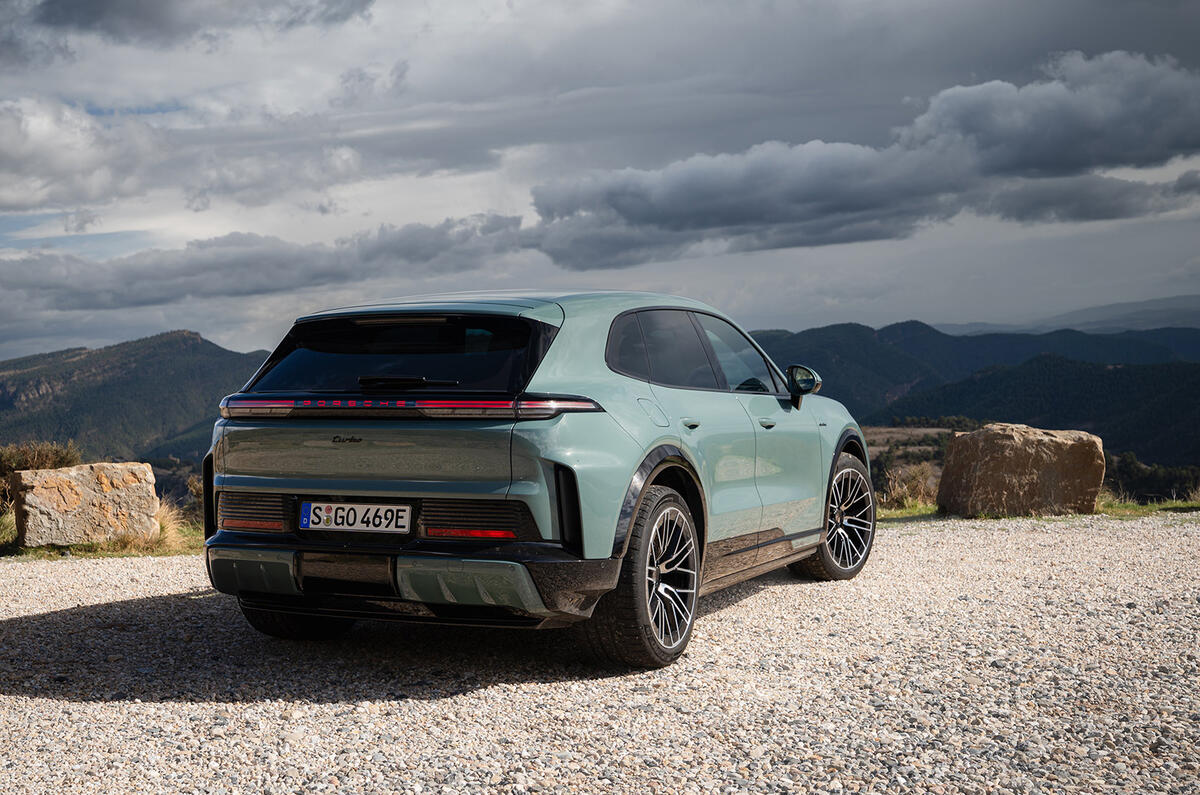
Meanwhile, the Cayenne Electric SUV's body scores a drag coefficient of just 0.25 (compared with 2.8 for the Q6) partly thanks to the active aerodynamics, which include huge vertical wings that erupt from the Cayenne’s posterior at higher speeds. In the Cayenne Coupe Electric, that falls to 0.23; and it's the Coupe, therefore, that offers the best electric range of the two, the S model stretching the WLTP Combined numbers as far as 414 miles.

INTERIOR

PORSCHE  DSC6614 copy

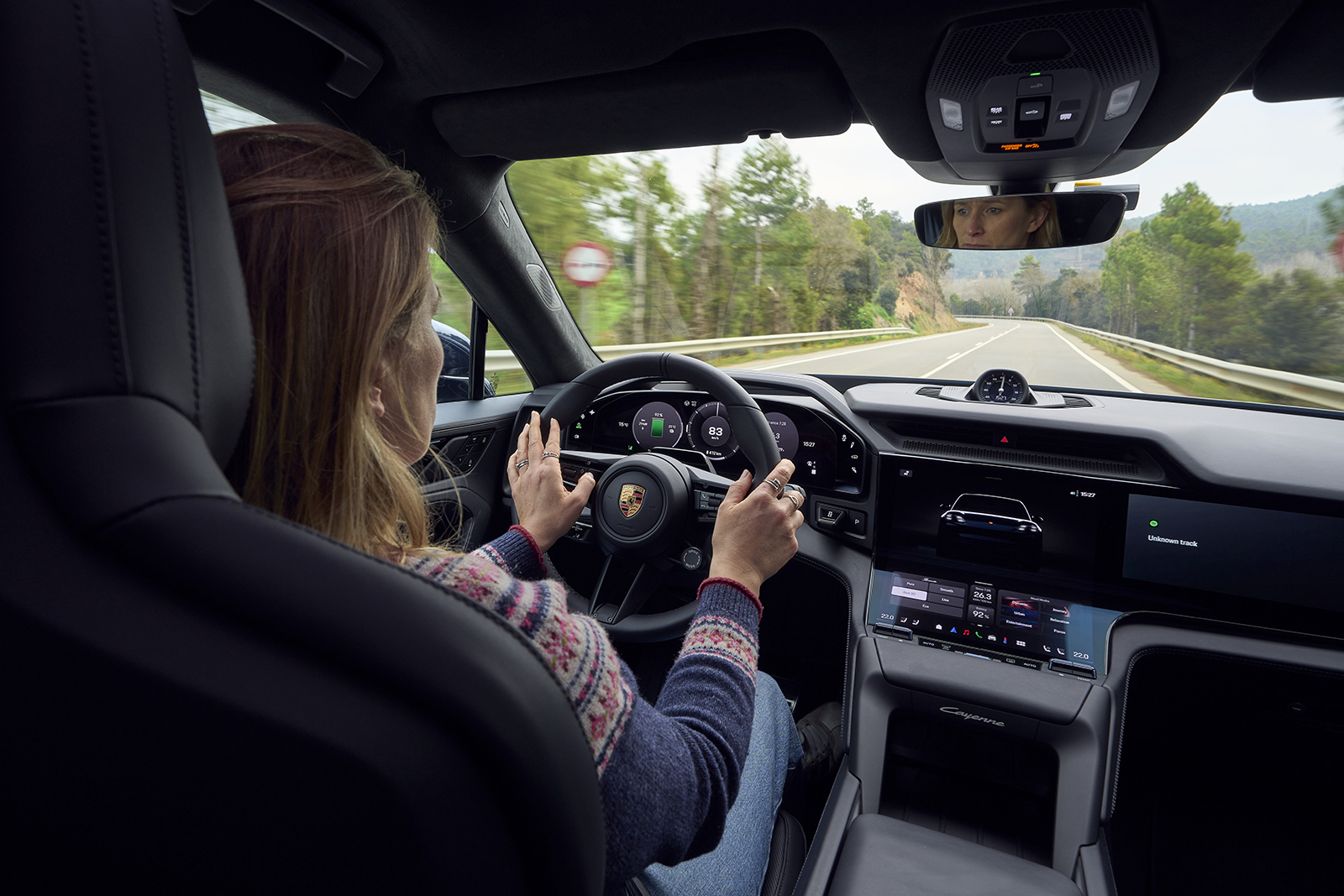
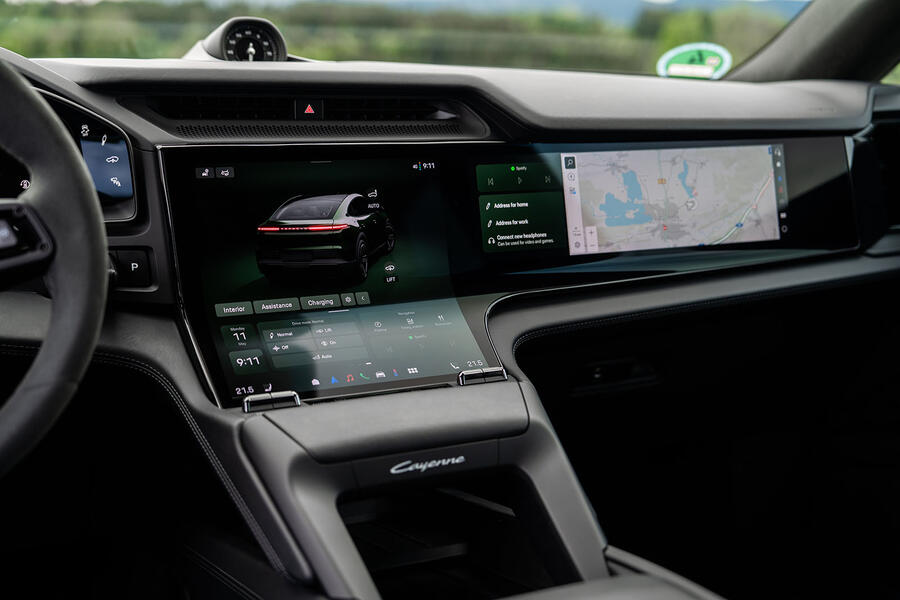
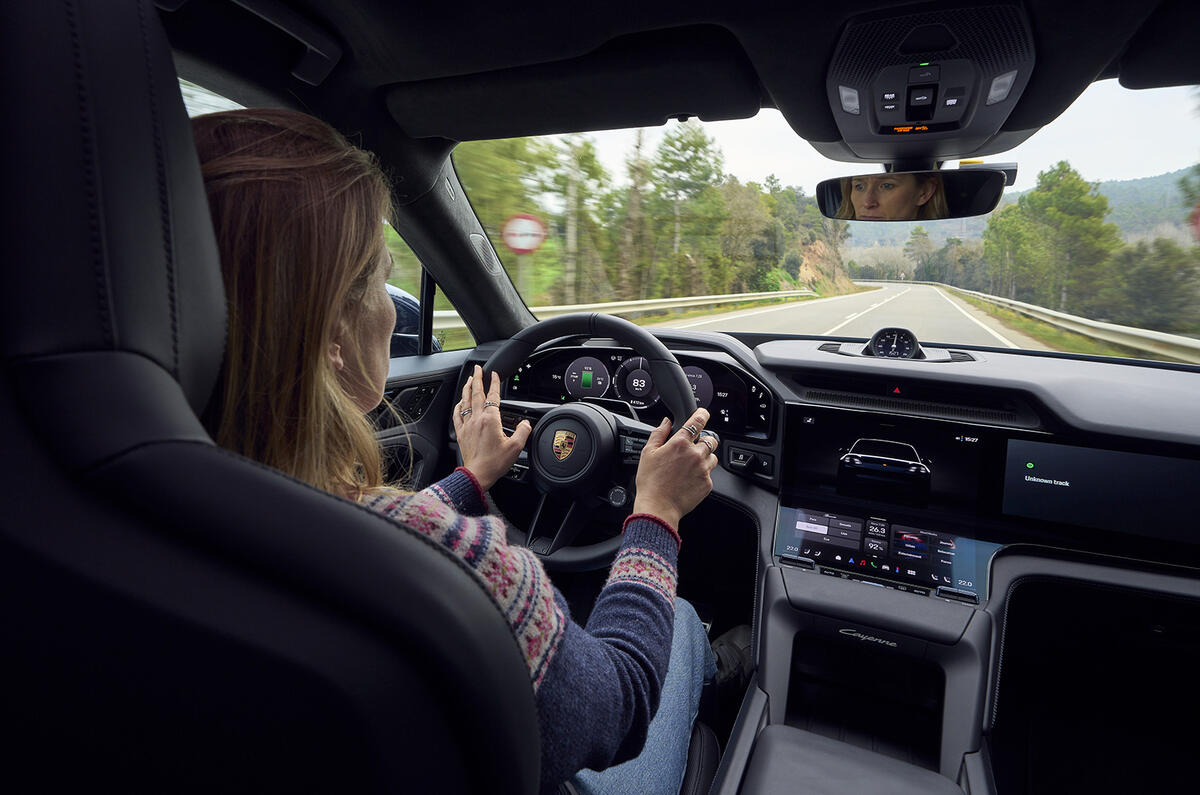
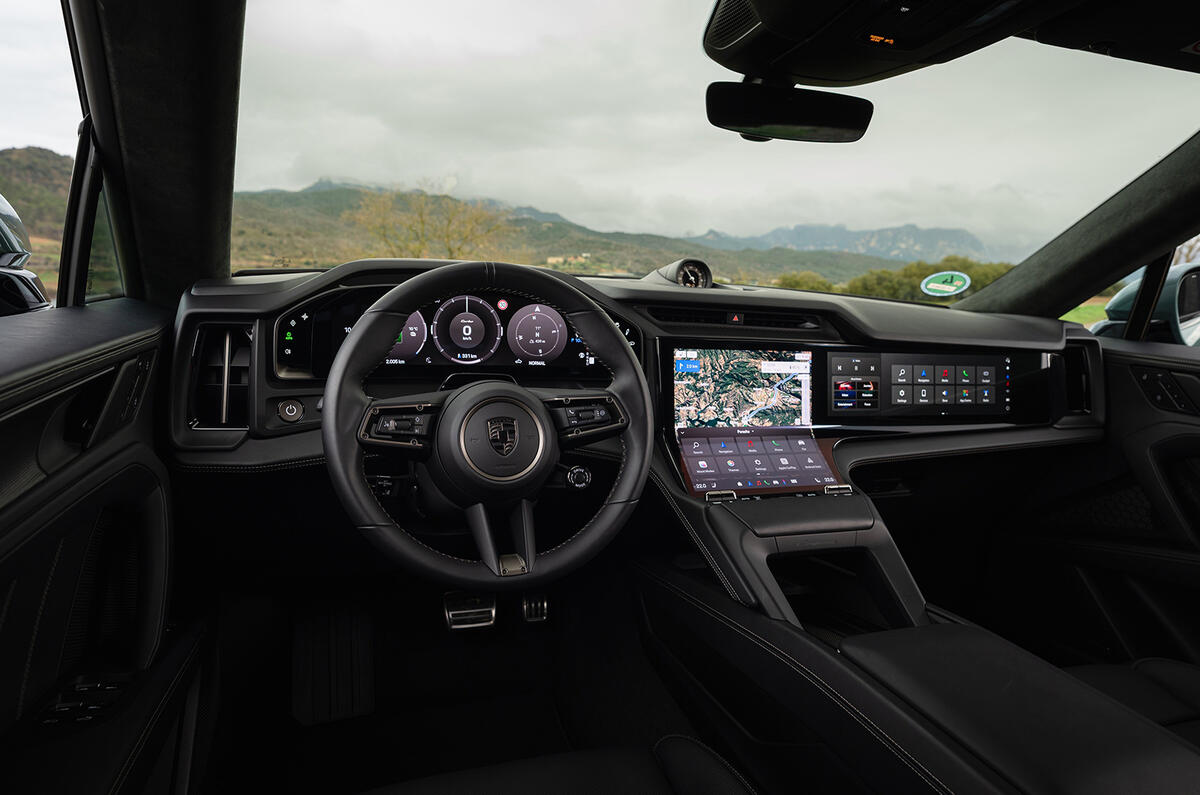
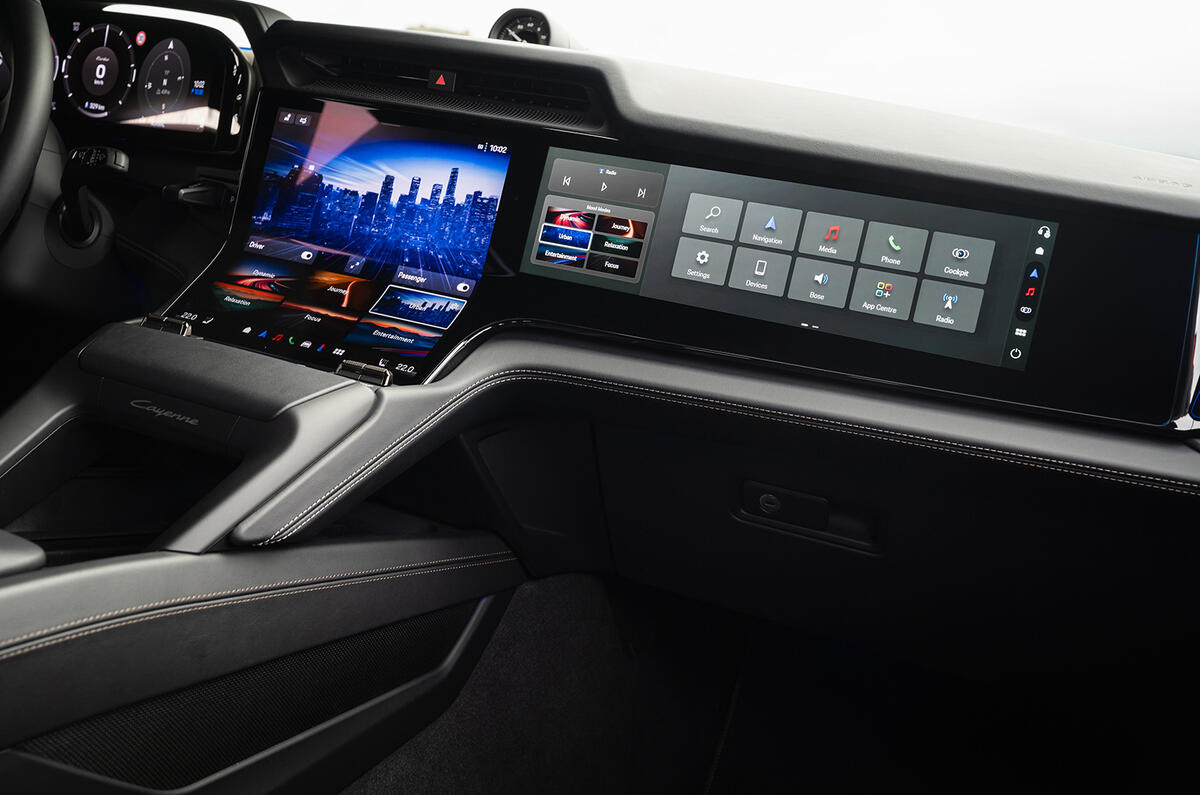
Slip inside the Cayenne and you’re greeted by an all-new cabin architecture, at the centre of which is an intriguing touchscreen display that curves over the meeting of centre stack and dashboard. Complete with a padded hand support to make screen prodding easier, and accompanied by fixed buttons for the climate control and system settings, and some of the best infotainment graphics you will see in any car, it’s impressive - even if it does require some familiarisation before you get the hang of where everything is.

The Cayenne S’s new-generation sports front seats are supportive, adjustable and very comfortable - except, this tester found, for the fixed-position, ‘integrated’ head restraints. Surely an 18-way-adjustable chair should be clever enough to stop you from getting neck ache?

A passenger touchscreen is also optional, although this will stray well into the ‘too much screen’ category for the preferences of those who don't like too much distraction and light pollution in their driving environment.

Perhaps most importantly, the Cayenne’s interior has that unmistakable Porscheness to it. The frameless, curved driver’s readout, the precision of the graphics, the density of the materials around the cabin… Porsche interiors always feel on point, solid yet understated, and this one is just the same – provided you avoid some of the more lurid-coloured screen backgrounds and ambient lighting modes.

Practicality is decent, with plenty of space for adults in the rear; although the shape of the rear seats does make this a much better four-seater SUV than a five-seater. There may be belts for five passengers, but the middle seat in the second row would be uncomfortable for most travellers thanks to the shaping of the second-row seat cushions.

The optional panoramic roof with selectable opacity is rather nice, though, and fills the cabin with light. Every model gets electrically folding rear seats, too, which makes it easy to extend the standard 506-litre boot to the maximum seats-down capacity of 1588 litres.

That’s not a huge boot capacity for a car that’s 4.93m long, but it’s competitive enough with rivals like the Polestar 3 and BMW iX. You can even tow up to 3.5 tonnes, which makes this one of the best EVs on sale for those who want to tow bigger loads. A 90-litre frunk is the Cayenne’s final practical flourish.

Move into the Coupe, meanwhile, and you likely won't find the interior coming up short on headroom in either row. Even a 6ft 3in test can sit in the back seats in comfort.

ENGINES & PERFORMANCE

Porsche Cayenne S Coupe Electric review 2026 003

So what use is 1141bhp on the UK roads of 2026, you may be wondering, in a full-size electric SUV? Well, you can actually use it, believe it or not. Most of it, at any rate - and in very short bursts - because Porsche’s tuning for the Cayenne Electric’s controls is so good. 

You only get access to all of it during launch control starts; but dialling up Sport Plus mode on the rotary drive mode knob lets you tap into a little over 1000bhp of power, which the car deploys surprisingly progressively.

The accelerator pedal isn’t made to feel like a switch, as in some fast EVs. Instead, you can just squeeze, and squeeze, and squeeze. The Cayenne’s capacity to find ever more urgency makes you feel a little like you might actually have been ‘beamed’ from one place to another without actually visiting any of the spaces in between. On smooth surfaces, the car can accelerate and then cover ground mesmerisingly quickly.

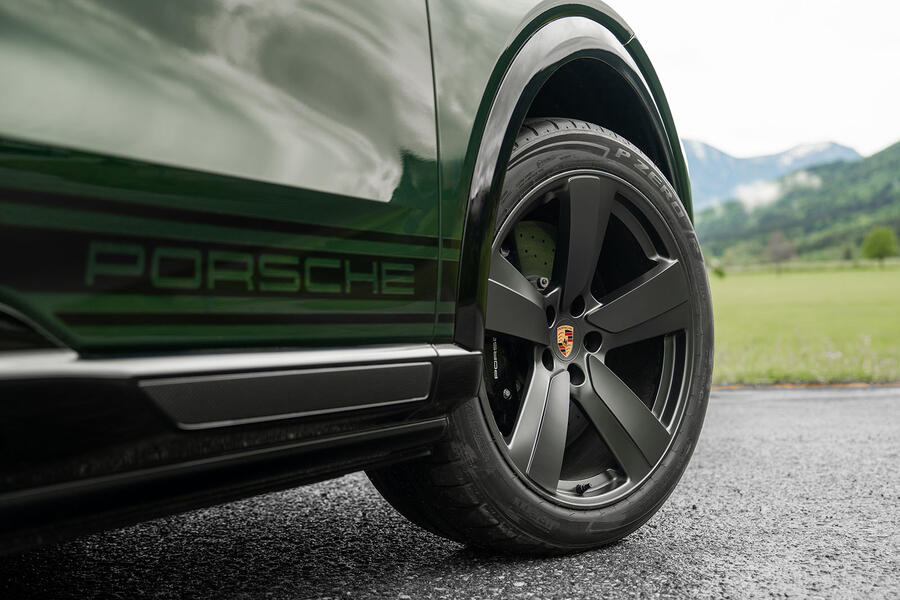
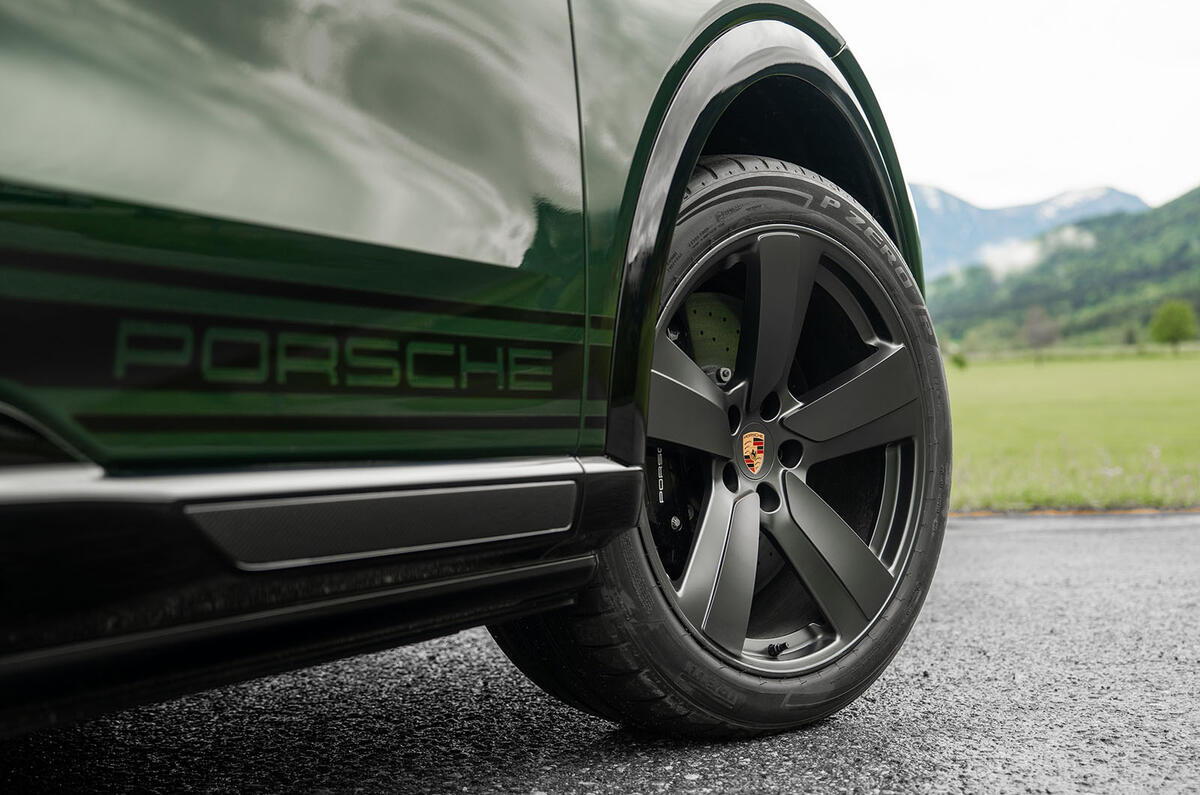
Alternatively, if you just get in and drive it about in Comfort or Normal mode, the car feels incredibly civilised. Almost zen-like, actually. There’s tyre noise from the enormous 22in Michelin tyres, but almost no motor whine; wind noise is subdued; and you breeze along, trying not to be tempted by the ‘push to pass’ button. 

Meanwhile, while the Taycan has more feelsome brake response, the Cayenne’s (whether you've added optional ceramics or not) are still some of the best brakes of any performance EV.

And what of the mid-range S model? Well, a 657bhp electric Porsche Cayenne is not, it turns out, in want of urgency. It doesn’t quite rocket off the line like the Turbo; but still, any car this size that can hit 62mph from rest in less than four seconds has to be considered a very serious performance prospect indeed. The S feels like the rubicon beyond which Cayenne Electric performance extends into the realm of the gratuitous; or, to put it another way, it's all the Cayenne Electric anybody really needs.

Porsche meters the car’s accelerator and brake pedal progression in suitably linear fashion, so the car only ever responds to either how you expect it to. Unlike in the Taycan, no gearshift is necessary in order for the car to keep piling on the pace, which it’ll do urgently all the way up to fast autobahn speeds. Regen, meanwhile, is controlled either through a handy shortcut ‘button’ on the central touchscreen, or via the selected drive mode dialled in via the steering-mounted rotary knob (if you want it off entirely, you can have that).

After all that, the standard Cayenne Electric’s 436bhp and 0-62mph time of 4.8sec sounds almost weedy - but in practice it’s a muscular and serene thing to drive, that offers 90% of what even the Turbo can do in most cases for a lot less money. It wouldn't leave anyone feeling short-changed.

RIDE & HANDLING

331402 6000x4000

Most of the Cayenne Electric test cars we've driven so far have come with both rear-axle steering (which allows the rear wheels to turn up to 5deg) and Porsche Active Ride (which uses hydraulics to not only adjust suspension rates, but to manipuate individual wheels and vehicle body posture) fitted as options.

The latter has similar pitch- and roll-cancelling functionality as you find on the Taycan and Panamera, if you use Comfort driving mode. Its effect seems to be more understated in the Cayenne, though - but, even so, it can feel slightly less natural.

The Porsche Active Ride seems an indulgence when you're already spending well over £100,000, but it's worth the extra money for the extra breadth of ability that the Cayenne gains from it.

There are times, when steering just off-centre, that you can feel the Cayenne’s suspension actuators adjusting and tweaking the car’s posture, through both the steering rim and chassis; almost as if the tech needs a moment to think. Unlike the in Taycan or Panamera, the Cayenne wants to telegraph that moment - just as clearly as it does every other move it makes. It wants you to know about it. 

It’s only for the most fleeting instant; and after it, when the Cayenne Electric is committed to a bend or lane change, it’s a very smart-handling thing. Perhaps a shade less agile than its lighter ICE predecessors - but still poised, responsive and very grippy indeed. Until you return it from Sport Plus back to Comfort mode, that is - when it rides very well.

You need a quiet stretch of wide, sweeping switchbacks that are vanishingly rare in much of the UK if you want to twist the Cayenne into Sport or Sport Plus and find out what it can do. But if you manage to find an appropriate road, you won't believe how ready such a big, heavy car could be to take some angle and rouse its traction control.

You can feel the power streaming to the rear wheels, and shuffling about laterally, as it punches the Cayenne out of corners with a tiny, deliciously naughty little squirm. For a car of monstrous power, it's astonishingly friendly and accessible on a good road.

But what about on those more typically found in the UK? Here, to be honest, the Cayenne Electric Turbo is notably less at home. The car's size and weight seem like greater encumbrances to it when transient demands are made of the chassis, and lump and bumps are in the mix.

While it can corner very quickly indeed in simple, objective terms, it doesn’t seem so keen to turn in when you're hustling it towards an apex, or so uncannily poised once it's settled to a line, as its piston-powered antecedents have. There is also notably less tactile steering feedback here than Cayenne stalwarts will be used to; and less effective damping, with more excitable body control and more apparent headtoss on uneven surfaces when you’re using the car’s sportier driving modes (which you've no choice but to do, if you want the car at its most agile).

The standard Cayenne Electric, meanwhile, on its PASM adaptive air suspension, also has impressive dynamic range and ability. It doesn’t wallow and float too much; and while you’re conscious of the lean in corners, it’s still neat, tidy and satisfying on a right road.

Maybe not nuanced and tactile in the way that the best Cayennes of the past have been, and in the way that the Taycan has managed lately - but it’s all that plenty of buyers will want or expect of a Cayenne Electric.

MPG & RUNNING COSTS

Porsche Cayenne S Coupe Electric review 2026 001

It’s strange to say it, given that EVs with 400 miles of range only arrived in recent years - but some buyers may feel that the Cayenne’s range isn’t quite enough.

There’s some clever battery tech and good aerodynamics here; it’s not like Porsche hasn’t done an impressive job with such a heavy, performance-oriented beast. But while cars like the BMW iX3 and Volvo EX60 may be closer rivals to the Macan Electric, if I were considering a Cayenne and saw that these other posh electric SUVs were offering 100 miles more range for substantially less money, I would pause for thought. We don’t know what the forthcoming BMW iX5 will manage in terms of range, but that may be another worry for Porsche.

The option you’d want for the Turbo Electric (Porsche Active Ride, four-wheel steering, carbon-ceramic brakes, Burmester audio, passenger display screen) add nearly £25k to an already punchy price. You’ve got to wonder how many will be willing to pay it. An S model would be more than enough for me.

If you’re interested in a Cayenne Electric - especially if you’re thinking of getting a Turbo - you may be more interested in the performance and image than in the efficiency and range; but they're always going to be concerns in the Porsche you buy for any journey, anywhere, on any day of the year.

Moreover, this is a car that you can option up to be well north of £160,000 – and that’s before you’ve designed the matching Swiss-built Porsche watch to go with it. Should it really come with real-world range of 250- to 300 miles; when EVs costing half as much go 50% farther?

VERDICT

Porsche Cayenne S Coupe Electric review 2026 022

The Porsche Cayenne Turbo has always been about outrageous outright power; but its genius, hitherto, was actually defined by how well that power could be put to use, and the transformative entertainment it enabled.

With the Turbo Electric, those carefully balanced scales finally seem to have been knocked over. Suddenly the monster isn’t quite so lovable; as undeniably, objectively fast and dynamically capable as it may be.

'Lesser' models don't struggle against such high expectations, of course; and so ultimately, it's a Cayenne S Electric or a base model that would seem to be the most recommendable versions. We've said similar of the Taycan and Macan, of course; but spending less on a car with more electric range, that doesn't bother with superfluous performance that you don't need and won't make a lot of use of, is the obvious thing to do. Much as a great many Cayenne owners won't want to hear it.

There’s not really any getting around the fact that, in some ways, the electric version is even more Cayenne; and in other ways, it’s notably less. Naturally, people will love to hate this car. That’s nothing new for a Cayenne. Whether it’s the battery beneath its floor or the sheer vulgarity of its performance, there are more reasons than ever why that will continue to be the case.

And yet watching how returning Cayenne customers ultimately vote with their wallets - and whether they can be convinced that a car with a usage case as broad as the Cayenne's can really work as an EV - is going to be fascinating.  It certainly isn’t something we’ve been able to do in quite the same way, over recent years, as the Taycan and Macan have appeared.

Porsche's gambling chips are on the table here. It feels a little like a critical, 'sliding doors' moment.

Matt Saunders

Matt Saunders Autocar
Title: Road test editor

As Autocar’s chief car tester and reviewer, it’s Matt’s job to ensure the quality, objectivity, relevance and rigour of the entirety of Autocar’s reviews output, as well contributing a great many detailed road tests, group tests and drive reviews himself.

Matt has been an Autocar staffer since the autumn of 2003, and has been lucky enough to work alongside some of the magazine’s best-known writers and contributors over that time. He served as staff writer, features editor, assistant editor and digital editor, before joining the road test desk in 2011.

Since then he’s driven, measured, lap-timed, figured, and reported on cars as varied as the Bugatti Veyron, Rolls-Royce PhantomTesla RoadsterAriel Hipercar, Tata Nano, McLaren SennaRenault Twizy and Toyota Mirai. Among his wider personal highlights of the job have been covering Sebastien Loeb’s record-breaking run at Pikes Peak in 2013; doing 190mph on derestricted German autobahn in a Brabus Rocket; and driving McLaren’s legendary ‘XP5’ F1 prototype. His own car is a trusty Mazda CX-5.

Vicky Parrott

Vicky Parrott

Vicky Parrott has been a motoring journalist since 2006, when she eventually did so much work experience at Autocar that it felt obliged to give her a job.

After that, she spent seven years as a features and news writer, video presenter and road tester for Autocar, before becoming deputy road test editor for What Car? in 2013. After five years with What Car?, Vicky spent a couple of years as associate editor of DrivingElectric and then embarked on a freelance career that has seen her return to writing for Autocar and What Car? as well as for The Daily Telegraph and many others.

Vicky has been a Car of the Year juror since 2020, and the proud owner of a 1992 Mercedes-Benz 300-SL 24V since 2017. She aspires to own an Alpine A110 and a Porsche Taycan Cross Turismo.