6

EV-agnostic Japanese giant launches its mainstream electric offering

Chairman Akio Toyoda’s edict that Toyota would no longer be a producer of “boring cars” was very bold. It’s the sort of PR gold that can easily turn to PR nightmare if the engineers revert to making worthy but slightly dull vehicles. After all, it’s one thing to produce a couple of halo models like the GR86 and GR Yaris; it’s another to make family crossovers that aren’t boring.

But Toyota has managed remarkably well. Although the outgoing RAV4 was a bit of a snoozer, cars such as the Corolla hatchback and C-HR hybrid crossover look sharp and are surprisingly good to drive. And just look at the wedge-shaped Prius. It’s equally important that the cars are still competitive when it comes to the sensible stuff, though, and that has been a challenge for Toyota’s EVs.

In comes the new electric Toyota C-HR+. It builds on the initially underwhelming bZ4X but, on paper, appears to be a big step forward because it gets the sort of big battery we have come to expect in this class and looks to have creditable efficiency and an attractive price.

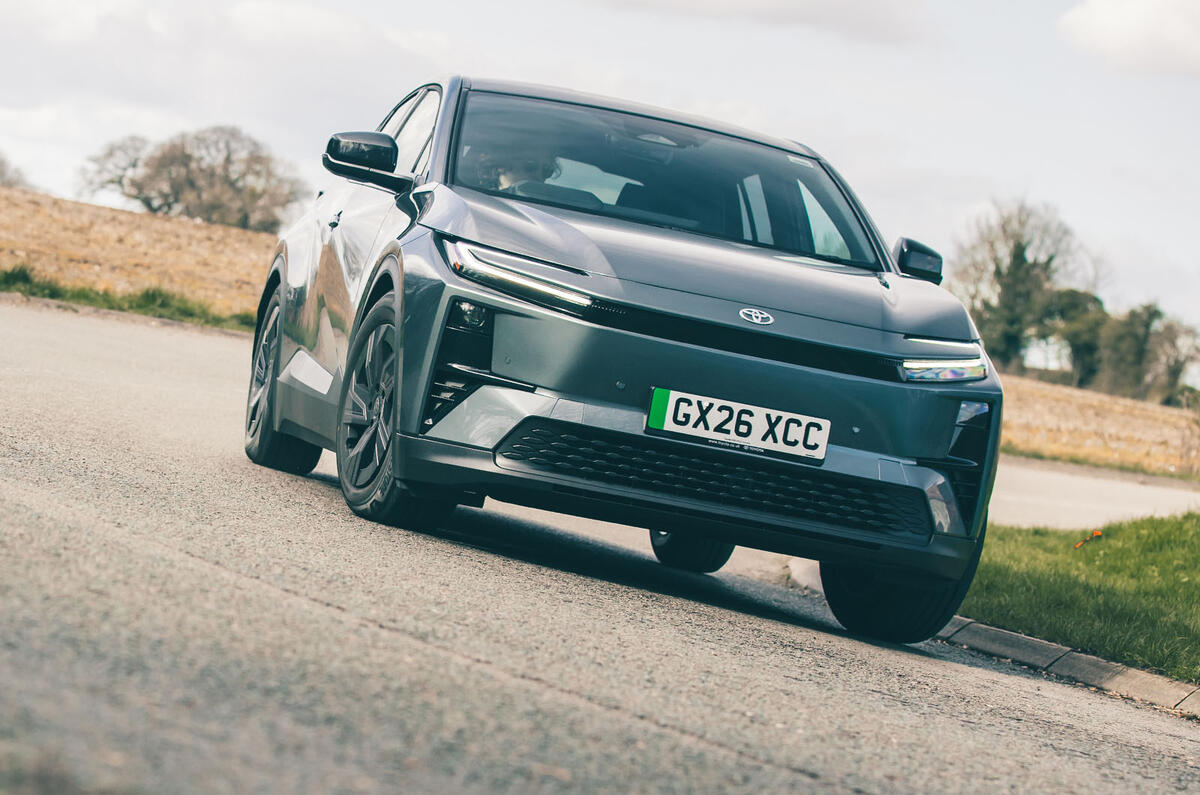
Toyota claims the suspension is tuned for fun-to-drive character, and despite our test car’s very dull paint colour, some styling flourishes are in evidence. Could this finally be Toyota’s electric breakthrough, with all-round dependability and quiet satisfaction? Its name certainly suggests that this is the intention: it should be like the existing hybrid C-HR, but electric.

Advertisement

DESIGN & STYLING

6
Toyota C HR+ review 2026 002

Unlike the smaller Suzuki-based Urban Cruiser EV, the C-HR+ is all Toyota’s own work, though Subaru will also sell a derivative of it called the Uncharted. It is in many ways a shortened and heavily updated bZ4X, much like the Skoda Elroq is a shorter version of the Enyaq. The Elroq is the C-HR+’s fiercest rival, though there is no shortage of alternatives, with the MG S5 EV, Peugeot e-3008 and Renault Scenic E-Tech all after a slice of the pie. Kia’s EV3 and EV5 more or less straddle the segment.

Like the bZ4X, the C-HR+ uses the electric version of Toyota’s TNGA platform, but compared with earlier iterations, Toyota has found space for a larger battery with 72kWh of usable capacity. At the same time, it is also offering a cheaper variant that has a smaller, 54kWh pack.

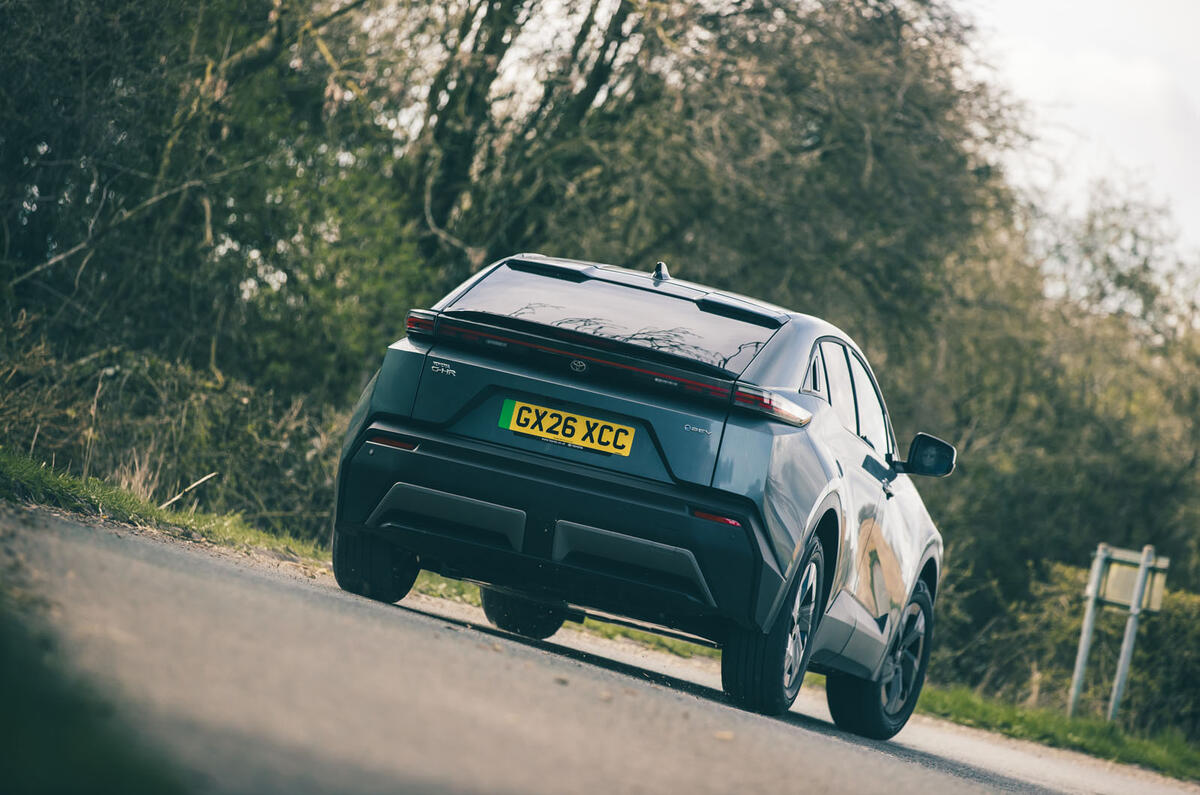
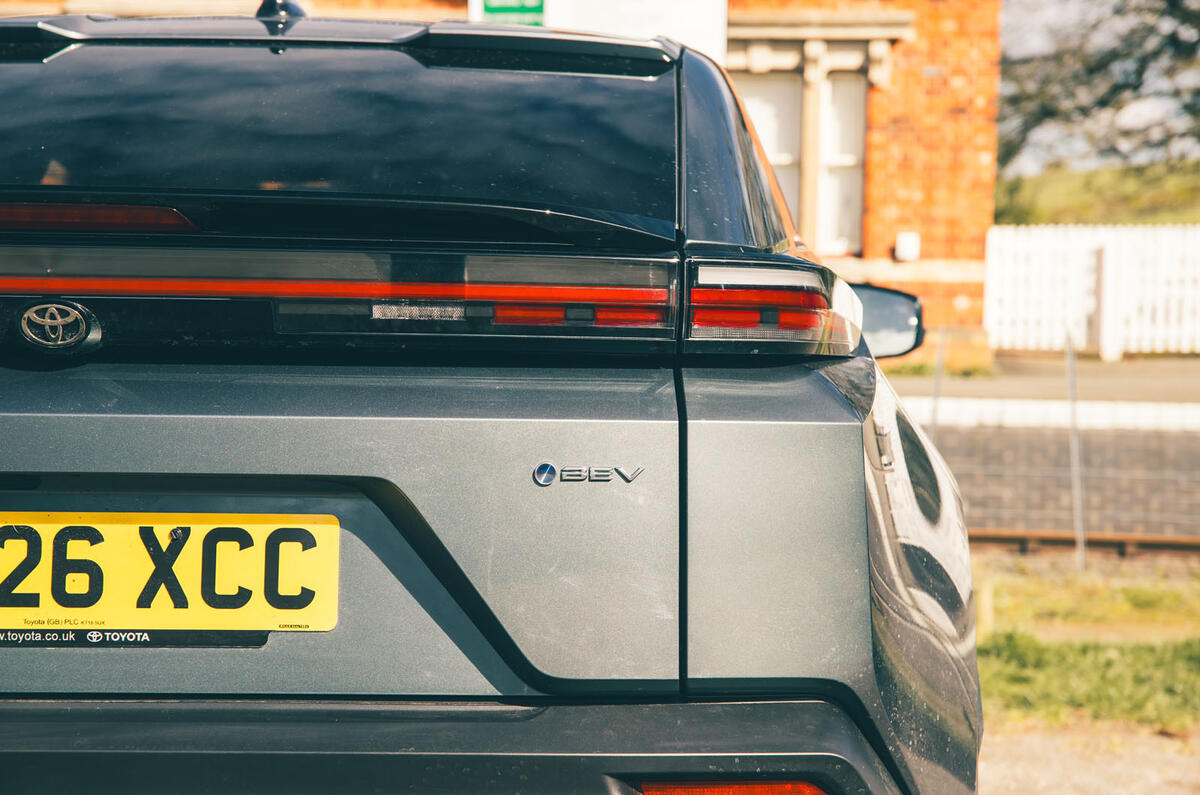
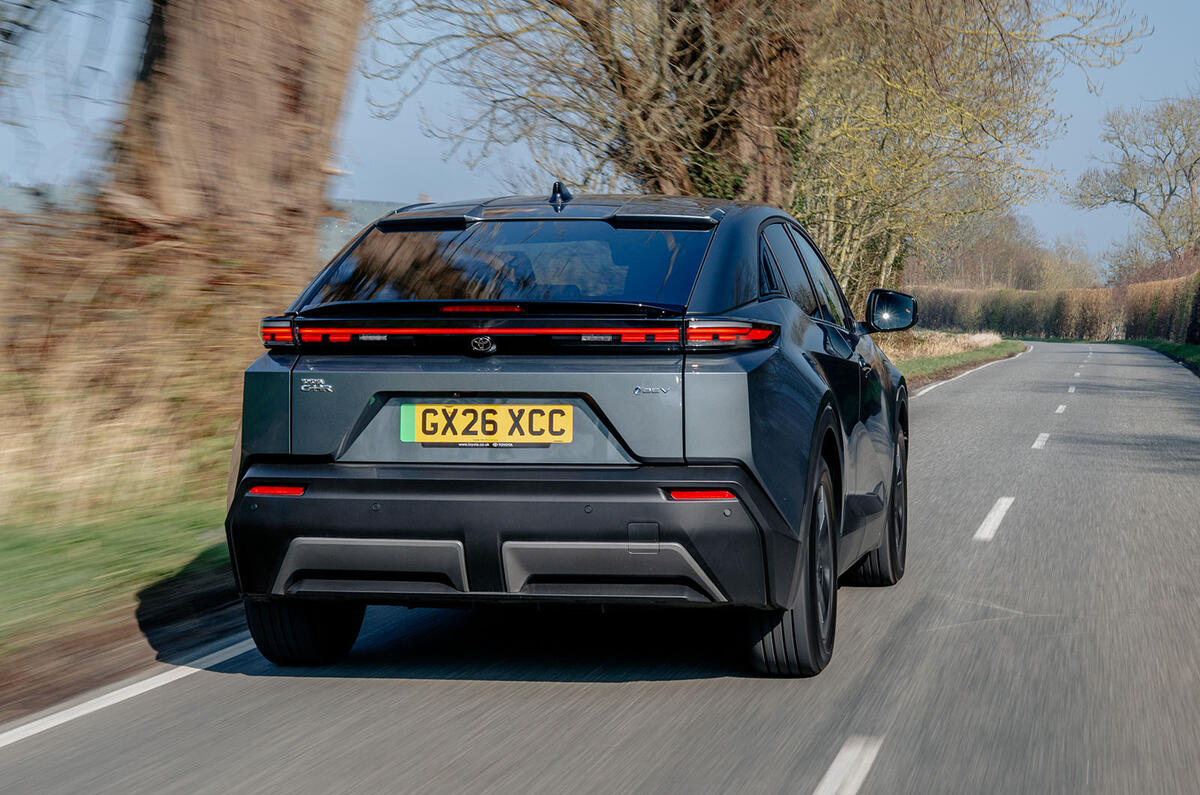
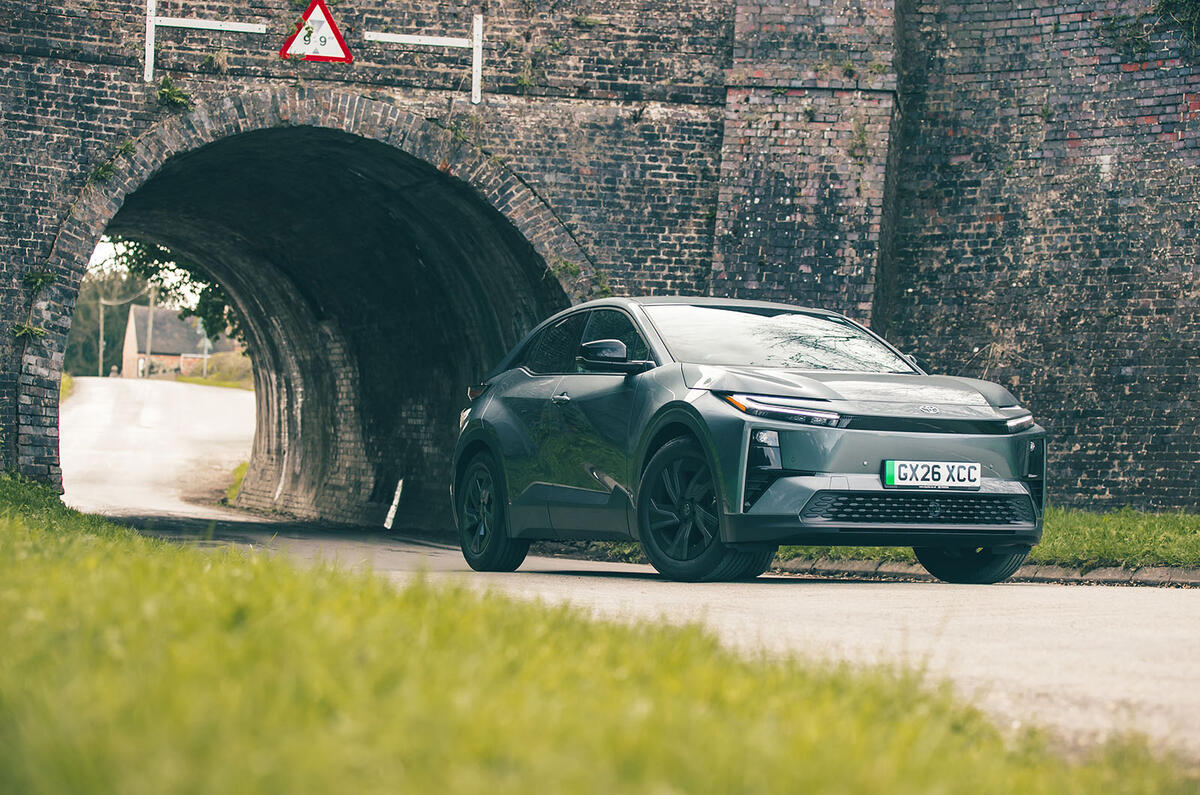
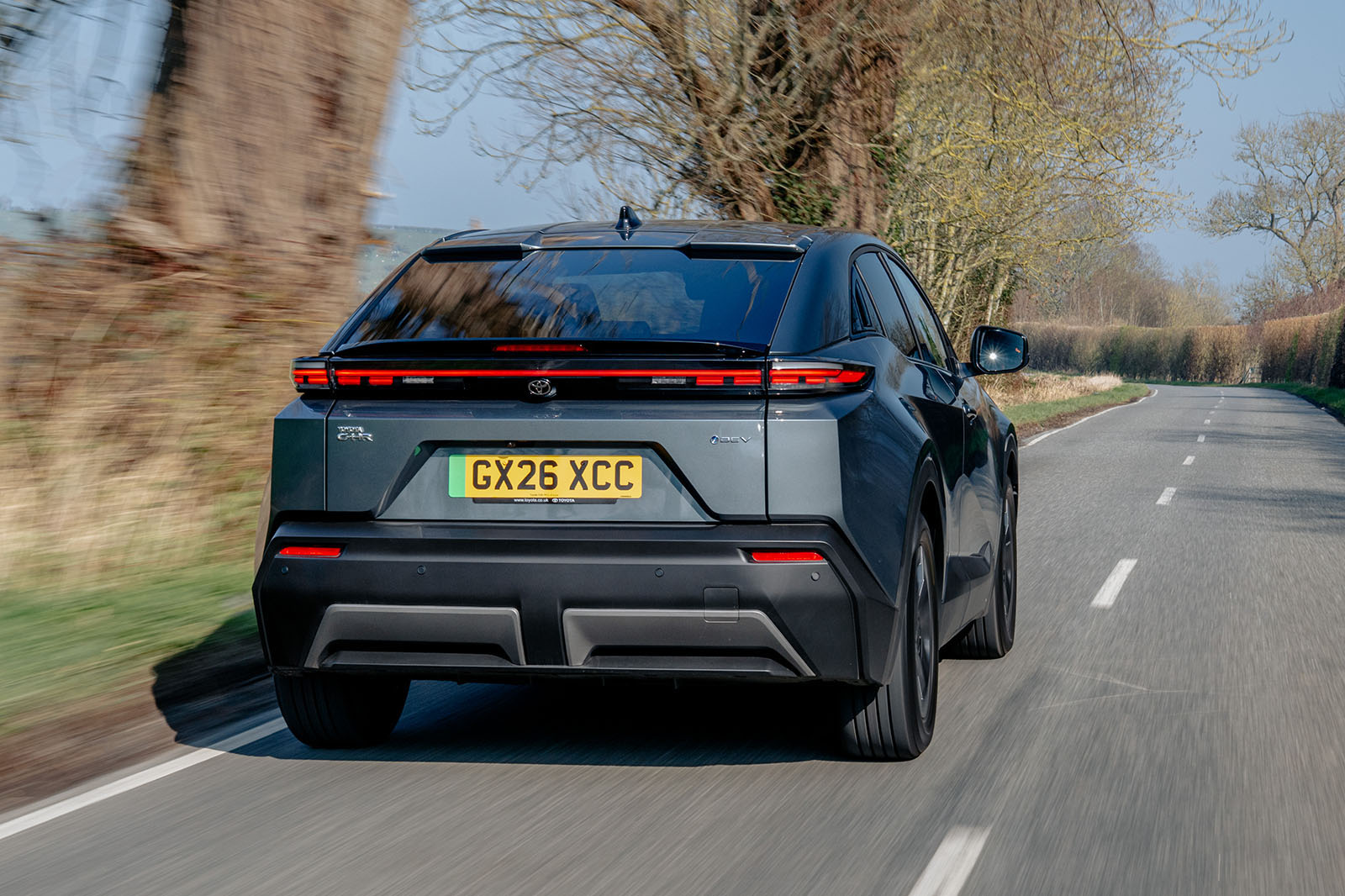
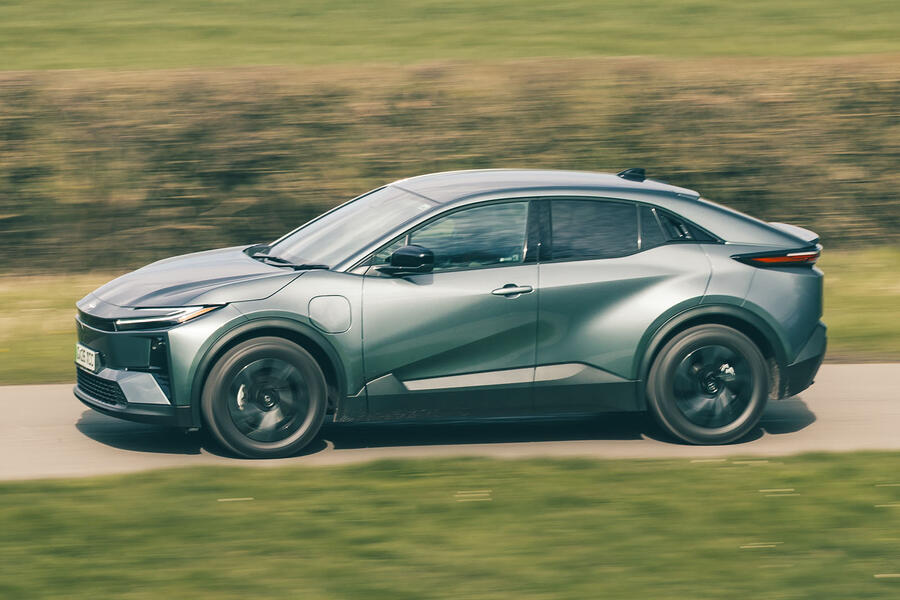
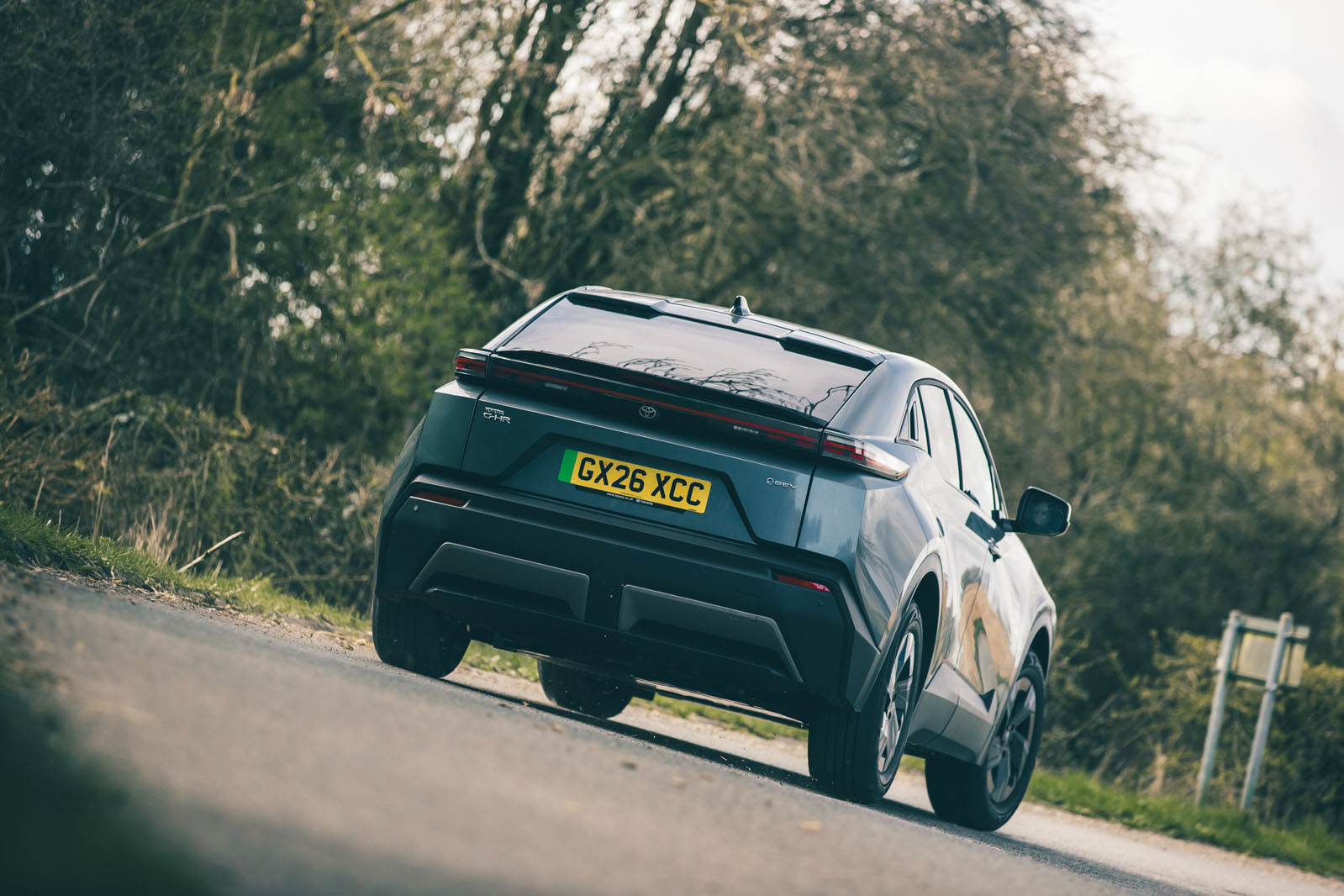
‘C-HR’ originally stood for ‘coupé high-rider’, hence the hidden rear door handles, the swoopy beltline and the sloping roof. It is irritating that the C-HR+ doesn’t have a rear windscreen wiper, because rainwater still gathers on top and obscures rear vision.

Despite the decently big battery, our long-range single-motor car weighed ‘only’ 1917kg as tested. It’s rare for a family-sized EV to come in at under two tonnes, let alone comfortably. We weighed the Skoda Elroq at 2085kg, so Toyota deserves praise for keeping the weight down.

It has optimised the cooling system, with water cooling on the bottom of the cells as well as help from the air-conditioning system. Heat management was an issue on early bZ4Xs, so this should bring improvements, claims Toyota.

As with other TNGA cars, the C-HR+ is predominantly front-wheel drive. The small-battery model gets a 165bhp permanent magnet motor on the front axle; this is upgraded to 221bhp in the long-range version. There is also a four-wheel-drive option with an additional 118bhp permanent magnet motor on the rear axle. However, this is not currently offered in the UK.

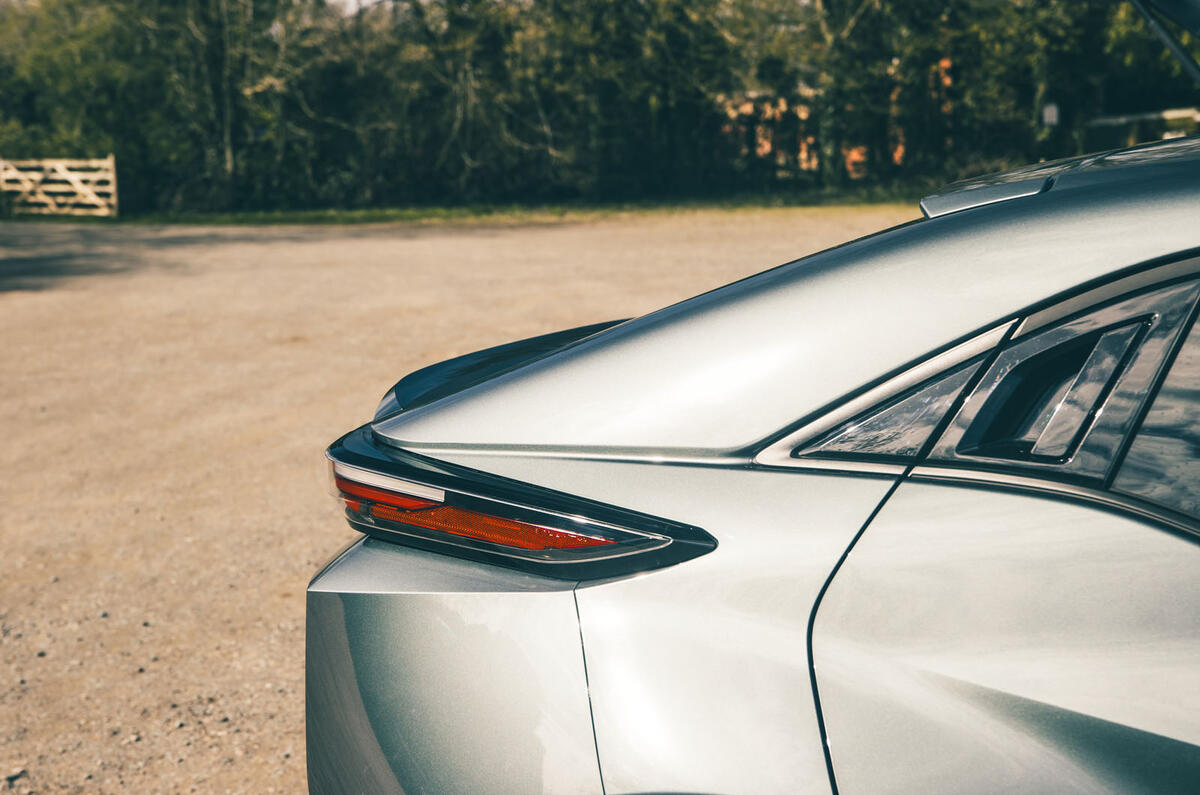
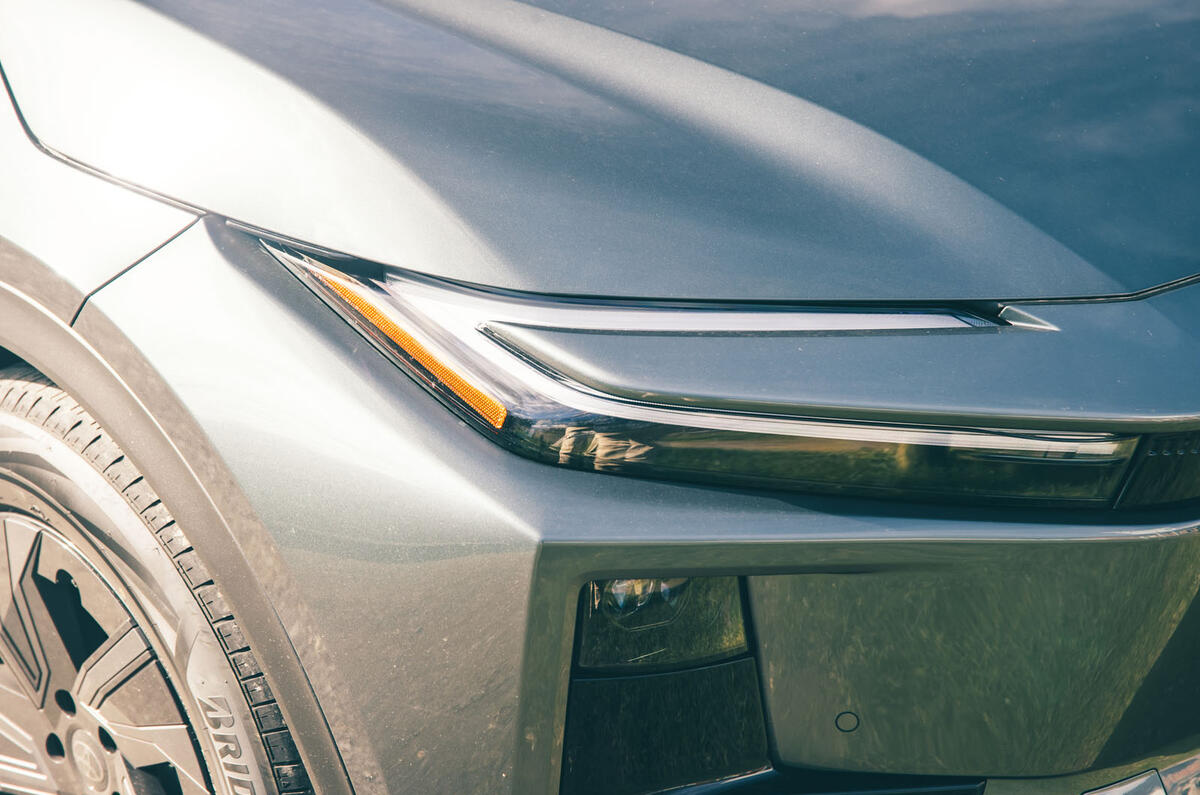
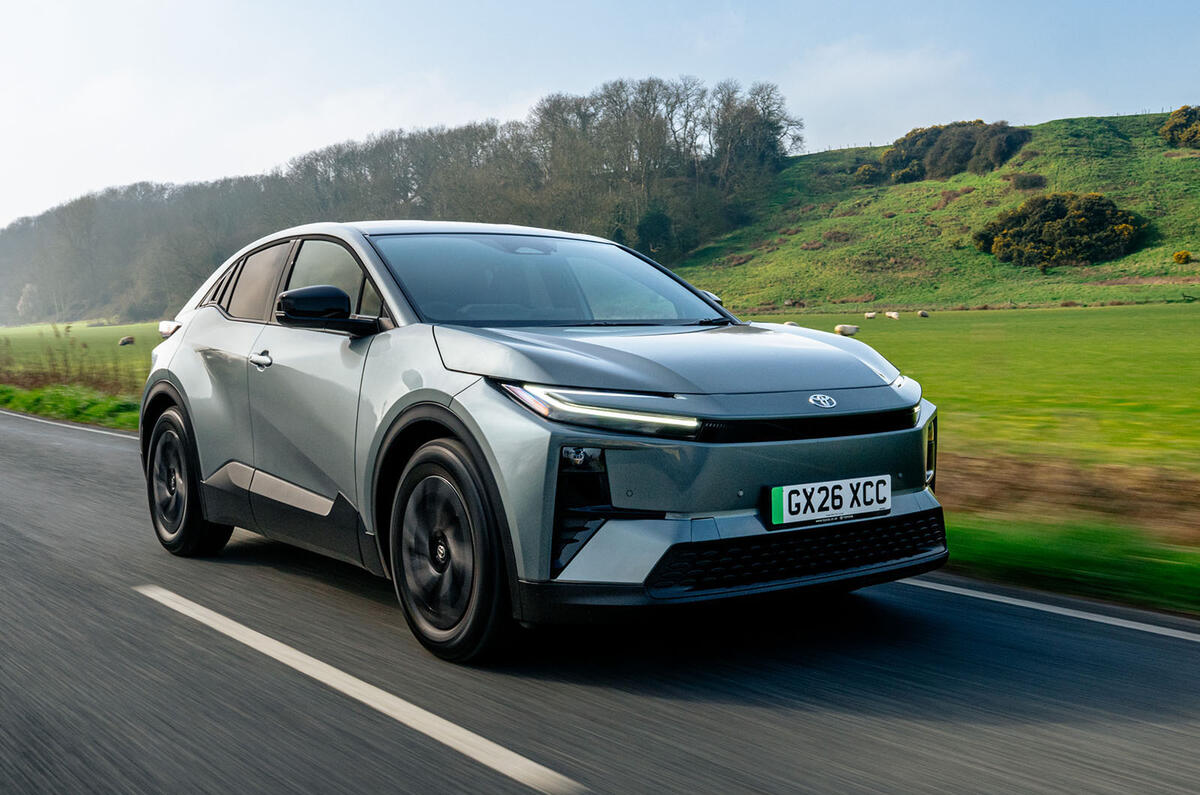
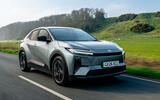
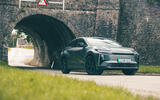
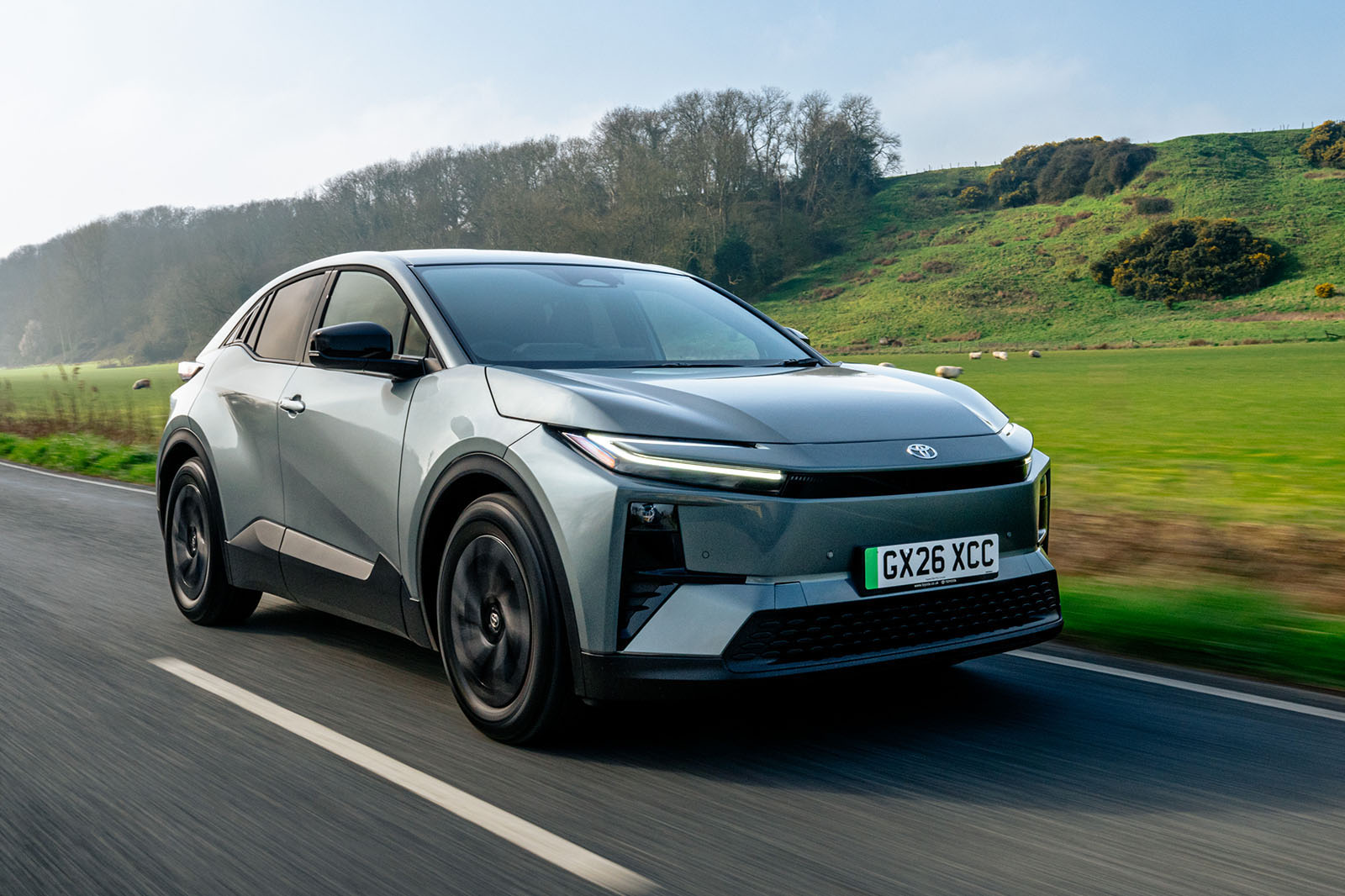
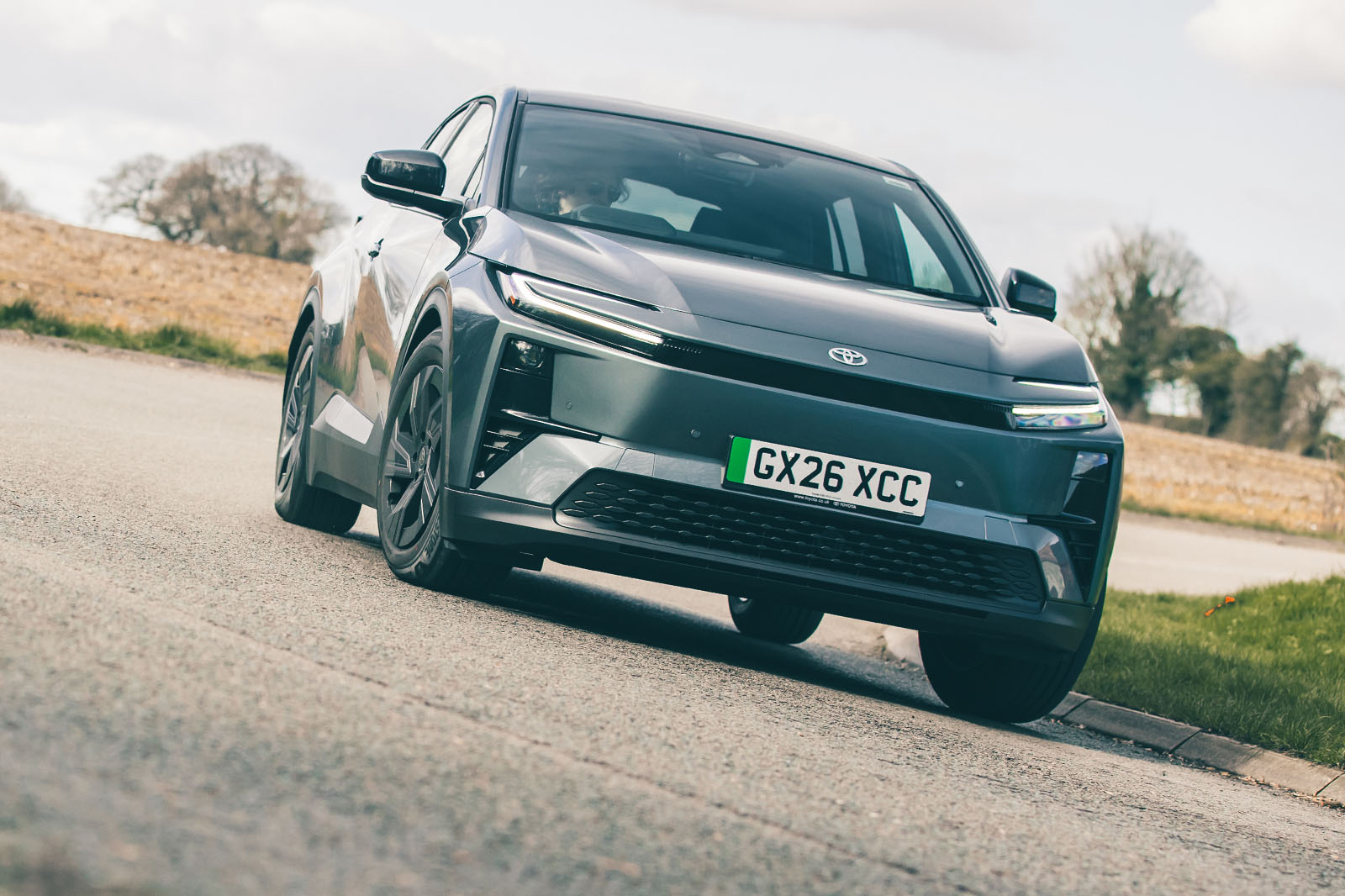
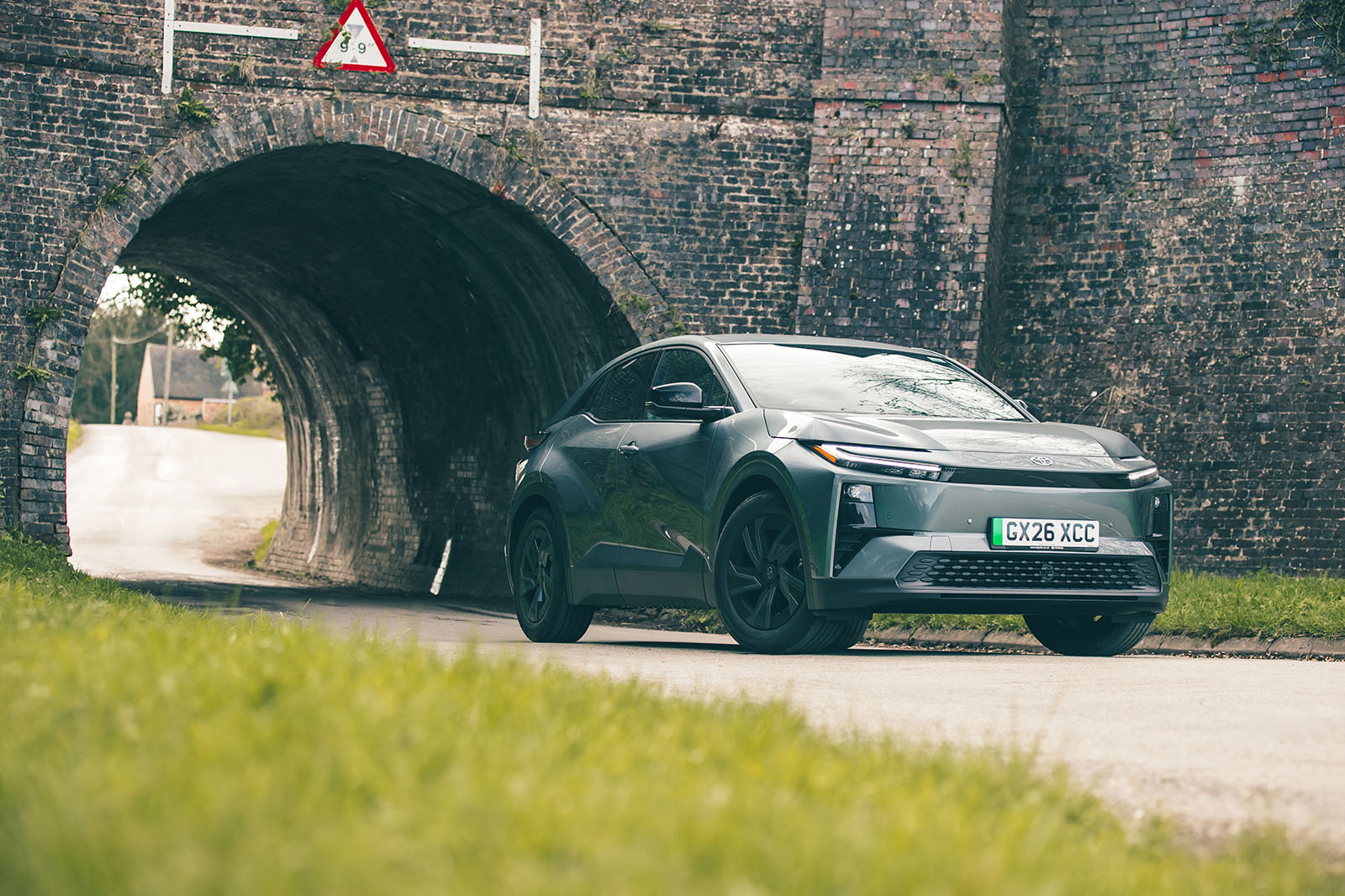
While the C-HR+ is technically related to the bZ4X and has a similar design language, with lots of slashes, sharp angles and Toyota’s now customary ‘hammerhead’ light signature, the side treatment is very different. Note the kinked shoulder line, coupé-style roofline and hidden rear door handle, as well as the round wheel arches with minimal plastic cladding. The C-HR+ is clearly meant to be more urban and sporty than the bZ4X. If you order it with ‘Metal Oxide’ red paint, that might be more obvious than with the rather industrial ‘Mineral’ grey of our test car.

INTERIOR

6
Toyota C HR review 2026 012

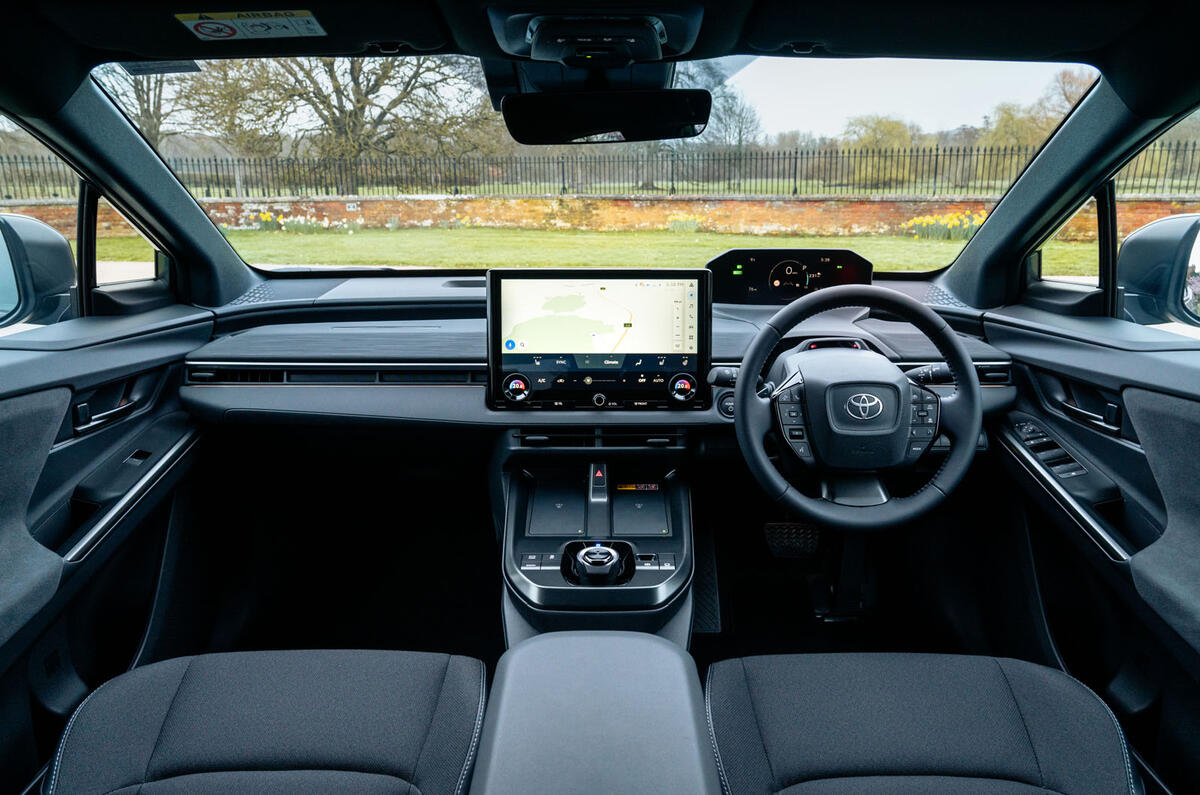
Toyotas of the past 10 years or so have had a clear design direction for their interiors: not flashy or overtly luxurious, but ergonomically sound and with rock-solid build quality. After a brief dalliance with gloss black plastic in the bZ4X, that philosophy largely continues.

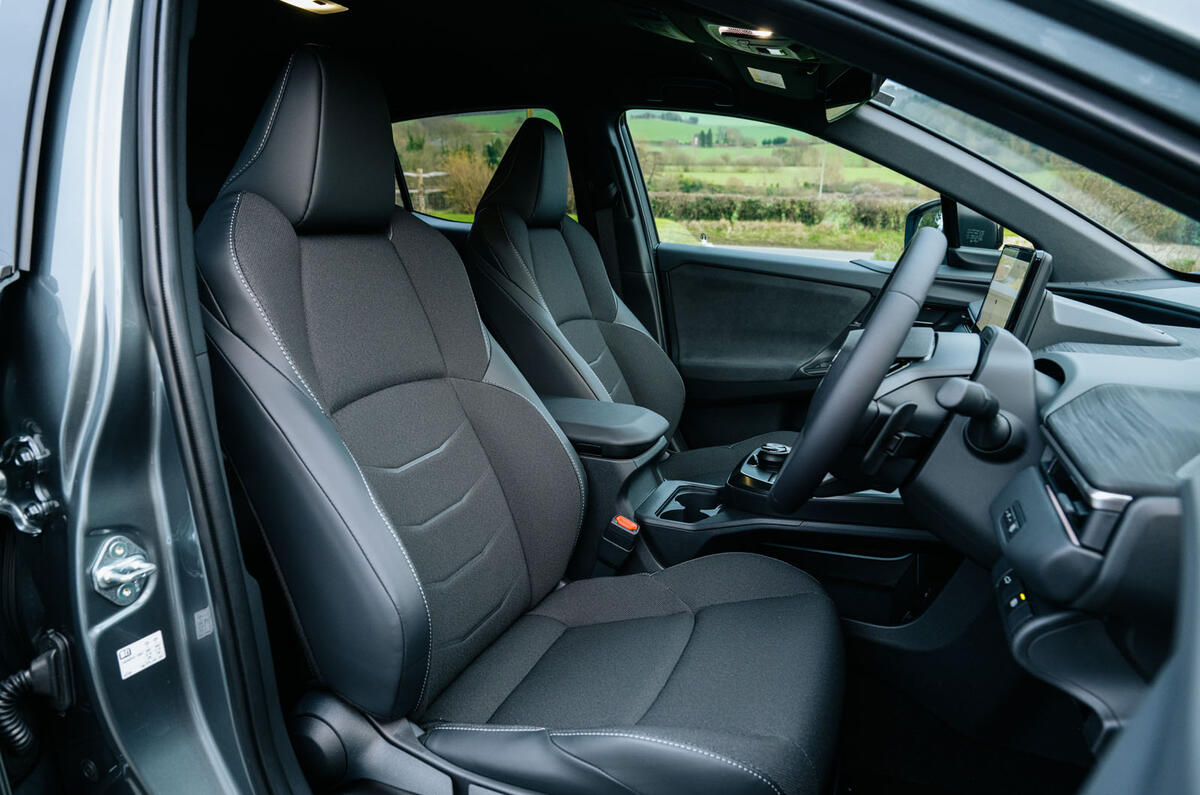
Most upper surfaces are fashioned from the sort of squidgy rubber that Toyota loves to use. It does feel highly robust and wipe-clean, but it’s also very dull. Beyond that, there’s grey microsuede, grey satin plastic and, depending on the trim level, cloth or leather seats in – you’ve guessed it – grey. It’s neither upmarket nor cheery, but the core design is at least more interesting than the screen-dominated ones in many new cars.

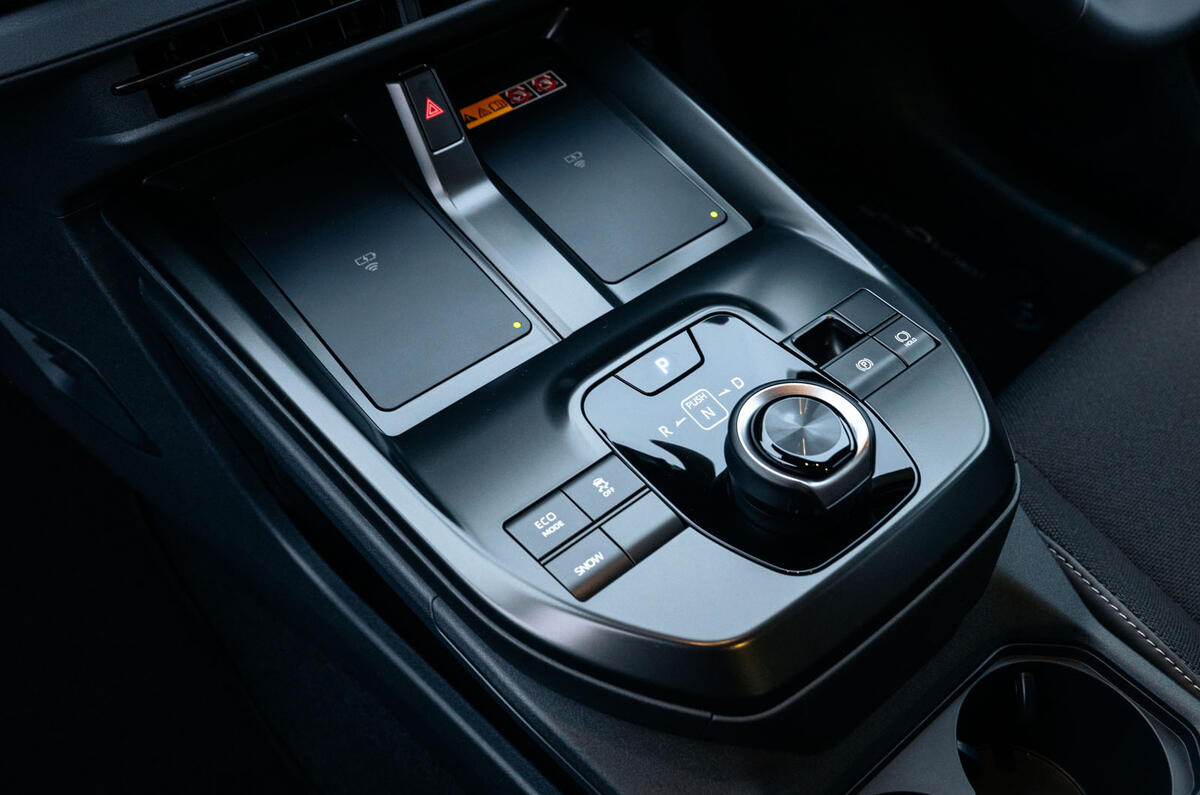
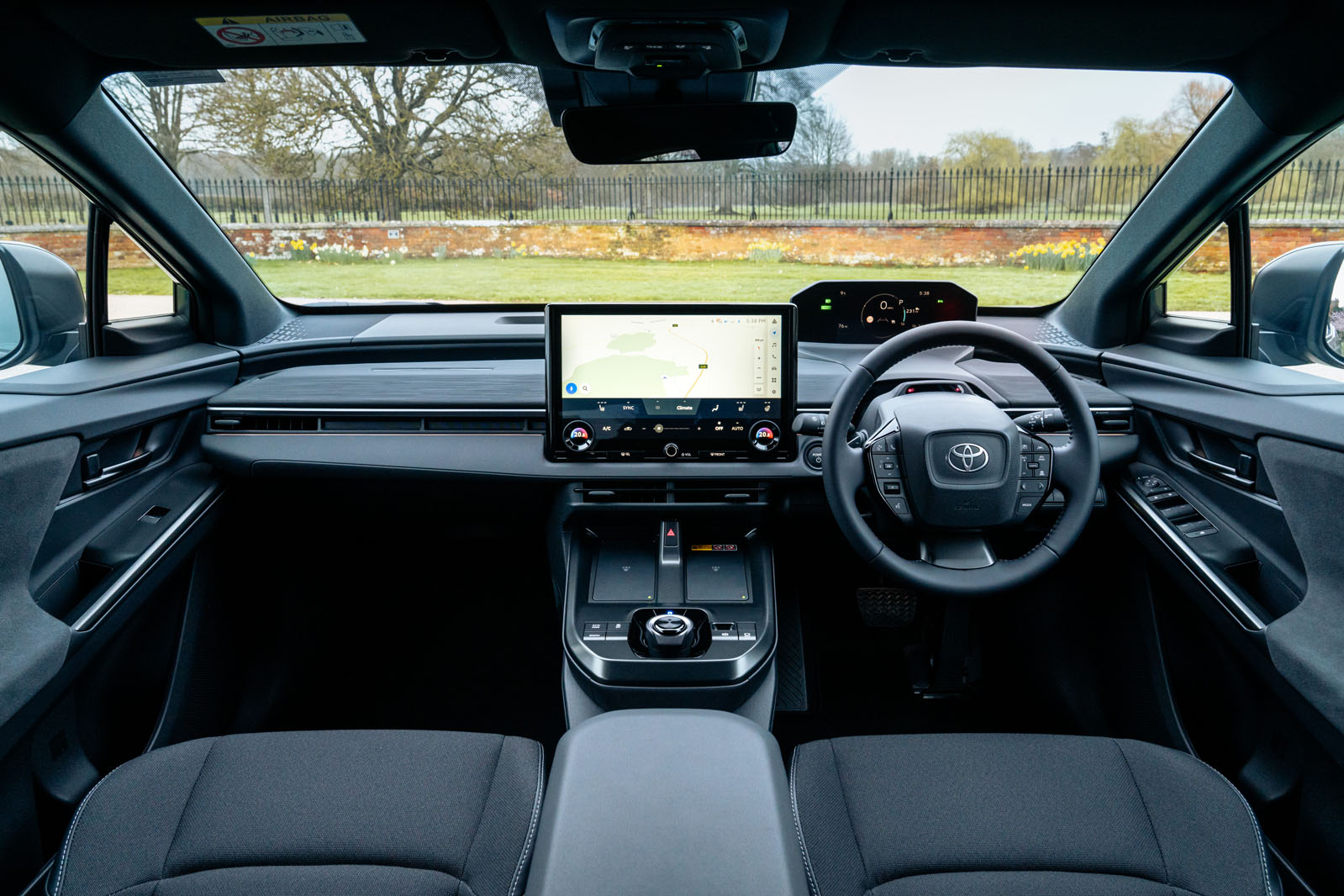
Toyota's press-and-turn drive selector is unusual but easier to use without looking and more satisfying than the more common toggle switches. There's a pleasing selection of physical controls generally: There are even controls for adjusting the brightness of the screens.

However, in the absence of luxury, we at least expected an impeccable feel of quality, but the flimsy plastic door releases and the wobbly lid for the centre armrest bin pop that particular balloon.

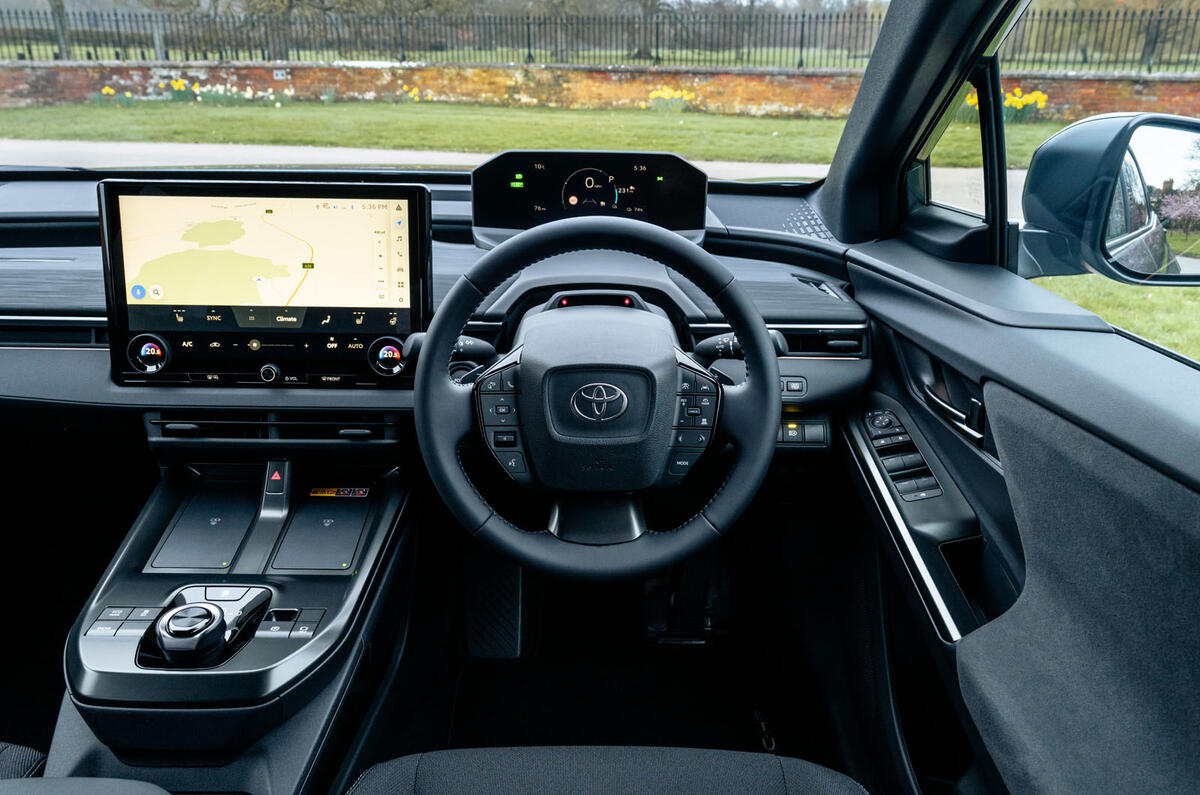
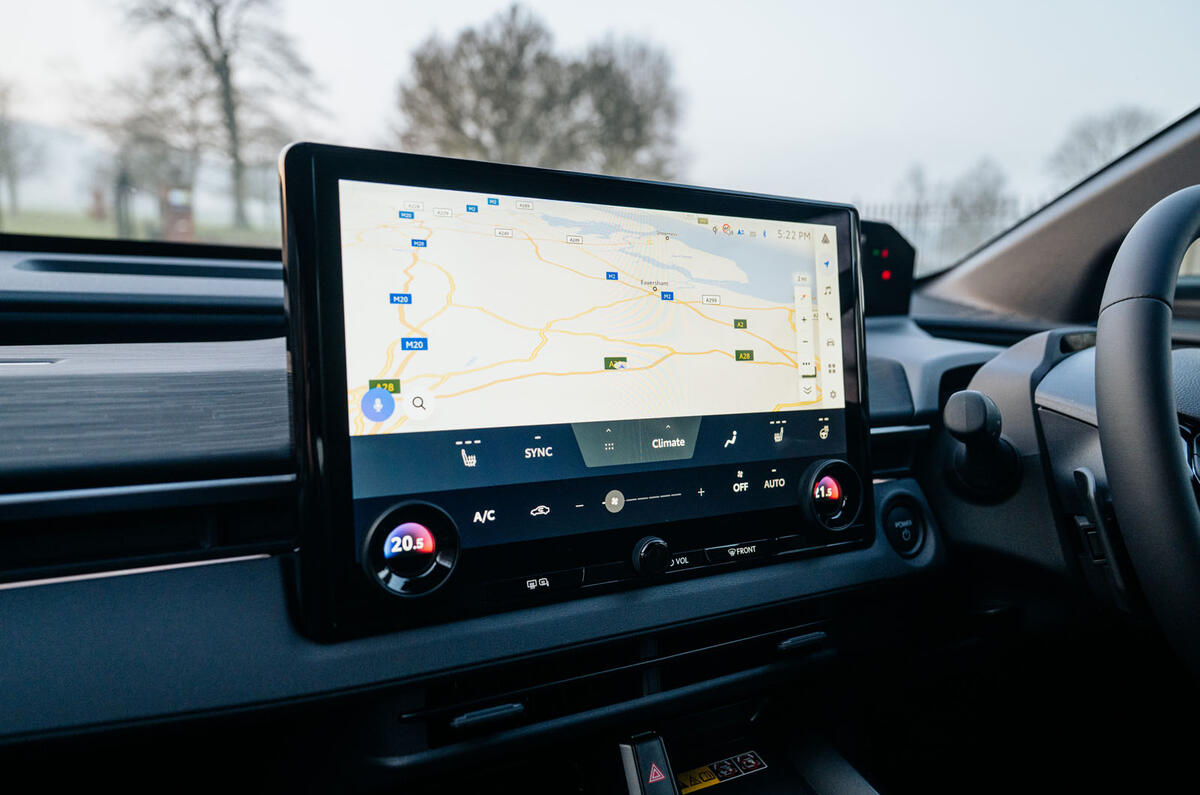
Thankfully, Toyota hasn’t wavered when it comes to offering simple but sound ergonomics. There is a large touchscreen, of course, but also plenty of physical knobs and switches – even some blank buttons. The mirror adjustment is entirely conventional, and the drive selector is a mechanical-feeling rotary device that leaves you in no doubt whether you’ve selected drive or not.

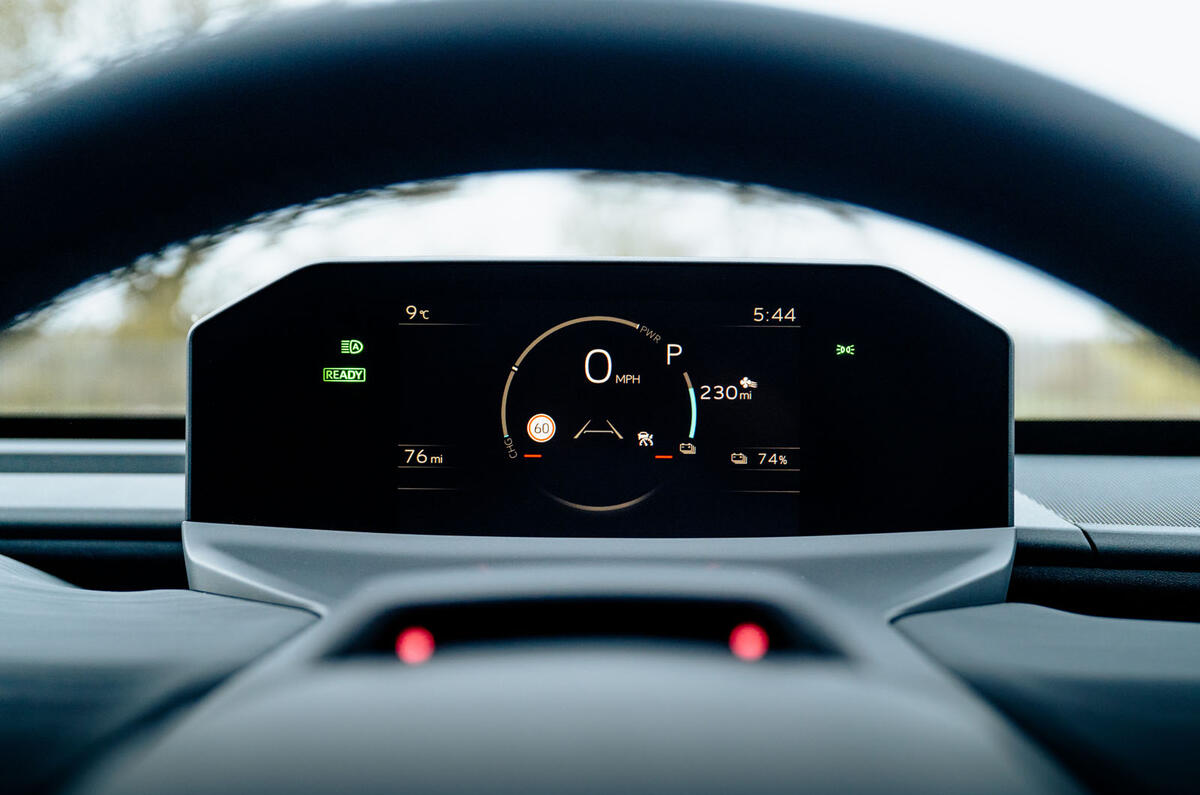
The driving position gets off to a promising start. It’s medium high – just appropriate for a medium SUV and, as usual, Toyota’s seats are very comfortable, being broad and soft yet supportive. However, you have to upgrade to the top trim with its electrically adjusted chairs to get cushion angle adjustment, and the Peugeot-style set-up with a small-diameter steering wheel and a high-set display remains a gimmick. Unlike in the original bZ4X and plenty of Peugeots, all testers were able to find a driving position in the C-HR+ that allowed them to see the display, but the small wheel means your arms aren’t as well supported by the armrests, which can cause slight aches during long drives.

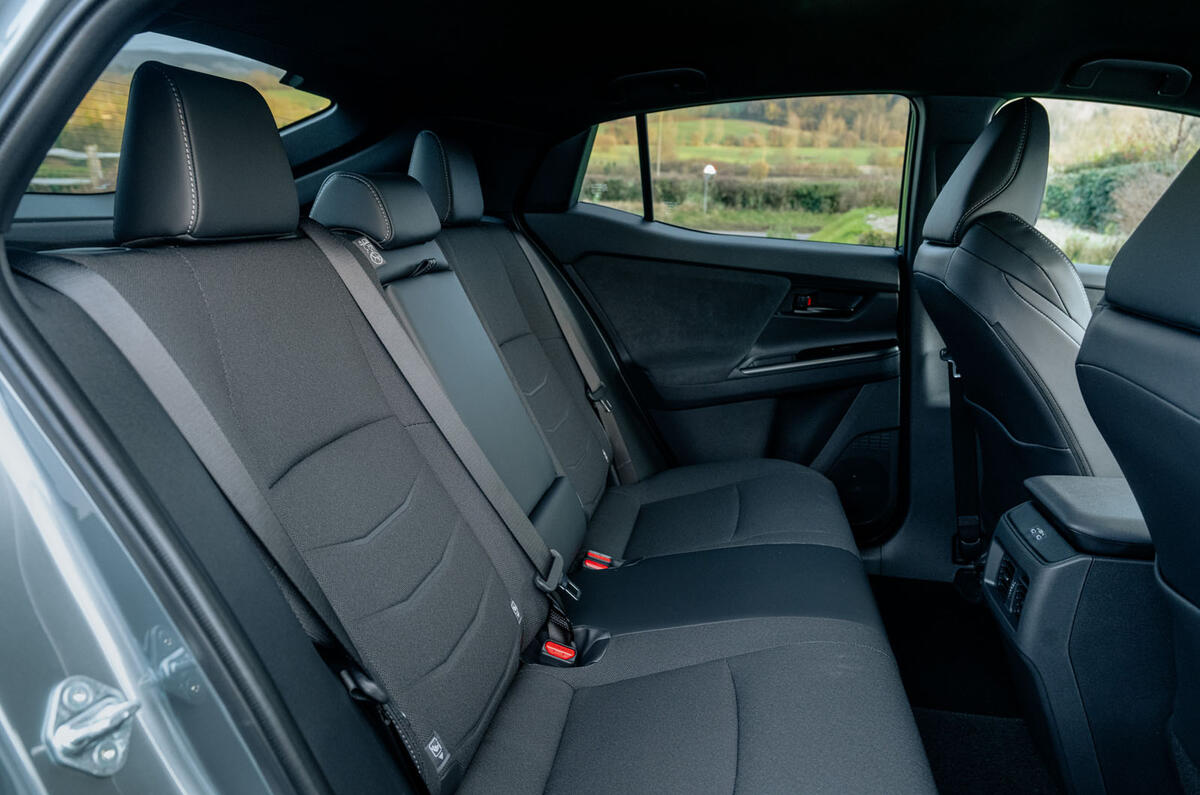
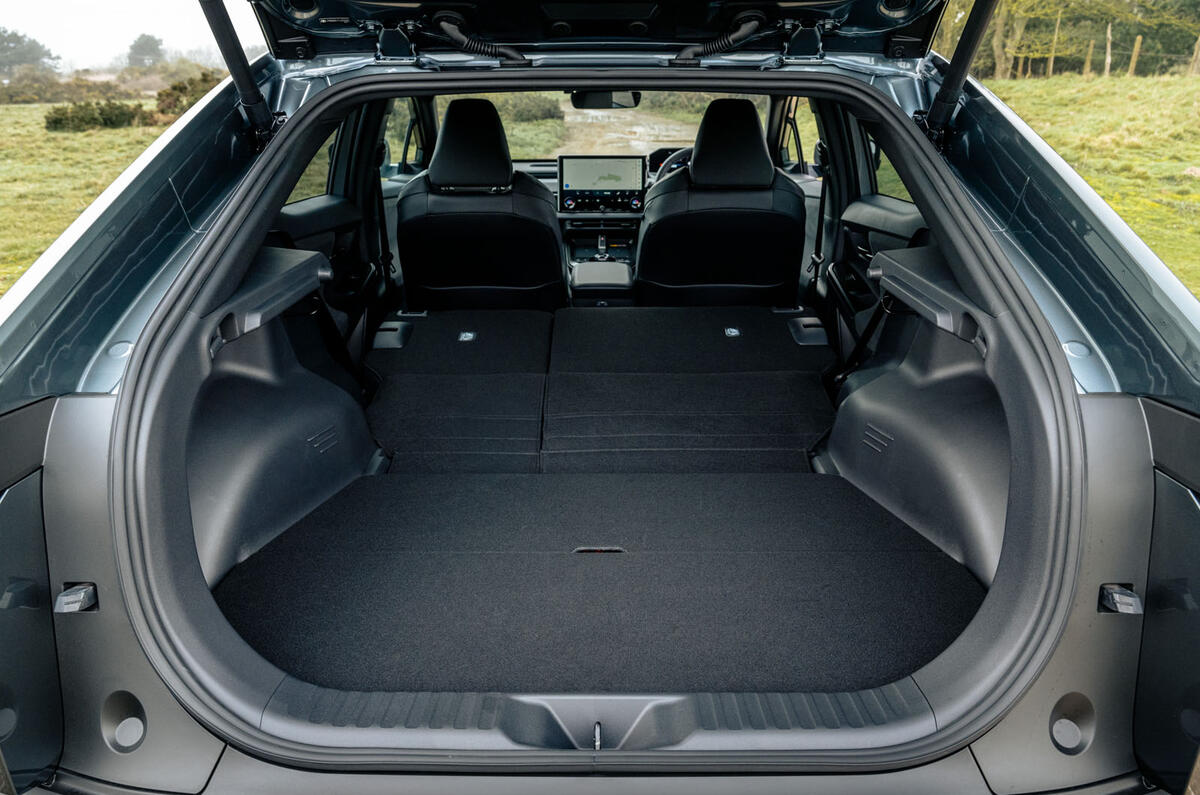
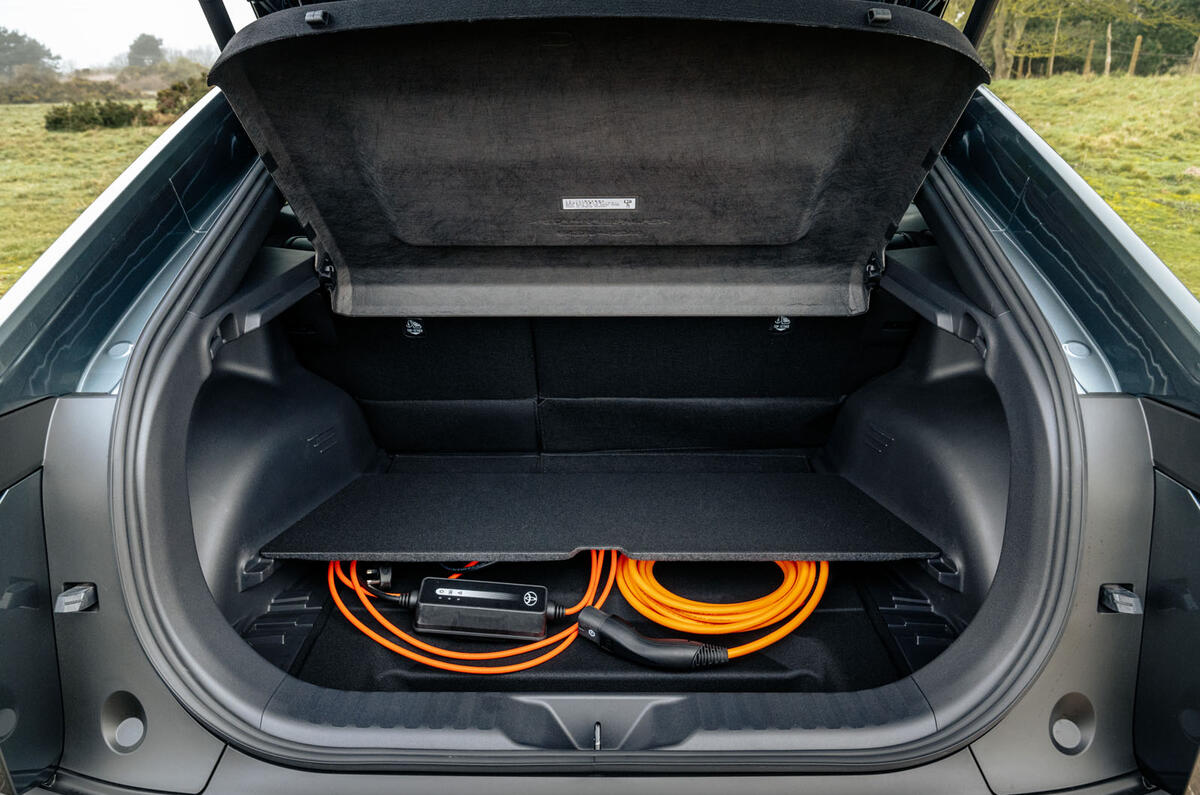
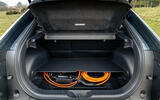
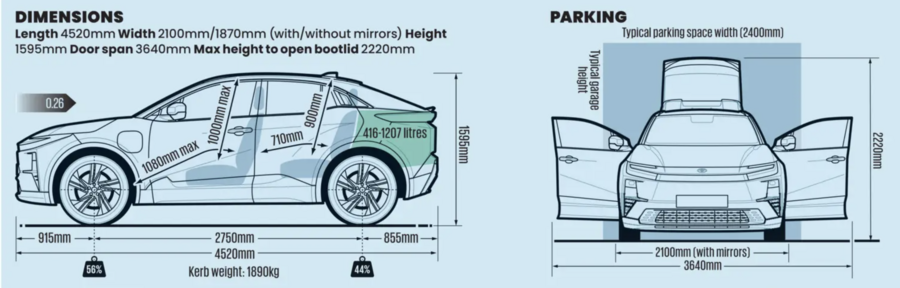
Toyota claims the e-TNGA platform is dedicated to EVs but, over the years, it has become clear that it shares a fair bit with the ICE equivalent. That has an impact on the C-HR+’s interior space, which is down on rivals’. Even though the C-HR+ is longer than the Skoda Elroq and Renault Scenic overall, it offers both less rear leg room and less boot space.

The sloping roofline means that head room in the back is compromised too. Tall adults’ heads are more likely to hit the headliner than the headrests. Even the Peugeot e-3008, which is also offered with petrol engines, offers more space. The backs of the rear seats in the C-HR+ can be reclined slightly, but this makes little difference. The floor is also relatively high, which doesn’t make for the most natural seating position in the back.
Multimedia

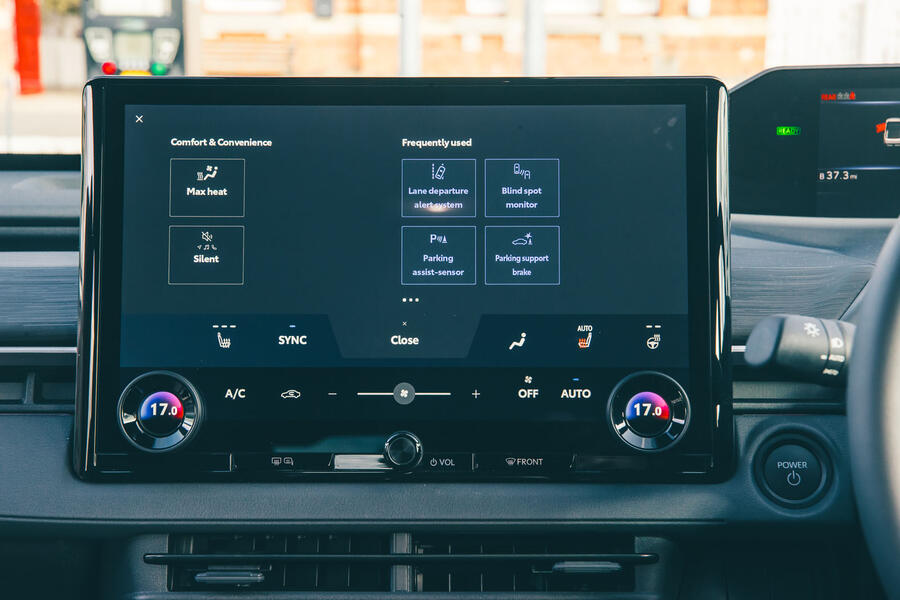
Whereas other makers try to dazzle with their digital sophistication, and often end up bamboozling, Toyota has no such ambitions. Its system, which is largely the same across all its cars, is fairly simple and therefore mostly easy to understand, partly because a lot of important vehicle functions are handled by physical controls.

There’s discrete navigation, media, phone mirroring and a couple of settings menus. All of it works quickly and logically, with the possible exception of some of the settings, which are hidden in different places and have opaque names. We had to resort to the manual to find out what ‘DRCC with RSA’ is (Dynamic Radar Cruise Control with Road Sign Assist, for the record) and whether we might want it turned on or off. It’s also mildly irritating that you have to dismiss two notifications every time you start the car.

With all of that said, it’s not very sophisticated. The fonts and graphics suggest it was developed by an entirely different team from the one that did the instrument cluster, and there’s no way to have both media controls and navigation on screen at the same time. Most likely, you will dial up your preferred brand of smartphone mirroring and ignore the native interface. It’s no great loss, because the built-in navigation isn’t particularly clever about avoiding traffic, and its EV route planning is quite basic.

 

ENGINES & PERFORMANCE

6
Toyota C HR review 2026 021

For the vast majority of new EVs today, their outright performance is a very predictable story: they tend to hit their quoted numbers with some safety margin and they tend to be a bit quicker and smoother than their piston-powered equivalents. The C-HR+, though, was rather shown up by our testing regime.
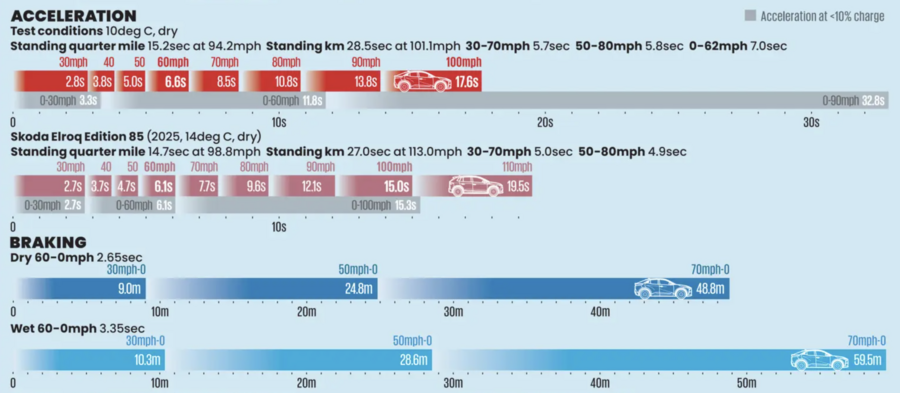
In normal day-to-day usage, it’s quite pleasant. The C-HR+’s relatively light weight combines with 221bhp for usefully brisk acceleration. It’s slightly slower than the Skoda Elroq 85, but 6.6sec to 60mph and 17.6sec to 100mph still make it nicely quick.

There are paddles to control the regen, but the steps are so small and stop far short of one-pedal driving that you wonder why they bothered

Drivability is well managed too. Both pedals are smooth and progressive and there are four levels of off-throttle regen to cycle through using steering wheel paddles. Even the strongest one is a long way short of a one-pedal mode, mind.

It’s what happens when you ask more from the C-HR+ that is concerning. Dip below 10% battery capacity and you will find seriously weakened performance. Most EVs manage to match their claimed 0-62mph time even with a depleted battery, but the C-HR+ needed almost twice as long. We take an average of two runs in opposite directions for our acceleration figures to account for the effect of the wind, but on a nearly windless day, 0-62mph on our second run (at 7% charge) took over a second longer than on our first (at 9% charge) and 13.4sec is not an acceptable 0-62mph time for a mid-range EV.

The C-HR+ fell apart further during our brake testing, which involves six loops in quick succession of accelerating to about 75mph and then doing an emergency stop. During this time (with around 40% charge), the car started limiting power and displayed a notification that the battery was getting too hot.

The actual braking performance isn’t much better. The ABS system feels unsophisticated in its operation. Not only is it very noisy, but it also grabs at individual wheels in a way that makes the car feel slightly unstable. It ultimately pulls up straight, but during our braking tests the stopping distances on dry and wet surfaces were longer than we would expect from a car of this type. For comparison, the Skoda Elroq needed 3.7m less in the dry and 10.4m less in the wet to stop from 70mph.

These are extreme circumstances but also critical. Emergency stops are rare in the real world, but when they happen you want the car to perform. While owners are unlikely to take a C-HR+ on a race track, they should expect to be able to drive it up a mountain road with passengers and luggage without the drive system overheating. Finally, dipping into the final 10% of the battery capacity is stressful enough without losing a big chunk of the performance. Quite simply, most rivals don’t struggle with these tests and nor should a Toyota.

RIDE & HANDLING

8
Toyota C HR review 2026 022

The C-HR+ feels a lot like other Toyotas to drive. Its suspension has a tautness to it that gives it a good amount of control over bumps. The generous sidewalls on the 18in wheels of our test car help to conjure a ride that feels not luxurious but certainly settled and comfortable. Noise isolation at speed is competitive too.

Hybrid Toyotas such as the Yaris and Corolla can be surprisingly engaging to drive, and Toyota promises a fun-to-drive character for the C-HR+, but in reality it proves to be a more demure character. Despite its relatively restrained kerb weight, the C-HR+ manages to feel slightly heavier than the Elroq and, being front-driven, doesn’t possess the Skoda’s clean steering feel and on-power balance. It doesn’t do anything particularly wrong: there’s adequate grip, and the steering has decent precision and even some feel as the chassis weights up. It just doesn’t have the immediacy or adjustability that would elevate it above rivals.

When you leave the car and lock it, it will often beep the alarm. It’s part of the rear occupant alert, which reminds you not to leave your kids in the back seat. It seems to do it by default, rather than using a weight sensor, which results in many false positives. We couldn’t find a way to turn it permanently off.

Another area where Toyota demonstrates its maturity as a maker of fit-for-purpose cars is the driver assistance systems. Its adaptive cruise control is one of the smoother systems around, the automatic lane following likewise, and it’s possible to switch to standard non-adaptive cruise control on the fly. The mandatory nannies are either unintrusive or easy to turn off, or both.

MPG & RUNNING COSTS

9
Toyota C HR+ review 2026 001

The C-HR+ is manufactured in Takaoka, Japan, and qualifies for the UK government’s £1500 grant. That means the entry-level Icon, which has the smaller battery, costs £32,995. It’s fairly well equipped, with heated seats and adaptive cruise control, and lacks only a few driver assistance features and inconsequential items. Design is £3155 more and brings the bigger battery but is otherwise almost identical in its equipment. Excel trim, from £40,150, adds niceties such as 22kW AC charging, 20in wheels and the options of a lighter-coloured interior, upgraded hi-fi and a glass roof, at which point it all gets a bit expensive.

We would stick with middle-grade Design, which is priced in line with rivals. On finance, however, the C-HR+ is looking particularly attractive compared with its rivals. Only the MG S5 EV undercuts it.

It does a lot of little things right, which adds to a feelgood factor. There’s a start/stop button that actually does what it says, the indicator tick sounds like a real relay, and the adaptive cruise control can be set to standard cruise.

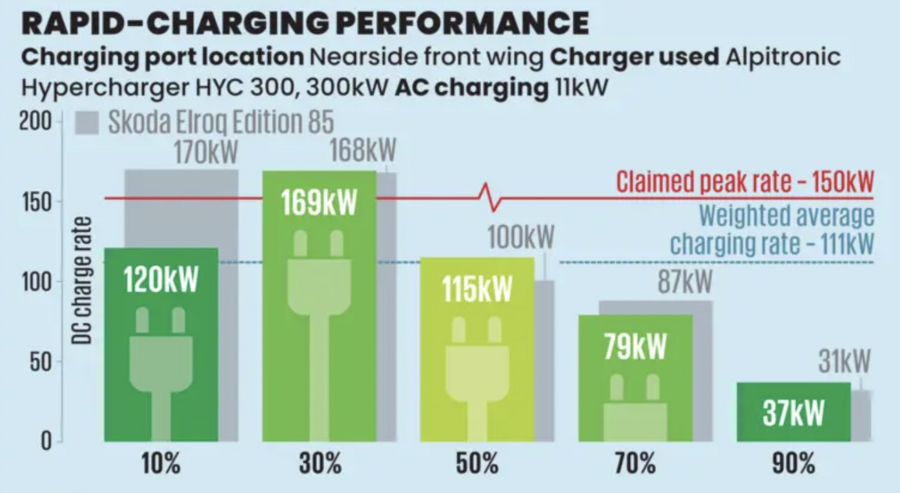
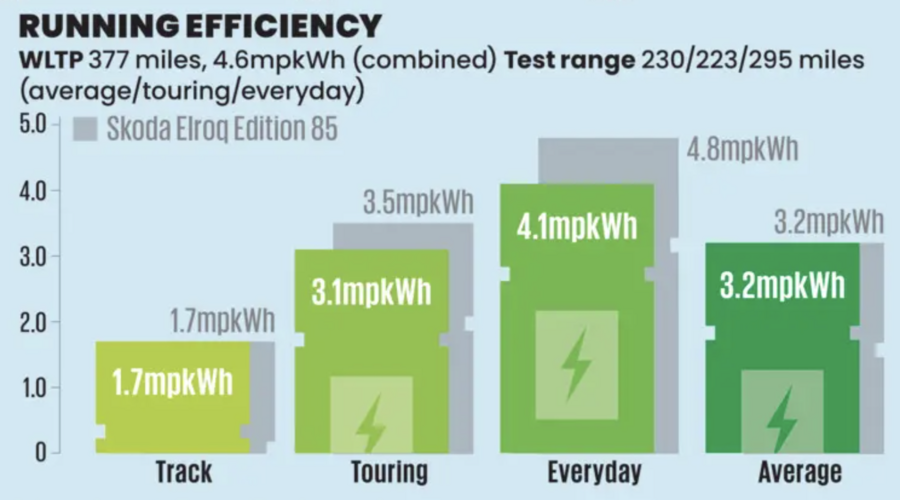
Our C-HR+ also proved quite efficient, if not quite as frugal as the Elroq. Our average of 3.2mpkWh includes the performance testing, as always, but we saw 3.5mpkWh on a regular basis, so you could count on 250 miles of real-world range. On a DC rapid charger, the C-HR+ achieved near enough the same weighted average speed as the Elroq but did it in a different way. Whereas the Skoda started out strong, then tailed off, the Toyota ramped up more slowly but held a high speed for longer. It also exceeded its quoted 150kW peak speed by some margin.

We wish it kept the driver better informed of what’s going on, though. The charging speed is shown in the instrument cluster rather than the centre screen but is often replaced with a ‘door open’ warning or similar. The car can pre-condition the battery for fast charging, either when you set a charger as the navigation destination or engage the manual setting, but there’s no indication whether it’s doing it, or how much time it needs for optimum speeds.

The C-HR+ is covered by the same warranty as all Toyotas, which is only three years as standard but is extended by a year and 10,000 miles up to 10 years/100,000 miles every time you have it serviced by a Toyota dealer. That also covers the battery, which is usually limited to seven years with most car makers. It’s a good option to have but it does tie you to the dealer network.

VERDICT

Toyota C HR+ review 2026 021

On the surface, the C-HR+ is the mature, well-considered product we expect from Toyota. It doesn’t have the ADAS frustrations and drivability quirks common in cars from younger brands and it’s calm, efficient and quietly satisfying to drive.

However, Toyota is still at a relatively early stage of its EV journey and that shows. The C-HR+ has decent efficiency, range and charging speed, but the drivetrain falters when taxed, the braking system is inadequate and the platform doesn’t exploit the opportunities for interior packaging offered by EVs. The design, digital technology and interior ambience don’t exactly draw you in, either.

The C-HR+ is pleasant enough, but consumers have better options. It’s time Toyota provided one by starting again with EVs and putting its full engineering might behind the effort.

Illya Verpraet

Illya Verpraet Road Tester Autocar
Title: Road Tester

As a road tester, Illya drives everything from superminis to supercars, and writes reviews and comparison tests, while also managing the magazine’s Drives section. Much of his time is spent wrangling the data logger and wielding the tape measure to gather the data for Autocar’s in-depth instrumented road tests.

He loves cars that are fun and usable on the road – whether piston-powered or electric – or just cars that are very fit for purpose. When not in test cars, he drives an R53-generation Mini Cooper S or a 1990 BMW 325i Touring.