
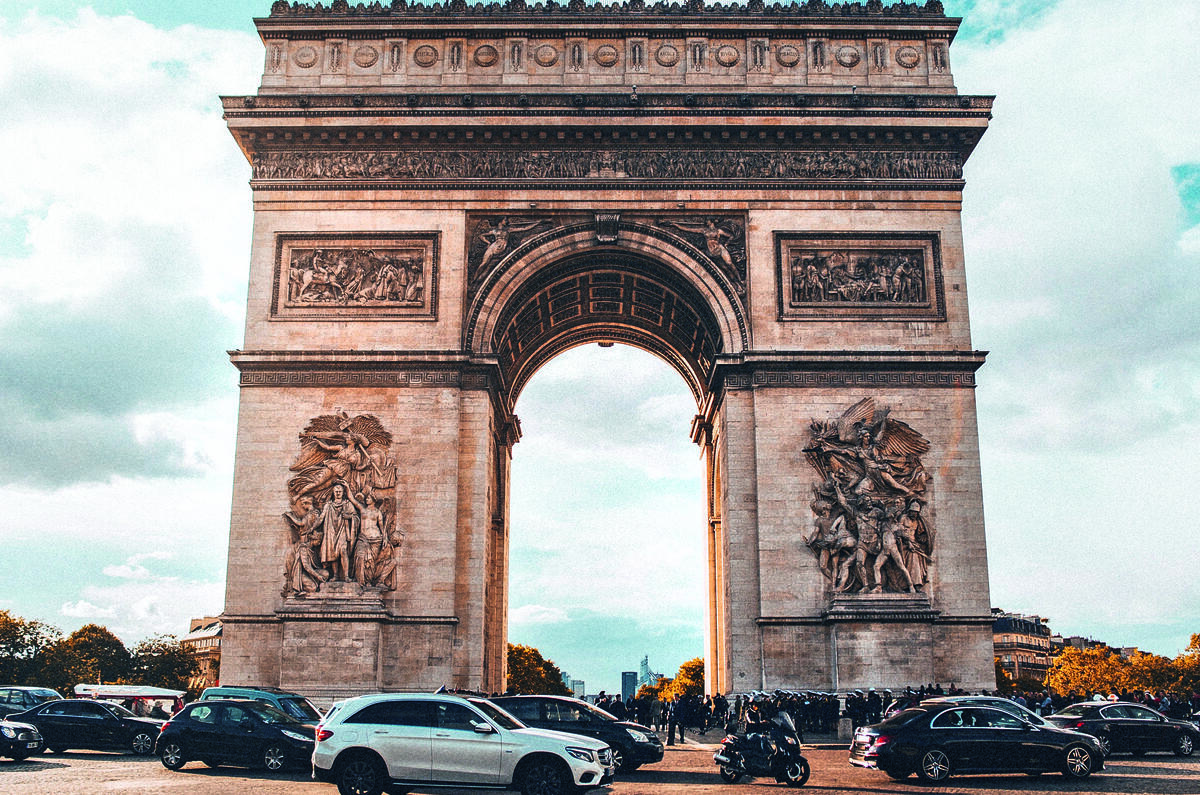
Right now, there's a lot of talk about reimagining our reliance on cars in cities, where the potential risks they present, from injuries to pollution, are statistically at their greatest.
Action has been under way to address the issues for some time, but the balance has typically been more in favour of raising revenue than cutting journey times via congestion charges, or encouraging lower-emission forms of transport, such as pedal bikes.

But there is much more to come.
A sign of where things are heading was revealed last month in Paris, a city that has been at the forefront of proactive action for some time despite its often well-deserved reputation for turning its roads to gridlock at a moment’s notice.
The plan is that from 2024 – just before the Olympics – a so-called ‘Paris-Centre to Saint-Germain peaceful zone’ will be introduced, closing the first to fourth arrondissements to any through traffic.
This includes landmarks such as the Louvre, Notre Dame and the Pompidou Centre – although traffic heading to a destination will still be allowed.
For Autocar Business webinars and podcasts, visit Autocar Business Insight
It is traffic crossing the city centre that in theory will be forced elsewhere.
The complexity of making this idea a reality means its success – or otherwise – will be watched by like-minded cities around the world.
It remains unclear, for instance, how cars will be fairly categorised.
ANPR surely can’t monitor every corner of every street, and who’s to say if a two minute coffee stop can be determined as a destination prior to heading on?
The complexity may mean that imposing a blanket ban will be easier for everyone to monitor – if not live with.
While the execution may be different, it already seems certain that London, and then other major UK cities, will not be far behind Paris in imposing similar restrictions.
The betting is that these will include some allowances for zero-tailpipe emissions vehicles – plug-in hybrids and electric cars – but it is a brave person who’d second guess law makers, especially in the current, highly charged climate.
The claim is that more than a third of car trips made by Londoners could be walked in under 25 minutes, and two-thirds cycled in under 20 minutes.
Whether you agree or not, such stats will always fuel the arguments of those who see no place for cars in cities at all.
For those in power, there’s a fine line.
It’s evident that some change is needed, but books need balancing, public transport is not today capable of offering a viable alternative for many and the benefits of the car – financial, practical, time-saving and more – need replacing.
Action in the face of a health and environmental crisis maybe logical, but the right directions to take are far from obvious.

Join the debate
Add your comment
Sad days.
Paris will be able o become a true museum.