
The first reports from the Japanese media, emerging on Monday morning UK time, were dramatic enough: prosecutors had descended on Nissan’s corporate headquarters to question the firm’s chairman, Carlos Ghosn, on financial ‘irregularities’. But the speed at which events that will have a profound long-term impact on the industry unfolded throughout the rest of the day was simply extraordinary.
Normally, the large scale of major international car firms means that it can take time for the impact of major events to be felt: for example, look at how long it it took for the Dieselgate saga to play out at Volkswagen following the initial reports. But events at Nissan today (Monday) have taken place at a simply dizzying pace.
Nissan to oust boss Carlos Ghosn due to 'serious misconduct'
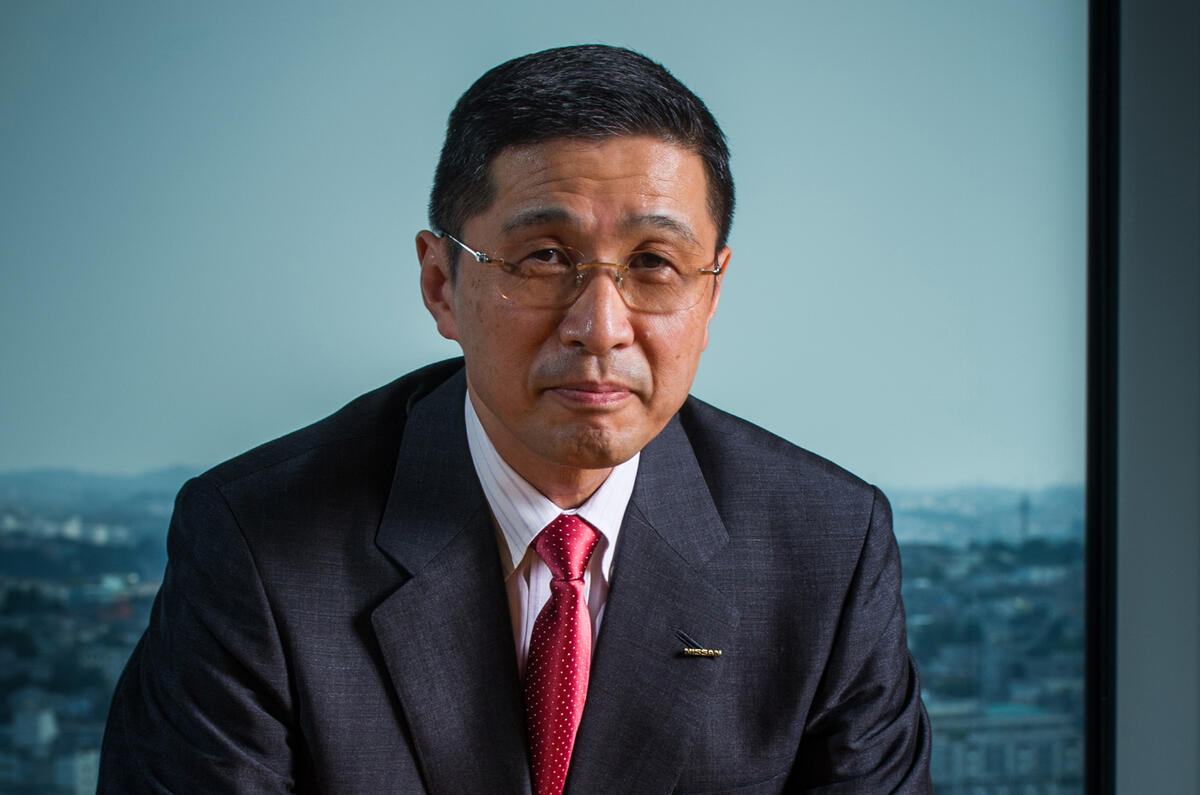
Within an hour of the first reports, Nissan issued a statement that it had contacted the Tokyo district public prosecutors office following an internal investigation sparked by a whistleblower – and that the evidence that investigation had unearthed against Ghosn and representative director Greg Kelly was serious enough for CEO Hiroto Saikawa to recommend the board remove both from their roles.
Within four hours of the first report, Saikawa was sitting in front of the Japanese media that had hastily assembled at Nissan’s Yokohama HQ, with numerous others (myself included) watching on via Nissan’s YouTube channel.
While limited in what he could say for legal reasons, a clearly emotional Saikawa was humbled, apologetic and at times brutally honest when issuing his statement and answering a series of questions from reporters.
Having laid out the three areas in which Nissan had found ‘serious misconduct’ by Ghosn and Kelly, Saikawa offered his “deep apologies”, promising “immediate and fundamental” steps to prevent such incidents happening again.
While Saikawa was speaking in Japan with his words translated, his emotion was clear – as was his anger. At one point, he said: “Beyond being sorry, I feel big disappointment and frustration and despair. I feel despair, indignation and resentment”, adding that people “will feel the same way” once all the details emerge.
Again, it’s hard to describe Saikawa admitting to feeling despair and resentment without using the term ‘extraordinary’. This went far beyond the sort of perfunctory apology and ‘wait and see’ attitude you might expect from a press conference such as this.
But Saikawa wasn’t finished, expressing his personal opinion that Ghosn’s concentration of power within the Renault-Nissan-Mitsubishi Alliance (the 64-year-old is chairman of all three firms and the alliance) was a key factor in enabling the ‘irregularities’ the firm has unearthed. That was a pointed criticism of how the alliance structure allowed one person to become chairman, and effectively in day-to-day charge, of three technically separate car firms.
He criticised Nissan’s “weak” corporate governance structure, which put so much power in Ghosn’s hands without checks in place and meant the alleged wrongdoing couldn’t be detected. While Saikawa said that Nissan would work “closely” with its Alliance partners on the future, he said the firm would introduce a “more sustainable structure”.
His criticism about the concentration of power within the Renault-Nissan-Mitsubishi Alliance was significant, hinting at some of the tensions that exist within – especially given that, despite Ghosn's multiple roles, the alliance remains made up of technically separate firms (albeit with stakes in each other), in contrast to, say, the singularly owned Volkswagen Group (although, within that group, each brand is run by separate management teams).
As things stand at the time of writing, Ghosn officially remains chairman of Renault, although that board is due to meet shortly to discuss his future. What happens to Ghosn, and how his multiple positions are filled within the various Alliance companies, will have a significant impact on the whole car industry.
There are plenty of other developments to consider, from what happens to Ghosn (whose current location is unknown following his arrest), to whether Japanese authorities singled him out as a foreign head of a major Japanese firm.
Indeed, the shockwaves and impact of Ghosn’s ousting from Nissan and arrest will be felt within the industry for years. But that’s the long term: for now, it’s time to reflect on what has been an absolutely remarkable day.
Read more
Nissan to oust boss Carlos Ghosn due to 'serious misconduct'

Join the debate
Add your comment
Palace Intrigue
The real story is highlighted by the difference in response to the allegations from Nissan and Renault.
At the press conference, Saikawa-san threw Ghosn under the bus but rather gave the game away by trying to denigrate his achievements in running the Renault-Nissan Alliance, a ludicrous suggestion. Renault, on the other hand, has stood by Ghosn and is waiting to see the evidence of his guilt.
The primary allegations (that he underreported his compensation and used company assets for personal purposes) are both fairly ridiculous. The first implies that Nissan was not aware of how much they were paying their chairman and CEO while the second is a classic example of corporate perks being weaponised by internal rivals.
The reality of the situation is that Nissan has never liked being the "junior" partner of the alliance and the proposed takeover by Renault was seen as a humiliation. As a result, the company has defenestrated the architect of both the plan (and their success over the past 20 years) on ridiculous charges.
I suspect Ghosn will have the last laugh in all this and the reputation of Nissan and Japanese corporate culture will be the ultimate victims.
All you hypocrites were quick
I would've arrested him for
I would've arrested him for convincing people to buy Qashqai and Jukes, horrible cars.
Remember the heyday of bulletproof Bluebirds?